
In late 1977, the hillside slopes and scenic vistas surrounding Glendale, Highland Park, and the Hollywood Hills became dumping grounds for the posed, nude bodies of ten young women. The Hillside Stranglers Kenneth Bianchi Angelo Buono Los Angeles investigation evolved into one of the most exhaustive forensic partnerships in criminological annals, exposing how two predatory cousins operated in tandem, utilized specialized upholstery fiber transfers, and attempted an elaborate psychiatric multiple-personality deception that was dismantled by scientific behavioral analysis.
Executive Case Factsheet
- Victim(s): 10 Los Angeles victims (Yolanda Washington, Judith Miller, Lissa Kastin, Jane King, Dolores Cepeda, Sonja Johnson, Kristina Weckler, Lauren Wagner, Kimberly Martin, Cindy Hudspeth); 2 Washington victims (Karen Mandic, Diane Wilder)
- Date of Incident: October 18, 1977 – January 11, 1979
- Primary Crime Scene / Location: Glendale, Hollywood Hills, Highland Park, Los Angeles, CA and Bellingham, Washington
- Lead Investigating Jurisdictions: Los Angeles Police Department (LAPD), Los Angeles County Sheriff’s Department (LASD), Bellingham Police Department
- Key Forensic Evidence: Microscopic automotive upholstery fibers from 703 East Colorado Street, electrocution contact burns, chemical injection analysis, faked multiple personality hypnosis disproven by Dr. Martin Orne
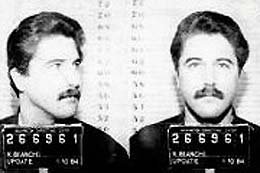
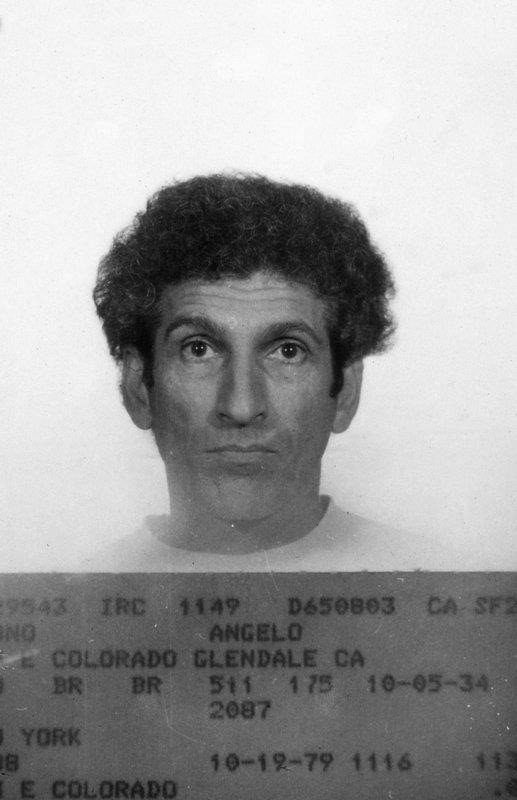
- Suspect(s) / Perpetrator(s):
- Legal Outcome & Status: Bianchi pleaded guilty in 1979 to 5 California and 2 Washington murders (life sentence); Buono convicted in 1983 of 9 murders (life without parole; died in prison in 2002)
The Discovery of Posed Victims Along Los Angeles Hillsides
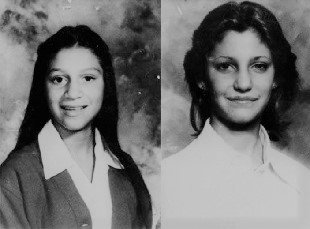
The terror began on October 18, 1977, when the nude body of nineteen-year-old Yolanda Washington was discovered discarded along an embankment on the Ventura Freeway in Glendale. Over the following twelve weeks, nine additional females—ranging from twelve-year-old schoolchildren Dolores Cepeda and Sonja Johnson to twenty-year-old college students Lauren Wagner and Cindy Hudspeth—were discovered dumped across desolate hillsides overlooking Los Angeles.
Forensic pathologists noted horrifying commonalities: the victims had been bound with nylon rope, tortured with electrical wiring, and strangled with ligatures or bare hands before their bodies were washed with household cleansers to eradicate latent fingerprint evidence. Furthermore, the corpses were intentionally positioned in humiliating, spread-eagled postures designed for immediate public discovery.
The LAPD and LASD formed a combined 100-investigator task force. Initial public warnings suggested an individual perpetrator dubbed the ‘Hillside Strangler’, though behavioral profilers noted dual ligature knot patterns and simultaneous physical restraints that strongly indicated the involvement of two coordinated killers.
The widespread panic caused severe disruptions to southern California’s entertainment and academic sectors, with women forming armed carpool networks and martial arts self-defense classes enrolling thousands across Los Angeles County.
Glendale Upholstery Shop Trace Evidence & Electrocution Forensics
Crime scene criminalists conducted meticulous vacuum trace retrievals from the victims’ hair and clothing, isolating microscopic synthetic fibers, specialized vinyl piping fragments, and red nylon automotive upholstery carpet fibers. These specific fibers did not match the victims’ residences or garments, indicating they had been transferred in a commercial workshop environment.
Pathologists also discovered subtle rectangular cutaneous burns on the necks and hands of several victims. Forensic electrocution experts determined these burns were caused by active household electrical wiring stripped of insulation, used by the perpetrators to torture victims to unconsciousness prior to ligature asphyxiation.
Despite gathering thousands of fiber specimens, the task force was unable to locate the specific workshop among Los Angeles’s thousands of auto repair facilities, and the murders abruptly ceased in February 1978 when one of the perpetrators relocated out of state.
Specialized chemical analysis of subcutaneous tissue biopsies confirmed that the killers had also experimented with injecting toxic household chemicals, including oven cleaner and air freshener, directly into the bloodstream of victims.
The Hillside Strangler proceedings remain a masterclass in forensic psychology, polygraphy, and multi-agency homicide coordination. The extensive hypnosis interviews conducted by Dr. John Watkins, Dr. Martin Orne, and Dr. Ralph Allison highlighted the extreme risks of forensic hypnosis leading to fabricated multiple-personality defenses. Today, Dr. Orne’s methodological refutation of Bianchi’s ‘Steve Walker’ alter ego is standard curriculum in forensic psychiatry and criminal law courses across the United States.
The Bellingham Washington Double Murders & Kenneth Bianchi Arrest
The investigative breakthrough occurred 1,200 miles north on January 11, 1979, in the coastal college town of Bellingham, Washington. Two Western Washington University students, twenty-year-old Karen Mandic and twenty-two-year-old Diane Wilder, disappeared while house-sitting a luxury home on Bayside Road. Their bodies were discovered the next morning inside Wilder’s green Dodge Dart in a wooded cul-de-sac, both strangled with nylon cords.
Bellingham Police immediately focused on twenty-seven-year-old security guard Kenneth Alessio Bianchi, who worked for the security firm guarding the Bayside residence and had dispatched the two coeds to the house. Under interrogation, Bianchi’s alibi collapsed, and police discovered stolen jewelry belonging to the Washington victims inside his residence.
Bellingham detectives contacted the LAPD Hillside task force after discovering Bianchi had resided in Glendale, California, until early 1978. Detectives executed a search warrant on the auto upholstery shop at 703 East Colorado Street in Glendale, owned by Bianchi’s forty-three-year-old cousin, Angelo Anthony Buono Jr.
Inside Buono’s shop and residence, forensic criminalists isolated exact microscopic matches to the red synthetic fibers and vinyl piping previously lifted from victims Kristina Weckler and Lauren Wagner.
The Dr. Martin Orne Hypnosis Experiment & Exposing ‘Billy’
Following his arrest, Kenneth Bianchi claimed to suffer from severe Dissociative Identity Disorder (Multiple Personality Disorder). During clinical hypnosis sessions conducted by defense psychiatrists, an aggressive, violent alter-ego named ‘Billy’ emerged, claiming that Billy had committed the murders without Kenneth’s conscious knowledge.
Prosecution retained world-renowned forensic psychiatrist Dr. Martin Orne of the University of Pennsylvania to evaluate Bianchi. Dr. Orne conducted a groundbreaking scientific experiment: prior to a hypnosis session, Orne casually remarked to Bianchi that in genuine cases of multiple personality disorder, it was standard to have at least three distinct personalities rather than two.
During the subsequent hypnosis session, Bianchi promptly manifested a brand-new third personality named ‘Steve’. Dr. Orne proved that Bianchi was consciously faking hypnosis through hidden optical tests and discovered university psychology textbooks in Bianchi’s home that detailed multiple personality symptomology.
Faced with Dr. Orne’s unmasking, Bianchi abandoned his insanity defense and agreed to plead guilty and testify against Angelo Buono in exchange for escaping the death penalty.
The Historic Los Angeles Trial, Convictions & Legal Impact
The trial of Angelo Buono Jr. commenced in November 1981 at the Los Angeles County Superior Court before Judge Ronald George. Lasting over two years and encompassing 400 witnesses, it became the longest and most expensive criminal trial in American history up to that time.
Although Bianchi proved to be an erratic, manipulative witness on the stand, prosecutors Roger Boren and Michael Nash secured conviction through unassailable physical evidence: microscopic fiber matches from Buono’s upholstery shop, hair transfers recovered from Buono’s home carpeting, and handwriting analysis on fraudulent documents.
In November 1983, the jury convicted Angelo Buono of nine counts of murder, sentencing him to life imprisonment without parole. Buono died of heart disease at Calipatria State Prison on September 21, 2002. Kenneth Bianchi remains incarcerated at the Washington State Penitentiary in Walla Walla.
The Hillside Stranglers investigation fundamentally advanced the admissibility standards of forensic hypnosis in American jurisprudence, establishing the ‘Orne Guidelines’ to prevent fraudulent psychiatric claims in capital proceedings.
Chronological Case Timeline
| Date / Milestone | Investigative Development | Forensic / Evidentiary Significance |
|---|---|---|
| October 18, 1977 | Yolanda Washington murdered in Glendale | First Hillside Strangler victim discovered |
| November 1977 | Five victims discovered across LA hillsides | Microscopic upholstery fibers and ligature signatures isolated |
| January 11, 1979 | Karen Mandic and Diane Wilder murdered in WA | Kenneth Bianchi arrested in Bellingham, Washington |
| January 1979 | Glendale upholstery shop searched | Angelo Buono identified; forensic fiber matches confirmed |
| May 1979 | Dr. Martin Orne exposes faked hypnosis | Bianchi’s multiple-personality defense thoroughly disproven |
| November 1983 | Angelo Buono convicted of 9 counts of murder | Sentenced to life without parole after historic 2-year trial |
| September 21, 2002 | Angelo Buono dies in prison | Succumbs to cardiovascular disease at Calipatria State Prison |
Frequently Asked Questions: Forensic & Legal Review
How did fiber evidence link Angelo Buono to the Hillside Stranglers murders?
Criminalists vacuumed microscopic synthetic fibers and vinyl piping fragments from the hair and skin of several victims. These fibers matched the specialized automotive upholstery fabrics and red carpeting found inside Angelo Buono’s commercial auto upholstery shop at 703 East Colorado Street in Glendale.
How was Kenneth Bianchi’s multiple personality claim disproven?
Forensic psychiatrist Dr. Martin Orne suggested to Bianchi that genuine multiple personality patients typically have three or more personalities. During the next hypnosis session, Bianchi spontaneously invented a third personality named ‘Steve’, proving he was consciously simulating mental illness based on psychology textbooks found in his home.
Why were there two killers instead of one?
Kenneth Bianchi and his older cousin Angelo Buono Jr. partnered to abduct women by posing as undercover police officers using fake badges. Dual ligature knots, simultaneous physical restraints, and eyewitness descriptions of two men in Buono’s vehicle confirmed that the crimes were executed collaboratively.