During the sweltering spring and summer of 1985, a sadistic nocturnal intruder terrorized southern California, entering suburban homes through unlocked windows to butcher occupants and leave occult pentagram markings on bedroom walls. The Richard Ramirez Night Stalker Los Angeles fingerprint manhunt represents a revolutionary turning point in law enforcement technology, showcasing the historic first operational deployment of the Automated Fingerprint Identification System (AFIS) and culminating in a dramatic citizen arrest on the streets of East Los Angeles.
Executive Case Factsheet
- Victim(s): 14 murdered victims (including Jennie Vincow, Dayle Okazaki, Tsai-Lian Yu, Vincent & Maxine Zazzara, William Doi, Malvia Keller, Elyas Abowath); dozens assaulted
- Date of Incident: June 28, 1984 – August 24, 1985
- Primary Crime Scene / Location: San Gabriel Valley, Greater Los Angeles, Whittier, Mission Viejo, and San Francisco, California
- Lead Investigating Jurisdictions: Los Angeles County Sheriff’s Department (LASD), Los Angeles Police Department (LAPD), San Francisco Police Department
- Key Forensic Evidence: Latent single thumbprint on stolen 1976 Toyota station wagon mirror matched via NEC AFIS system, distinct size 11 1/2 Avia model 445 geometric shoe prints, .22 and .25 caliber ballistics
- Suspect(s) / Perpetrator(s):
- Legal Outcome & Status: Convicted of 13 counts of murder, 5 attempted murders, 11 sexual assaults, and 14 burglaries in September 1989; sentenced to death; died on death row at San Quentin in June 2013
The Nocturnal Invasions Across Southern California
The terror escalated on March 17, 1985, in Rosemead, California, when twenty-two-year-old Maria Hernandez was shot in the face in her driveway, surviving when the .22-caliber bullet ricocheted off the keys she held in her hand. Inside the house, her roommate, thirty-four-year-old Dayle Okazaki, was shot to death. Hours later, thirty-year-old Tsai-Lian Yu was pulled from her vehicle in Monterey Park and fatally shot.
Over the following five months, the perpetrator struck across Los Angeles, Orange County, and San Francisco with savage unpredictability. Victims ranged from eight-year-old children to eighty-year-old retirees. The killer utilized multiple weapons—including handguns, machetes, tire irons, and claw hammers—forcing surviving victims to ‘swear on Satan’ and scrawling inverted pentagrams on walls and mirrors with victims’ lipstick.
The media dubbed the elusive predator the ‘Night Stalker’ and the ‘Walk-in Killer’. Gun shops reported unprecedented surges in firearm sales, hardware stores ran out of window locks and deadbolts, and residents slept with windows closed in 100-degree heat.
Law enforcement agencies throughout southern California faced intense jurisdictional pressure as fear gripped the public, altering daily routines and transforming suburban neighborhoods into heavily barricaded compounds.
Forensic Footwear Impressions & The Rare Avia Model 445
Los Angeles County Sheriff’s Department (LASD) Homicide Detectives Gil Carrillo and Frank Salerno spearheaded the task force. Examining crime scenes in Whittier, Glendale, and Mission Viejo, criminalists isolated distinct geometric footwear impressions in dust and blood.
Forensic footwear analysis revealed the impressions belonged to a size 11 1/2 ‘Avia Model 445’ aerobic sneaker featuring a unique concentric circle tread pattern. Detectives contacted the manufacturer in Oregon, learning that the specific Model 445 in size 11 1/2 had been distributed exclusively to a handful of stores in the western United States, with only one pair shipped to a retail outlet in southern California.
Simultaneously, ballistic testing on extracted .22 and .25 caliber lead projectiles and shell casings established consistent firing-pin and extractor-mark matches connecting crime scenes separated by more than 400 miles, including a brutal August 1985 double attack in San Francisco.
The physical footprint evidence proved crucial in establishing that a single mobile offender was operating across multiple municipal police jurisdictions without local boundaries.
The Night Stalker investigation revolutionized multi-jurisdictional crime analysis and tactical intelligence sharing in California. The coordination between the Los Angeles County Sheriff’s Department, LAPD, San Francisco Police Department, and Orange County law enforcement demonstrated the vital necessity of integrated automated fingerprint networks (AFIS). Ramirez’s ability to cross city boundaries and exploit jurisdictional silos led directly to the creation of standardized statewide violent crime tracking task forces and emergency photographic broadcast protocols.
The 1976 Toyota Station Wagon & The NEC AFIS Fingerprint Match
The decisive technological breakthrough occurred on August 25, 1985, following an attack in Mission Viejo. A vigilant teenager noted the license plate of a suspicious, primer-colored 1976 Toyota station wagon cruising through the neighborhood. Deputies located the abandoned vehicle in a Rampart parking lot in central Los Angeles.
Forensic criminalists painstakingly processed the vehicle with cyanoacrylate (superglue) fuming and black magnetic powder, lifting a single, pristine latent thumbprint from the interior rearview mirror. The latent print was submitted to the California Department of Justice’s newly installed NEC Automated Fingerprint Identification System (AFIS)—a multi-million-dollar computerized database that had gone online only weeks earlier.
Within minutes, the computer system scanned through 1.8 million state fingerprint files, producing a definitive 100% match to arrest record #C-263080: twenty-five-year-old Ricardo Leyva Muñoz Ramirez, a transient car thief from El Paso, Texas, with a criminal record for felony narcotics and vehicle theft.
This automated match marked the historic first instance in world criminological history where an unidentified serial killer was identified exclusively via automated biometric computer matching.
The East Los Angeles Citizen’s Arrest on Hubbard Street
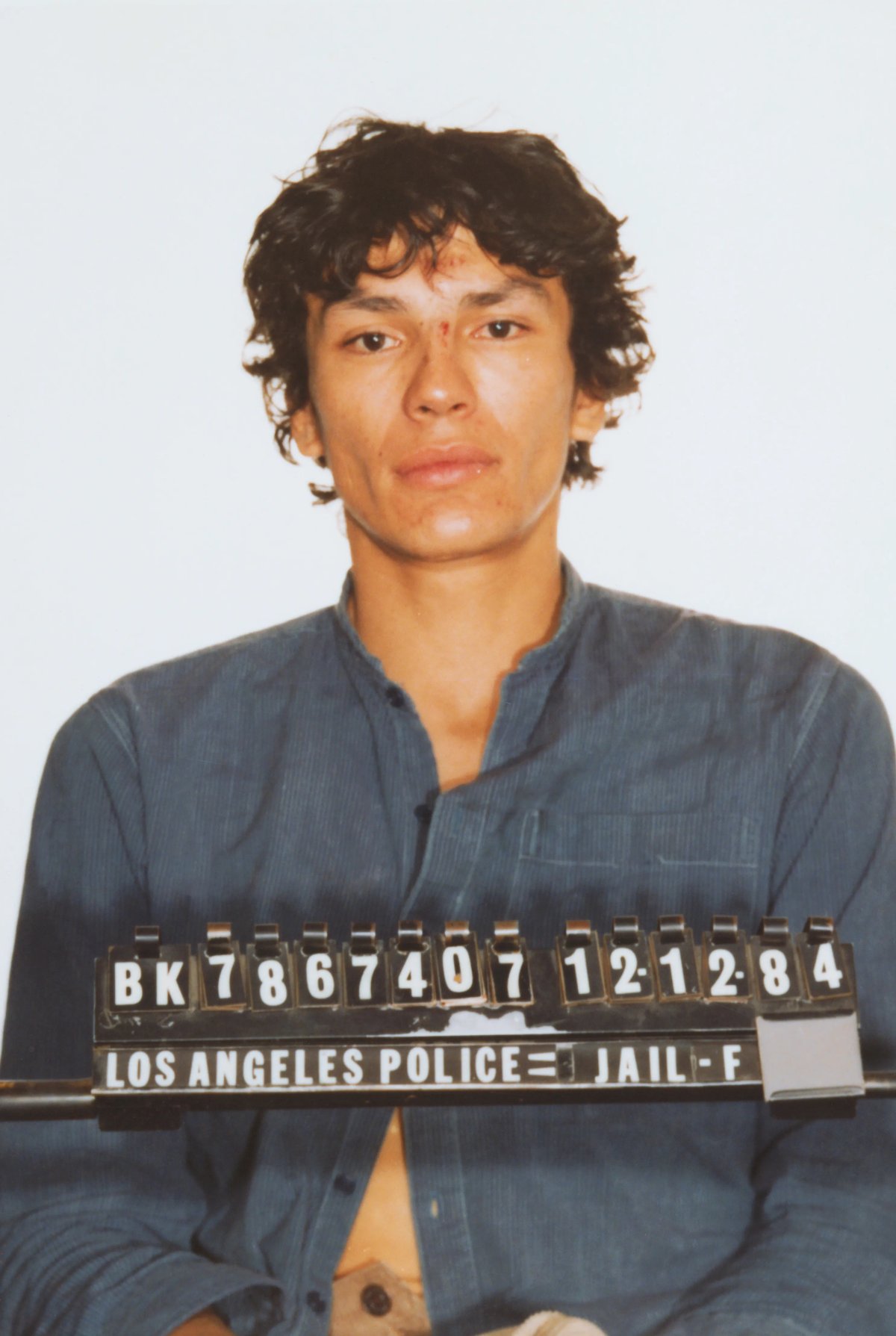
On the morning of August 31, 1985, law enforcement released Ramirez’s 1984 booking photograph and criminal dossier to television stations and newspapers under banner headlines: ‘NIGHT STALKER IDENTIFIED’. Unaware that his photograph had saturated every news broadcast, Ramirez arrived at the Greyhound bus station in downtown Los Angeles on a morning bus from Tucson, Arizona, where he had visited his brother.
Ramirez walked into a local bodega on East Olympic Boulevard, where terrified patrons recognized his gaunt face and pointed at the morning newspapers shouting ‘¡El Matador!’. Ramirez fled in panic, running through alleyways into a residential neighborhood in East Los Angeles.
On East Hubbard Street, Ramirez attempted to carjack an automobile belonging to resident Faustino Pinon. Alerted by screams, a group of local Hispanic neighbors and auto mechanics—armed with steel pipes, tire irons, and wooden fence posts—chased Ramirez down, tackled him to the asphalt, and subdued him until LAPD patrol units arrived to take the bloodied Night Stalker into custody.
The dramatic community capture averted what could have been months of additional bloodshed, showcasing the powerful synergy between rapid mass media dissemination and public vigilance.
The Trial, Satanic Outbursts & San Quentin Death Row
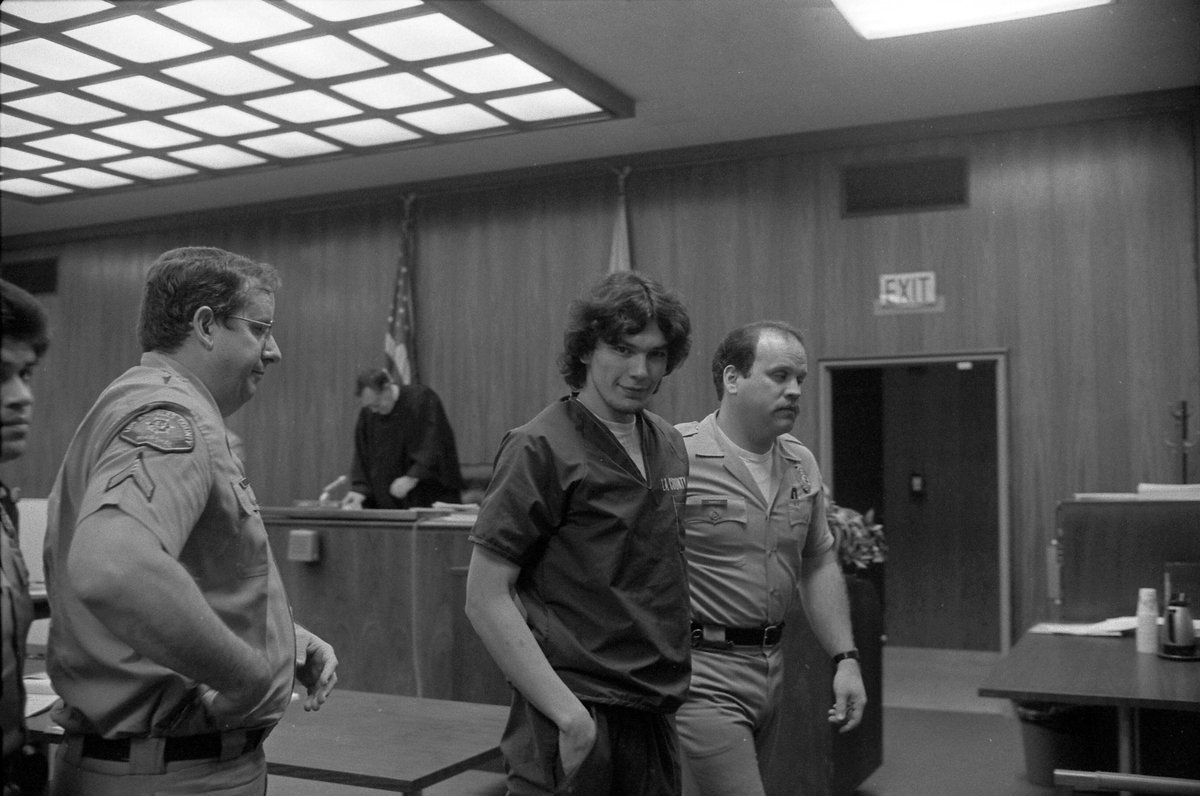
The trial of Richard Ramirez began in January 1989 at the Los Angeles County Superior Court before Judge Michael Tynan. Deputized prosecutors Phil Halpin and Alan Yochelson presented an unassailable evidentiary fortress: nineteen latent fingerprints, dozens of matching Avia shoe impressions, ballistics matches from five handguns, and eyewitness identifications from surviving victims.
Ramirez disrupted proceedings with bizarre satanic outbursts, displaying a pentagram drawn in blood on his palm and shouting ‘Hail Satan!’ in open court. On September 20, 1989, after a fourteen-month trial, the jury convicted Ramirez of thirteen counts of murder, five attempted murders, eleven sexual assaults, and fourteen burglaries, sentencing him to death in the gas chamber.
Ramirez spent twenty-four years on death row at San Quentin State Prison before dying of B-cell lymphoma and liver failure on June 7, 2013, at age fifty-three. The Night Stalker investigation established computerized AFIS fingerprint searches as standard global criminalistics protocol.
The trial remains one of the longest and most costly capital prosecutions in California history, establishing crucial legal precedents on courtroom security, witness intimidation safeguards, and multi-incident joinder rules.

Chronological Case Timeline
| Date / Milestone | Investigative Development | Forensic / Evidentiary Significance |
|---|---|---|
| June 28, 1984 | Jennie Vincow murdered in Glassell Park, LA | First official Night Stalker homicide scene |
| March 17, 1985 | Rosemead and Monterey Park double attacks | Detectives isolate size 11 1/2 Avia model 445 footprints |
| August 25, 1985 | Stolen 1976 Toyota station wagon recovered | Latent thumbprint lifted from interior rearview mirror |
| August 28, 1985 | NEC AFIS identifies Richard Ramirez | Historic first computerized fingerprint database identification |
| August 31, 1985 | Ramirez captured by East LA citizens | Apprehended on Hubbard Street following televised manhunt |
| September 20, 1989 | Jury convicts Ramirez on 43 felony counts | Sentenced to death; receives 19 consecutive death sentences |
| June 7, 2013 | Richard Ramirez dies on death row | Succumbs to lymphoma at age 53 at San Quentin State Prison |
Frequently Asked Questions: Forensic & Legal Review
How did the AFIS computer system catch Richard Ramirez?
After detectives recovered a stolen Toyota station wagon used by the Night Stalker in Mission Viejo, criminalists lifted a latent thumbprint from the rearview mirror. Submitted to the newly installed NEC Automated Fingerprint Identification System (AFIS), the database scanned 1.8 million records in minutes, identifying Richard Ramirez.
What unique footwear evidence was linked to the Night Stalker?
Detectives isolated geometric footwear impressions left in dust and blood belonging to a size 11 1/2 Avia Model 445 aerobic sneaker. Manufacturer records confirmed that only one pair of that specific size and model had been shipped to a retail store in southern California, matching Ramirez’s shoe size.
How was Richard Ramirez finally apprehended?
On August 31, 1985, hours after police released his mugshot to the media, Ramirez returned to Los Angeles on a bus. Recognized in a convenience store, he fled to East Hubbard Street and attempted a carjacking. Local residents and mechanics pursued him with tire irons and restrained him until police arrived.