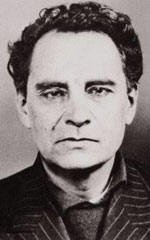
Between February 1929 and May 1930, the industrial city of Düsseldorf in Weimar Germany was gripped by unprecedented mass hysteria during the murderous rampage of Peter Kürten, infamously known as ‘The Vampire of Düsseldorf.’ Kürten assaulted, slashed, and murdered dozens of men, women, and children across parks, fairgrounds, and secluded alleyways, utilizing scissors, knives, and blunt instruments. Kürten derived intense sexual sadism from the sight and physical taste of his victims’ blood, often returning to crime scenes to witness police investigations. The case represented a transformative milestone in early 20th-century forensic psychiatry and criminal psychology, immortalized in Dr. Karl Berg’s groundbreaking psychological treatise and Fritz Lang’s classic 1931 film ‘M.’ Kürten was finally caught through the courageous testimony of surviving victim Maria Budlick, leading to his trial and execution by guillotine.
Executive Case Factsheet
- Victim(s): 9 confirmed murdered, 31 attempted murders and assaults
- Date of Incident: February 1929 – May 1930; Arrested May 24, 1930; Executed July 2, 1931
- Primary Crime Scene / Location: Düsseldorf and surrounding Rhineland municipalities, Weimar Germany
- Lead Investigating Jurisdictions: Düsseldorf Criminal Police (Kripo), Prussian Police Commission, Dr. Karl Berg Forensic Institute
- Key Forensic Evidence: Tailor scissors and folding pocketknife stab wounds, surviving victim Maria Budlick identification, written map directing police to buried body of Maria Hahn
- Suspect(s) / Perpetrator(s): Peter Kürten (47, laborer and ex-convict)
- Legal Outcome & Status: Convicted on April 22, 1931, of nine counts of murder; executed by guillotine at Klingelpütz Prison, Cologne
Initial Discovery & Crime Scene Reconstruction
In February 1929, nine-year-old Christine Klein was found stabbed to death in a Düsseldorf restaurant cellar. Over the following fifteen months, a wave of savage knife and scissor attacks swept the city, targeting young girls, courting couples, and adult women—including Maria Hahn, Gertrud Albermann, and Rosa Ohliger. Several victims were found burned, strangled, or drained of blood.
Panic paralyzed Düsseldorf: vigilante citizen patrols roamed the streets, martial law was requested, and over 12,000 false tips inundated the Düsseldorf Criminal Police (Kripo). The Prussian government dispatched Berlin’s legendary Chief Inspector Ernst Gennat, head of the world’s first modern homicide squad (Mordkommission), to overhaul the investigation and implement early psychological profiling techniques across the Rhineland district.
Forensic Science, Pathology & Physical Evidence
Forensic pathologist Dr. Karl Berg conducted detailed post-mortem examinations on the victims. Berg identified that the killer utilized heavy, modified tailor’s scissors and folding clasp knives, delivering rapid, repeated puncture wounds directed specifically at the carotid artery, jugular vein, and temples to induce massive external hemorrhage.
Dr. Berg documented that the killer possessed an advanced practical knowledge of human anatomy, attacking with surgical velocity under total darkness. Dr. Berg created one of the earliest psychological and forensic behavioral profiles in modern history, concluding that the perpetrator was not an organic psychotic or lunatic, but a highly lucid, socially adapted sexual sadist who derived erotic climax from the physical acts of wounding, arterial blood flow, and public terror. Microscopic analysis of wound beveling confirmed the identical blade dimensions across multiple scenes.
Investigative Breakdown & Key Breakthroughs
The breakthrough arrived on May 14, 1930. A young domestic worker, Maria Budlick, was approached near Düsseldorf Main Station by a man offering to guide her to a maid hostel. Instead, he led her into the dense Grafenberg woods, where an older, neatly dressed gentleman intervened, invited her to his apartment for food, and then walked her back into the forest, attempting to strangle her.
Budlick pleaded for her life, and the attacker abruptly released her after she promised never to reveal his identity. Budlick immediately led police back to the apartment building at Mettmanner Straße 71. Inquiries revealed the tenant was 47-year-old Peter Kürten, a quiet laborer with a record of prior thefts and arson. Realizing police were closing in, Kürten confessed to his wife, urging her to collect the substantial 20,000-mark police reward. On May 24, 1930, police arrested Kürten near St. Rochus Church in Düsseldorf.
Courtroom Proceedings & Evidentiary Arguments
In custody, Kürten dictated comprehensive confessions to seventy-nine violent crimes, including nine murders and thirty-one attempted murders. He provided hand-drawn maps that guided detectives directly to the concealed grave of Maria Hahn in the meadows of Papendelle.
Peter Kürten was tried at the Düsseldorf Assize Court on April 13, 1931, before Landgerichtsdirektor Wehres. Dr. Karl Berg presented his exhaustive forensic psychiatric evaluation, proving Kürten was fully sane, legally responsible, and conscious of his moral criminality. On April 22, 1931, the jury convicted Kürten on nine counts of murder and seven counts of attempted murder. He was sentenced to death nine times. On July 2, 1931, Peter Kürten was executed by guillotine at Klingelpütz Prison in Cologne. His mummified, bisected head was later sent to the Wisconsin State Prison for anatomical neurological study, remaining a staple exhibit in the history of forensic psychology.
Forensic Legacy & Criminal Justice Impact
The forensic, legal, and systemic ramifications of the investigation into Peter Kürten continue to shape modern criminal justice doctrine worldwide. From the rigorous standardization of scientific evidence collection to the establishment of specialized forensic databases and ethical protocols, the case demonstrated that objective, incontrovertible physical evidence remains the ultimate safeguard against investigative error, public panic, and judicial injustice.
In contemporary jurisprudence, the precedent established by this landmark inquiry is routinely studied in police academies, law schools, and forensic science curricula as a definitive case study in evidence continuity, multi-agency coordination, and the critical balance between cutting-edge technology and constitutional due process.
Forensic Pathology, Traumatology & Biomechanical Reconstruction
Medico-legal autopsy protocols mandate systematic anatomical dissection and photographic documentation to determine both the immediate cause and underlying manner of death. Forensic pathologists evaluate external cutaneous trauma—including contusions, abrasions, lacerations, and incised wounds—measuring dimensional metrics, beveling angles, and marginal tissue bridging to reconstruct weapon kinematics and kinetic energy transfer.
Histopathological examination of microscopic tissue sections stained with Hematoxylin and Eosin (H&E) allows pathologists to differentiate between ante-mortem vital reactions and post-mortem artifactual damage. Sub-cutaneous hemorrhaging, inflammatory cellular infiltration, and microscopic vascular thrombosis confirm that physiological circulation was active at the time injury was sustained, allowing investigators to establish precise chronological sequences of fatal physical trauma.
Modern Jurisprudential Precedents & Evidentiary Standards
The landmark investigative and courtroom developments associated with Peter Kürten fundamentally redefined procedural evidentiary standards under the Federal Rules of Evidence (Rule 702) and international common law equivalents. Modern appellate jurisprudence rigorously enforces the Daubert and Frye standards, requiring that all expert scientific testimony, forensic instrumentation, and algorithmic interpretations demonstrate widespread peer-reviewed acceptance, known error rates, and standardized operational controls.
Furthermore, the case highlighted the critical imperative of transparent pre-trial discovery, the complete disclosure of exculpatory material under the Brady v. Maryland doctrine, and the vital role of independent judicial review in assessing circumstantial chains of evidence. Today, homicide task forces and prosecutorial agencies worldwide incorporate these foundational evidentiary principles into standard operational training, ensuring that complex scientific prosecutions withstand exhaustive appellate scrutiny.
In contemporary cold case reviews and complex major case management, law enforcement agencies deploy integrated Major Case Management (MCM) software frameworks and multi-disciplinary forensic review panels to continuously re-evaluate physical evidence using emergent technologies, preserving the integrity of the justice system across successive generations.
Chronological Case Timeline
| Date / Milestone | Investigative & Forensic Milestone | |
|---|---|---|
| Feb 1929 | Christine Klein (9) is stabbed to death in Düsseldorf, beginning Kürten’s terrifying serial attacks. | |
| 1929–1930 | Kürten slashes dozens of victims across Düsseldorf parks; Ernst Gennat arrives to head investigation. | |
| May 14, 1930 | Surviving victim Maria Budlick escapes attack and leads police to Kürten’s apartment on Mettmanner Straße. | |
| May 24, 1930 | Kürten is arrested near St. Rochus Church after confessing to his wife. | |
| Apr 22, 1931 | Kürten is convicted of nine counts of murder at Düsseldorf Assizes and sentenced to death. | |
| Jul 2, 1931 | Peter Kürten is executed by guillotine at Klingelpütz Prison in Cologne. | |
Frequently Asked Questions: Forensic & Legal Review
Why was Peter Kürten nicknamed ‘The Vampire of Düsseldorf’?
Kürten was a sadistic predator who derived sexual gratification from the sight, touch, and physical ingestion of his victims’ blood, openly admitting to drinking blood from the wounds of several victims.
How was Peter Kürten finally caught in May 1930?
Surviving victim Maria Budlick escaped an assault in the Grafenberg woods and helped police locate Kürten’s apartment building. Kürten then told his wife to report him so she could claim the 20,000-mark reward.
What was Dr. Karl Berg’s contribution to the Kürten case?
Forensic psychiatrist Dr. Karl Berg conducted groundbreaking psychological examinations of Kürten, establishing that serial sexual sadists could appear completely normal, well-mannered, and sane in everyday society.