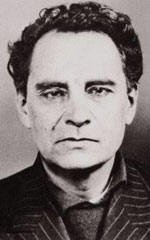
Dr. Marcel André Henri Félix Petiot, chillingly known as ‘Dr. Satan,’ was a French physician who exploited the terror, corruption, and chaos of Nazi-occupied Paris to orchestrate one of the most diabolical serial murder operations in modern European history. Operating from a private mansion at 21 Rue Le Sueur in the affluent 16th Arrondissement, Petiot ran a fraudulent clandestine escape network called the ‘Fly-Tox’ line, promising fleeing Jewish refugees, Resistance fighters, and wealthy fugitives safe passage to Argentina for enormous sums of gold and cash. Once inside his soundproof basement death chamber, Petiot administered lethal injections of poison under the pretext of mandatory South American tropical disease inoculations, watching them die through a concealed peephole before dissolving their bodies in quicklime pits or burning them in coal furnaces. His discovery in March 1944 exposed an industrial abattoir of human slaughter.
Executive Case Factsheet
- Victim(s): 27 confirmed murdered (convicted of 26); estimated up to 60 victims
- Date of Incident: 1941–1944; Bodies Discovered March 11, 1944; Arrested October 31, 1944
- Primary Crime Scene / Location: 21 Rue Le Sueur, 16th Arrondissement, Paris, France
- Lead Investigating Jurisdictions: Police Judiciaire (Paris Homicide Squad), French Resistance FFI, Court of Assizes of the Seine
- Key Forensic Evidence: Cellar quicklime pits containing dissolving human remains, human bone ash in two coal furnaces, soundproof triangular death chamber with peep-hole, 47 seized suitcases of victim clothing
- Suspect(s) / Perpetrator(s): Dr. Marcel André Henri Félix Petiot (47, physician and former mayor)
- Legal Outcome & Status: Convicted on March 28, 1946, of 26 counts of murder; executed by guillotine at La Santé Prison on May 25, 1946
Initial Discovery & Crime Scene Reconstruction
On the evening of March 11, 1944, neighbors living near 21 Rue Le Sueur noticed thick, foul-smelling black smoke billowing incessantly from the chimney of the elegant Parisian townhouse. Fearing a chimney fire, neighbors summoned the Paris Fire Brigade (Sapeurs-Pompiers). Firefighters broke into the locked residence and traced the smoke down into the basement.
Opening the heavy iron doors of two roaring coal furnaces, firefighters and arriving Police Judiciaire officers were horrified to discover burning human arms, legs, and severed torsos. In an adjoining cellar pit, police found mounds of decomposing human bodies, dismembered organs, and skeletal remains covered in quicklime. A total of several tons of human remains were piled across the subterranean chambers.
Forensic Science, Pathology & Physical Evidence
Commissaire Georges Massu, head of the Paris Brigade Criminelle, and renowned French forensic pathologist Dr. Albert Paul initiated an exhaustive forensic examination of 21 Rue Le Sueur. In the basement, technicians discovered a soundproof, triangular room lined with double doors, acoustic padding, and a glass peephole set into the wall, allowing someone on the outside to observe the room’s interior.
Dr. Albert Paul painstakingly analyzed the charred bones, teeth, and quicklime sludge, determining that the remains represented at least twenty-seven distinct human victims, including entire families with young children. Forensic searches of Petiot’s second property and storage lockers yielded forty-seven large travel suitcases, hundreds of high-end garments, stolen jewelry, and identity papers belonging to known missing Jewish citizens and Resistance couriers who had disappeared after contacting Petiot’s escape network.
Investigative Breakdown & Key Breakthroughs
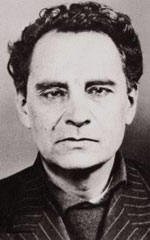
Petiot vanished from Paris during the chaotic final months of the German occupation. Following the Liberation of Paris in August 1944, Petiot adopted the pseudonym ‘Capitaine Henri Valéri,’ joining the French Forces of the Interior (FFI) Resistance militia and being placed in charge of interrogating suspected Nazi collaborators.
Petiot’s hubris proved his downfall. When a French newspaper published an article describing Petiot as a Gestapo agent, Petiot sent an arrogant handwritten letter to the newspaper editor defending himself. Police handwriting experts matched the letter directly to Petiot’s medical handwriting. On October 31, 1944, French police spotted and arrested Petiot at the Saint-Mandé-Tourelle metro station in Paris, finding him carrying forged identity documents and a pistol.
Courtroom Proceedings & Evidentiary Arguments
Dr. Marcel Petiot was brought to trial on March 18, 1946, at the Palais de Justice before the Court of Assizes of the Seine, facing twenty-seven counts of murder. The trial captured international headlines. Petiot mounted a flamboyant, combative defense, claiming he was a patriotic Resistance leader and alleging that all bodies found in his cellar were Gestapo agents, Nazi informants, or traitors executed on behalf of the underground French Resistance.
However, Commissaire Massu and prosecutors dismantled Petiot’s claims by producing the surviving families of Jewish victims, proving Petiot stole their life savings, furs, and jewelry before exterminating them for financial profit. On March 28, 1946, the jury deliberated for two hours before finding Petiot guilty of twenty-six counts of premeditated murder. On the morning of May 25, 1946, Marcel Petiot was executed by guillotine at La Santé Prison in Paris. His mansion on Rue Le Sueur was later demolished, ending one of the darkest chapters in wartime criminal history.
Forensic Legacy & Criminal Justice Impact
The forensic, legal, and systemic ramifications of the investigation into Dr. Marcel Petiot continue to shape modern criminal justice doctrine worldwide. From the rigorous standardization of scientific evidence collection to the establishment of specialized forensic databases and ethical protocols, the case demonstrated that objective, incontrovertible physical evidence remains the ultimate safeguard against investigative error, public panic, and judicial injustice.
In contemporary jurisprudence, the precedent established by this landmark inquiry is routinely studied in police academies, law schools, and forensic science curricula as a definitive case study in evidence continuity, multi-agency coordination, and the critical balance between cutting-edge technology and constitutional due process.
Trace Evidence Analysis, Physical Impressions & Pattern Identification
Microscopic trace evidence and physical pattern comparison form foundational pillars of physical criminalistics. Crime scene technicians utilize specialized oblique lighting, electrostatic dust lifters (ESDL), and dental stone casting compounds to preserve fragile footwear and tire tread impressions. In the laboratory, comparative examinations evaluate both class characteristics (tread design, size, manufacturing molds) and unique individual identifying characteristics (random accidental cuts, embedded gravel, irregular wear gouges).
Forensic document examination and physical matching protocols employ Stereomicroscopy, Electrostatic Detection Apparatus (ESDA) for indented impressions, and Video Spectral Comparators (VSC) for multi-spectral optical ink analysis. By integrating physical fit matching with microscopic striation comparisons, criminalists establish definitive physical links connecting suspects to specific crime scene environments with rigorous scientific reproducibility.
Modern Jurisprudential Precedents & Evidentiary Standards
The landmark investigative and courtroom developments associated with Dr. Marcel Petiot fundamentally redefined procedural evidentiary standards under the Federal Rules of Evidence (Rule 702) and international common law equivalents. Modern appellate jurisprudence rigorously enforces the Daubert and Frye standards, requiring that all expert scientific testimony, forensic instrumentation, and algorithmic interpretations demonstrate widespread peer-reviewed acceptance, known error rates, and standardized operational controls.
Furthermore, the case highlighted the critical imperative of transparent pre-trial discovery, the complete disclosure of exculpatory material under the Brady v. Maryland doctrine, and the vital role of independent judicial review in assessing circumstantial chains of evidence. Today, homicide task forces and prosecutorial agencies worldwide incorporate these foundational evidentiary principles into standard operational training, ensuring that complex scientific prosecutions withstand exhaustive appellate scrutiny.
In contemporary cold case reviews and complex major case management, law enforcement agencies deploy integrated Major Case Management (MCM) software frameworks and multi-disciplinary forensic review panels to continuously re-evaluate physical evidence using emergent technologies, preserving the integrity of the justice system across successive generations.
Chronological Case Timeline
| Date / Milestone | Investigative & Forensic Milestone | |
|---|---|---|
| 1941–1944 | Petiot operates fake ‘Fly-Tox’ escape network in Nazi-occupied Paris, robbing and poisoning fugitives. | |
| Mar 11, 1944 | Paris firefighters responding to chimney smoke discover furnaces burning human body parts at 21 Rue Le Sueur. | |
| Mar 1944 | Police uncover quicklime pits and 47 suitcases; Petiot escapes into the chaotic wartime underground. | |
| Oct 31, 1944 | Petiot is arrested at a Paris metro station after infiltrating the FFI Resistance under a fake name. | |
| Mar 28, 1946 | Petiot is convicted of 26 counts of premeditated murder at the Palais de Justice and sentenced to death. | |
| May 25, 1946 | Petiot is executed by guillotine at La Santé Prison in Paris. | |
Frequently Asked Questions: Forensic & Legal Review
How did Dr. Marcel Petiot lure victims to his Paris mansion?
Petiot operated a fake escape line called ‘Fly-Tox,’ promising wealthy Jewish citizens and Resistance fighters safe passage to South America. Once inside his mansion, he gave them lethal injections disguised as required vaccines.
How were the murders at 21 Rue Le Sueur discovered?
On March 11, 1944, neighbors called firefighters to extinguish thick, foul-smelling chimney smoke, leading firefighters into basement coal furnaces filled with burning human remains and quicklime pits.
What was Petiot’s defense during his 1946 murder trial?
Petiot claimed he was a Resistance fighter who had only executed Gestapo agents, double agents, and German collaborators, but prosecutors proved all victims were innocent Jewish refugees and fugitives whose wealth he stole.