
The disappearance and tragic death of two-year-old Caylee Anthony in the summer of 2008 triggered one of the most polarizing and media-saturated legal dramas in modern forensic jurisprudence. The Caylee Anthony murder trial brought pioneering, cutting-edge chemical gas chromatography, forensic entomology, and digital forensics into the Orange County Courthouse in Orlando, Florida. While the state attempted to reconstruct a sinister timeline of neglect and calculated homicide involving chloroform and duct tape, the defense countered with allegations of accidental drowning and generational trauma, culminating in a historic verdict that stunned legal analysts across the globe.
Executive Case Factsheet
- Victim(s): Caylee Marie Anthony, age 2
- Date of Incident: June 16, 2008 (Reported missing July 15, 2008)
- Primary Crime Scene / Location: Orlando, Orange County, Florida
- Lead Investigating Jurisdictions: Orange County Sheriff’s Office, FBI, Florida Department of Law Enforcement
- Key Forensic Evidence: Chloroform chemical signatures in vehicle trunk, duct tape across mandible, computer search history for ‘foolproof suffocation’, forensic botanical and entomological decomposition markers
- Suspect(s) / Perpetrator(s): Casey Marie Anthony (mother)
- Legal Outcome & Status: Acquitted of first-degree murder, aggravated manslaughter, and child abuse in July 2011; convicted on four misdemeanor counts of lying to law enforcement
The 31-Day Delay and the Initial 911 Distress Calls
The investigation into Caylee Anthony’s disappearance began under extraordinarily suspicious circumstances on the evening of July 15, 2008. Cindy Anthony, Caylee’s maternal grandmother, placed three frantic 911 telephone calls to the Orange County Sheriff’s Office from the family residence on Hopespring Drive in Orlando. During the third call, Cindy made a chilling declaration that would define the foundational theory of the prosecution: she stated that she had finally tracked down her twenty-two-year-old daughter, Casey Anthony, and discovered that Caylee had been missing for thirty-one days. Furthermore, Cindy informed dispatchers that Casey’s Pontiac Sunfire automobile smelled unmistakably like a decomposing human corpse.
When interviewed by lead investigator Yuri Melich, Casey Anthony spun a convoluted narrative claiming that on June 9, 2008, she had left Caylee with a babysitter named Zenaida Fernandez-Gonzalez (whom she referred to as ‘Zanny the Nanny’) at the Sawgrass Apartments. Casey claimed that upon returning, both the babysitter and Caylee were gone, and that she had spent the subsequent month conducting her own clandestine investigation out of sheer terror. Detectives quickly determined that the apartment was vacant, the woman named Zenaida Gonzalez had never met the family, and Casey’s purported employment as an event coordinator at Universal Studios was an outright fabrication after she walked investigators directly to an office building and admitted she had been fired years prior.
Deputies immediately arrested Casey Anthony on charges of child neglect, false statements to law enforcement, and obstruction of justice. Community volunteers, Texas EquuSearch, and hundreds of law enforcement officers descended upon Orange County to search retention ponds, wooded lots, and wetlands surrounding the Anthony residence, while Casey remained largely uncooperative in detention.

Forensic Discovery in Suburban Woods and Skeletal Reconstruction
On December 11, 2008, Roy Kronk, a utility meter reader who had previously alerted authorities to suspicious activity in the area, discovered human skeletal remains in a heavily wooded, waterlogged lot just blocks away from the Anthony family home on Suburban Drive. The remains were partially submerged in muck and contained within a laundry bag inside a canvas bag, surrounded by Winnie the Pooh blanket fragments matching Caylee’s bedroom bedding.
Chief Medical Examiner Dr. Jan Garavaglia and forensic anthropologist Dr. John Schultz managed the meticulous recovery of the scattered bones. Crucially, three pieces of heavy-duty duct tape were recovered still attached to the child’s skull, covering the lower facial bones and mandible. Dr. Garavaglia classified the death as a homicide by undetermined means, emphasizing that the placement of duct tape over the airway and the concealing of remains in refuse bags were unequivocal indicators of intentional, homicidal violence.
Forensic botanists examined root growth extending through the vertebrae and clothing, confirming that the remains had rested in that precise wooded location since the summer months of 2008, directly aligning with the initial timeline of Caylee’s disappearance and debunking theories of late-stage body dumping.
The Chemistry of Death: Chloroform and Trunk Air Sampling
The prosecution’s scientific strategy hinged on unprecedented forensic chemistry presented by Dr. Arpad Vass of the Oak Ridge National Laboratory. Dr. Vass utilized gas chromatography-mass spectrometry (GC-MS) and an experimental cryogenic trap device to capture and analyze air samples extracted from the trunk of Casey’s Pontiac Sunfire. His analysis revealed shockingly high concentrations of chloroform—a potent chemical anesthetic—alongside common volatile fatty acid compounds associated with human decomposition, such as putrescine and cadaverine.
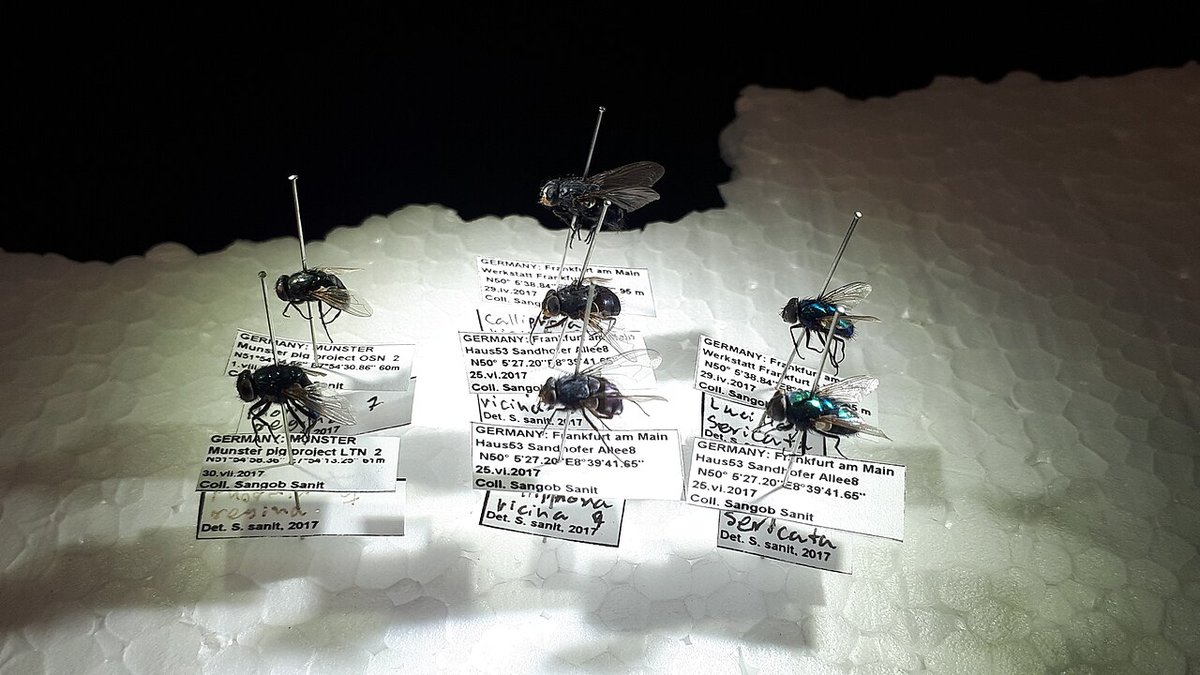
Complementing the chemical findings, FBI forensic entomologists Dr. Neal Haskell analyzed fly larvae and insect specimens recovered from the vehicle’s spare tire well and the Suburban Drive recovery site. Dr. Haskell testified that early-colonizing coffin flies (Megaselia scalaris) were present in the trunk debris, indicating that a decomposing human body had been stored within the trunk for several days before being relocated into the woods.
Furthermore, digital forensic examiners from the Orange County Sheriff’s Office recovered browser search histories from the Anthony family desktop computer. The records demonstrated searches for ‘chloroform’, ‘how to make chloroform’, ‘neck breaking’, and ‘foolproof suffocation’, performed during hours when Casey Anthony was logged into her personal user accounts and present in the home alone.
The Battle in the Courtroom: State vs. Jose Baez
The capital murder trial began in May 2011 before Judge Belvin Perry Jr. Assistant State Attorneys Linda Drane Burdick and Jeff Ashton built their case around Casey’s lavish party lifestyle, tattoo sessions displaying ‘Bella Vita’ (Beautiful Life) just weeks after Caylee vanished, and calculated deception. The prosecution characterized Casey as a young woman who murdered her child to escape the burdens of motherhood and indulge in uninhibited nightlife with her boyfriend.
In a dramatic opening statement, lead defense attorney Jose Baez delivered a shocking counter-theory: he claimed that Caylee had not been murdered, but had accidentally drowned in the family’s above-ground swimming pool on June 16, 2008. Baez alleged that Casey’s father, George Anthony, discovered the child’s body and orchestrated a cover-up to protect Casey, while also subjecting Casey to years of psychological abuse. George Anthony passionately took the witness stand to deny all allegations under oath.
The defense team vigorously attacked the state’s forensic science under Florida’s Frye standard for scientific admissibility. They called expert toxicologists who argued that Dr. Vass’s air sampling methodology was experimental, unstandardized, and prone to false positives from common household cleaning agents. Baez emphasized that no direct DNA or fingerprints from Casey were recovered on the duct tape, leaving reasonable doubt regarding the exact mechanism and perpetrator of the crime.

The Verdict, Public Outcry, and Lasting Legal Transformations
On July 5, 2011, after thirty-three days of exhaustive testimony and less than eleven hours of jury deliberation, the twelve-person jury returned a verdict of not guilty on the charges of first-degree murder, aggravated child abuse, and aggravated manslaughter of a child. Casey Anthony was convicted solely on four misdemeanor counts of providing false information to a law enforcement officer. Having already served substantial time in pre-trial detention, she was released from custody shortly thereafter on July 17, 2011.
The acquittal sparked intense nationwide outrage, leading to widespread debates regarding circumstantial evidence thresholds, jury sequester protocols, and trial-by-media phenomena. The case catalyzed the passage of ‘Caylee’s Law’ across multiple US states, which establishes felony criminal penalties for parents or guardians who fail to report a child’s disappearance or death within designated, mandatory timeframes (typically 24 to 48 hours).
In forensic science, the case prompted extensive academic reviews regarding the legal reliability and validation standards required for novel forensic decomposition analysis and canine cadaver alert corroboration in capital prosecutions.
Chronological Case Timeline
| Date / Milestone | Investigative Development | Forensic / Evidentiary Significance |
|---|---|---|
| June 16, 2008 | Caylee Anthony last seen alive | Child disappears; Casey begins 31 days of partying and lying |
| July 15, 2008 | Cindy Anthony places 911 calls | Reports Caylee missing and smells human decomposition in car trunk |
| July 16, 2008 | Casey Anthony arrested for child neglect | Fabricated ‘Zanny the Nanny’ and Universal Studios job collapsed |
| December 11, 2008 | Skeletal remains discovered on Suburban Drive | Utility worker Roy Kronk finds remains wrapped in bags with duct tape |
| May 24, 2011 | Opening statements in capital murder trial | Defense claims accidental pool drowning and cover-up |
| July 5, 2011 | Jury delivers Not Guilty murder verdict | Acquitted of murder and manslaughter; convicted of lying to police |
Frequently Asked Questions: Forensic & Legal Review
What was the forensic controversy surrounding Dr. Arpad Vass’s air sampling evidence?
Dr. Arpad Vass utilized an experimental cryogenic GC-MS device to detect chemical signatures of decomposition and elevated chloroform in the trunk. The defense challenged this evidence, arguing the methodology was novel, lacked peer-reviewed baseline standards for vehicle trunks, and could not conclusively prove a corpse was present rather than household chemicals.
How did the duct tape on Caylee’s skull impact the medical examiner’s findings?
Dr. Jan Garavaglia determined the death was a homicide because three pieces of duct tape were placed across the jaw, nose, and mouth area, and the body was concealed in refuse bags. Garavaglia testified that duct tape would not be placed over a child’s airway during a genuine accidental drowning.
What is ‘Caylee’s Law’ and what legal change did it create?
Prompted by the 31-day delay in reporting Caylee missing, several US states enacted ‘Caylee’s Law’, making it a severe felony for a parent or caregiver to fail to report a child missing within 24 to 48 hours or fail to report a child’s death within two hours.
Why did the jury acquit Casey Anthony of the homicide charges?
Jurors stated in post-trial interviews that while they suspected Casey was involved, the prosecution failed to prove beyond a reasonable doubt the exact cause and mechanism of death, or definitively link Casey’s physical DNA to the duct tape recovered from the crime scene.