
On the morning after Christmas in 1996, the brutal slaying of six-year-old beauty queen JonBenét Ramsey in Boulder, Colorado, ignited one of the most perplexing and heavily scrutinized cold case homicides in American history. The JonBenet Ramsey murder investigation became synonymous with catastrophic initial crime scene contamination, sensationalized media speculation, and intense forensic debates. From the bizarre three-page handwritten ransom note discovered on the back staircase to the microscopic foreign male DNA profile embedded within the victim’s clothing, forensic scientists and federal profilers have spent nearly three decades attempting to unravel the enigma of the Ramsey basement.
Executive Case Factsheet
- Victim(s): JonBenét Patricia Ramsey, age 6
- Date of Incident: December 25–26, 1996
- Primary Crime Scene / Location: Boulder, Boulder County, Colorado
- Lead Investigating Jurisdictions: Boulder Police Department, Colorado Bureau of Investigation, FBI, Boulder County DA
- Key Forensic Evidence: Unidentified male DNA on waistband and long johns (CODIS profile), handwritten 2.5-page ransom note, pine paintbrush garrote, fractured skull, broken basement window
- Suspect(s) / Perpetrator(s): Unresolved; family exonerated by DA in 2008 based on touch DNA; external intruder theory vs. household staging
- Legal Outcome & Status: Active cold case homicide investigation; 2023 Cold Case Review Team DNA retesting underway
The Christmas Morning Ransom Note and Basement Discovery
At approximately 5:52 a.m. on December 26, 1996, Patsy Ramsey placed a frantic 911 call to the Boulder Police Department, reporting that her six-year-old daughter, JonBenét, had been kidnapped from her second-floor bedroom. Patsy reported finding a lengthy, handwritten three-page ransom note left on the spiral wooden staircase leading to the kitchen. The note, signed by a purported ‘small foreign faction’, demanded the highly specific sum of $118,000—an amount virtually identical to the net Christmas bonus John Ramsey, an executive at Access Graphics, had received earlier that year.
Boulder police officers arrived within minutes but failed to seal the sprawling fifteen-room Tudor residence as an active crime scene. Family friends, neighbors, and ministers were permitted to walk freely throughout the house, cleaning kitchen countertops and inadvertently destroying latent fingerprint and fiber traces. Around 1:00 p.m., Detective Linda Arndt instructed John Ramsey and family friend Fleet White to search the residence for anything unusual.
In a dark, secluded cellar room in the basement—referred to as the ‘wine cellar’—John Ramsey discovered JonBenét’s deceased body covered by a white blanket. She had a piece of black duct tape across her mouth, her wrists were bound with nylon cord, and a homemade garrote fashioned from a broken paintbrush handle and nylon cord was tightly wrapped around her neck. John immediately carried the child’s body upstairs into the living room, further compromising physical evidence before forensic technicians could document the scene in situ.

Forensic Pathology, Autopsy Findings, and Crime Scene Anomalies
The forensic autopsy performed by Boulder County Coroner Dr. John Meyer revealed a catastrophic sequence of physical trauma. JonBenét suffered an eight-and-a-half-inch cranial fracture caused by blunt force impact from an unknown smooth, heavy object (such as a metal flashlight or golf club), resulting in extensive subdural hemorrhaging. The official cause of death was asphyxiation by strangulation associated with severe craniocerebral trauma.
Crucially, Dr. Meyer recovered fragments of a wooden paintbrush from Patsy Ramsey’s art supply kit in the basement, which had been snapped to create the handle of the garrote. Small wood splinters were embedded in the nylon ligature. Autopsy examination also identified pineapple fragments in the victim’s duodenum, indicating she had consumed pineapple shortly before her death. Detectives subsequently discovered a bowl of freshly cut pineapple on the Ramsey dining table bearing fingerprints from JonBenét’s nine-year-old brother, Burke Ramsey, and Patsy Ramsey, directly contradicting parental statements that JonBenét had fallen asleep immediately upon returning from a holiday party.
Additionally, crime scene technicians identified a broken basement window with an exterior grate moved aside and a suitcase positioned beneath the sill, supporting the defense theory of an external intruder entering the subterranean levels of the home.
Forensic Linguistics and Document Analysis of the Ransom Note
The 2.5-page ransom note remains one of the most unusual documents in criminal history. Unlike typical kidnapping demands, which are brief and direct, the Ramsey note spanned several hundred words, containing dramatic rhetorical flourishes, cinematic quotes from films like Speed and Dirty Harry, and specific behavioral instructions. Forensic document examiners from the Colorado Bureau of Investigation, the Secret Service, and the FBI analyzed the handwriting against exemplars from both parents.
Forensic document examiners conclusively excluded John Ramsey as the author of the note. However, analysis of Patsy Ramsey’s handwriting yielded inconclusive results; examiners noted numerous stylistic, grammatical, and structural similarities between Patsy’s known writing samples and the ransom letter, though experts could not definitively prove or eliminate her authorship. The note had been written using a Sharpie pen and a legal pad sourced directly from Patsy’s desk inside the residence, with several preliminary draft pages torn out and discarded.
FBI Behavioral Analysis Unit profilers, including John Douglas and Mark Olshaker, offered divergent views. While some profilers argued the note represented elaborate staging designed to misdirect police away from an internal domestic tragedy, others concluded that an obsessive, predatory intruder wrote the note inside the home while waiting for the family to return.
The Evolution of Touch DNA and the 2008 Exoneration
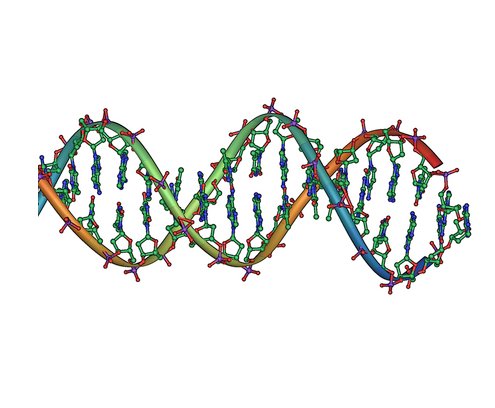
In the early 2000s, revolutionary advancements in forensic genetics transformed the investigation. In 2008, under Boulder County District Attorney Mary Lacy, forensic scientists at Bode Technology applied advanced ‘touch DNA’ (low-template STR profiling) to the waistband of JonBenét’s long johns and underwear. The analysis isolated a complete, unmixed STR DNA profile of an unknown male (designated ‘Male Profile 1’).
This genetic profile matched foreign male DNA previously extracted from blood droplets inside the victim’s underwear in 1997. Crucially, the profile did not match any member of the Ramsey family, law enforcement personnel, or medical examiners. In July 2008, District Attorney Lacy issued an official public letter completely clearing John, Patsy (who had passed away from cancer in 2006), and Burke Ramsey of all suspicion, formally classifying them as victims of an unknown predatory intruder.
The foreign male profile was uploaded into the FBI’s National DNA Index System (CODIS), but nearly two decades of continuous database searches against millions of convicted offenders and arrestees have yielded no definitive match, keeping the identity of the contributor an unsolved mystery.
The 2023 Cold Case Review Team and Modern Investigative Frontiers
In late 2022 and 2023, the Boulder Police Department, in collaboration with the Colorado Cold Case Review Team and independent genetic genealogists, initiated a comprehensive review of all physical evidence. Modern investigative genetic genealogy (IGG) and next-generation sequencing (NGS) technologies—which played pivotal roles in solving cases like the Golden State Killer—are currently being evaluated to generate ancestral SNP profiles from degraded touch samples.
The JonBenét Ramsey homicide remains an enduring case study in the catastrophic risks of initial crime scene mismanagement, the evolution of forensic touch DNA analysis, and the necessity of objective, science-driven cold case methodology. Boulder authorities continue to receive and process hundreds of tips annually, determined to identify the source of the unknown male DNA profile and bring definitive closure to the historic tragedy.
Chronological Case Timeline
| Date / Milestone | Investigative Development | Forensic / Evidentiary Significance |
|---|---|---|
| December 25, 1996 | Ramsey family attends holiday dinner | Last documented sightings of JonBenét alive before returning home |
| December 26, 1996 | Ransom note found; body discovered in basement | Patsy calls 911; John discovers victim in wine cellar hours later |
| December 27, 1996 | Coroner performs forensic autopsy | Determines death caused by skull fracture and garrote asphyxiation |
| December 1997 | Foreign male DNA isolated from underwear | First identification of unknown male biological evidence |
| July 9, 2008 | DA Mary Lacy issues formal exoneration letter | Touch DNA testing on waistband clears Ramsey family members |
| December 2022–2023 | Boulder PD partners with Colorado Cold Case Review Team | Advanced genetic genealogy and NGS retesting initiated on legacy evidence |
Frequently Asked Questions: Forensic & Legal Review
What is the significance of the foreign male DNA profile found on JonBenét’s clothing?
Forensic scientists at Bode Technology isolated an STR profile of an unidentified male from the waistband of the victim’s long johns and bloodstains in her underwear. This profile (Male Profile 1) does not match any Ramsey family member, leading prosecutors in 2008 to formally exonerate the family and pursue an intruder theory.
Why was the crime scene management in 1996 heavily criticized?
Boulder police failed to secure the residence immediately after the kidnapping report. Friends, family, and ministers walked through the home, cleaned kitchen surfaces, and John Ramsey was permitted to search the basement unsupervised, moving the body upstairs and contaminating physical evidence.
What did the forensic autopsy reveal regarding the weapon used in the strangulation?
The coroner documented that a garrote had been fashioned using nylon cord and a broken wooden paintbrush handle sourced from Patsy Ramsey’s art supplies in the basement. The ligature had been twisted tightly around the child’s neck, causing fatal asphyxiation alongside an 8.5-inch cranial fracture.
How is modern investigative genetic genealogy being applied to the case today?
In 2023, the Boulder Police Department and the Colorado Cold Case Review Team announced plans to utilize advanced SNP sequencing and investigative genetic genealogy on the microscopic touch DNA samples to build family trees and identify the unidentified male contributor.