
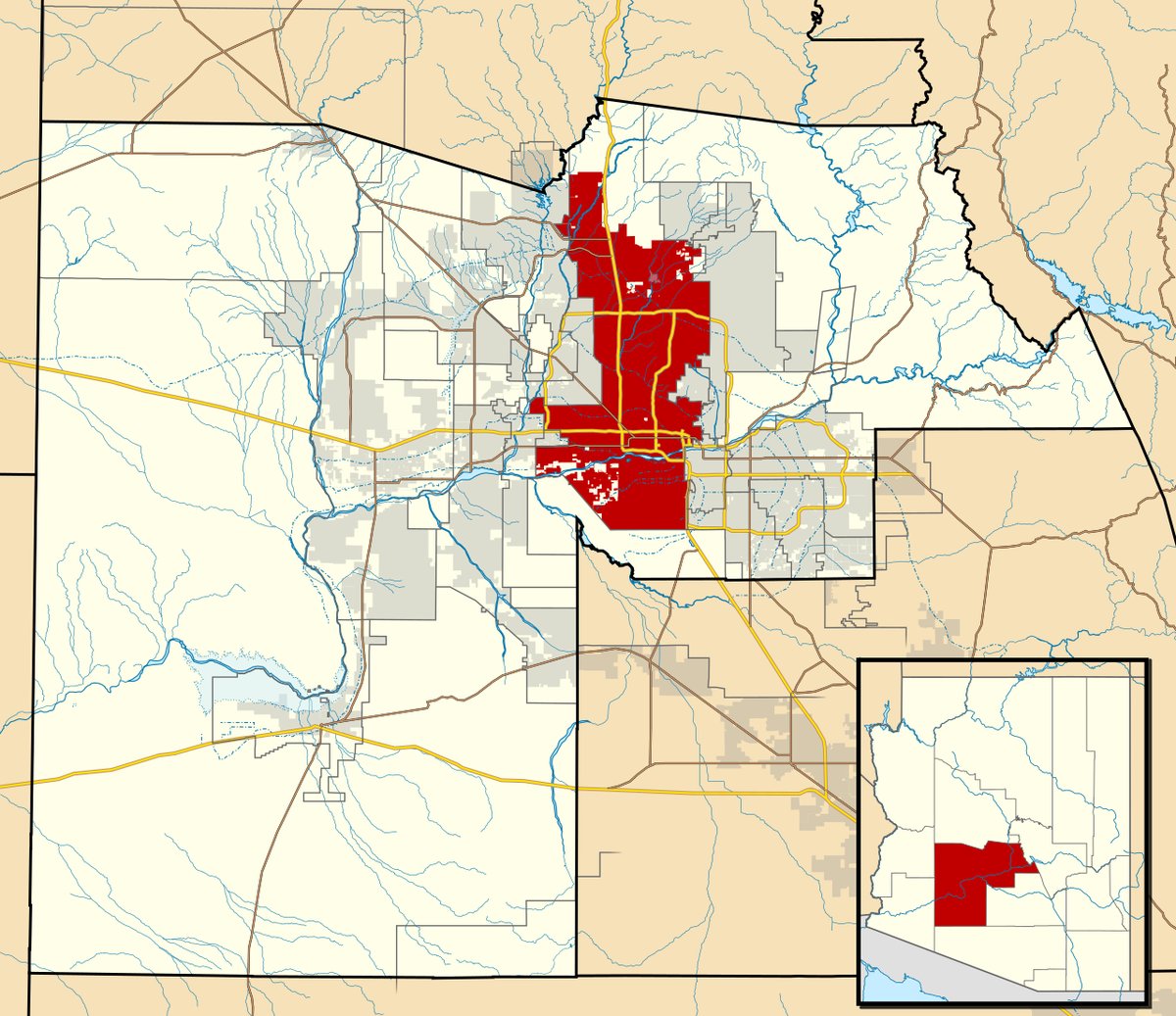
Between late August and September 2015, a terrifying series of sniper shootings along Interstate 10 in Phoenix, Arizona, paralyzed the fifth-largest metropolitan area in the United States. The Phoenix Freeway Phantom shootings targeted commercial tour buses, tractor-trailers, and private passenger sedans along an eight-mile corridor of the Maricopa Freeway. What followed was a high-stakes forensic confrontation involving microscopic ballistics tool-mark matching, pawn shop transaction tracking, and intense courtroom challenges that ultimately collapsed the state’s case against its primary suspect, leaving the highway sniper mystery unsolved.
Executive Case Factsheet
- Victim(s): Multiple civilian motorists, commercial buses, and passenger vehicles struck along I-10; one 16-year-old girl injured by shattered glass
- Date of Incident: August 29 – September 10, 2015
- Primary Crime Scene / Location: Interstate 10 (Maricopa Freeway), Phoenix, Maricopa County, Arizona
- Lead Investigating Jurisdictions: Arizona Department of Public Safety (DPS), Phoenix Police Department, FBI
- Key Forensic Evidence: Forensic ballistics tool-mark striations on 9mm Hi-Point Model C9 bullets, pawn shop firearm logs, roadside trajectory reconstruction, surveillance traffic camera metadata
- Suspect(s) / Perpetrator(s): Leslie Allen Merritt Jr. (arrested September 2015; all charges dismissed with prejudice in April 2016); true perpetrator unidentified
- Legal Outcome & Status: Unsolved serial sniper investigation; $50,000 DPS reward active
The August 2015 Highway Ambush and Public Panic
The terror began on the morning of Saturday, August 29, 2015, along an eight-mile stretch of Interstate 10 between 19th Avenue and 83rd Avenue in central Phoenix. At approximately 11:10 a.m., an empty commercial tour bus traveling eastbound was struck on its passenger side by a high-velocity bullet that penetrated the outer steel skin. Minutes later, a private SUV was struck directly in the windshield, followed by an additional passenger sedan hit near 59th Avenue. The random nature of the attacks suggested a mobile sniper operating from an adjacent vehicle or elevated roadside concealment.
Over the subsequent eleven days, eleven distinct shooting incidents were officially confirmed by the Arizona Department of Public Safety (DPS). Projectiles penetrated car doors, shattered tempered glass windows, and ricocheted off vehicle roofs during high-speed morning and evening rush hours. In one terrifying incident on September 6, a sixteen-year-old girl suffered lacerations when a bullet shattered the passenger window of her family’s vehicle near 35th Avenue, narrowly missing vital arteries.
The sudden attacks caused widespread panic across Maricopa County. Electronic highway overhead message signs throughout Phoenix flashed urgent alerts: ‘FREEWAY SHOOTER / REPORT SUSPICIOUS ACTIVITY / DIAL 911’. Commuters radically altered daily travel routes, school districts adjusted transportation corridors, and DPS deployed hundreds of undercover tactical units, tactical air support helicopters equipped with forward-looking infrared (FLIR) cameras, and mobile surveillance vans across highway overpasses to monitor traffic patterns around the clock.
Federal agencies, including the FBI Joint Terrorism Task Force and the Bureau of Alcohol, Tobacco, Firearms and Explosives (ATF), mobilized specialized trajectory reconstruction teams. Using laser trajectory rods and high-speed photography, criminalists analyzed projectile entrance angles on the struck motor vehicles, determining that the shooter was firing from moving traffic in adjacent lanes or from specific embankment choke points.

The DPS Forensic Lab and the Pawn Shop Breakthrough
DPS criminalists and forensic firearms examiners retrieved fragmented 9mm lead projectiles and jacket fragments from four of the struck vehicles. Using comparative microscopic ballistics, DPS firearms examiner Vincent Figarelli determined that four specific bullet fragments exhibited identical land and groove impressions, indicating they had been fired from the same rifled firearm barrel—specifically a 9mm Hi-Point Model C9 pistol.
Investigators launched an exhaustive dragnet of commercial firearms retailers and pawn shops across the Greater Phoenix area, auditing thousands of Bureau of Alcohol, Tobacco, Firearms and Explosives (ATF) Form 4473 transfer records and pawn transaction logs. At the Mo Money Pawn Shop in Glendale, detectives identified a 9mm Hi-Point pistol pawned by twenty-one-year-old landscaper Leslie Allen Merritt Jr. on September 7, 2015.
DPS technicians test-fired Merritt’s confiscated firearm at their state ballistics laboratory. On September 18, 2015, DPS Director Frank Milstead publicly announced that forensic tool-mark striations on test bullets provided an exact microscopic match to the projectiles recovered from the first four freeway shooting scenes, declaring at a nationally televised press conference: ‘We got him.’
The High-Profile Arrest and Alibi Contradictions
On the evening of September 18, 2015, heavily armed DPS SWAT teams and federal tactical units arrested Leslie Merritt Jr. at a Walmart supercenter in Glendale. The Maricopa County County Attorney’s Office filed sixteen felony counts against Merritt, including drive-by shooting, aggravated assault with a deadly weapon, and endangerment, with Judge Marvin Davis setting bail at $1 million cash.
Merritt passionately declared his innocence during his initial court appearance, stating: ‘I’m not the shooter. I had my gun at a pawn shop during those shootings.’ Defense attorney Jason Lamm immediately subpoenaed electronic timecard records, pawn shop security video, and mobile phone geolocation data.
Lamm established that Merritt’s Hi-Point firearm had been surrendered and locked inside the pawn shop vault on September 7 at 5:30 p.m. However, DPS ballistics reports claimed that the fourth shooting occurred on September 10—three full days after the weapon was in the physical custody of the pawn shop. To account for this discrepancy, DPS prosecutors altered their theory, asserting that the September 10 incident was the work of an independent ‘copycat’ perpetrator.
Independent Ballistics Review and Total Case Collapse
As pre-trial discovery advanced in early 2016, Maricopa County Superior Court Judge Warren Granville granted defense motions for an independent forensic ballistics evaluation by Lucien Haag, an internationally renowned independent firearms examiner and former president of the Association of Firearm and Tool Mark Examiners (AFTE).
Lucien Haag conducted exhaustive microscopic comparisons between the recovered bullet fragments and test bullets fired from Merritt’s Hi-Point pistol. Haag’s comprehensive forensic report delivered a devastating blow to the state’s case: he concluded that the crime scene bullet fragments were too severely degraded and damaged to establish a conclusive tool-mark match to Merritt’s specific gun barrel, stating that the state examiner’s conclusions were scientifically unsupportable.
Faced with Haag’s definitive findings, Maricopa County Superior Court Judge Granville reduced Merritt’s bail to zero on April 19, 2016, ordering his immediate release from custody after seven months of incarceration. On April 25, 2016, Maricopa County Attorney Bill Montgomery formally dismissed all felony charges against Leslie Merritt Jr. with prejudice.
Civil Litigation, Forensic Lessons & The Active Unsolved Case
Following his complete legal vindication, Leslie Merritt Jr. filed a major federal civil rights lawsuit against the State of Arizona, DPS Director Frank Milstead, and Maricopa County for wrongful arrest and malicious prosecution. In November 2020, the State of Arizona agreed to pay Merritt a $100,000 settlement to resolve portions of the claims, while appellate courts scrutinized DPS’s confirmation-bias practices in forensic firearms identification.
The Phoenix Freeway Phantom shootings remain an active, unsolved cold case investigation. The Arizona Department of Public Safety maintains a $50,000 reward for information leading to the identification and conviction of the true sniper.
The case is cited in legal and forensic literature as a prime example of the perils of subjective firearms tool-mark interpretation and the dangers of prematurely declaring forensic certainty under intense media and public pressure.
Chronological Case Timeline
| Date / Milestone | Investigative Development | Forensic / Evidentiary Significance |
|---|---|---|
| August 29, 2015 | First 3 shootings occur on Interstate 10 | Tour bus, SUV, and passenger car hit in central Phoenix |
| September 6, 2015 | 16-year-old girl injured by window glass | Public alarm escalates; DPS launches Freeway Task Force |
| September 7, 2015 | Leslie Merritt pawns Hi-Point 9mm gun | Pawn shop records later show weapon locked in vault |
| September 18, 2015 | DPS SWAT arrests Leslie Merritt Jr. | State claims microscopic ballistics match; sets $1M bail |
| March 2016 | Independent expert Lucien Haag refutes match | Concludes bullets too damaged for conclusive tool-mark identification |
| April 25, 2016 | All felony charges dismissed with prejudice | Merritt released; state’s ballistics case collapses entirely |
| November 2020 | State settles wrongful arrest civil litigation | Freeway Phantom remains an active, unsolved $50k reward cold case |
Frequently Asked Questions: Forensic & Legal Review
What firearm was originally implicated in the Phoenix freeway shootings?
The Arizona DPS initially claimed that a 9mm Hi-Point Model C9 semi-automatic pistol pawned by Leslie Allen Merritt Jr. was the exact weapon that fired projectiles into four vehicles along Interstate 10.
Why were all charges against Leslie Merritt Jr. dismissed in 2016?
Renowned independent firearms expert Lucien Haag examined the ballistic evidence and found that the recovered bullet fragments were far too damaged to establish a scientifically valid tool-mark match to Merritt’s firearm, proving the state lab’s initial match was flawed.
How did the pawn shop records conflict with the prosecution’s timeline?
Defense records proved that Merritt had pawned his pistol on September 7, 2015. However, one of the shooting incidents the state initially attributed to the same weapon occurred on September 10, when the firearm was locked securely in the pawn shop’s vault.
Is the Phoenix Freeway Phantom case still open today?
Yes. Following the dismissal of charges against Merritt, the Arizona Department of Public Safety returned the investigation to active cold case status, with a $50,000 reward remaining active for information leading to the true perpetrator.