
On a secluded, forested farmstead in the rural Bavarian countryside between Gröbern and Wangen, the horrific sixfold slaughter of an entire household on March 31, 1922, stands as Germany’s most famous and unsettling unsolved criminal enigma. The Hinterkaifeck farm murders 1922 horrified post-World War I Weimar Germany through its eerie paranormal-like premonitions, cold-blooded tactical execution with a farm mattock, and the chilling realization that the killer resided inside the homestead alongside the corpses for several days after the slayings.
Executive Case Factsheet
- Victim(s): 6 fatalities: Andreas Gruber (63), Cäzilia Gruber (72), Viktoria Gabriel (35), Cäzilia Gabriel (7), Josef Gruber (2), Maria Baumgartner (44, new maid)
- Date of Incident: March 31 – April 1, 1922
- Primary Crime Scene / Location: Hinterkaifeck Farmstead, between Gröbern and Wangen, Waidhofen, Bavaria, Germany
- Lead Investigating Jurisdictions: Munich Police Department (Münchner Polizei), District Court of Neuburg an der Donau
- Key Forensic Evidence: Mattock (Reuthaue) pickaxe weapon embedded with hair and bone, decapitated skulls examined by Munich pathologists, footprints leading from forest to attic but none leaving, livestock fed and chimney smoke observed for days after the murders
- Suspect(s) / Perpetrator(s): Lorenz Schlittenbauer (neighbor and former lover); Karl Gabriel; Gump brothers; Josef Bärtl; unresolved
- Legal Outcome & Status: Officially unsolved historical cold case mass homicide
Premonitions in the Snow and the Ominous Attic Sounds
In late March 1922, sixty-three-year-old farmer Andreas Gruber shared disturbing observations with neighbors in the nearby village of Gröbern. Following a heavy Bavarian snowfall, Gruber discovered a fresh set of human footprints leading from the dense Hofmark forest directly to the farmstead—yet no footprints led away. Furthermore, Gruber reported hearing strange pacing noises in the attic above the bedrooms, discovering an unfamiliar Munich newspaper in the kitchen, and finding that the master set of house keys had vanished.
Six months prior, the family’s previous housemaid had abruptly quit her job in sheer terror, claiming the farm was haunted by malevolent spirits. On the afternoon of Friday, March 31, 1922, a new maid, forty-four-year-old Maria Baumgartner, arrived at the farmstead, escorted by her sister, to begin her employment.
That evening, the secluded farmstead fell permanently silent. Over the subsequent weekend, coffee merchant Alberthofer, postman Josef Mayer, and repairman Michael Plöckl arrived at the farm and noticed that while smoke rose steadily from the kitchen chimney, the dog barked furiously from inside the barn, and neither the family nor their seven-year-old daughter, Cäzilia, appeared at church or school on Monday morning.
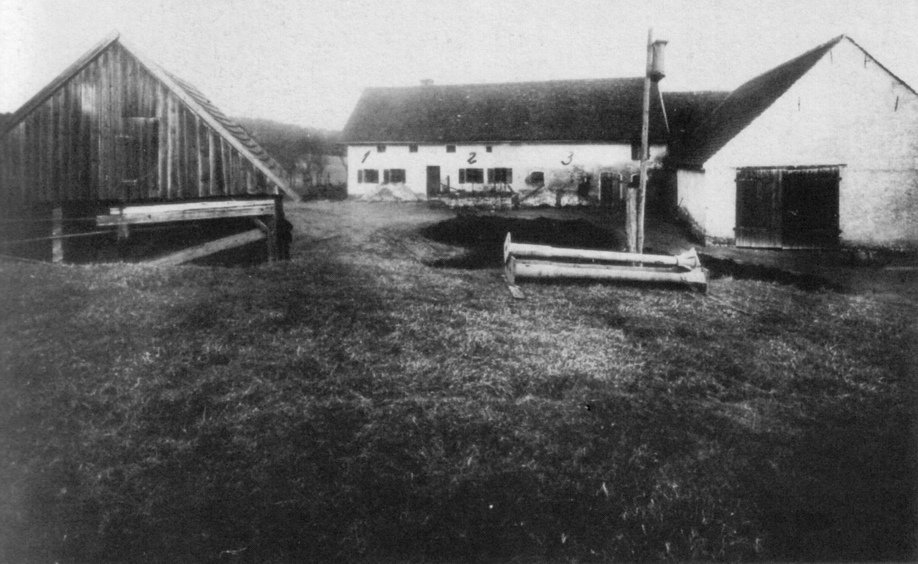
The April 4 Discovery in the Barn and Farmhouse
On Tuesday afternoon, April 4, 1922, concerned neighbors led by local town councilman Lorenz Schlittenbauer entered the Hinterkaifeck homestead. Pushing open the heavy barn door, the men discovered a horrifying stack of bodies covered with hay. Layered upon one another were Andreas Gruber, his seventy-two-year-old wife Cäzilia, their thirty-five-year-old widowed daughter Viktoria Gabriel, and seven-year-old granddaughter Cäzilia.
Moving inside the residential quarters, searchers discovered two additional victims: two-year-old Josef Gruber lay dead inside his crib in his mother’s bedroom, and the new maid, Maria Baumgartner, lay dead in her bed in the maid’s quarters. All six victims had suffered catastrophic blunt-force and penetrating trauma to the cranium.
Munich Police Inspector Georg Reingruber and detective criminalists arrived to secure the scene. An immediate autopsy conducted on the barn floor by Munich court physician Dr. Johann Baptist Aumüller confirmed that the victims had been struck down with a heavy, pickaxe-like implement. Autopsy findings revealed that seven-year-old Cäzilia had survived for several hours after the attack, tearing out clumps of her own hair in traumatic shock while lying among her deceased family members in the hay.
Dr. Aumüller detached the skulls of all six victims and transported them to the Institute of Forensic Medicine in Munich, where specialized physical anthropologists examined the bone impact fractures under magnification. The skulls were subsequently sent to clairvoyants in Nuremberg in a desperate attempt to gain investigative leads during the 1920s, but were ultimately lost in transit or destroyed during Allied bombing raids in World War II, permanently preventing modern cranial DNA extraction.

The Ghost in the House: Days with the Dead
The most chilling aspect of the forensic investigation was the incontrovertible proof that the killer—or killers—had stayed at the farm for at least three full days after murdering the family. Detectives determined that the slayings occurred on Friday evening, March 31, when the family members were lured into the barn one by one and struck down.
During the three days following the massacre, the killer methodically fed the six cows and two horses, milked the livestock, cared for the family dog, prepared and ate meals from the pantry (using eggs, bread, and cured meats), and slept in the master bed. Munich detectives discovered fresh impressions in the straw loft above the barn where the killer had observed the farmyard through displaced roof tiles prior to the attack.
Initial theories of armed robbery were quickly complicated. While significant sums of gold coins and banknotes remained untouched in visible drawers, several thousand paper marks were missing. However, the excessive violence and post-homicide domestic comfort indicated a deeply personal, obsessive, or retaliatory motive rather than simple transient burglary.
The Mattock Recovery and Suspect Interrogations
In 1923, following the complete demolition of the Hinterkaifeck farm buildings, workers discovered the definitive murder weapon concealed beneath the floorboards of the attic: a homemade Reuthaue (mattock/grubbing hoe) belonging to Andreas Gruber, its forged iron blade still bearing dried blood, human hair, and bone fragments that matched the cranial injuries documented in the 1922 autopsies.
Munich detectives interrogated hundreds of suspects over decades. The most prominent suspect was neighbor Lorenz Schlittenbauer, who had engaged in an affair with Viktoria Gabriel and was the purported biological father of two-year-old Josef. Schlittenbauer had entered the crime scene on April 4 before police arrived, handled the bodies, and unlocked doors without keys, raising intense suspicion. However, Schlittenbauer won multiple civil defamation lawsuits against neighbors who accused him of the crime.
Alternative theories focused on Viktoria’s husband, Karl Gabriel, who had been reported killed in action in France during World War I in 1914, but whose body was never recovered. Theorists speculated that Gabriel returned, discovered his wife’s relationship with Schlittenbauer, and committed the massacre before fleeing abroad to Russia.

The 2007 Fürstenfeldbruck Police Academy Cold Case Review
In 2007, eighty-five years after the massacre, fifteen cadet criminalists at the Bavarian Police Academy in Fürstenfeldbruck, under the leadership of Detective Chief Superintendent Konrad Müller, conducted a modern, comprehensive cold case review utilizing modern forensic technology, psychological profiling, and archival cross-referencing.
The academy team utilized 3D crime scene reconstruction and behavioral analysis. In their final classified report, the investigators concluded that while one specific historical suspect emerged as the overwhelmingly probable perpetrator based on behavioral motive and opportunity, the academy chose not to release the suspect’s name publicly out of respect for living descendants and because forensic physical corroboration (such as DNA testing) was impossible due to the passage of time and the loss of physical skulls during World War II.
The Hinterkaifeck massacre remains an enduring historical monument in global criminology. A memorial shrine now stands near the former farm site in Waidhofen, drawing historians, forensic researchers, and true crime scholars fascinated by the haunting Bavarian mystery.
Chronological Case Timeline
| Date / Milestone | Investigative Development | Forensic / Evidentiary Significance |
|---|---|---|
| Late March 1922 | Andreas Gruber finds footprints in snow | Tracks lead from woods to farm; attic pacing sounds heard |
| March 31, 1922 | New maid arrives; evening massacre occurs | Six household members murdered with a farm mattock |
| April 1–3, 1922 | Killer resides in house with corpses | Feeds livestock, cooks food, and lights chimney fires |
| April 4, 1922 | Bodies discovered by Lorenz Schlittenbauer | Four bodies found stacked in barn; two in farmhouse |
| April 5, 1922 | Munich pathologists conduct autopsies in barn | Dr. Aumüller confirms mattock trauma; skulls removed for study |
| 1923 | Murder weapon discovered during demolition | Reuthaue mattock found concealed under attic floorboards |
| 2007 | Bavarian Police Academy completes cold case review | Confirms single prime suspect using modern behavioral analysis |
Frequently Asked Questions: Forensic & Legal Review
What was the Hinterkaifeck farmstead and what happened there in 1922?
Hinterkaifeck was a secluded farm in Bavaria, Germany, where six people—Andreas and Cäzilia Gruber, their daughter Viktoria, granddaughter Cäzilia, grandson Josef, and a new maid—were murdered with a mattock on March 31, 1922.
What evidence proved the killer lived on the farm after the murders?
Detectives confirmed that smoke rose from the chimney, livestock was fed and milked, the dog was cared for, meals were prepared and eaten from the pantry, and beds were slept in for three full days while the victims lay dead in the barn.
What weapon was used in the Hinterkaifeck massacre?
A Reuthaue (a heavy forged iron farming mattock/grubbing hoe) belonging to Andreas Gruber was recovered in 1923 hidden under the attic floorboards, with dried blood, hair, and bone fragments matching the autopsy wounds.
What did the 2007 Bavarian Police Academy cold case review find?
Cadet investigators using modern profiling concluded that one specific historical suspect was the clear perpetrator based on motive, timing, and behavior, but withheld the name from the public to protect innocent surviving descendants.