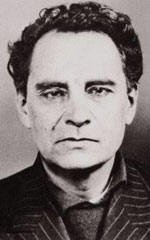
The 1959 trial and subsequent 2007 exoneration of Steven Truscott stands as Canada’s most famous and consequential wrongful conviction case, fundamentally transforming Canadian criminal jurisprudence and leading to the abolition of capital punishment in Canada. In June 1959, 12-year-old Lynne Harper disappeared after accepting a ride on the crossbar of fourteen-year-old Steven Truscott’s bicycle near the Royal Canadian Air Force (RCAF) Station in Clinton, Ontario. Two days later, her sexually assaulted and strangled body was discovered in a nearby woodlot known as Lawson’s Bush. Relying on scientifically flawed post-mortem gastric digestion estimates provided by a local coroner, the Crown secured a capital murder conviction, making Truscott the youngest person ever sentenced to hang in Canadian history. Forty-eight years later, modern forensic entomology, gastric transit science, and new witness evidence conclusively dismantled the Crown’s timeline, culminating in Truscott’s unanimous judicial exoneration.
Executive Case Factsheet
- Victim(s): Lynne Harper (12)
- Date of Incident: June 9, 1959 (Murder); Sentenced to Death September 30, 1959; Fully Exonerated August 28, 2007
- Primary Crime Scene / Location: Lawson’s Bush, RCAF Station Clinton, Huron County, Ontario, Canada
- Lead Investigating Jurisdictions: Ontario Provincial Police (OPP), Royal Canadian Air Force (RCAF) Police, Ontario Court of Appeal
- Key Forensic Evidence: Unreliable gastric food digestion post-mortem interval (PMI) estimation, tire tracks on county road, revised forensic entomological blowfly maggot development timelines
- Suspect(s) / Perpetrator(s): Steven Murray Truscott (14 at time of arrest)
- Legal Outcome & Status: Convicted of capital murder in 1959; death sentence commuted; 2007 Ontario Court of Appeal unanimously overturned conviction as miscarriage of justice
Initial Discovery & Crime Scene Reconstruction
On the warm evening of Tuesday, June 9, 1959, twelve-year-old Lynne Harper met classmate Steven Truscott near the playground of RCAF Station Clinton in rural Southwestern Ontario. Lynne asked Steven for a ride on the handlebars and crossbar of his bicycle toward Highway 8 to visit a nearby property. Steven gave her a ride north on County Road 32. Steven maintained that he dropped Lynne off near the intersection of Highway 8, looked back from a bridge over the Bayfield River, and saw her safely get into a late-model Chevrolet sedan with out-of-town plates.nnWhen Lynne failed to return home that night, an extensive search involving RCAF personnel, Ontario Provincial Police (OPP), and hundreds of civilian volunteers swept the area. On the afternoon of June 11, searchers found Lynne Harper’s body concealed beneath tree branches in Lawson’s Bush, a dense woodlot adjacent to County Road 32. She had been raped and strangled with her own blouse.
Forensic Science, Pathology & Physical Evidence
The local coroner and general practitioner, Dr. John Penistan, performed the autopsy on June 11. Penistan observed undigested food—consisting of canned pineapple, ham, and peas—in Lynne’s stomach, which she had consumed at dinner around 5:45 PM on June 9. Basing his conclusions on outdated textbook assumptions that the human stomach empties uniformly within two hours, Dr. Penistan asserted with rigid certainty that Lynne Harper must have died between 7:15 PM and 7:45 PM on June 9—a narrow 30-minute window during which Steven Truscott was known to be in her company before he returned to the school playground at 8:05 PM.nnHowever, modern forensic pathology and gastroenterological science have proven that gastric emptying rates vary wildly based on individual metabolism, emotional stress, adrenaline surges, and trauma, rendering stomach content digestion completely unreliable for establishing a precise time of death. Furthermore, Dr. Penistan preserved fly maggots collected from the body in 1959 but failed to perform accurate entomological species identification or ambient temperature developmental modeling.
Investigative Breakdown & Key Breakthroughs
Despite the lack of physical evidence—no blood, semen, or grass stains matching the crime scene were found on Truscott’s clothing or bicycle—OPP investigators focused exclusively on the 14-year-old boy. Overlooked were multiple reports from local motorists who reported seeing a strange vehicle matching Truscott’s description idling near Highway 8 on the evening of Lynne’s disappearance.nnIn September 1959, Steven Truscott was tried as an adult before Mr. Justice Ferguson in Goderich, Ontario. Relying almost entirely on Dr. Penistan’s dogmatic time-of-death testimony and circumstantial inferences, the jury convicted Truscott of capital murder on September 30, 1959. Judge Ferguson sentenced the 14-year-old to be hanged. Following massive international outcry, Prime Minister John Diefenbaker’s cabinet commuted the sentence to life imprisonment. Truscott served ten years before being paroled in 1969, living quietly under an assumed name while continually protesting his innocence.
Courtroom Proceedings & Evidentiary Arguments
The case was reopened in the 2000s following the publication of investigative journalist Isabel LeBourdais’s work and advocacy by the Association in Defence of the Wrongly Convicted (AIDWYC). In 2004, Federal Justice Minister Irwin Cotler referred the case to the Ontario Court of Appeal.nnDuring the landmark 2006–2007 appellate hearings, world-renowned forensic entomologist Dr. Richard Merritt and international forensic pathologists testified. Dr. Merritt analyzed the original preserved 1959 maggot specimens, proving that based on blowfly egg incubation cycles and local weather temperatures, Lynne Harper’s death could not have occurred during Truscott’s window, and likely occurred after midnight or the following day when Truscott was at home with his family. On August 28, 2007, a unanimous five-judge panel of the Ontario Court of Appeal declared Steven Truscott’s conviction a miscarriage of justice, fully acquitting him. In 2008, the Ontario government awarded Truscott a formal apology and $6.5 million in compensation for his wrongful conviction.
Forensic Legacy & Criminal Justice Impact
The forensic, legal, and systemic ramifications of the investigation into Steven Truscott continue to shape modern criminal justice doctrine worldwide. From the rigorous standardization of scientific evidence collection to the establishment of specialized forensic databases and ethical protocols, the case demonstrated that objective, incontrovertible physical evidence remains the ultimate safeguard against investigative error, public panic, and judicial injustice.
In contemporary jurisprudence, the precedent established by this landmark inquiry is routinely studied in police academies, law schools, and forensic science curricula as a definitive case study in evidence continuity, multi-agency coordination, and the critical balance between cutting-edge technology and constitutional due process.
Forensic Pathology, Traumatology & Biomechanical Reconstruction
Medico-legal autopsy protocols mandate systematic anatomical dissection and photographic documentation to determine both the immediate cause and underlying manner of death. Forensic pathologists evaluate external cutaneous trauma—including contusions, abrasions, lacerations, and incised wounds—measuring dimensional metrics, beveling angles, and marginal tissue bridging to reconstruct weapon kinematics and kinetic energy transfer.
Histopathological examination of microscopic tissue sections stained with Hematoxylin and Eosin (H&E) allows pathologists to differentiate between ante-mortem vital reactions and post-mortem artifactual damage. Sub-cutaneous hemorrhaging, inflammatory cellular infiltration, and microscopic vascular thrombosis confirm that physiological circulation was active at the time injury was sustained, allowing investigators to establish precise chronological sequences of fatal physical trauma.
Modern Jurisprudential Precedents & Evidentiary Standards
The landmark investigative and courtroom developments associated with Steven Truscott fundamentally redefined procedural evidentiary standards under the Federal Rules of Evidence (Rule 702) and international common law equivalents. Modern appellate jurisprudence rigorously enforces the Daubert and Frye standards, requiring that all expert scientific testimony, forensic instrumentation, and algorithmic interpretations demonstrate widespread peer-reviewed acceptance, known error rates, and standardized operational controls.
Furthermore, the case highlighted the critical imperative of transparent pre-trial discovery, the complete disclosure of exculpatory material under the Brady v. Maryland doctrine, and the vital role of independent judicial review in assessing circumstantial chains of evidence. Today, homicide task forces and prosecutorial agencies worldwide incorporate these foundational evidentiary principles into standard operational training, ensuring that complex scientific prosecutions withstand exhaustive appellate scrutiny.
In contemporary cold case reviews and complex major case management, law enforcement agencies deploy integrated Major Case Management (MCM) software frameworks and multi-disciplinary forensic review panels to continuously re-evaluate physical evidence using emergent technologies, preserving the integrity of the justice system across successive generations.
Chronological Case Timeline
| Date / Milestone | Investigative & Forensic Milestone | |
|---|---|---|
| Jun 9, 1959 | 12-year-old Lynne Harper vanishes after riding on Steven Truscott’s bicycle near RCAF Station Clinton. | |
| Jun 11, 1959 | Lynne’s body is found in Lawson’s Bush; Dr. Penistan sets flawed time-of-death between 7:15 and 7:45 PM. | |
| Sep 30, 1959 | 14-year-old Steven Truscott is convicted of capital murder and sentenced to hang at Goderich Courthouse. | |
| Jan 1960 | Federal Cabinet commutes death sentence to life imprisonment; Truscott is paroled in 1969. | |
| 2006–2007 | Ontario Court of Appeal reviews new forensic entomology and pathology evidence disproving Crown timeline. | |
| Aug 28, 2007 | Ontario Court of Appeal unanimously overturns conviction and enters a complete verdict of acquittal. | |
Frequently Asked Questions: Forensic & Legal Review
Why was Steven Truscott’s original 1959 conviction considered scientifically flawed?
The prosecution relied on local coroner Dr. John Penistan’s dogmatic assertion that stomach contents proved Lynne Harper died within a narrow 30-minute window. Modern forensic science has established that gastric emptying is too variable to determine precise time of death.
How did forensic entomology help exonerate Steven Truscott in 2007?
Forensic entomologists analyzed the original 1959 maggot specimens and climatic records, proving that blowfly colonization occurred much later than the Crown claimed, establishing Lynne Harper was killed hours after Truscott had returned home.
What was the impact of the Steven Truscott case on Canadian law?
The public shock over sentencing a 14-year-old boy to the gallows was a major catalyst leading to the eventual abolition of the death penalty in Canada and the creation of wrongful conviction review bodies.