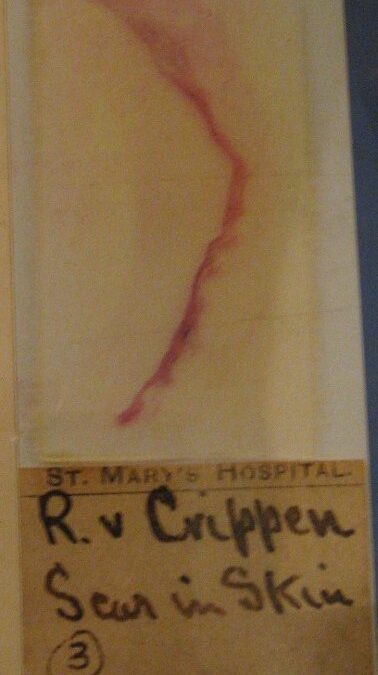
The 1910 investigation and capture of American physician Dr. Hawley Harvey Crippen represents one of the most celebrated cases in criminal justice history, marking the birth of modern forensic pathology in the courtroom and the very first operational use of wireless telecommunications to apprehend a fleeing fugitive. Following the sudden disappearance of his flamboyant music hall wife, Cora Crippen (known by her stage name Belle Elmore), Crippen claimed she had died of illness in America. However, when Scotland Yard detectives excavated the brick cellar of his London residence at 39 Hilldrop Crescent, they unearthed the filleted, headless torso of a human corpse preserved in lime. Pioneering Home Office pathologist Dr. Bernard Spilsbury established the victim’s identity through microscopic scar tissue analysis, while Chief Inspector Walter Dew utilized Guglielmo Marconi’s wireless telegraph across the Atlantic Ocean to intercept Crippen and his disguised lover aboard the ocean liner SS Montrose.
Executive Case Factsheet
- Victim(s): Cora Henrietta Crippen (stage name Belle Elmore, 37)
- Date of Incident: February 1, 1910 (Murder); July 13, 1910 (Body Found); Arrested July 31, 1910
- Primary Crime Scene / Location: 39 Hilldrop Crescent, Camden Town, London & SS Montrose (Mid-Atlantic)
- Lead Investigating Jurisdictions: Metropolitan Police Service (Scotland Yard), Home Office Forensic Pathology
- Key Forensic Evidence: Human torso remains buried in brick cellar floor, toxicological extraction of hyoscine hydrobromide, microscopic scar tissue matching victim’s laparotomy surgery
- Suspect(s) / Perpetrator(s): Dr. Hawley Harvey Crippen (48) & Ethel Le Neve (27)
- Legal Outcome & Status: Convicted on October 22, 1910, at the Old Bailey; executed by hanging at Pentonville Prison on November 23, 1910
Initial Discovery & Crime Scene Reconstruction
In late January 1910, friends of music hall performer Cora Crippen—including fellow actress Lil Hawthorne—became deeply suspicious when Cora vanished without notice. Hawley Crippen, a mild-mannered homeopathic doctor practicing in London, explained to friends that Cora had abruptly returned to the United States to care for a sick relative, later sending telegrams announcing she had died in California. Suspicion deepened dramatically when Crippen’s young typist and lover, Ethel Le Neve, moved into 39 Hilldrop Crescent and began openly wearing Cora’s diamond brooches and fur coats.nnIn July 1910, Hawthorne alerted Scotland Yard. Chief Inspector Walter Dew visited Crippen, who admitted during an interview that he had fabricated the story of Cora’s death to prevent public embarrassment, claiming she had actually left him for an American lover. Dew was initially satisfied, but when he returned to the house days later for follow-up questions, Crippen and Le Neve had vanished. Dew immediately ordered a forensic search of the entire property.
Forensic Science, Pathology & Physical Evidence
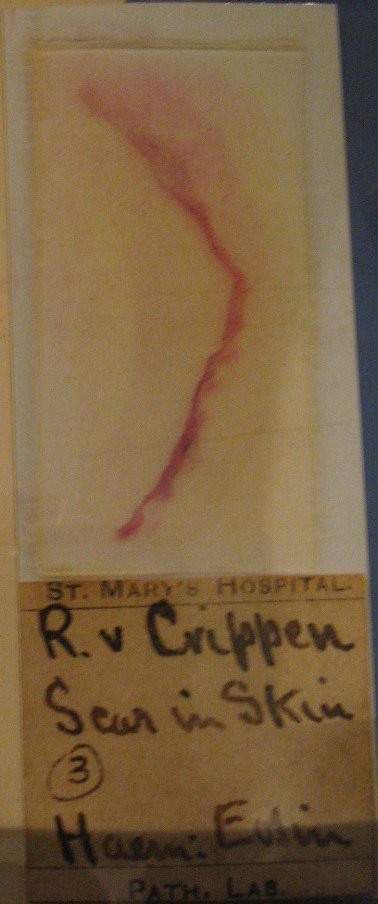
On July 13, 1910, during their fourth meticulous search of the dark, damp cellar floor at Hilldrop Crescent, Inspector Dew noticed loose brickwork beneath the stairs. Prying up the paving stones and digging into the clay, detectives uncovered human flesh, fat, and organs that had been de-boned, filleted, and buried with quicklime. The head, limbs, and skeleton had been completely removed and disposed of elsewhere.nnHome Office toxicologist Dr. William Willcox and rising forensic pathologist Dr. Bernard Spilsbury conducted a revolutionary post-mortem examination. Willcox extracted a fatal concentration of hyoscine hydrobromide (scopolamine)—a powerful sedative and twilight-sleep alkaloid that Crippen had purchased from a local chemist weeks earlier. To prove identity, Spilsbury microscopically analyzed a preserved piece of abdominal skin, identifying hair follicles, sweat glands, and a distinct transversal transverse scar exhibiting inverted epithelium from an ovariotomy laparotomy surgery known to have been performed on Cora Crippen.
Investigative Breakdown & Key Breakthroughs
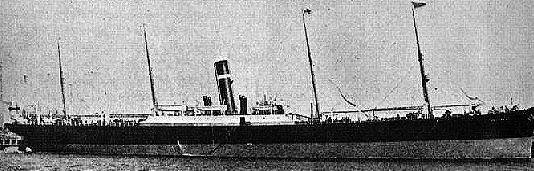
Meanwhile, Crippen and Ethel Le Neve—disguised as father and teenage son ‘Mr. John Robinson and Master John Robinson’—had fled across the English Channel to Antwerp, boarding the Canadian Pacific ocean liner SS Montrose bound for Quebec, Canada. During the transatlantic crossing, the ship’s observant master, Captain Henry George Kendall, noticed the pair’s unnatural intimacy and noted that ‘Master Robinson’s’ trousers were pinned at the back to fit a female waist.nnUtilizing the newly invented Marconi wireless telegraph installed on his vessel, Captain Kendall transmitted a confidential message to Scotland Yard: ‘Have strong suspicions that Crippen London cellar murderer and accomplice are among saloon passengers.’ Chief Inspector Walter Dew immediately boarded the faster SS Laurentic from Liverpool, outpacing the Montrose across the Atlantic. On July 31, 1910, as the Montrose entered the St. Lawrence River near Father Point, Quebec, Dew boarded the vessel disguised as a harbor pilot and arrested Crippen and Le Neve.
Courtroom Proceedings & Evidentiary Arguments
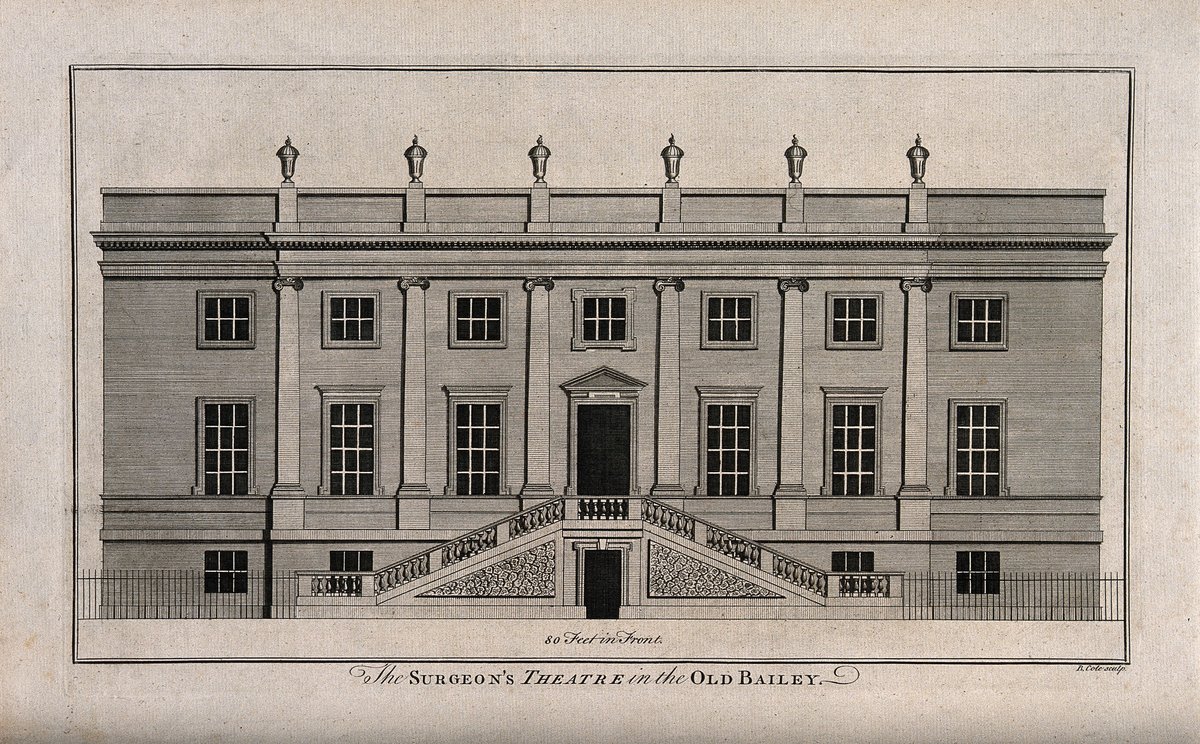
Dr. Hawley Crippen was tried for capital murder at the Old Bailey on October 18, 1910, before the Lord Chief Justice, Lord Alverstone. The prosecution, led by Richard Muir, presented Dr. William Willcox’s toxicological proof of hyoscine poisoning and Dr. Bernard Spilsbury’s surgical scar tissue demonstration, which captivated the courtroom and launched Spilsbury’s legendary career as Britain’s premier forensic expert. The defense contended the cellar remains were buried before Crippen occupied the house and belonged to a previous resident.nnOn October 22, 1910, after deliberating for just twenty-seven minutes, the jury found Dr. Hawley Crippen guilty of willful murder. Ethel Le Neve was tried separately as an accessory after the fact and acquitted. Crippen was hanged at HM Prison Pentonville by executioner John Ellis on November 23, 1910. The case forever demonstrated the power of international police telecommunications and established forensic histological tissue identification as a standard of courtroom proof.
Forensic Legacy & Criminal Justice Impact
The forensic, legal, and systemic ramifications of the investigation into Dr. Hawley Crippen continue to shape modern criminal justice doctrine worldwide. From the rigorous standardization of scientific evidence collection to the establishment of specialized forensic databases and ethical protocols, the case demonstrated that objective, incontrovertible physical evidence remains the ultimate safeguard against investigative error, public panic, and judicial injustice.
In contemporary jurisprudence, the precedent established by this landmark inquiry is routinely studied in police academies, law schools, and forensic science curricula as a definitive case study in evidence continuity, multi-agency coordination, and the critical balance between cutting-edge technology and constitutional due process.
Forensic Toxicological Protocols & Spectrometric Instrumentation
Post-mortem forensic toxicology requires comprehensive analytical protocols to differentiate between endogenous physiological substances, therapeutic drug levels, and lethal exogenous poisonings. Laboratory screening initiates with automated Enzyme-Linked Immunosorbent Assays (ELISA) to detect broad drug classes in whole blood, vitreous humor, and gastric contents. Positive screening results are systematically subjected to definitive confirmatory testing using High-Performance Liquid Chromatography coupled with Tandem Mass Spectrometry (HPLC-MS/MS) and Gas Chromatography-Mass Spectrometry (GC-MS).
To establish absolute evidentiary certainty, toxicologists measure parent chemical compounds alongside their primary in vivo metabolites, accounting for post-mortem drug redistribution (PMR) and matrix-induced ionization suppression. Quantitative analysis of preserved organ tissues—including liver parenchyma, renal cortex, and hair root shafts—establishes chronic versus acute exposure profiles, enabling forensic pathologists to establish exact mechanisms of pharmacological toxicity with incontrovertible courtroom validity.
Modern Jurisprudential Precedents & Evidentiary Standards
The landmark investigative and courtroom developments associated with Dr. Hawley Crippen fundamentally redefined procedural evidentiary standards under the Federal Rules of Evidence (Rule 702) and international common law equivalents. Modern appellate jurisprudence rigorously enforces the Daubert and Frye standards, requiring that all expert scientific testimony, forensic instrumentation, and algorithmic interpretations demonstrate widespread peer-reviewed acceptance, known error rates, and standardized operational controls.
Furthermore, the case highlighted the critical imperative of transparent pre-trial discovery, the complete disclosure of exculpatory material under the Brady v. Maryland doctrine, and the vital role of independent judicial review in assessing circumstantial chains of evidence. Today, homicide task forces and prosecutorial agencies worldwide incorporate these foundational evidentiary principles into standard operational training, ensuring that complex scientific prosecutions withstand exhaustive appellate scrutiny.
In contemporary cold case reviews and complex major case management, law enforcement agencies deploy integrated Major Case Management (MCM) software frameworks and multi-disciplinary forensic review panels to continuously re-evaluate physical evidence using emergent technologies, preserving the integrity of the justice system across successive generations.
Chronological Case Timeline
| Date / Milestone | Investigative & Forensic Milestone | |
|---|---|---|
| Jan 31, 1910 | Cora Crippen disappears from 39 Hilldrop Crescent; Crippen claims she died in California. | |
| Jul 8, 1910 | Scotland Yard interviews Crippen; Crippen and mistress Ethel Le Neve immediately flee Britain. | |
| Jul 13, 1910 | Inspector Walter Dew discovers filleted human torso buried beneath cellar brickwork. | |
| Jul 22, 1910 | Captain Kendall transmits historic Marconi wireless telegram from mid-Atlantic alerting Scotland Yard. | |
| Jul 31, 1910 | Inspector Dew intercepts SS Montrose in the St. Lawrence River, arresting Crippen and Le Neve. | |
| Nov 23, 1910 | Crippen is executed by hanging at Pentonville Prison after a 27-minute jury conviction. | |
Frequently Asked Questions: Forensic & Legal Review
How was Marconi’s wireless telegraph used to capture Dr. Crippen?
Captain Henry Kendall of the SS Montrose recognized Crippen and Le Neve (disguised as father and son) and sent a wireless telegram to Scotland Yard, allowing Inspector Dew to board a faster ship, overtake them, and arrest them in Canada.
What chemical poison was detected in the Hilldrop Crescent cellar remains?
Dr. William Willcox extracted lethal concentrations of hyoscine hydrobromide (scopolamine), a powerful depressant that Crippen, a homeopathic physician, had purchased from a London chemist shortly before Cora disappeared.
How did Dr. Bernard Spilsbury prove the cellar remains belonged to Cora Crippen?
Dr. Spilsbury microscopic examination identified a healed surgical scar on an abdominal skin fragment that perfectly matched a known ovariotomy operation Cora Crippen had undergone years earlier.