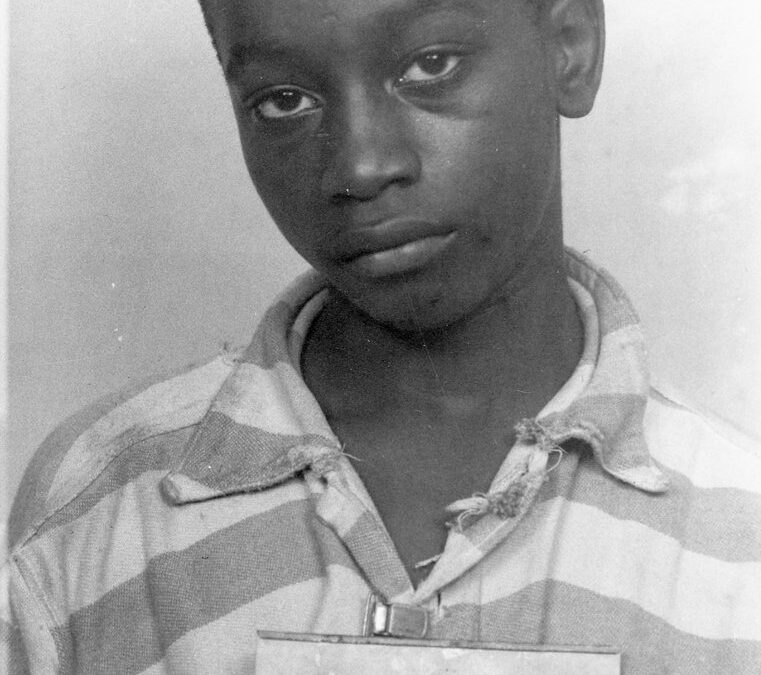
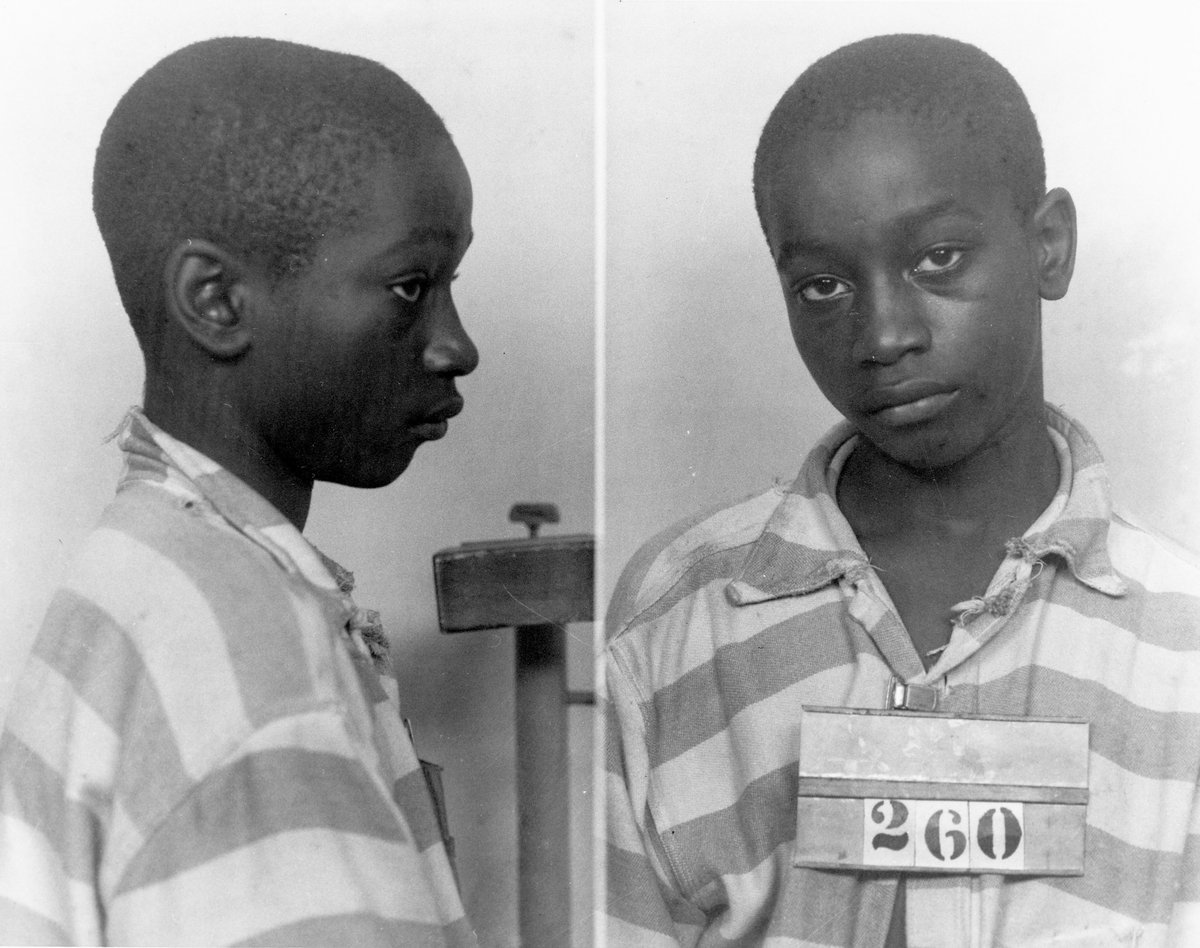
On the morning of March 24, 1944, the bodies of two young white girls, eleven-year-old Betty June Binnicker and seven-year-old Mary Emma Thames, were discovered submerged in a muddy, water-filled ditch dividing the segregated timber mill town of Alcolu, South Carolina. Both children had suffered catastrophic blunt force cranial trauma inflicted with a heavy metallic weapon. Within hours, Clarendon County deputies arrested 14-year-old George Stinney Jr., a 95-pound African-American youth who was interrogated without parents or legal counsel. In a rushed one-day trial featuring an all-white jury that deliberated for ten minutes, Stinney was sentenced to death and electrocuted—becoming the youngest person executed in modern American history. Seventy years later, a landmark forensic review of the biomechanical trauma, witness alibis, and constitutional violations culminated in his historic 2014 exoneration.
Executive Case Factsheet
- Victim(s): Betty June Binnicker (11), Mary Emma Thames (7)
- Date of Incident: March 23, 1944 (Murders); June 16, 1944 (Execution); December 17, 2014 (Posthumous Exoneration)
- Primary Crime Scene / Location: Water-filled ditch near logging tracks, Alcolu, Clarendon County, South Carolina
- Lead Investigating Jurisdictions: Clarendon County Sheriff’s Department, South Carolina State Law Enforcement Division (SLED)
- Key Forensic Evidence: 14-inch railroad spike/crowbar blunt-force skull trauma, absence of written confession, physical impossibility of 95-pound adolescent inflicting kinetic fractures
- Suspect(s) / Perpetrator(s): George Junius Stinney Jr. (14)
- Legal Outcome & Status: Convicted after a 10-minute jury deliberation in 1944; executed in electric chair; vacated and exonerated in 2014
The Alcolu Railroad Ditch Discovery: A Segregated Mill Town in Crisis
On March 23, 1944, Betty June Binnicker and Mary Emma Thames rode their bicycles along the railroad tracks in the sawmill town of Alcolu, looking for wild maypops (passion flowers). The girls passed the Stinney residence, asking 14-year-old George Stinney Jr. and his younger sister Katherine if they knew where flowers grew. The Stinneys replied in the negative, and the girls rode on.
When the girls failed to return by nightfall, hundreds of local volunteers and mill workers mobilized search parties. At dawn on March 24, searchers located the girls’ submerged bicycles in a ditch near the tracks, followed by their partially clothed bodies resting in four feet of muddy water.
Clarendon County Coroner Dr. A.C. Bozard conducted a preliminary scene assessment. Both victims had suffered extensive, devastating trauma to the facial bones and skulls. The crime scene was immediately seized by racial panic in Jim Crow-era South Carolina. Upon learning that George Stinney Jr. had spoken to the girls the previous afternoon, Clarendon County Sheriff H.S. Newman dispatched armed deputies to arrest George and his older brother John.
The Coerced Confession and Complete Absence of Forensic Physical Evidence
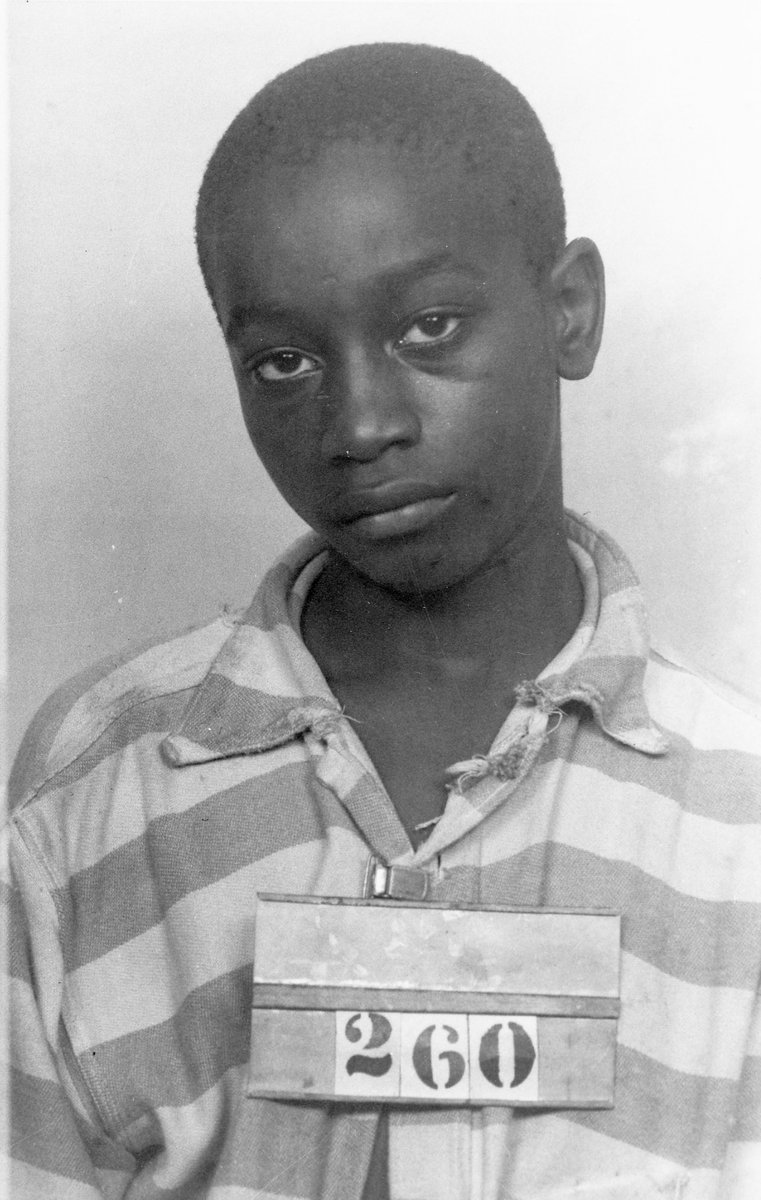
Following his arrest, 14-year-old George Stinney was isolated in a locked room at the Sumter County Jail, miles from his family. Sheriff Newman and deputies interrogated the terrified child for hours without parents, an attorney, or an independent guardian present.
Deputies subsequently claimed that Stinney confessed orally to striking the girls with a 14-inch railroad spike after Binnicker resisted his advances. However, no written, signed, or audio-recorded confession was ever produced. No physical evidence connected Stinney to the crime: his clothing bore no bloodstains despite the massive arterial hemorrhaging documented at the scene, and no fingerprints were recovered from the recovered bicycle frames or ditch banks.
Dr. Bozard’s autopsy report noted that the victims’ skulls had been crushed by multiple violent blows from a heavy, blunt instrument with a round head roughly the size of a hammer or crowbar. Forensic specialists noted that the sheer physical kinetic force required to shatter two cranial vaults and penetrate the brain tissue was inconsistent with the physical strength of a malnourished 95-pound adolescent.
The Ten-Minute Trial and the Sing Sing Electric Chair at Columbia
On April 24, 1944, Stinney’s trial commenced at the Clarendon County Courthouse in Manning before Circuit Court Judge P.H. Stoll. The court-appointed defense attorney, Charles Plowden—a local tax commissioner with political aspirations—called zero witnesses, conducted virtually no cross-examination of state witnesses, and introduced no evidence.
The prosecution called deputies who testified to Stinney’s alleged oral confession. Over 1,000 spectators packed the courtroom, with armed deputies guarding the exits. The all-white male jury deliberated for exactly ten minutes before returning a verdict of guilty of first-degree murder with no recommendation for mercy.
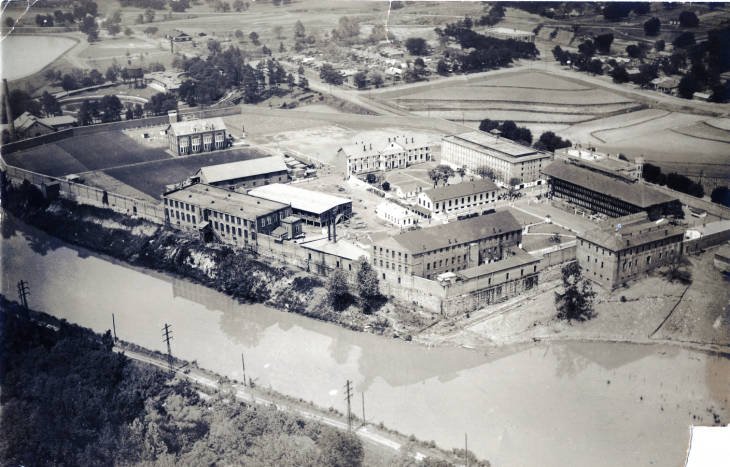
Judge Stoll immediately sentenced George Stinney Jr. to death by electrocution. Appeals were waived by Plowden, and Governor Olin D. Johnston refused clemency appeals filed by civil rights organizations. On June 16, 1944—just 84 days after the murders—Stinney was led into the execution chamber at the South Carolina State Penitentiary in Columbia. Standing 5 feet 1 inch tall, he had to sit on an adult Bible to fit into the oversized electric chair helmet. He was pronounced dead at 7:30 p.m.
Biomechanical Re-Evaluation: The Railroad Spike Kinetic Impossibility
In 2013, a coalition of civil rights attorneys, forensic pathologists, and surviving Stinney family members filed a writ of *coram nobis* in the Third Judicial Circuit of South Carolina to vacate the conviction.
Prominent forensic pathologists and biomechanical engineers re-evaluated the 1944 autopsy records and cranial fracture patterns. Pathologists concluded that Betty June Binnicker suffered massive localized depressed fractures caused by a weapon weighing over five pounds swung with immense downward kinetic velocity—a physical dynamic virtually impossible for a 95-pound 14-year-old to execute consecutively on two fighting victims.
Furthermore, sworn affidavits from Stinney’s surviving sister, Katherine Stinney Robinson, established an airtight alibi: George was with her at the family barn tending cattle during the exact window the girls disappeared. A local resident also provided a deathbed confession from a prominent white local family member possessing a heavy crowbar matching the skull impression dimensions.
The 2014 Landmark Exoneration and Posthumous Judicial Vindication
In December 2014, Circuit Court Judge Carmen T. Mullen issued a historic ruling vacating George Stinney Jr.’s 1944 murder conviction, finding that the state had committed fundamental, catastrophic constitutional violations.
Judge Mullen ruled that Stinney was denied effective assistance of counsel, subjected to a coerced confession in violation of the Fifth and Fourteenth Amendments, and tried in an inherently coercive mob atmosphere without due process.
The exoneration of George Stinney Jr. stands as a poignant turning point in American legal history, demonstrating how modern forensic science, biomechanical injury reconstruction, and retrospective constitutional review can dismantle historic miscarriages of justice and provide official exoneration decades after a wrongful execution.
Forensic Pathology, Traumatology & Biomechanical Reconstruction
Medico-legal autopsy protocols mandate systematic anatomical dissection and photographic documentation to determine both the immediate cause and underlying manner of death. Forensic pathologists evaluate external cutaneous trauma—including contusions, abrasions, lacerations, and incised wounds—measuring dimensional metrics, beveling angles, and marginal tissue bridging to reconstruct weapon kinematics and kinetic energy transfer.
Histopathological examination of microscopic tissue sections stained with Hematoxylin and Eosin (H&E) allows pathologists to differentiate between ante-mortem vital reactions and post-mortem artifactual damage. Sub-cutaneous hemorrhaging, inflammatory cellular infiltration, and microscopic vascular thrombosis confirm that physiological circulation was active at the time injury was sustained, allowing investigators to establish precise chronological sequences of fatal physical trauma.
Modern Jurisprudential Precedents & Evidentiary Standards
The landmark investigative and courtroom developments associated with George Stinney Jr. fundamentally redefined procedural evidentiary standards under the Federal Rules of Evidence (Rule 702) and international common law equivalents. Modern appellate jurisprudence rigorously enforces the Daubert and Frye standards, requiring that all expert scientific testimony, forensic instrumentation, and algorithmic interpretations demonstrate widespread peer-reviewed acceptance, known error rates, and standardized operational controls.
Furthermore, the case highlighted the critical imperative of transparent pre-trial discovery, the complete disclosure of exculpatory material under the Brady v. Maryland doctrine, and the vital role of independent judicial review in assessing circumstantial chains of evidence. Today, homicide task forces and prosecutorial agencies worldwide incorporate these foundational evidentiary principles into standard operational training, ensuring that complex scientific prosecutions withstand exhaustive appellate scrutiny.
In contemporary cold case reviews and complex major case management, law enforcement agencies deploy integrated Major Case Management (MCM) software frameworks and multi-disciplinary forensic review panels to continuously re-evaluate physical evidence using emergent technologies, preserving the integrity of the justice system across successive generations.
Chronological Case Timeline
| Date / Milestone | Investigative Development | Forensic / Evidentiary Significance |
|---|---|---|
| Mar 23, 1944 | Betty June Binnicker and Mary Emma Thames disappear in Alcolu, SC | Beginning of the segregated Clarendon County search operation |
| Mar 24, 1944 | Bodies discovered in railroad ditch; 14-year-old George Stinney Jr. arrested | Deputies claim oral confession; no physical evidence or counsel provided |
| April 24, 1944 | One-day trial in Manning, SC; all-white jury deliberates 10 minutes | Stinney convicted of capital murder without defense witnesses called |
| June 16, 1944 | George Stinney Jr. executed in South Carolina electric chair at age 14 | Youngest person executed in modern American history |
| Oct 2013 | Attorneys file writ of coram nobis presenting biomechanical forensic evidence | Pathology re-evaluation challenges kinetic capability of 95-lb defendant |
| Dec 17, 2014 | Judge Carmen T. Mullen vacates 1944 conviction, officially exonerating Stinney | Historic posthumous exoneration in South Carolina judicial circuit |
Frequently Asked Questions: Forensic & Legal Review
Why was George Stinney Jr. exonerated 70 years after his execution?
In December 2014, Circuit Judge Carmen Mullen vacated Stinney’s conviction because he was denied fundamental constitutional rights: he was interrogated without parents or counsel, had ineffective legal representation, his confession was unrecorded and coerced, and forensic biomechanical analysis proved a 95-pound child could not have inflicted the catastrophic blunt-force skull trauma documented in the autopsy.
What physical evidence linked George Stinney to the crime in 1944?
There was zero physical evidence. Stinney’s clothes had no bloodstains despite the horrific scene, no fingerprints were recovered, and no murder weapon was found on his person or property. The entire prosecution rested on an alleged unwritten oral confession.
How old was George Stinney Jr. when he was executed?
George Stinney Jr. was 14 years old, 5 feet 1 inch tall, and weighed 95 pounds when he was executed in South Carolina’s electric chair on June 16, 1944.