Executive Case Factsheet
- Perpetrator: Richard Trenton Chase (‘The Vampire of Sacramento’)
- Active Period: December 1977 – January 1978 (Arrested January 28, 1978 in Sacramento, CA)
- Jurisdiction: Sacramento County, California, United States
- Confirmed Victims: 6 confirmed victims (Ambrose Griffin, Teresa Wallin, Evelyn Miroth, Jason Miroth, Michael Ferreira, David Ferreira)
- Modus Operandi: Entering unlocked suburban homes; shooting occupants with a .22 caliber handgun; severe post-mortem mutilation, necrophilia, and consumption of victim blood and organs
- Key Forensic Breakthrough: FBI Special Agent Robert Ressler’s disorganized offender psychological profile; .22 caliber ballistic matching; bloody shoe tread impression matching
- Judicial Outcome: Convicted of 6 counts of first-degree murder on May 8, 1979; sentenced to death in gas chamber; committed suicide by overdose on December 26, 1980 at San Quentin
The Criminal Genesis, Modus Operandi & Geographic Hunting Grounds
In January 1978, the quiet residential suburbs of Sacramento, California, were overwhelmed by a thirty-day wave of unprecedented violence perpetrated by Richard Trenton Chase. Diagnosed with severe paranoid schizophrenia and hospitalized repeatedly for somatic delusions, Chase believed his blood was transforming into powder and his internal organs were being stolen by extraterrestrials, requiring him to consume the blood and viscera of living organisms to survive.
Chase’s predatory method was opportunistic and disorganized. Walking through suburban neighborhoods in Carmichael and North Sacramento, Chase tested front doorknobs. If a door was locked, he viewed it as a sign he was unwelcome; if unlocked, he entered armed with a .22 caliber semi-automatic pistol, executing residents before subjecting their corpses to massive post-mortem mutilation, organ harvesting, and cannibalism.
Forensic Crime Scene Investigation, Pathology & Evidence Reconstruction
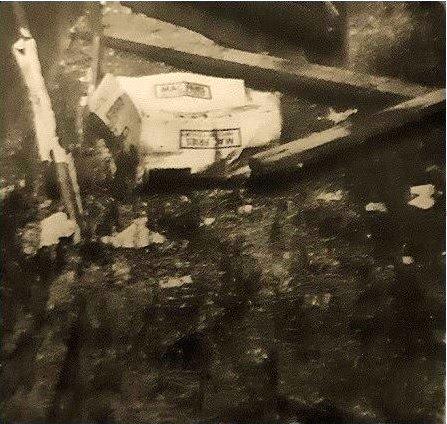
Forensic pathologists at the Sacramento County Coroner’s Office were confronted with horrific crime scenes. In the January 23 murder of 22-year-old Teresa Wallin and the January 27 quadruple slaughter at the Miroth residence, victims exhibited close-range gunshot wounds, extensive abdominal cavitations, and organ excision.
Forensic criminalists recovered distinct bloody shoe tread impressions matching lightweight running shoes, alongside .22 caliber cartridge casings bearing unique firing pin indentations. Sifting through the Miroth residence, criminalists recovered latent fingerprints on discarded glassware and doorframes.
The Investigative Breakthrough, Behavioral Profiling & Tactical Manhunt
To break the impasse, Sacramento Sheriff’s detectives contacted the FBI Behavioral Science Unit at Quantico. Special Agent Robert K. Ressler drafted a groundbreaking criminal profile, predicting the killer was an unemployed, severely malnourished white male aged 25 to 27, living in squalor in the immediate vicinity of the homicides, driving a dilapidated vehicle, and exhibiting severe psychiatric deterioration.
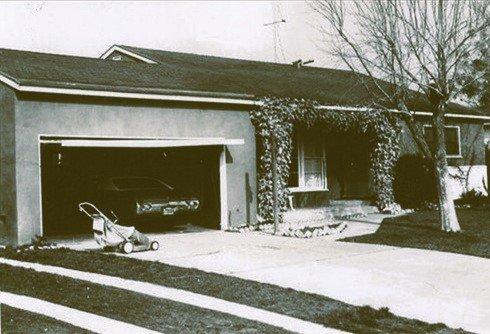
On January 28, 1978, detectives located Chase’s apartment on Watt Avenue, less than a mile from the Miroth crime scene. Observing Chase emerge carrying a box, detectives confronted him. Chase sprinted, discarding the box—which contained bloodstained rags—before being tackled. Searching his apartment, investigators discovered a kitchen blender encrusted with blood, butchered animal remains in the refrigerator, and victim credit cards.

Courtroom Proceedings, Expert Testimony & The Definitive Verdict
Chase’s trial opened in January 1979 in Sacramento County Superior Court before Judge A. Richard Backus. The defense argued that Chase was legally insane under the M’Naghten rule due to severe schizophrenia.
However, the prosecution established that Chase took deliberate evasive countermeasures, such as parking blocks away from victim homes and attempting to discard evidence upon arrest, demonstrating cognitive awareness of wrongfulness. On May 8, 1979, the jury found Chase guilty of six counts of first-degree murder, sentencing him to death. On December 26, 1980, Chase committed suicide in his cell at San Quentin by overdosing on prescribed anti-anxiety medication.
Modern Criminological Impact, Legal Precedents & Forensic Evolution
The Richard Chase case is celebrated in criminalistics as the classic textbook archetype of the ‘disorganized serial offender’ in FBI behavioral profiling methodology.
Ressler’s accurate psychological deduction validated the clinical utility of behavioral analysis in homicide investigations, establishing the paradigm still taught across law enforcement academies worldwide.
Forensic Pathology, Traumatology & Biomechanical Reconstruction
Medico-legal autopsy protocols mandate systematic anatomical dissection and photographic documentation to determine both the immediate cause and underlying manner of death. Forensic pathologists evaluate external cutaneous trauma—including contusions, abrasions, lacerations, and incised wounds—measuring dimensional metrics, beveling angles, and marginal tissue bridging to reconstruct weapon kinematics and kinetic energy transfer.
Histopathological examination of microscopic tissue sections stained with Hematoxylin and Eosin (H&E) allows pathologists to differentiate between ante-mortem vital reactions and post-mortem artifactual damage. Sub-cutaneous hemorrhaging, inflammatory cellular infiltration, and microscopic vascular thrombosis confirm that physiological circulation was active at the time injury was sustained, allowing investigators to establish precise chronological sequences of fatal physical trauma.
Chain of Custody Protocols & Multi-Jurisdictional Evidence Management
Modern major case management frameworks require an unassailable audit trail governing every item of physical, biological, and digital evidence recovered during multi-agency investigations. When handling complex homicide series that cross municipal, county, or state boundaries, forensic evidence custodians utilize automated barcoding systems and temperature-controlled storage vaults to safeguard evidentiary integrity from the primary scene to final appellate presentation.
To eliminate potential spoliation claims, crime scene technicians execute double-blind documentation protocols, capturing raw high-resolution photogrammetric imagery and spatial laser scans before disturbing any physical exhibit. Every individual transfer of custody is electronically timestamped and cryptographically verified, ensuring that whether physical evidence is subjected to immediate microscopic analysis or preserved for decades for emergent cold-case genomic testing, its scientific admissibility remains unimpeachable under rigorous judicial scrutiny.
Modern Jurisprudential Precedents & Evidentiary Standards
The landmark investigative and courtroom developments associated with Richard Chase fundamentally redefined procedural evidentiary standards under the Federal Rules of Evidence (Rule 702) and international common law equivalents. Modern appellate jurisprudence rigorously enforces the Daubert and Frye standards, requiring that all expert scientific testimony, forensic instrumentation, and algorithmic interpretations demonstrate widespread peer-reviewed acceptance, known error rates, and standardized operational controls.
Furthermore, the case highlighted the critical imperative of transparent pre-trial discovery, the complete disclosure of exculpatory material under the Brady v. Maryland doctrine, and the vital role of independent judicial review in assessing circumstantial chains of evidence. Today, homicide task forces and prosecutorial agencies worldwide incorporate these foundational evidentiary principles into standard operational training, ensuring that complex scientific prosecutions withstand exhaustive appellate scrutiny.
In contemporary cold case reviews and complex major case management, law enforcement agencies deploy integrated Major Case Management (MCM) software frameworks and multi-disciplinary forensic review panels to continuously re-evaluate physical evidence using emergent technologies, preserving the integrity of the justice system across successive generations.
Chronological Case Timeline
| Date | Event Description |
|---|---|
| December 29, 1977 | First drive-by murder of 51-year-old Ambrose Griffin in Sacramento. |
| January 23, 1978 | Murders pregnant 22-year-old Teresa Wallin inside her unlocked suburban home. |
| January 27, 1978 | Quadruple homicide of Evelyn Miroth, her son Jason, infant nephew Michael, and friend David Ferreira. |
| January 28, 1978 | Sacramento Sheriff’s deputies execute stakeout; Chase arrested attempting to flee his apartment. |
| January 1978 | Search of Chase’s apartment reveals blender containing blood, animal parts, and victim property. |
| January 1979 | Trial opens in Sacramento County Superior Court. |
| May 8, 1979 | Jury rejects insanity defense; convicts Chase of 6 counts of first-degree murder; sentenced to death. |
| December 26, 1980 | Found dead in his cell at San Quentin State Prison from prescribed antidepressant overdose. |
Frequently Asked Questions
Why was Richard Chase called the Vampire of Sacramento?
Chase suffered from severe paranoid schizophrenia and somatic delusions that his blood was turning to powder, driving him to consume the blood and visceral organs of animals and human victims to stay alive.
How did an unlocked door determine Chase’s victim selection?
Chase believed an unlocked door was an invitation to enter, while a locked door signified he was unwelcome, simply walking away from locked houses.
What was FBI Profiler Robert Ressler’s role in the case?
Ressler developed a pioneering psychological profile of a ‘disorganized serial killer’, accurately predicting Chase was a malnourished, unemployed, unkempt white male living alone in squalor near the crime scenes.
{
“@context”: “https://schema.org”,
“@type”: “FAQPage”,
“mainEntity”: [
{
“@type”: “Question”,
“name”: “Why was Richard Chase called the Vampire of Sacramento?”,
“acceptedAnswer”: {
“@type”: “Answer”,
“text”: “Chase suffered from severe paranoid schizophrenia and somatic delusions that his blood was turning to powder, driving him to consume the blood and visceral organs of animals and human victims to stay alive.”
}
},
{
“@type”: “Question”,
“name”: “How did an unlocked door determine Chase’s victim selection?”,
“acceptedAnswer”: {
“@type”: “Answer”,
“text”: “Chase believed an unlocked door was an invitation to enter, while a locked door signified he was unwelcome, simply walking away from locked houses.”
}
},
{
“@type”: “Question”,
“name”: “What was FBI Profiler Robert Ressler’s role in the case?”,
“acceptedAnswer”: {
“@type”: “Answer”,
“text”: “Ressler developed a pioneering psychological profile of a ‘disorganized serial killer’, accurately predicting Chase was a malnourished, unemployed, unkempt white male living alone in squalor near the crime scenes.”
}
}
]
}