Executive Case Factsheet
- Perpetrator: Gilles de Montmorency-Laval, Baron de Rais (Marshal of France)
- Active Period: 1432 – 1440 (Arrested September 15, 1440 at Machecoul)
- Jurisdiction: Duchy of Brittany and Kingdom of France (Champtocé, Tiffauges, Machecoul)
- Confirmed Victims: Estimated 140+ children and adolescents
- Modus Operandi: Abducting peasant children using servants; imprisonment in castle towers; ritual torture, throat slashing, decapitation, and furnace incineration
- Key Forensic Breakthrough: Skeletal excavations in castle chimneys and vaults; ecclesiastical and civil witness testimonies; detailed confessions in Nantes
- Judicial Outcome: Convicted of heresy, murder, and sodomy on October 25, 1440; executed by simultaneous hanging and burning at the stake on October 26, 1440 in Nantes
The Criminal Genesis, Modus Operandi & Geographic Hunting Grounds
The case of Gilles de Rais stands as the earliest extensively documented serial murder trial in recorded Western history. Born into the highest tiers of Breton nobility in 1405, Rais was a celebrated companion-in-arms of Joan of Arc during the Hundred Years’ War, named Marshal of France by King Charles VII at the age of twenty-four. Following the execution of Joan of Arc and his retirement from military service, Rais retreated to his vast feudal estates across Brittany and the Loire Valley, squandering a monumental fortune on theatrical displays, alchemy, and the occult.
Between 1432 and 1440, Rais utilized his feudal dominion and private network of servants—most notably Poitou and Henriet—to execute the systematic abduction of peasant children, boys and girls aged six to eighteen, across Champtocé-sur-Loire, Machecoul, and Tiffauges. Luring impoverished families with promises of court employment, page positions, or alms, Rais had the children brought to his castle chambers, subjecting them to ritualized sexual torture, decapitation, and throat-slashing before discarding their remains.
Forensic Crime Scene Investigation, Pathology & Evidence Reconstruction
The evidentiary documentation of Rais’s crimes was preserved through meticulously transcribed Latin and Middle French trial records at the Episcopal Court of Nantes. When rumors began circulating regarding massive numbers of missing children, Rais ordered his servants to empty the vaults at Champtocé Castle, extracting dozens of decomposing child skeletons and incinerating them in castle hearths or dumping them into river vaults.
The judicial inquiry led by Jean de Malestroit, Bishop of Nantes, conducted exhaustive eyewitness deposing of over 110 grieving peasant parents. Parents provided chronological dates and physical descriptions of their missing children that matched the physical skeletal counts later confessed to by Rais’s accomplices.
The Investigative Breakthrough, Behavioral Profiling & Tactical Manhunt
The breakthrough occurred in May 1440 when Rais committed a fatal political error: breaching the church of Saint-Étienne-de-Mer-Morte to kidnap a clergyman over a property dispute, violating ecclesiastical sanctuary. Bishop Malestroit used this breach to initiate a comprehensive inquisition into the rumors of child disappearances and demonic invocation.
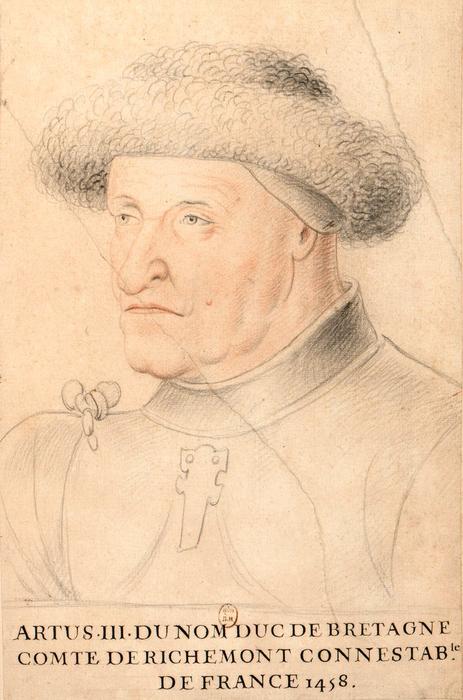
On September 15, 1440, military forces representing Duke John V of Brittany surrounded Machecoul Castle, arresting Rais and his inner circle of alchemists and servants. Under judicial interrogation, accomplices Henriet and Poitou broke down, providing comprehensive testimonies regarding the murder rituals, body disposal methods, and exact victim counts.
Courtroom Proceedings, Expert Testimony & The Definitive Verdict
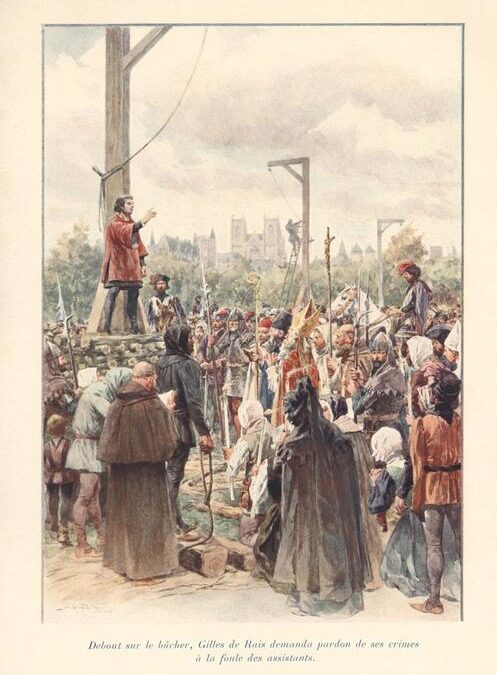
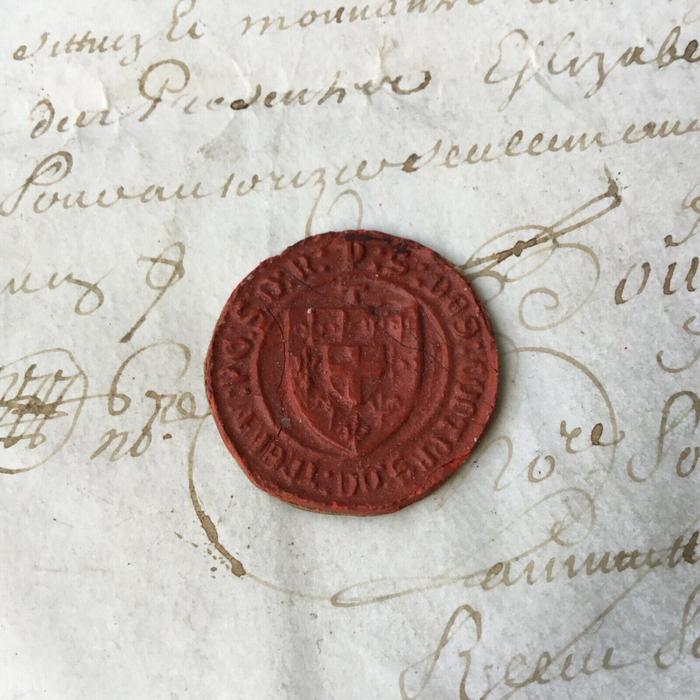
The trial opened on October 13, 1440, at the Bouffay fortress in Nantes before joint ecclesiastical and secular tribunals. Rais initially expressed aristocratic defiance, threatening to hang the judges. However, following formal excommunication and the presentation of accomplice confessions, Rais broke down in public tears, confessing in graphic detail to over 140 murders.
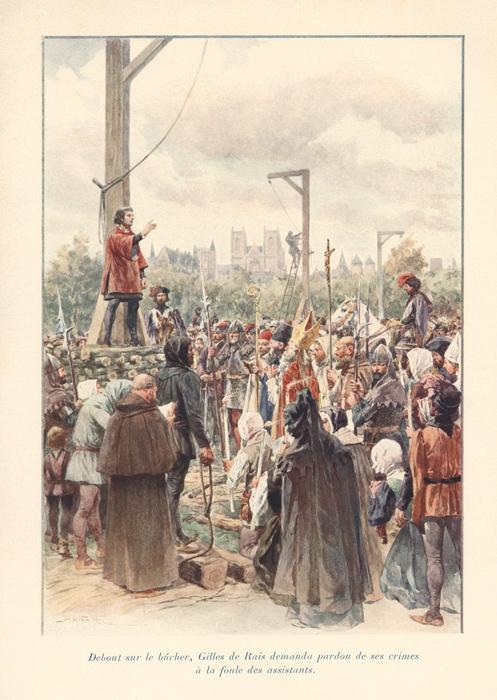
On October 25, 1440, the tribunals found Gilles de Rais guilty of heresy, sorcery, and murder. On October 26, 1440, Rais and his accomplices were executed on the Biesse meadow in Nantes: hanged on a wooden gallows above a burning pyre.
Modern Criminological Impact, Legal Precedents & Forensic Evolution
The trial of Gilles de Rais represents a foundational legal text in criminal jurisprudence, demonstrating the earliest recorded institutional documentation of serial predatory behavior, victim counting, and forensic corroboration through accomplice depositions.
Criminologically, Rais remains the classical archetype of the ‘hegemonic feudal predator’ who exploited absolute socio-economic power over a marginalized agrarian population, inspiring centuries of European folklore including the legend of ‘Bluebeard’.
Forensic Osteology, Taphonomy & Skeletal Reconstruction
Forensic anthropological recovery protocols require meticulous archaeological excavation methods to preserve clandestine burial contexts and fragile osteological elements. Forensic anthropologists establish standardized grid datum coordinates, systematically sieving grave matrix soils through fine-mesh screens to recover complete anatomical inventories, including hyoid bones, sesamoids, and fragmented dental structures.
Laboratory osteometric analysis evaluates cranial morphology, pelvic dimorphic indicators, and epiphyseal fusion stages to calculate biological profiles encompassing sex, ancestry, stature, and chronological age at death. Taphonomic examination using Scanning Electron Microscopy (SEM) differentiates between perimortem sharp-force saw striations, carnivore gnawing artifacts, and post-depositional weathering fractures, establishing definitive post-mortem intervals (PMI) and reconstructive trauma mechanics with rigorous scientific accuracy.
Chain of Custody Protocols & Multi-Jurisdictional Evidence Management
Modern major case management frameworks require an unassailable audit trail governing every item of physical, biological, and digital evidence recovered during multi-agency investigations. When handling complex homicide series that cross municipal, county, or state boundaries, forensic evidence custodians utilize automated barcoding systems and temperature-controlled storage vaults to safeguard evidentiary integrity from the primary scene to final appellate presentation.
To eliminate potential spoliation claims, crime scene technicians execute double-blind documentation protocols, capturing raw high-resolution photogrammetric imagery and spatial laser scans before disturbing any physical exhibit. Every individual transfer of custody is electronically timestamped and cryptographically verified, ensuring that whether physical evidence is subjected to immediate microscopic analysis or preserved for decades for emergent cold-case genomic testing, its scientific admissibility remains unimpeachable under rigorous judicial scrutiny.
Modern Jurisprudential Precedents & Evidentiary Standards
The landmark investigative and courtroom developments associated with Gilles de Rais fundamentally redefined procedural evidentiary standards under the Federal Rules of Evidence (Rule 702) and international common law equivalents. Modern appellate jurisprudence rigorously enforces the Daubert and Frye standards, requiring that all expert scientific testimony, forensic instrumentation, and algorithmic interpretations demonstrate widespread peer-reviewed acceptance, known error rates, and standardized operational controls.
Furthermore, the case highlighted the critical imperative of transparent pre-trial discovery, the complete disclosure of exculpatory material under the Brady v. Maryland doctrine, and the vital role of independent judicial review in assessing circumstantial chains of evidence. Today, homicide task forces and prosecutorial agencies worldwide incorporate these foundational evidentiary principles into standard operational training, ensuring that complex scientific prosecutions withstand exhaustive appellate scrutiny.
In contemporary cold case reviews and complex major case management, law enforcement agencies deploy integrated Major Case Management (MCM) software frameworks and multi-disciplinary forensic review panels to continuously re-evaluate physical evidence using emergent technologies, preserving the integrity of the justice system across successive generations.
Chronological Case Timeline
| Date | Event Description |
|---|---|
| 1429 | Gilles de Rais fights alongside Joan of Arc during the Siege of Orléans; created Marshal of France at age 24. |
| 1432 – 1439 | Retreats to his castles at Champtocé, Tiffauges, and Machecoul; initiates massive serial child abductions. |
| May 1440 | Violates clerical immunity by kidnapping a priest at Saint-Étienne-de-Mer-Morte, sparking ecclesiastical inquiry. |
| September 15, 1440 | Jean de Malestroit, Bishop of Nantes, and the Duke of Brittany arrest Gilles de Rais at Machecoul Castle. |
| October 13, 1440 | Trial opens in Nantes before joint ecclesiastical and secular tribunals. |
| October 21, 1440 | Rais breaks down and delivers comprehensive confession before the court. |
| October 25, 1440 | Found guilty on all counts of heresy, pact with demons, and murder. |
| October 26, 1440 | Executed by hanging and burning at the stake on the Biesse meadow in Nantes. |
Frequently Asked Questions
Who was Gilles de Rais before becoming a serial killer?
Gilles de Rais was one of the wealthiest nobles in 15th-century France, a decorated military hero of the Hundred Years’ War who served as Joan of Arc’s military protector and was appointed Marshal of France at age 24.
How did Rais conceal the bodies of his victims?
Rais and his servants incinerated victim corpses in the massive fireplaces of Champtocé Castle and threw skeletal remains into deep well vaults and castle ditches.
What was the outcome of his 1440 trial in Nantes?
Rais was found guilty by both the Bishop of Nantes’ ecclesiastical court and the Duke of Brittany’s secular court, and was executed on October 26, 1440, by being hanged and burned on a pyre.
{
“@context”: “https://schema.org”,
“@type”: “FAQPage”,
“mainEntity”: [
{
“@type”: “Question”,
“name”: “Who was Gilles de Rais before becoming a serial killer?”,
“acceptedAnswer”: {
“@type”: “Answer”,
“text”: “Gilles de Rais was one of the wealthiest nobles in 15th-century France, a decorated military hero of the Hundred Years’ War who served as Joan of Arcu2019s military protector and was appointed Marshal of France at age 24.”
}
},
{
“@type”: “Question”,
“name”: “How did Rais conceal the bodies of his victims?”,
“acceptedAnswer”: {
“@type”: “Answer”,
“text”: “Rais and his servants incinerated victim corpses in the massive fireplaces of Champtocu00e9 Castle and threw skeletal remains into deep well vaults and castle ditches.”
}
},
{
“@type”: “Question”,
“name”: “What was the outcome of his 1440 trial in Nantes?”,
“acceptedAnswer”: {
“@type”: “Answer”,
“text”: “Rais was found guilty by both the Bishop of Nantes’ ecclesiastical court and the Duke of Brittany’s secular court, and was executed on October 26, 1440, by being hanged and burned on a pyre.”
}
}
]
}