Executive Case Factsheet
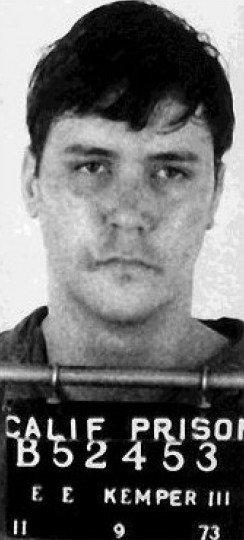
- Perpetrator: Edmund Emil Kemper III (‘The Co-ed Killer’)
- Active Period: 1972 – 1973 (Surrendered April 24, 1973 in Pueblo, CO)
- Jurisdiction: Santa Cruz County and Alameda County, California
- Confirmed Victims: 10 victims (including his grandparents, mother Clarnell Strandberg, and 6 female college students)
- Modus Operandi: Picking up female college hitchhikers; shooting with handguns or stabbing; anatomical dismemberment, necrophilia, and decapitation at his residence
- Key Forensic Breakthrough: Voluntary telephonic surrender from Pueblo, Colorado; detailed crime scene reconstructions; groundbreaking interviews with FBI BSU agents John Douglas and Robert Ressler
- Judicial Outcome: Convicted of 8 counts of first-degree murder on November 8, 1973; sentenced to 8 concurrent life terms at California Medical Facility
The Criminal Genesis, Modus Operandi & Geographic Hunting Grounds
Edmund Emil Kemper III represents one of the most intellectually complex and clinically studied serial murderers in the history of behavioral criminology. Standing 6 feet 9 inches tall, weighing 280 pounds, and possessing a measured IQ of 145, Kemper began his violent career in 1964 at age fifteen by shooting his paternal grandparents. After spending five years at Atascadero State Hospital, Kemper secured full psychiatric release in 1969 after successfully manipulating institutional staff.
Between May 1972 and April 1973, Kemper operated across Santa Cruz County, California. Cruising in his vehicle, he offered rides to young female hitchhikers attending the University of California, Santa Cruz, and Cabrillo College. Disarming victims with polite conversational charm and a vehicle modified with locked interior handles, Kemper transported them to isolated mountain roads in the Santa Cruz Mountains, shooting or stabbing them before taking their bodies to his mother’s residence for post-mortem anatomical dismemberment, decapitation, and necrophilia.
Forensic Crime Scene Investigation, Pathology & Evidence Reconstruction
Forensic pathologists at the Santa Cruz County Coroner’s Office documented extreme anatomical precision in the dismemberment of victim remains recovered from mountain ravines. Kemper used surgical-grade knives and bone saws, carefully dissecting joints without leaving jagged bone fractures.
Following his confession, forensic criminalists searched his mother’s Aptos residence. Luminol testing revealed extensive latent bloodstain patterns in the closet and bathroom facilities. Ballistic testing confirmed that rifling striations on recovered .22 caliber lead bullets matched a firearm seized from Kemper’s vehicle.
The Investigative Breakthrough, Behavioral Profiling & Tactical Manhunt
The homicide spree concluded on Easter weekend in April 1973. Kemper bludgeoned his mother, Clarnell Strandberg, to death in her bed, subsequently murdering her best friend Sally Hallett. Placing his mother’s decapitated head on the mantle, Kemper fled California, driving non-stop to Colorado.
Realizing that law enforcement had not yet discovered the bodies, Kemper called the Santa Cruz Police Department from a phone booth in Pueblo, Colorado, on April 24, 1973, demanding to speak with homicide detectives and providing an exhaustive, voluntary confession to all ten homicides. He waited peacefully until Pueblo police officers arrived to take him into custody.
Courtroom Proceedings, Expert Testimony & The Definitive Verdict
Kemper’s trial opened in October 1973 in Santa Cruz County Superior Court before Judge Harry Brauer. Kemper refused to allow his defense counsel to seek an insanity acquittal, taking the stand to describe his crimes in precise, analytical detail.
On November 8, 1973, the jury convicted Kemper of eight counts of first-degree murder. Because the death penalty was temporarily unconstitutional in California under People v. Anderson, Kemper was sentenced to eight concurrent terms of life imprisonment. He is incarcerated at the California Medical Facility in Vacaville.
Modern Criminological Impact, Legal Precedents & Forensic Evolution
Edmund Kemper’s voluntary collaboration with Special Agents John Douglas and Robert Ressler of the FBI Behavioral Science Unit (BSU) laid the foundation for modern criminal profiling methodologies and the development of the Criminal Classification Manual.
Kemper’s detailed clinical explanations of the progression from violent fantasy to active predatory execution provided the scientific blueprint for understanding the organized serial killer typology across global law enforcement agencies.
Behavioral Analysis, Geographic Profiling & Offender Typology
Forensic behavioral analysis synthesizes victimological data, crime scene dynamics, and spatial-temporal patterns to reconstruct the psychological characteristics and operational habits of violent offenders. Behavioral analysts from the FBI National Center for the Analysis of Violent Crime (NCAVC) evaluate the degree of criminal sophistication, distinguishing between organized offenders who exhibit meticulous planning and forensic awareness, and disorganized offenders driven by impulsive, deteriorating psychopathology.
Geographic profiling software algorithms utilize Rigel and CrimeStat spatial analysis to model offender anchor points, hunting ranges, and buffer zones based on Rossmo’s formula of distance decay. By analyzing signature behaviors—such as ritualistic posing, souvenir retention, and post-mortem staging—behavioral scientists establish vital behavioral linkages across multi-jurisdictional crime series, guiding targeted investigative strategies and tactical interrogation approaches.
Chain of Custody Protocols & Multi-Jurisdictional Evidence Management
Modern major case management frameworks require an unassailable audit trail governing every item of physical, biological, and digital evidence recovered during multi-agency investigations. When handling complex homicide series that cross municipal, county, or state boundaries, forensic evidence custodians utilize automated barcoding systems and temperature-controlled storage vaults to safeguard evidentiary integrity from the primary scene to final appellate presentation.
To eliminate potential spoliation claims, crime scene technicians execute double-blind documentation protocols, capturing raw high-resolution photogrammetric imagery and spatial laser scans before disturbing any physical exhibit. Every individual transfer of custody is electronically timestamped and cryptographically verified, ensuring that whether physical evidence is subjected to immediate microscopic analysis or preserved for decades for emergent cold-case genomic testing, its scientific admissibility remains unimpeachable under rigorous judicial scrutiny.
Modern Jurisprudential Precedents & Evidentiary Standards
The landmark investigative and courtroom developments associated with Edmund Kemper fundamentally redefined procedural evidentiary standards under the Federal Rules of Evidence (Rule 702) and international common law equivalents. Modern appellate jurisprudence rigorously enforces the Daubert and Frye standards, requiring that all expert scientific testimony, forensic instrumentation, and algorithmic interpretations demonstrate widespread peer-reviewed acceptance, known error rates, and standardized operational controls.
Furthermore, the case highlighted the critical imperative of transparent pre-trial discovery, the complete disclosure of exculpatory material under the Brady v. Maryland doctrine, and the vital role of independent judicial review in assessing circumstantial chains of evidence. Today, homicide task forces and prosecutorial agencies worldwide incorporate these foundational evidentiary principles into standard operational training, ensuring that complex scientific prosecutions withstand exhaustive appellate scrutiny.
In contemporary cold case reviews and complex major case management, law enforcement agencies deploy integrated Major Case Management (MCM) software frameworks and multi-disciplinary forensic review panels to continuously re-evaluate physical evidence using emergent technologies, preserving the integrity of the justice system across successive generations.
Chronological Case Timeline
| Date | Event Description |
|---|---|
| August 27, 1964 | At age 15, Kemper shoots his grandparents in North Fork, California; committed to Atascadero State Hospital. |
| 1969 | Released from Atascadero; records sealed after convincing psychiatrists of his rehabilitation. |
| May 1972 | Abducts and murders Fresno State students Mary Ann Pesce and Anita Luchessa in Santa Cruz mountains. |
| April 20, 1973 | Murders his mother Clarnell Strandberg and her friend Sally Hallett; flees California. |
| April 24, 1973 | Calls Santa Cruz police from a phone booth in Pueblo, Colorado, and confesses to all homicides. |
| October 1973 | Trial commences in Santa Cruz County Superior Court. |
| November 8, 1973 | Jury convicts Kemper of eight counts of first-degree murder. |
| Present | Incarcerated at California Medical Facility in Vacaville. |
Frequently Asked Questions
Why was Edmund Kemper called the Co-ed Killer?
Kemper targeted female college students (‘co-eds’) attending the University of California, Santa Cruz, and Cabrillo College who were hitchhiking along regional highways in 1972 and 1973.
How did Kemper contribute to FBI criminal profiling?
Possessing a 145 IQ and extraordinary articulateness, Kemper spent hundreds of hours being interviewed by FBI BSU Special Agents John Douglas and Robert Ressler, providing foundational insights into serial killer psychology, fantasy progression, and signature behavior.
Why did Kemper surrender to police?
After murdering his mother, Kemper realized that his internal predatory compulsion had been extinguished with her death, concluding that continued killing had no purpose and calling police to turn himself in.
{
“@context”: “https://schema.org”,
“@type”: “FAQPage”,
“mainEntity”: [
{
“@type”: “Question”,
“name”: “Why was Edmund Kemper called the Co-ed Killer?”,
“acceptedAnswer”: {
“@type”: “Answer”,
“text”: “Kemper targeted female college students (‘co-eds’) attending the University of California, Santa Cruz, and Cabrillo College who were hitchhiking along regional highways in 1972 and 1973.”
}
},
{
“@type”: “Question”,
“name”: “How did Kemper contribute to FBI criminal profiling?”,
“acceptedAnswer”: {
“@type”: “Answer”,
“text”: “Possessing a 145 IQ and extraordinary articulateness, Kemper spent hundreds of hours being interviewed by FBI BSU Special Agents John Douglas and Robert Ressler, providing foundational insights into serial killer psychology, fantasy progression, and signature behavior.”
}
},
{
“@type”: “Question”,
“name”: “Why did Kemper surrender to police?”,
“acceptedAnswer”: {
“@type”: “Answer”,
“text”: “After murdering his mother, Kemper realized that his internal predatory compulsion had been extinguished with her death, concluding that continued killing had no purpose and calling police to turn himself in.”
}
}
]
}