
INVESTIGATIVE CASE DOSSIER: THE BEAR BROOK MURDERS (ALLENSTOWN FOUR)
- Identified Victims: Marlyse Elizabeth Honeychurch (24), Marie Elizabeth Vaughn (6), Sarah Lynn McWaters (11 months)
- Unidentified Victim: Middle Child (approx. 2–4 years old; biologically confirmed daughter of killer Terry Rasmussen)
- Discovery Dates: Barrel 1: November 10, 1985; Barrel 2: May 9, 2000
- Crime Location: Bear Brook State Park, Allenstown, Merrimack County, New Hampshire
- Perpetrator: Terry Peder Rasmussen (“The Chameleon Killer”; Born 1943, Died in prison December 28, 2010)
- Forensic Breakthrough: Investigative Genetic Genealogy (Barbara Rae-Venter, Dr. Colleen Fitzpatrick, Identifinders)
- Official Identification Date: June 6, 2019 (New Hampshire State Police Press Conference)
- Historical Significance: Established early genetic genealogy methodology that led directly to solving the Golden State Killer
For more than three decades, the pine-blanketed woodland of Bear Brook State Park in southern New Hampshire concealed one of the most chilling, multifaceted serial murder mysteries in American history. Between 1985 and 2000, two rusted 55-gallon industrial metal barrels were discovered discarded in the forest brush just yards apart. Inside lay the skeletal remains of four female victims—a young mother and three small children—all wrapped in plastic sheeting and bearing the catastrophic trauma of blunt force head injuries. For decades, they were known across the true crime world simply as the “Allenstown Four”.
The quest to identify the victims and unmask their killer sparked an unprecedented multi-jurisdictional investigation spanning five decades, five states, and multiple stolen identities. The breakthrough did not arrive through conventional police databases, but through the pioneering birth of investigative genetic genealogy. Led by pioneering genealogist Barbara Rae-Venter and cold case detectives, forensic scientists successfully unmasked the phantom killer as Terry Peder Rasmussen—a prolific, transient serial predator known as the “Chameleon Killer”—before definitively restoring the names of three of the four victims in June 2019.
THE 1985 AND 2000 BARREL DISCOVERIES
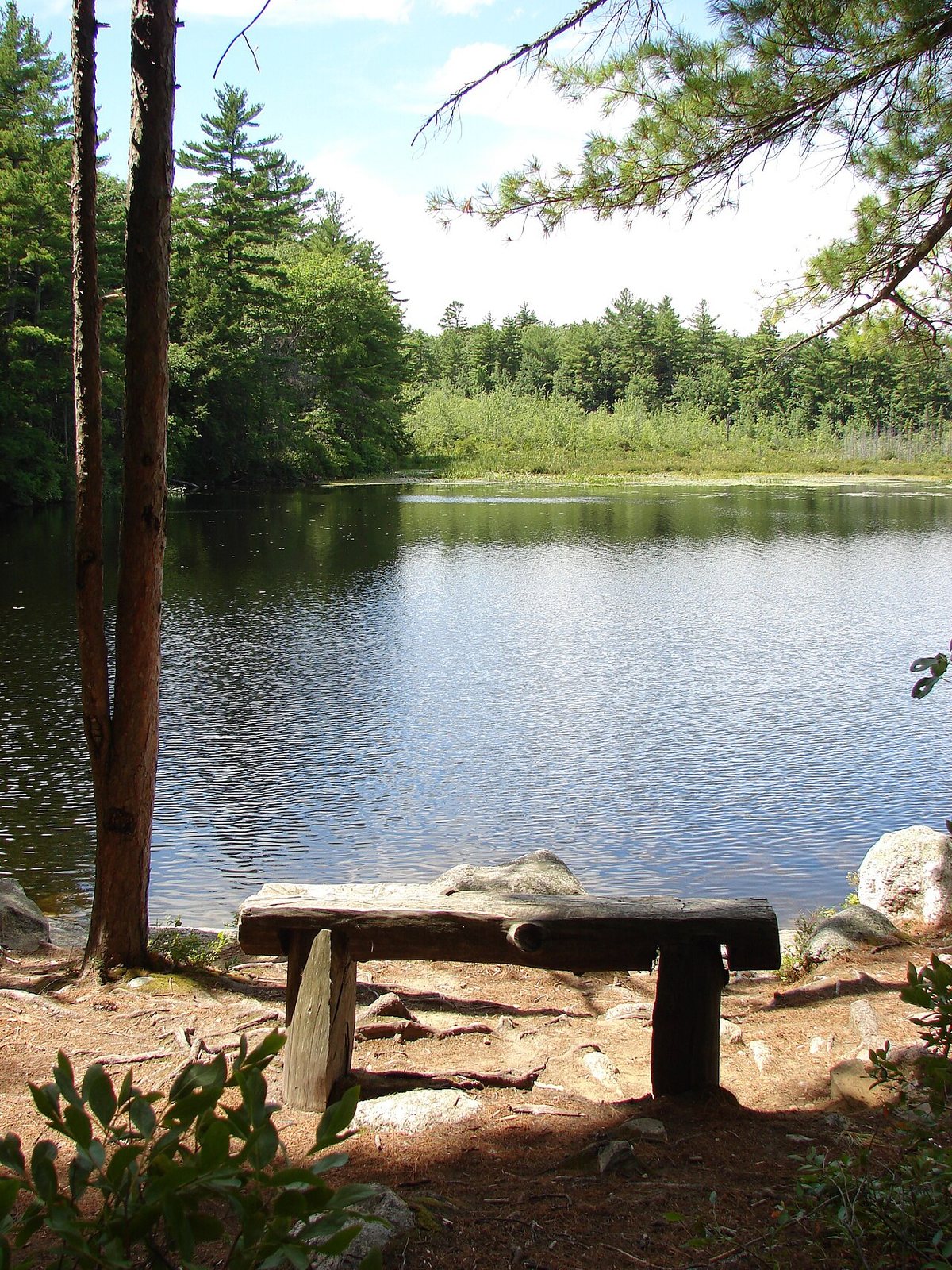
The dark saga commenced on November 10, 1985, when a local hunter traversing the woods near a burned-down general store along the perimeter of Bear Brook State Park in Allenstown stumbled upon an overturned, rusted 55-gallon industrial metal drum. Inside, investigators discovered the skeletal remains of an adult female (estimated age 23–33) and a young female child (estimated age 5–10), tightly wrapped in plastic garbage bags. Autopsies determined that both victims had died from severe blunt force trauma to the skull and had been dead for several years, likely placed in the drum between 1977 and 1981.
Despite exhaustive forensic facial reconstructions, dental charting, and national missing person queries, the case went completely cold. Fifteen years later, on May 9, 2000, New Hampshire State Police Detective Sergeant Timothy Loveless returned to the wooded parcel to conduct a fresh terrain sweep. Barely one hundred yards from the 1985 recovery site, detectives uncovered a second rusted 55-gallon drum. Inside were the skeletal remains of two additional young female children: a toddler aged 2 to 4 years and an infant aged 11 to 18 months.
Subsequent forensic testing established that all four victims were killed around the same time and discarded in identical fashion. In the mid-2000s, mitochondrial DNA (mtDNA) analysis conducted by state and federal laboratories confirmed a crucial biological link: the adult female found in the first barrel was the biological mother of the oldest child in Barrel 1 and the infant in Barrel 2. However, the middle child in Barrel 2 shared no maternal DNA with the others—she was biologically unrelated on the maternal line, deepening the perplexing mystery.
THE CHAMELEON KILLER: UNMASKING TERRY RASMUSSEN
The breakthrough that unraveled the Bear Brook murders originated thousands of miles away in California. In 1986, a man using the alias “Curtis Kimball” abandoned a 5-year-old girl named Lisa at an RV park in Scotts Valley, California. After serving prison time for child abandonment, the man vanished, assumed the name “Larry Vanner”, and in 2002 murdered his common-law wife, Eunice McFall, in Richmond, California. In 2003, Vanner was convicted of second-degree murder and sentenced to prison, where he died in December 2010.
In 2016, retired patent attorney and genetic genealogist Barbara Rae-Venter undertook the genealogical analysis of the abandoned girl, Lisa. By reverse-engineering Lisa’s family tree through consumer DNA databases, Rae-Venter discovered that Lisa was actually Dawn Beaudin, kidnapped from New Hampshire in 1981 by her mother’s boyfriend—a man known in New Hampshire as “Bob Evans”.
New Hampshire State Police detectives matched DNA from the deceased prisoner “Larry Vanner / Bob Evans” to the Bear Brook evidence. The results were astounding: he was the biological father of the middle child found in the second Bear Brook barrel. In 2017, through further genetic genealogy, authorities finally uncovered the killer’s true birth name: Terry Peder Rasmussen, a violent, nomadic drifter born in Colorado in 1943 who had utilized at least five distinct false identities across forty years of crime.
THE 2019 IDENTIFICATION OF THREE VICTIMS
While the killer was unmasked, three of the four victims in the barrels still lacked their names. In 2018, Dr. Colleen Fitzpatrick and the forensic team at Identifinders International, working with the New Hampshire State Police Cold Case Unit, deployed advanced SNP microarray sequencing on bone fragments from the adult female and oldest child.
Genealogists traced distant cousin matches to an ancestral family line in southern California. In June 2019, detectives confirmed the identities through living maternal relatives:
- Marlyse Elizabeth Honeychurch (24): Born in Connecticut, raised in California; disappeared in November 1978 from La Puente, California, after introducing her family to a new boyfriend named “Bob Evans” (Terry Rasmussen).
- Marie Elizabeth Vaughn (6): Marlyse’s daughter from her first marriage.
- Sarah Lynn McWaters (11 months): Marlyse’s youngest daughter from her second marriage.
The investigation revealed that Rasmussen had convinced Marlyse to leave California with her two young daughters in late 1978, traveling across the country to New Hampshire, where he brutally murdered all three and concealed their bodies inside the first barrel and second barrel along with his own biological daughter.
THE UNRESOLVED MYSTERY: THE MIDDLE CHILD
Despite the historic breakthrough, one crucial piece of the Bear Brook tragedy remains unsolved: the identity of the middle child found in the second barrel. Biologically confirmed through DNA testing to be Terry Rasmussen’s daughter, the toddler was between 2 and 4 years old at the time of her death. Genetic analysis indicates she had significant maternal European ancestry, but her mother’s identity and her true legal name remain completely unknown.
Detectives believe Rasmussen murdered the child’s mother sometime between 1975 and 1978, prior to meeting Marlyse Honeychurch in California. Law enforcement agencies across the United States continue to analyze missing women reports from Texas, Arizona, California, and Idaho to identify the mother of Rasmussen’s child.
The resolution of the Bear Brook Murders stands alongside landmark cold case breakthroughs including Montana’s 1956 Kalitzke-Bogle investigation, the Lady of the Dunes identification in Massachusetts, and the Carla Walker Fort Worth murder, solidifying genetic genealogy as an unprecedented tool in forensic justice.
CRIMINAL PROFILE AND FORENSIC ISOTOPE ANALYSIS
Following the discovery of the second barrel in 2000, forensic scientists at the Lawrence Livermore National Laboratory and the University of Utah conducted stable isotope testing on the victims’ teeth, hair, and bone collagen. By measuring variations in oxygen, hydrogen, and carbon isotopes absorbed through local drinking water and diet, scientists reconstructed the geographic movements of the victims during the final years of their lives.
The isotopic testing revealed that the adult female (Marlyse Honeychurch) and her older daughter (Marie Vaughn) had spent the majority of their childhood and early adolescence in the Pacific or Southern regions of the United States—specifically California or Arizona—before arriving in the New England area just months prior to their murders. In contrast, the middle child (Rasmussen’s biological daughter) exhibited distinct isotopic signatures consistent with spending her early childhood in the Upper Midwest or Great Lakes region, corroborating detectives’ hypothesis that Rasmussen traveled continuously across state lines with multiple families.
THE LEGACY OF BEAR BROOK IN MODERN FORENSIC SCIENCE
The resolution of the Bear Brook murders fundamentally altered the global application of genetic genealogy in law enforcement. It was during her work on the Bear Brook / Lisa case that genetic genealogist Barbara Rae-Venter refined the exact pedigree triangulation methods, GEDmatch database searching protocols, and X-DNA inheritance mapping that she would deploy just months later to unmask Joseph James DeAngelo as the Golden State Killer in California.
Today, the Bear Brook investigation is cited worldwide in forensic pathology and homicide investigator academies as the definitive proof-of-concept for genetic genealogy. What was once considered an insurmountable forensic dead-end in a remote New Hampshire forest became the historic catalyst that opened a new era of cold case resolution across North America.
SUBMIT TIPS ON THE UNIDENTIFIED BEAR BROOK CHILD
If you have archival records, family recollections, or information regarding missing women associated with Terry Rasmussen between 1974 and 1978, please contact the investigative desk.