INVESTIGATIVE CASE DOSSIER: PATRICIA KALITZKE & LLOYD DUANE BOGLE
- Victims: Patricia Kalitzke (16 years old) & Lloyd Duane Bogle (18 years old, USAF Airman 3rd Class)
- Date of Crime: Wednesday, January 2, 1956 (Evening holiday hours)
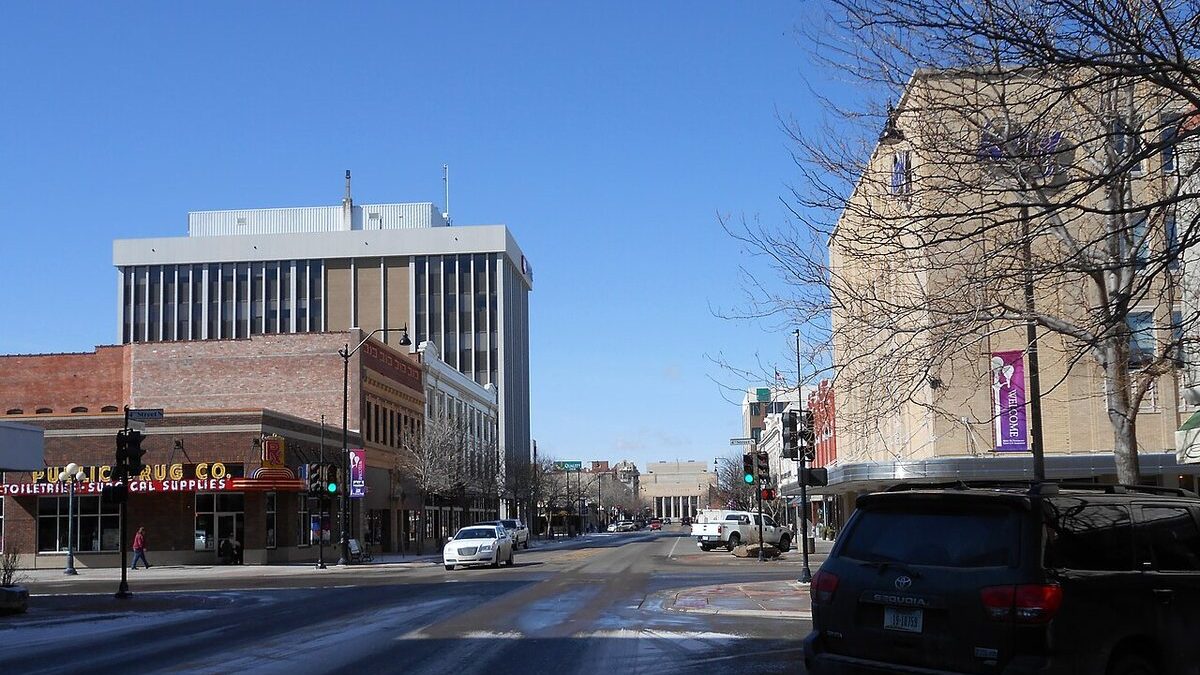
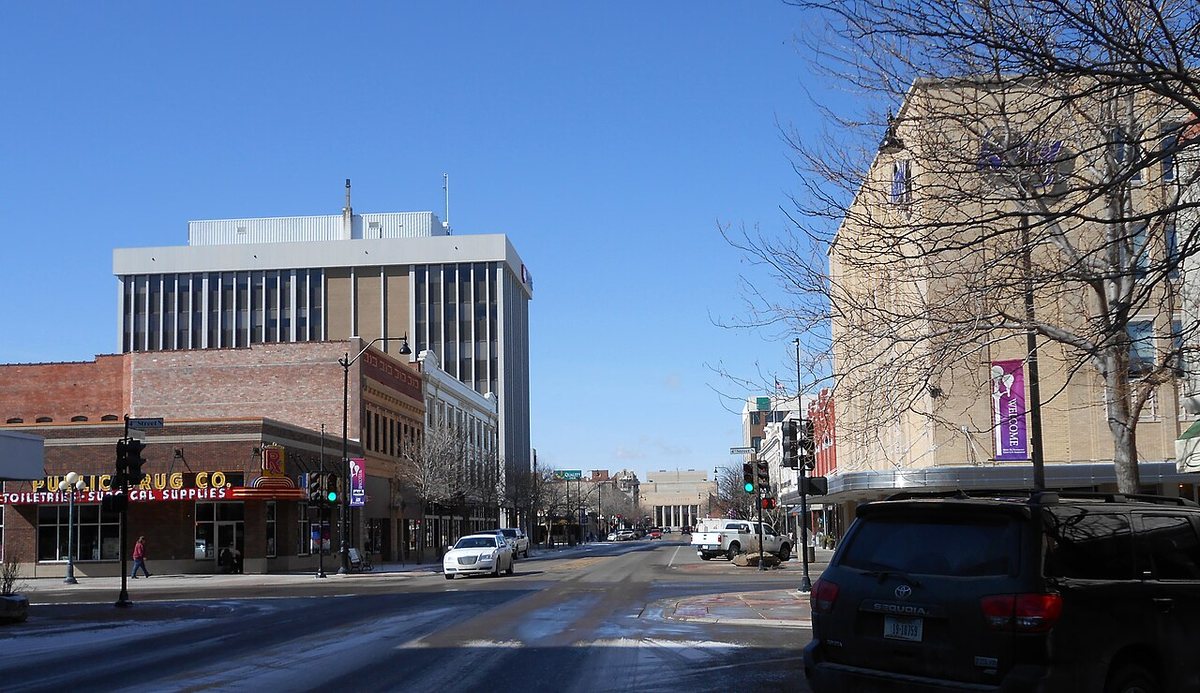
- Discovery Locations: Wadsworth Park overlook & Sun River Road culvert, Great Falls, Cascade County, Montana
- Primary Investigating Agency: Cascade County Sheriff’s Office & Montana Department of Justice DCI
- Perpetrator Identified: Kenneth Gould (Born 1927; Age 29 in 1956; Deceased May 2007 in Missouri)
- Breakthrough Forensic Technology: Whole-Genome SNP Sequencing & Forensic Genetic Genealogy (Bode Technology)
- Historical Significance: Oldest cold case in Montana history (65 years) and one of the oldest in the world resolved by DNA
- Official Clearance Date: June 8, 2021 (Formal Case Closure by Cascade County Sheriff Jesse Slaughter)
On a bitter, sub-zero winter evening in January 1956, a ruthless double execution near the frozen banks of the Sun River shattered the peace of Great Falls, Montana. Eighteen-year-old Lloyd Duane Bogle, an ambitious active-duty airman stationed at Malmstrom Air Force Base, and his 16-year-old high school sweetheart, Patricia Kalitzke, were ambushed in a secluded lover’s lane overlooking the river valley. Lloyd was bound with his own leather belt and shot execution-style through the base of his skull. Patricia was abducted, driven to a remote gravel culvert over a mile away, subjected to horrific sexual violence, and executed with a matching contact gunshot to the head.
For sixty-five years, the heinous double murder remained Montana’s most enduring, frustrating unsolved mystery. Generations of Cascade County sheriffs and county prosecutors inherited the yellowing case files, pursuing hundreds of dead-end leads involving roving transient killers, military personnel, and notorious serial predators like Ted Bundy. That six-decade silence was shattered in June 2021 when modern forensic genetic genealogy breathed life into microscopic sperm cells preserved on glass slides from the 1956 autopsy, definitively unmasking a local Great Falls resident as the elusive killer.
THE AMBUSH AT WADSWORTH PARK: JANUARY 2, 1956
On the afternoon of Monday, January 2, 1956—the observed New Year’s holiday—18-year-old Lloyd Duane Bogle borrowed a maroon 1950 Chevrolet sedan and drove to the Great Falls home of his girlfriend, Patricia Kalitzke, a junior at Great Falls High School. Bogle, originally from Webster City, Iowa, was an ambitious young airman third class assigned to the 407th Strategic Fighter Wing at Malmstrom Air Force Base. The couple intended to spend their holiday afternoon visiting local friends before parking along the scenic cliffs of Wadsworth Park overlooking the Sun River, a popular scenic overlook known locally as a teen gathering spot.
Sometime after dusk, as temperatures plunged below freezing across the Montana plains, an armed assailant approached the vehicle in the darkness. The killer ordered Bogle out of the car, forced him to lie face down on the snow-covered ground, and removed Bogle’s own leather trouser belt to bind his wrists tightly behind his back. The assailant then fired a single .22-caliber slug into the base of Bogle’s skull at point-blank range, killing him instantly.
The killer then forced 16-year-old Patricia Kalitzke into another vehicle or marched her down the frozen river corridor. The following morning, three teenage boys hiking near Wadsworth Park discovered Bogle’s lifeless body lying beside the open door of the blood-stained Chevrolet. Patricia was nowhere to be found, launching an urgent multi-agency countywide search involving military police from Malmstrom Air Force Base, state troopers, and local volunteer posses.
THE RECOVERY OF PATRICIA KALITZKE AND 65-YEAR STALEMATE
Twenty-four hours after the discovery of Bogle’s body, on the morning of Wednesday, January 3, 1956, a county road crew clearing snow along a remote dirt trail over a mile north of the primary crime scene spotted clothing protruding from a deep drainage ditch. Cascade County Sheriff’s deputies arrived and confirmed the remains were those of Patricia Kalitzke. She was fully clothed in her winter coat, but an autopsy performed by the county coroner revealed that she had suffered traumatic sexual assault and had been executed with a single contact gunshot wound to the back of her head, matching the .22-caliber ballistics that killed Bogle.
During the 1956 post-mortem examination, the forensic pathologist made a critical decision that would alter forensic history decades later: he carefully preserved biological evidence from the victim on glass microscope slides. Although DNA technology was non-existent in the 1950s, the slides were meticulously sealed inside evidence envelopes and archived inside the Cascade County Sheriff’s Office evidence vault in Great Falls.
Over the next six decades, the investigation saw hundreds of interviews and theories. In 1989, detectives reviewed the file to see if early DNA extraction was possible, but technology at the time required large quantities of fresh blood. In the early 2000s, state crime lab analysts succeeded in extracting a partial STR profile from the preserved glass slide cuttings, but repeated searches against the FBI’s Combined DNA Index System (CODIS) yielded zero matches, proving the perpetrator had never been convicted of a felony qualifying for mandatory DNA registration.
THE 2021 GENETIC GENEALOGY BREAKTHROUGH: KENNETH GOULD
In 2019, Detective Sergeant Jon Kadner of the Cascade County Sheriff’s Office Cold Case Unit decided to submit the fragile 65-year-old biological slides to Bode Technology in Virginia for advanced whole-genome sequencing. Working alongside private genetic genealogists and public ancestry databases, the bio-forensic team converted the degraded microscopic sperm cells into a comprehensive single-nucleotide polymorphism (SNP) profile containing hundreds of thousands of genetic markers.
Genealogists constructed extensive family trees originating in the northern United States and Canada, identifying multiple second and third cousins. Within months, the genetic lines converged upon a single family branch: the Gould family of Great Falls. By cross-matching historical city directories, employment records, and 1950s vehicle registrations, Detective Kadner pinpointed a prime suspect: Kenneth Gould.
In January 1956, Kenneth Gould was 29 years old, married, and worked in Great Falls as a local laborer. Crucially, Gould resided less than one mile from Patricia Kalitzke’s home and lived directly on the path between the high school and the Wadsworth Park lover’s lane. Records revealed that Gould was an avid outdoorsman who owned several .22-caliber rifles and frequently hunted and fished along the Sun River.
DNA CONFIRMATION AND HISTORIC CASE CLOSURE
Upon identifying Kenneth Gould, Detective Kadner discovered that Gould had moved out of Montana in the 1960s, relocating to Missouri, where he died in 2007 at the age of 80 and was subsequently cremated. Without a direct body to exhume, detectives traveled across state lines to locate Gould’s surviving adult children.
Gould’s children voluntarily cooperated with law enforcement, providing buccal DNA swabs for comparative familial testing. The forensic genetic analysis conducted by the state crime lab was definitive: the biological evidence recovered from Patricia Kalitzke’s body matched Kenneth Gould with a statistical certainty of greater than 99.9999%—conclusively establishing Gould as the perpetrator of the sexual assault and double homicide.
On June 8, 2021, Cascade County Sheriff Jesse Slaughter and Detective Sergeant Jon Kadner hosted a historic press conference in Great Falls, officially announcing that after 65 years, the murders of Patricia Kalitzke and Lloyd Duane Bogle were formally solved and closed by exception.
The breakthrough in Montana’s oldest unsolved homicide, alongside landmark resolutions in the Lady of the Dunes identification, the Carla Walker Fort Worth murder, and the Jay Cook and Tanya Van Cuylenborg trial, cements forensic genetic genealogy as an unprecedented scientific triumph that guarantees no cold case is ever truly beyond the reach of justice.
THE FORENSIC BALLISTICS AND COLD CASE CHRONOLOGY
The initial 1956 ballistics inquiry conducted by the Montana State Crime Laboratory and federal firearms examiners identified the murder weapon as a .22-caliber rimfire weapon, firing standard lead round-nose cartridges. Ballistics markings recovered from Bogle’s vehicle and the spent casing recovered near Patricia Kalitzke’s recovery site indicated the bullets were fired from the same rifled barrel. Throughout the 1960s and 1970s, Cascade County detectives tested dozens of seized firearms belonging to known felons across the Pacific Northwest, but none matched the unique rifling striations.
Investigative files reveal that Kenneth Gould was never formally interviewed as a prime suspect in 1956 because he had no prior felony record or violent criminal history on file with local authorities. Working as a quiet, unassuming laborer in Great Falls, Gould blended seamlessly into the fabric of the community. In the years following the double murder, Gould moved his family to Washington State, then to Wyoming, and ultimately settled in rural Missouri. Detectives now believe that Gould acted alone, utilizing his intimate familiarity with the Sun River’s fishing access points and dark logging cut-offs to ambush the couple and escape undetected in the sub-zero darkness.
LESSONS FROM MONTANA’S HISTORIC RESOLUTION
The successful closure of the 1956 Kalitzke-Bogle murder has established an essential benchmark for law enforcement agencies managing decades-old biological evidence. Prior to 2021, many forensic experts believed that biological material preserved on simple non-vacuum microscope slides from the 1950s would be too degraded, fragmented, or contaminated for modern genomic mapping. The breakthrough accomplished by Cascade County and Bode Technology proved that whole-genome SNP microarray sequencing can recover actionable DNA profiles even from samples stored in standard room-temperature evidence vaults for more than sixty years. The milestone techniques demonstrated here mirrored those that unmasked predators in the April Tinsley cold case murder in Fort Wayne.
SUBMIT TIPS OR ARCHIVAL RECORDS ON COLD CASES
If you possess archival records, historical photographs, or genealogical documentation regarding unsolved homicides or missing person cases, please contact our investigative desk directly.