INVESTIGATIVE CASE DOSSIER: LADY OF THE DUNES (RUTH MARIE TERRY)
- Victim: Ruth Marie Terry (Born September 8, 1936, Whitwell, Tennessee; Age 37 at death)
- Date of Discovery: Friday, July 26, 1974
- Discovery Location: Race Point Dunes, Cape Cod National Seashore, Provincetown, Barnstable County, Massachusetts
- Primary Investigating Agencies: FBI Boston Field Office, Massachusetts State Police, Provincetown Police Department
- Perpetrator: Guy Rockwell Muldavin (Victim’s husband; Born October 27, 1923; Died March 14, 2002)
- Official Identification Date: October 31, 2022 (FBI Press Conference)
- Official Case Clearance: August 28, 2023 (Massachusetts State Police / Cape & Islands District Attorney)
- Forensic Breakthrough Laboratory: Othram Inc. (The Woodlands, Texas) — SNP Microarray & Genetic Genealogy
- Case Classification: Historic Cold Case Solved by Forensic DNA & Genealogy
For nearly half a century, the windswept coastal dunes of Cape Cod held one of the most haunting and elusive mysteries in American true crime history. On a humid summer afternoon in July 1974, the mutilated body of an unidentified woman was discovered lying on an insect-swarmed beach towel in the protected wilderness of the Cape Cod National Seashore. The killer had systematically severed both of the victim’s hands at the wrists to erase fingerprint records, crushed her skull with catastrophic blunt force, and removed several teeth to prevent dental identification. For forty-eight years, she was known across the world simply as the “Lady of the Dunes”—Massachusetts’ oldest, most investigated, and most famous unidentified homicide victim.
Over the ensuing decades, generations of state troopers, FBI profilers, and forensic artists pursued thousands of leads, exhuming the victim’s body three separate times and investigating potential connections to notorious organized crime figures like Whitey Bulger and itinerant serial predators. However, in October 2022, a historic breakthrough achieved through Investigative Genetic Genealogy (IGG) definitively restored the victim’s stolen name: Ruth Marie Terry, a 37-year-old mother and world traveler originally from Tennessee. Ten months later, state prosecutors officially resolved the 49-year investigation by naming her husband, an eccentric antique dealer and suspected serial wife killer, as her murderer.
THE 1974 DISCOVERY IN THE RACE POINT DUNES
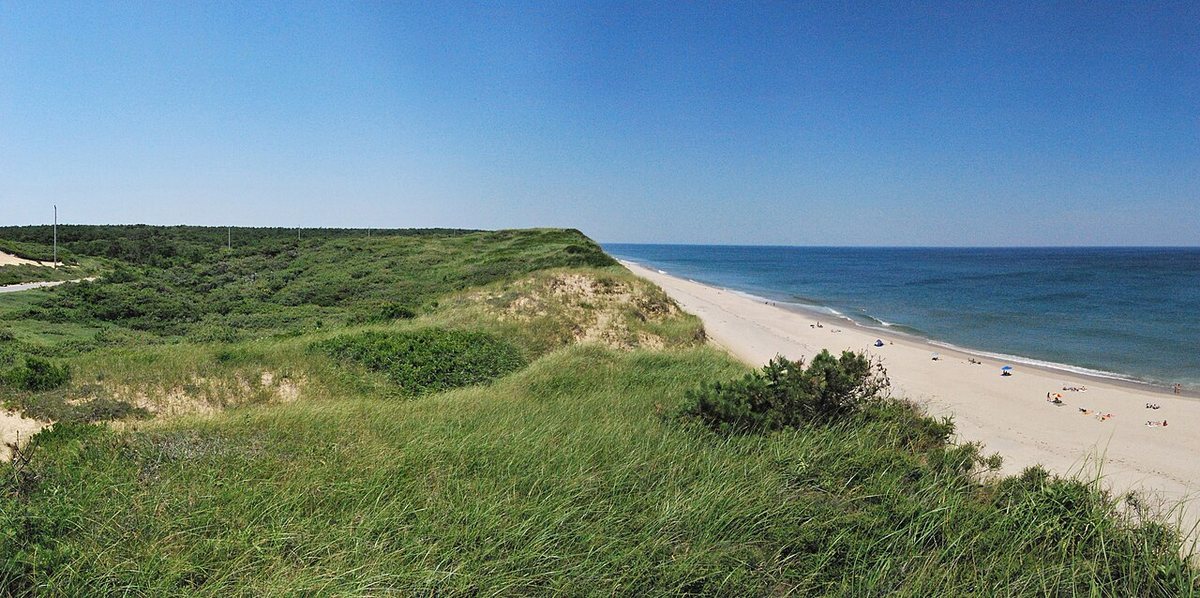
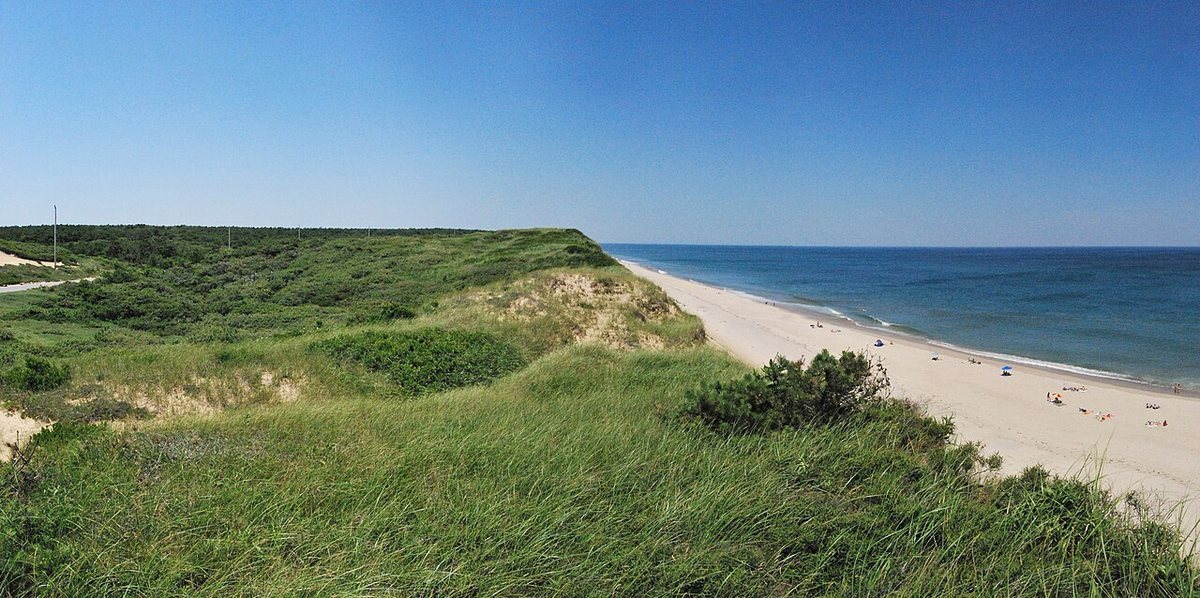
On the afternoon of Friday, July 26, 1974, a 12-year-old local girl walking her dog through the maritime scrub brush of the Race Point Dunes in Provincetown, Massachusetts, approximately one mile east of the Race Point Coast Guard Station, made a horrifying discovery. Lying face-down on a green pine-needle-covered beach towel spread over the white sand were the decomposing remains of a young Caucasian female.
Provincetown Police and Massachusetts State Police detectives quickly cordoned off the remote coastal sector. The victim was estimated to have been deceased for between ten days and three weeks. She was naked, with a pair of folded Wrangler jeans and a blue bandana resting beneath her head as an improvised pillow. An examination of the crime scene revealed deliberate, sadistic efforts to conceal her identity: both hands had been severed at the wrists and were missing from the scene, her left leg suffered deep post-mortem lacerations, and the left side of her skull had been shattered by multiple crushing blows from an entrenching tool or heavy weapon. Her head was nearly decapitated from behind.
Forensic pathologists estimated the victim’s age between 25 and 40 years, with auburn or reddish-blond hair tied back in a barrette, and standing approximately 5 feet 6 inches tall with an athletic build. Notably, she had undergone extensive, expensive dental restoration work—including gold crowns valued at thousands of dollars in 1974, described by dentists as “New York style”—yet several teeth had been intentionally knocked out by the perpetrator to hinder forensic charting.

DECADES OF INVESTIGATION, THREE EXHUMATIONS, AND COMPLEX THEORIES
Following the failure of initial missing persons matching across the United States and Canada, the victim was laid to rest in an unmarked plot in Provincetown’s St. Peter’s Cemetery beneath a headstone reading simply: “Unidentified Female Body Found in Race Point Dunes, July 26, 1974.”
Over the next five decades, the case evolved into Massachusetts’ most famous unsolved mystery. Detectives exhumed the body on three separate occasions to apply evolving scientific methodologies:
- 1980 Exhumation: Investigators re-examined the cranial structure to create early clay 3D facial reconstructions and cross-reference dental charts with missing women across New England and eastern Canada.
- 2000 Exhumation: Forensic technicians extracted early mitochondrial DNA (mtDNA) samples from femoral bone fragments to upload into nascent state and federal missing persons registries.
- 2013 Exhumation: State police partnered with National Center for Missing & Exploited Children (NCMEC) digital artists and Department of Defense isotopic ratio specialists to determine geographic origin based on stable oxygen and strontium isotopes preserved in her tooth enamel, suggesting she spent her youth in the American South or Midwest.
Throughout the years, numerous high-profile suspects were investigated. Boston mob boss James “Whitey” Bulger was scrutinized due to his known presence in Provincetown during the mid-1970s and his trademark underworld methodology of removing victims’ teeth and hands to impede law enforcement identification. Convicted serial killer Hadden Clark confessed to the murder from prison in 2000, but his claims were ultimately dismissed as pathological grandstanding when he failed to pinpoint the burial location of the severed hands or provide unreleased crime scene details.
THE 2022 FBI GENETIC BREAKTHROUGH: RUTH MARIE TERRY
In 2021, the FBI Boston Field Office, working alongside the Massachusetts State Police Cold Case Squad and the Cape & Islands District Attorney’s Office, submitted remaining skeletal DNA fragments to Othram Inc. in The Woodlands, Texas. Othram’s bio-forensic scientists utilized specialized Forensic-Grade Genome Sequencing (FGGS) to overcome severe environmental degradation and generate a high-density SNP profile containing hundreds of thousands of genetic markers.
Genealogists uploaded the data into public ancestry databases, identifying multiple distant relatives in the southeastern United States. The genealogical trees converged upon the Terry family lineage originating in Marion County and Sequatchie County, Tennessee. By testing direct DNA reference samples from living siblings and descendants, the FBI achieved a mathematically irrefutable 100% positive match.
On October 31, 2022, in a historic joint press conference, FBI Special Agent in Charge Joseph Bonavolonta announced to the world that after 48 years, the Lady of the Dunes had been identified as Ruth Marie Terry, born in Whitwell, Tennessee on September 8, 1936. Records revealed that Terry had relocated to Michigan, California, and Nevada in the early 1970s, working as a retail clerk and traveling extensively before mysteriously vanishing from all contact with her son, siblings, and friends in the summer of 1974.

UNMASKING THE KILLER: GUY ROCKWELL MULDAVIN
Once Ruth Terry’s identity was restored, Massachusetts State Police cold case investigators reconstructed her final months alive. Marriage registry records revealed that in February 1974—just five months before her body was discovered in the dunes—Ruth had married a charismatic, shadowy antique merchant and former radio host named Guy Rockwell Muldavin in Reno, Nevada.
Muldavin, who used numerous aliases including “Raoul Guy Rockwell”, possessed a dark, violent past. In 1960, Muldavin had been the prime suspect in the sudden disappearance of his second wife, Manzanita Mearns, and her 18-year-old daughter, Dolores Mearns, in Seattle, Washington. While human body parts and mutilated remains were discovered inside Muldavin’s Seattle septic tank in 1960, he fled the state and was only ever convicted of grand larceny for fleeing with his wife’s bank assets.
Witness testimonies and vehicle records confirmed that Muldavin and Ruth Terry traveled together across the United States in the spring and summer of 1974, driving through Tennessee to visit Ruth’s family before arriving in Massachusetts in July. When Muldavin returned to California later that summer, he was driving Ruth’s vehicle and informed acquaintances that his new wife had simply “left him” during their travels.
On August 28, 2023, Massachusetts State Police and District Attorney Robert Galibois officially named Guy Rockwell Muldavin as the sole perpetrator responsible for the murder of Ruth Marie Terry. Because Muldavin had died in Salinas, California in March 2002 at the age of 78, no living trial could take place, but the 49-year investigation was officially declared cleared and closed by exception.
The resolution of the Lady of the Dunes mystery alongside breakthroughs in the Carla Walker Fort Worth murder and the landmark Jay Cook and Tanya Van Cuylenborg trial highlights the unstoppable power of modern genetic genealogy to restore identity to the forgotten and bring finality to America’s deepest cold cases. The milestone techniques demonstrated here mirrored those that unmasked predators in the April Tinsley cold case murder in Fort Wayne.
SUBMIT TIPS OR ARCHIVAL RECORDS ON COLD CASES
If you possess archival records, historical photographs, or genealogical documentation regarding unsolved homicides or missing person cases, please contact our investigative desk directly.
Wilderness Search Protocols & Topographic Grid Analysis
Search and rescue operations in vast federal wilderness reserves present unique logistical, environmental, and physical challenges for search teams. Ground search personnel must navigate dense alpine undergrowth, steep scree fields, and rapid weather transitions that can obliterate physical tracks within hours. Modern wilderness SAR doctrine combines high-resolution FLIR aerial mapping, trained scent-tracking K9 units, and predictive lost-person behavioral models to maximize search coverage in high-risk zones.
Related Investigations & Forensic Dossiers
Explore additional comprehensive cold case analyses and historical investigations: