
INVESTIGATIVE CASE DOSSIER: CARLA JAN WALKER
- Victim: Carla Jan Walker (17 years old) — High School Senior & Cheerleader, Fort Worth, Texas
- Date of Abduction: Sunday, February 17, 1974 (approx. 1:45 AM CST)
- Body Recovery Date: Wednesday, February 20, 1974 (Benbrook Lake Culvert, Tarrant County)
- Primary Investigating Agency: Fort Worth Police Department Cold Case Homicide Squad
- Perpetrator: Glen Samuel McCurley (Born 1943; Arrested September 21, 2020; Convicted August 24, 2021)
- Breakthrough Forensic Technology: Forensic-Grade Genome Sequencing (FGGS) & SNP Microarray by Othram Inc.
- Key Physical Evidence: Dropped Ruger .22 magazine (1974) & Semen stain on bra yielding single-source male DNA (2020)
- Judicial Outcome: Pleaded guilty to Capital Murder in Tarrant County District Court; Sentenced to Life Imprisonment; Deceased in custody July 2023
For nearly half a century, the abduction and murder of 17-year-old Carla Jan Walker stood as one of the most agonizing, high-profile cold cases in modern Texas history. On a bitterly cold Valentine’s weekend in February 1974, the popular high school senior was violently kidnapped from the passenger seat of her boyfriend’s car in a bustling Fort Worth parking lot. Three days later, following an unprecedented statewide manhunt, her tortured body was discovered dumped in a remote drainage ditch near Benbrook Lake. The perpetrator vanished without a trace, leaving a grieving family, a traumatized high school community, and generations of Fort Worth homicide detectives searching for answers in the dark.
For 46 years, the file remained open, with successive squads of investigators pursuing hundreds of leads, interviewing convicted serial predators, and re-evaluating ballistic logs. However, in 2020, through the tenacious dedication of modern cold case detectives and a revolutionary partnership with private forensic biotechnology firm Othram Inc., the genetic mystery was definitively cracked. The resolution of Carla Walker’s murder stands as a landmark triumph in forensic genealogy, proving that even a microscopic, heavily degraded biological sample preserved across five decades can hold the irrefutable truth needed to bring a killer to justice.

THE VALENTINE’S DANCE AND THE AMBUSH AT RIDGLEA BOWL
On the evening of Saturday, February 16, 1974, Carla Walker attended the Western Hills High School Valentine’s Sweetheart Dance with her boyfriend, 18-year-old Rodney McCoy, the school’s star quarterback. Dressed in a formal light blue gown, Carla spent the evening laughing with friends and celebrating senior milestones. Following the dance, the couple attended an after-party at a classmate’s home before McCoy drove Carla to the parking lot of the Brunswick Ridglea Bowl on Camp Bowie Boulevard at approximately 1:30 AM to use the public restroom and say goodnight before returning to her family home.
As they sat in the front seat of McCoy’s vehicle talking, the passenger side door was violently jerked open by an unknown assailant. Without a word of warning, a man holding a small-caliber handgun leaned into the cabin and struck McCoy repeatedly across the skull with the heavy steel barrel of the pistol. Blood poured into McCoy’s eyes as he fell semi-conscious across the seats. As he drifted in and out of consciousness, he heard Carla’s terrified screams: “Don’t hurt him! Leave him alone! Go get my dad!”
When McCoy regained full consciousness moments later, the parking lot was eerily silent. Carla was gone. Stumbling out of the blood-splattered car into the freezing night air, McCoy spotted a vital piece of physical evidence lying on the asphalt directly beneath the passenger door: a loaded, detached magazine for a Ruger .22-caliber semi-automatic pistol. Dazed and suffering from a concussion, McCoy drove frantically to the Walker residence on Westridge Avenue, alerting Carla’s father, Jim Walker, who immediately contacted the Fort Worth Police Department.
THE THREE-DAY SEARCH AND THE DISCOVERY AT BENBROOK LAKE
The abduction unleashed the most intensive search and rescue operation in North Texas history. More than 100 uniformed Fort Worth police officers, sheriff’s deputies, Texas Rangers, and hundreds of student and neighborhood volunteers combed rural pastureland, creek beds, and abandoned farmhouses across western Tarrant County. Search helicopters swept the terrain with searchlights while radio stations broadcast urgent appeals for information.
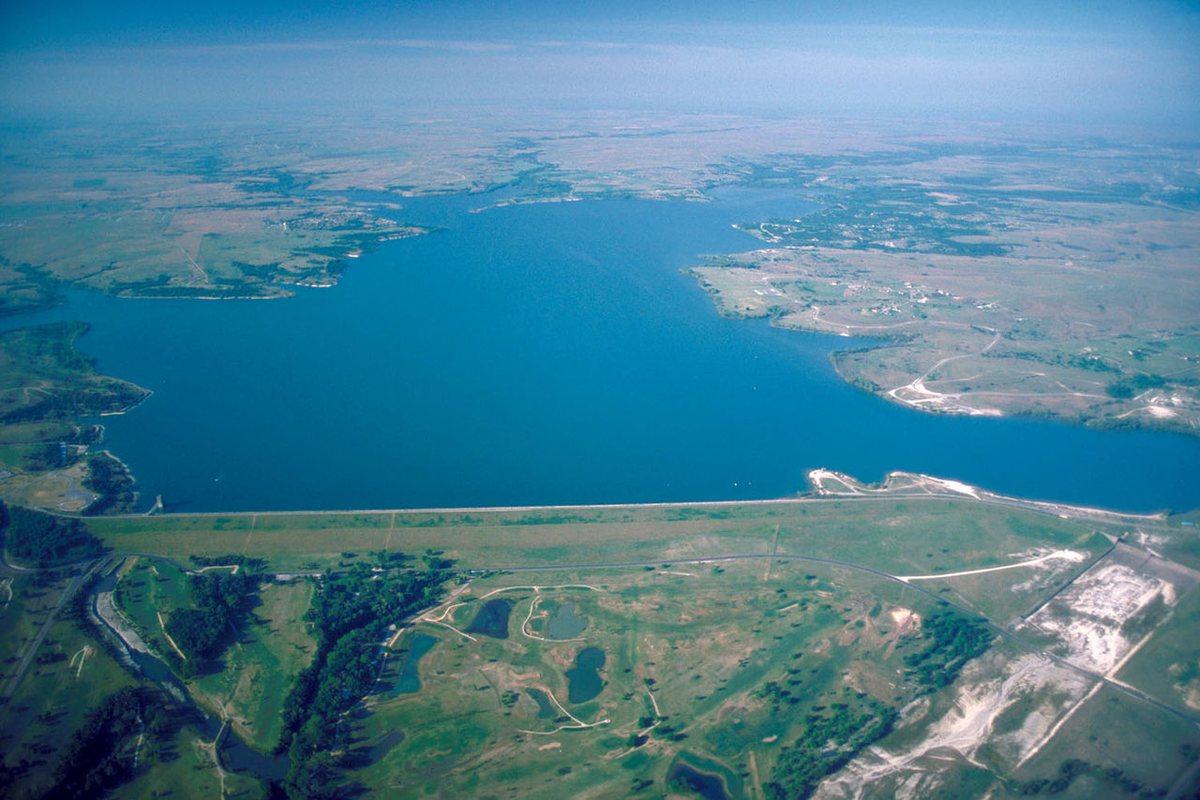
The search culminated in heartbreak on Wednesday, February 20, 1974. A local resident walking along a remote dirt access road near a concrete drainage culvert adjacent to Benbrook Lake observed clothing partially hidden in thick brush. Tarrant County homicide detectives rushed to the scene and confirmed the body was that of Carla Walker. The 17-year-old was clad only in her torn bra and remnants of her dress. An extensive autopsy conducted by the Tarrant County Medical Examiner revealed that Carla had been kept alive in captivity for several hours, subjected to horrific physical abuse, injected with lethal doses of morphine, and ultimately strangled to death.
During the forensic examination, the pathologist collected and preserved critical biological evidence from Carla’s body and clothing. Ballistics examiners also traced the dropped .22 magazine recovered from the bowling alley parking lot to local gun retailers, discovering that a 31-year-old local truck driver named Glen Samuel McCurley had purchased a matching Ruger .22 semi-automatic pistol months earlier. In April 1974, detectives questioned McCurley; he claimed his gun had been stolen from his truck shortly before the murder and denied any involvement. Without eyewitness identification, DNA testing (which was non-existent in 1974), or legal grounds for arrest, investigators were forced to release him, and the investigation stalled into a cold case.
THE 46-YEAR COLD CASE AND THE OTHRAM GENOMICS BREAKTHROUGH
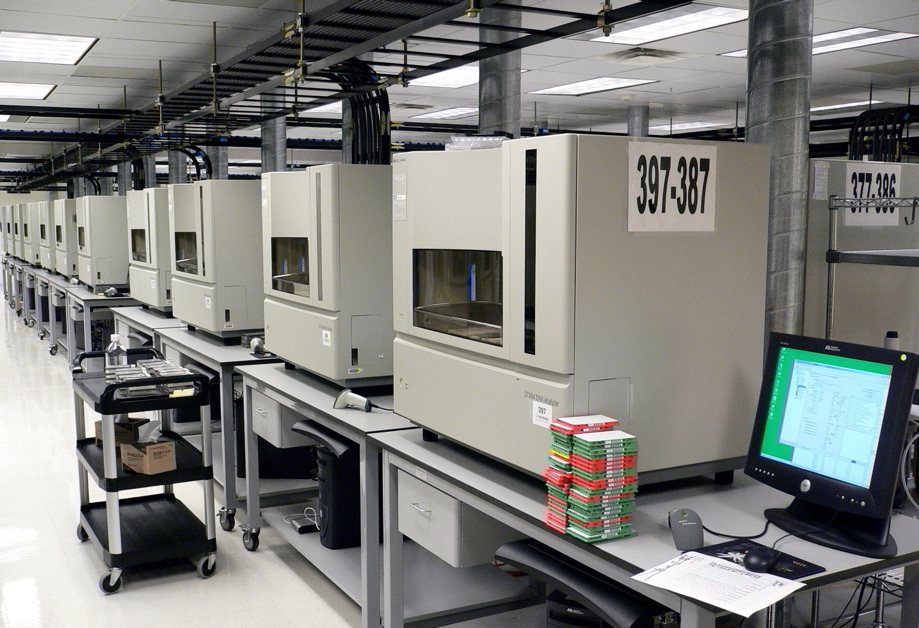
Over the subsequent decades, Carla Walker’s case file passed through the hands of dozens of dedicated investigators. Carla’s brother, Jim Walker Jr., and her sister, Cindy Stone, maintained public pressure, organizing annual memorials and establishing tip lines. In 2019, Detectives Leah Wagner and Jeff Bennett of the Fort Worth Police Cold Case Squad reopened the file with fresh determination. Recognizing that traditional STR DNA testing had failed due to degraded sample quantities, Wagner partnered with Othram Inc., a cutting-edge private forensic genomics laboratory located in The Woodlands, Texas, renowned for resolving previously impossible cold cases.
Dr. David Mittelman and the specialized bio-engineering team at Othram received minute cuttings from Carla Walker’s preserved clothing, including a faded semen stain on her bra. Applying proprietary Forensic-Grade Genome Sequencing (FGGS), Othram’s scientists extracted and reconstructed a pristine, high-density Single Nucleotide Polymorphism (SNP) profile containing hundreds of thousands of genetic markers from less than one nanogram of severely degraded DNA.
Genealogists uploaded this comprehensive profile into law enforcement-approved public genealogy databases and systematically mapped out intricate family trees spanning multiple generations back to the late 19th century. Within weeks, the genetic lineages converged decisively upon three brothers from the McCurley family line. By cross-referencing public marriage records, historical census filings, and the original 1974 Fort Worth police interview dossiers, Detectives Wagner and Bennett pinpointed a single living suspect: 77-year-old Glen Samuel McCurley, who still lived quietly with his wife in Fort Worth, residing less than a mile from where Carla had been abducted 46 years earlier.
SURVEILLANCE, ARREST, AND THE 2021 GUILTY PLEA
In July 2020, Fort Worth undercover officers initiated covert surveillance on Glen McCurley, retrieving discarded household trash items from the curb outside his residence. Forensic analysts at the Texas Department of Public Safety crime lab extracted DNA from discarded refuse and confirmed an exact match to the 1974 crime scene semen stain. On September 10, 2020, Detectives Wagner and Bennett visited McCurley’s home and obtained a voluntary buccal swab from his cheek. The resulting formal DNA comparison was mathematically indisputable: the statistical probability of the DNA matching anyone other than Glen McCurley was less than 1 in 1.4 quintillion.
On September 21, 2020, Fort Worth Police arrested Glen Samuel McCurley and formally charged him with Capital Murder. In August 2021, the trial commenced in Tarrant County District Court before Judge Elizabeth Beach. Prosecutors presented overwhelming physical, ballistic, and genetic testimony, highlighted by an emotional courtroom appearance by Rodney McCoy, who recounted the traumatic events of that freezing February night 47 years prior.
On August 24, 2021, on the third day of trial, after witnessing the undeniable scientific proof presented by forensic experts, Glen McCurley abruptly ceased his defense and entered a guilty plea to capital murder. The court sentenced him to life imprisonment in the Texas Department of Criminal Justice. McCurley served two years in state custody before dying in prison in July 2023 at the age of 80.
The successful resolution of Carla Walker’s murder marked a historic triumph for modern cold case investigative science. Alongside landmark convictions such as the Jay Cook and Tanya Van Cuylenborg genetic genealogy milestone and breakthroughs in historic national park disappearances, Carla Walker’s story stands as a beacon of hope for thousands of families awaiting justice across the world. The milestone techniques demonstrated here mirrored those that unmasked predators in the April Tinsley cold case murder in Fort Wayne.
SUBMIT TIPS OR ARCHIVAL RECORDS ON COLD CASES
If you possess archival records, historical photographs, or genealogical documentation regarding unsolved homicides or missing person cases, please contact our investigative desk directly.