
Three years before Jack the Ripper terrorized the foggy cobblestone alleys of Whitechapel, London, the capital city of Austin, Texas, was besieged by America’s first recognized urban serial killer. The Servant Girl Annihilator Austin Texas—also referred to in 1885 by author O. Henry as ‘the Midnight Assassin’—perpetrated a reign of terror that claimed the lives of seven women and one man, while severely mutilating eight others. The nocturnal atrocities prompted sweeping municipal panic, bloodhound manhunts, Pinkerton detective deployments, and the construction of Austin’s iconic historic Moonlight Towers.
Executive Case Factsheet
- Victim(s): 8 confirmed fatalities (Mollie Smith, Eliza Shelly, Irene Cross, Mary Barker, Orange Washington, Gracie Vance, Susan Hancock, Eula Phillips) and 8 severely wounded survivors
- Date of Incident: December 30, 1884 – December 24, 1885
- Primary Crime Scene / Location: Austin, Travis County, Texas
- Lead Investigating Jurisdictions: Austin Police Department, Travis County Sheriff’s Office, Texas Rangers, Pinkerton National Detective Agency
- Key Forensic Evidence: Consistent MO: midnight home intrusions, axes and cast-iron fire irons used for skull bludgeoning, victims posed in backyards, barefoot tracks, sharpened wooden stakes
- Suspect(s) / Perpetrator(s): Nathan Elgin (killed by police Feb 1886); James Phillips; historical Jack the Ripper overlap theories
- Legal Outcome & Status: Officially unsolved historical serial murder investigation
The Christmas 1884 Outbreak and the Midnight Modus Operandi
The murderous spree began on the night before New Year’s Eve, December 30, 1884. Mollie Smith, a twenty-five-year-old African American cook employed by prominent Austin merchant Walter Spencer, was sleeping in her detached servant quarters behind the main residence on West Pecan Street (modern-day 6th Street). An intruder entered through an unlatched window, struck Smith’s partner Walter Spencer with a heavy cast-iron axe, and dragged Mollie into the freezing backyard.
Neighbors and responding police officers discovered Mollie Smith’s mutilated body lying in the snow, her skull shattered by repeated axe blows and her body pierced with a sharpened wooden stake. In May 1885, thirty-year-old Eliza Shelly, a cook for former Texas Supreme Court Justice Alexander Terrell, was murdered in identical fashion in her servant cabin, her head cleft open with an axe while her two young children slept beside her.
Austin City Marshal Jim Lucy and Travis County Sheriff John Campbell recognized a consistent, terrifying modus operandi: the predator struck exclusively between midnight and 4:00 a.m. on moonlit nights, targeted domestic servants sleeping in detached backyard outbuildings, used axes and cast-iron kindling bars found on the properties, dragged victims outdoors into dark alleyways, and left distinct barefoot tracks across muddy lawns.
Historical forensic documentation recorded that the killer possessed an eerie, intimate knowledge of Austin’s residential architecture. The assailant navigated silent gravel pathways, opened latched screen doors with thin wire tools, and struck sleeping victims with crushing precision in pitch darkness without disturbing family members sleeping in main residences only yards away. The attacks exhibited hallmarks of extreme psychosexual sadism, with victims arranged in ritualistic poses across garden lawns.

Escalation, Racial Paranoia, and Pinkerton Infiltration
Throughout the summer and autumn of 1885, the killer struck with ruthless frequency. Irene Cross, Mary Barker, Orange Washington, and Gracie Vance were attacked in rapid succession across Austin neighborhoods. Panic gripped the city, exacerbating deep post-Reconstruction racial tensions. Initial arrests by Austin police focused almost exclusively on African American men, including former romantic partners of the victims, but all suspects were cleared when subsequent murders occurred while they were locked inside the county jail.
Desperate to restore public order, the Austin City Council authorized Mayor John Dowell to hire elite private investigators from the Pinkerton National Detective Agency in Chicago and deploy bloodhounds imported from Tennessee. Pinkerton operatives went undercover as transient laborers and rail workers throughout ‘Guy Town’ (Austin’s red-light district), monitoring boarding houses, lumber yards, and saloons.
Criminologists who have analyzed the historical case notes emphasize the killer’s extraordinary spatial familiarity with Austin’s alley networks, his silent feline movements through darkened homes, and his sophisticated ability to evade armed neighborhood vigilante patrols that roamed the streets every night.
The Christmas Eve 1885 Double Slaying and White Victims
The crisis reached its peak on Christmas Eve, December 24, 1885, when the killer shattered the prevailing social belief that the attacks were confined to servant quarters. In two separate attacks occurring less than an hour apart on opposite sides of the city, the killer targeted prominent Caucasian households.
At approximately 12:30 a.m., Susan Hancock, the wife of Confederate veteran and civic leader Moses Hancock, was dragged from her bed on Water Street (modern Cesar Chavez Street) into the garden and bludgeoned to death with an axe. At 1:15 a.m., seventeen-year-old Eula Phillips, newly married to James Phillips Jr., was murdered in her bedroom on West 10th Street, her skull crushed by a timber axe while her husband was bludgeoned into a coma.
The Christmas Eve double homicide sent shockwaves through the Texas Legislature and state government. Armed citizens formed the Austin Vigilance Committee, business districts shut down at sundown, and city banks offered unprecedented multi-thousand-dollar cash rewards for the capture of the Midnight Assassin dead or alive.
The Death of Nathan Elgin and the Abrupt Cessation of Murders
In February 1886, Austin police officer William ‘Paddy’ Murphy intercepted nineteen-year-old African American cook Nathan Elgin violently assaulting a young woman in a saloon near 4th and Guadalupe Streets. When Elgin attacked the officer with a knife, Murphy shot and killed him on the spot.
A post-mortem examination revealed that Nathan Elgin had a missing right toe, which perfectly matched the anomalous barefoot bloody footprint impressions documented at the scene of the Gracie Vance and Eula Phillips homicides. Furthermore, Elgin was employed at a downtown restaurant directly adjacent to several murder locations and was known to wander the alley networks at late hours. Following Elgin’s death in February 1886, the serial axe murders in Austin ceased permanently.
While some historical theorists, including author Philip Sugden and true crime scholars, have speculated on sensational links between the Servant Girl Annihilator and London’s 1888 Jack the Ripper murders (noting that an unidentified Malay cook or transatlantic seafaring butcher could have traveled from Texas to England), modern FBI Behavioral Analysis Unit profilers conclude that Nathan Elgin or a local lone predator was the true perpetrator of the Austin killings.
Modern comparative profiling emphasizes the distinct behavioral typologies between the two sprees. Jack the Ripper operated exclusively as an outdoor blitz-and-slash predator targeting sex workers in public alleys, whereas the Servant Girl Annihilator was an invasive residential home-intruder who utilized heavy blunt-force impact weapons, extracted victims from their beds, and demonstrated advanced domestic reconnaissance before committing nocturnal assaults.

The Moonlight Towers and Enduring Criminological Legacy
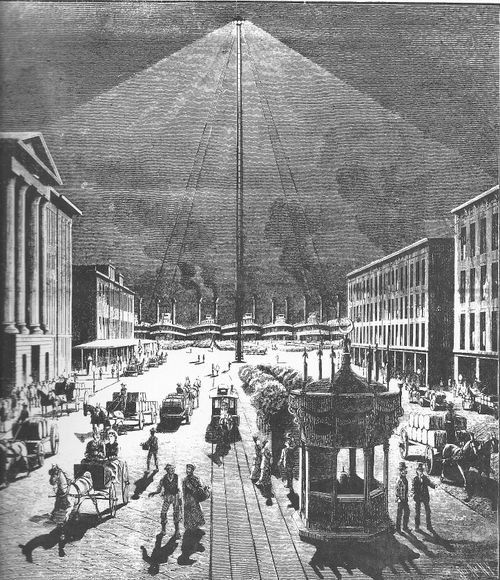
The psychological trauma of the 1885 murders permanently transformed the urban landscape of Austin, Texas. In 1894, seeking to illuminate the entire city with continuous nocturnal light and eliminate the pitch-black shadows that shielded the Midnight Assassin, the Austin City Council purchased and erected thirty-one 165-foot carbon-arc Moonlight Towers (Moontowers) across the city.
Today, seventeen of these historic Moonlight Towers remain standing, fully restored and functioning with modern LED illumination as recognized United States National Historic Landmarks—the only operational municipal moontower system surviving in the world.
The Servant Girl Annihilator case represents a foundational chapter in the history of American serial murder investigation, demonstrating early crime scene preservation techniques, footwear impression casting, and the profound civic impact of serial homicide on urban architecture and street lighting design.
Chronological Case Timeline
| Date / Milestone | Investigative Development | Forensic / Evidentiary Significance |
|---|---|---|
| December 30, 1884 | Mollie Smith murdered in servant quarters | First confirmed victim of the Servant Girl Annihilator in Austin |
| May 7, 1885 | Eliza Shelly killed on West 10th Street | Serial nature confirmed; axe recovered at scene |
| August 1885 | Pinkerton detectives and bloodhounds arrive | Undercover agents and tracking dogs deployed across Austin |
| December 24, 1885 | Susan Hancock and Eula Phillips murdered | Christmas Eve double homicide targets white residential homes |
| February 1886 | Nathan Elgin shot and killed by police | Suspect’s missing toe matches footprint casts; murders cease |
| May 1894 | Austin erects 31 Moonlight Towers | City builds landmark high-intensity street lighting to prevent night crime |
Frequently Asked Questions: Forensic & Legal Review
Who was the ‘Servant Girl Annihilator’?
The Servant Girl Annihilator (also known as the Midnight Assassin) was America’s first recognized urban serial killer, who murdered seven women and one man with axes and cast-iron implements in Austin, Texas, throughout 1885.
Why were the Austin Moonlight Towers built following these murders?
In 1894, directly in response to the public terror caused by the unlit alleyway murders of 1885, the Austin City Council erected 31 towering 165-foot carbon-arc Moonlight Towers to provide bright nocturnal illumination across the entire city.
Who was the primary historical suspect identified in the killings?
Nineteen-year-old cook Nathan Elgin is widely regarded by modern historians as the primary suspect. Elgin was shot by police during a violent assault in February 1886; his missing right toe matched footprint impressions at crime scenes, and the murders abruptly stopped after his death.
Is there any legitimate connection between the Austin murders and Jack the Ripper?
While contemporary 1888 British newspapers and some historical authors speculated that a seafaring butcher might have traveled from Texas to London, modern FBI profilers view the cases as separate, noting vastly different victim profiles, weapon selections, and mutilation patterns.