On a stormy night in March 1932, the abduction and murder of twenty-month-old Charles Lindbergh Jr.—the firstborn son of world-famous aviator Charles Lindbergh—ignited the ‘Crime of the Century’. The Lindbergh baby kidnapping investigation fundamentally transformed federal law enforcement in the United States. Beyond the sensational headlines and international ransom negotiations, the case became a groundbreaking historical milestone in forensic science, introducing microscopic forensic botanical wood anatomy, federal currency tracking, and document examination to convict German carpenter Bruno Richard Hauptmann.
Executive Case Factsheet
- Victim(s): Charles Augustus Lindbergh Jr., age 20 months
- Date of Incident: March 1, 1932
- Primary Crime Scene / Location: Highfields Estate, Hopewell, Hunterdon County, New Jersey
- Lead Investigating Jurisdictions: New Jersey State Police (Col. H. Norman Schwarzkopf), FBI, IRS Intelligence
- Key Forensic Evidence: Handmade wooden ladder forensically matched to attic floorboards by wood anatomist Arthur Koehler, serial-numbered Gold Certificate ransom notes, handwriting analysis of 13 ransom letters, $14,000 ransom cash found in Hauptmann’s garage
- Suspect(s) / Perpetrator(s): Bruno Richard Hauptmann (German immigrant carpenter)
- Legal Outcome & Status: Convicted of first-degree murder in February 1935; executed in the electric chair in April 1936
The Nursery Abduction at Highfields Estate: March 1, 1932
At approximately 10:00 p.m. on Tuesday, March 1, 1932, nursemaid Betty Gow entered the second-floor nursery of the secluded Highfields estate in Hopewell, New Jersey, discovering that twenty-month-old Charles Augustus Lindbergh Jr. was missing from his crib. Charles Lindbergh, famed for his historic 1927 solo transatlantic flight, searched the grounds with a rifle and discovered a crude, three-piece wooden ladder lying in the mud near the house alongside a footprint impression.
Resting on the nursery window sill was a handwritten envelope containing a ransom note demanding $50,000 in small denominations. The note displayed a unique cryptographic signature: two intersecting blue circles with a red oval center pierced by three square holes. New Jersey State Police Superintendent Colonel H. Norman Schwarzkopf assumed command of the state investigation alongside the FBI.
Over the subsequent weeks, twelve additional ransom notes bearing the identical cryptographic seal were delivered to Lindbergh’s representatives. In April 1932, retired Bronx educator Dr. John F. Condon (‘Jafsie’) acted as an intermediary, delivering $50,000 in specially recorded Gold Certificates to an unidentified man with a German accent in a Bronx cemetery. However, the child was not returned.
Forensic Recovery in Mount Rose Woods and Autopsy Findings
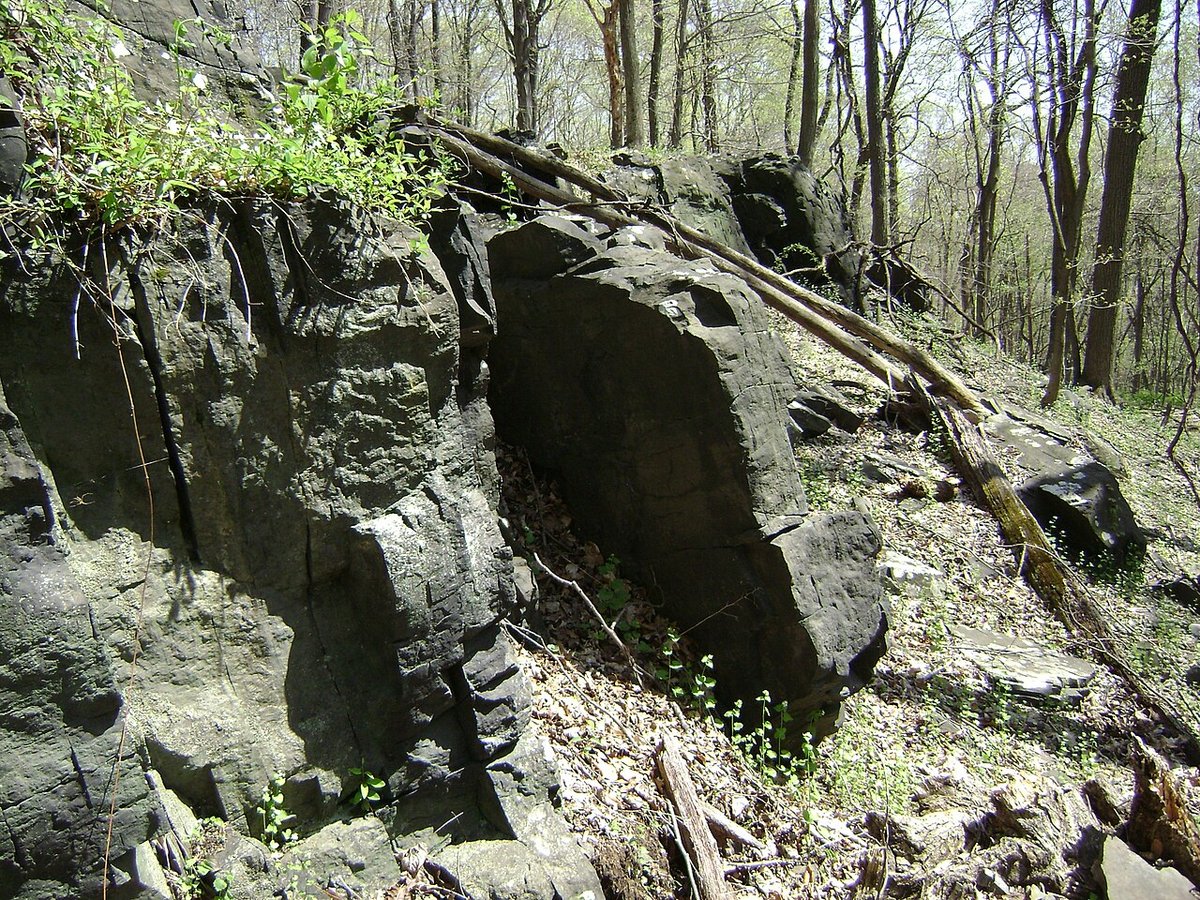
On May 12, 1932, forty-five days after the ransom payment, truck driver William Allen stopped his vehicle along a dirt road near Mount Rose, four miles south of the Lindbergh estate. Walking into the dense underbrush to relieve himself, Allen discovered the decomposed body of a toddler partially buried under leaves in a shallow ditch.
Mercer County Coroner Dr. Charles Mitchell and forensic pathologist Dr. Walter Bromhead performed an immediate post-mortem examination. The infant was positively identified as Charles Lindbergh Jr. through dental development, characteristic overlapping toes, and remnants of the flannel undershirt sewn by Betty Gow.
The forensic autopsy revealed that the child had suffered a massive, catastrophic fractured skull resulting from blunt force impact to the left side of the head, causing instantaneous cerebral hemorrhaging. Dr. Mitchell determined that the child was likely dropped from the makeshift ladder as the kidnapper descended the exterior wall of the Highfields estate on the stormy night of the abduction, dying before the ransom letters were ever negotiated.
Arthur Koehler and the Science of Forensic Wood Anatomy
The centerpiece of the state’s physical forensic case was the extraordinary analysis conducted by Arthur Koehler, chief wood technologist at the United States Forest Products Laboratory in Madison, Wisconsin. Koehler pioneered the discipline of forensic wood anatomy by examining the crude, three-section ladder abandoned at the crime scene.
Through microscopic cellular examination of growth rings and wood grain, Koehler identified the ladder’s wood species: North Carolina pine, Douglas fir, and birch. Koehler traced unique hand-plane tool marks and machine cutterhead imperfections across thousands of commercial lumber mills along the Atlantic seaboard, successfully tracking the specific batch of pine to the National Lumber and Millwork Company in the Bronx, New York.
Furthermore, Koehler made a breathtaking forensic discovery following Bruno Hauptmann’s arrest: he proved that ‘Rail 16’ of the kidnapping ladder had been cut from a floorboard in Hauptmann’s own attic. The grain patterns, annual growth rings, four specific nail holes, and saw blade striations matched the missing floorboard section in Hauptmann’s attic with mathematical, microscopic precision.
Gold Certificate Tracking and the Arrest of Bruno Hauptmann
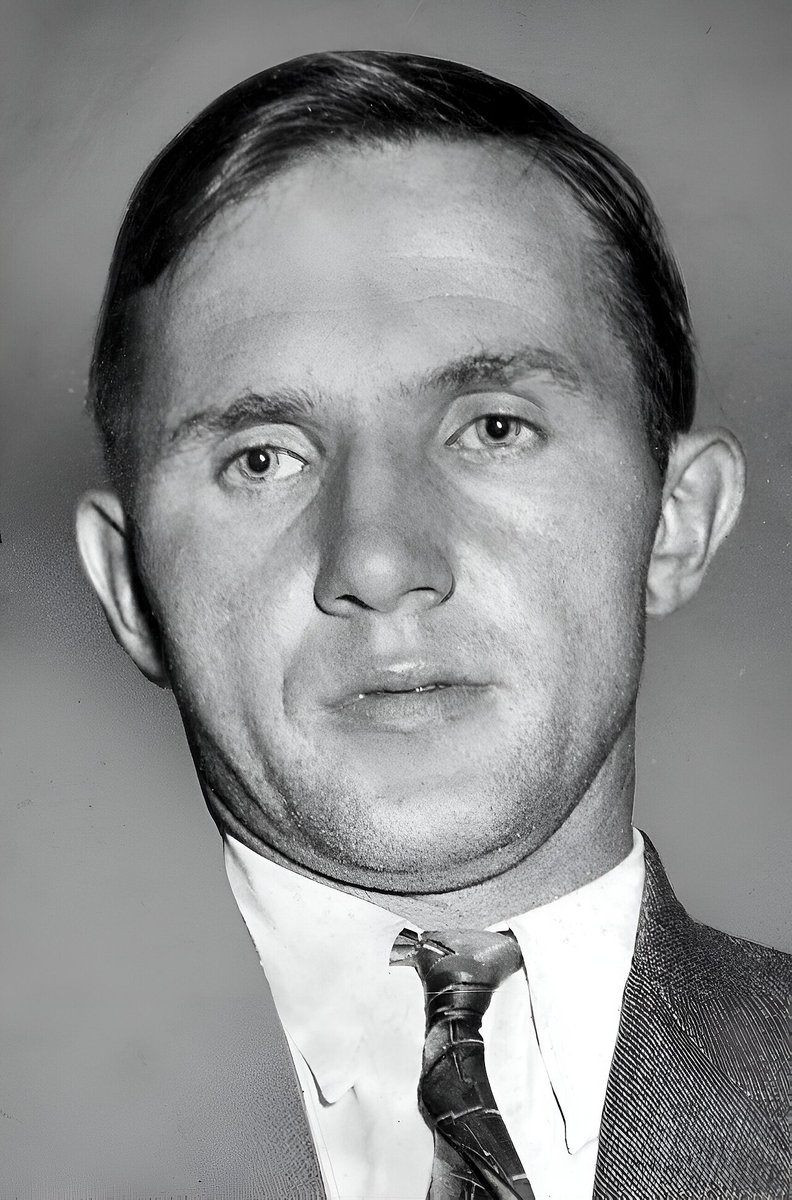
In 1933, President Franklin D. Roosevelt issued an executive order requiring the surrender of all gold coins and Gold Certificates, making the Lindbergh ransom bills highly conspicuous. On September 18, 1934, a Manhattan gas station attendant recorded the license plate number of a customer who paid for five gallons of gasoline with a $10 Gold Certificate. The license plate was registered to Bruno Richard Hauptmann, a thirty-five-year-old German immigrant carpenter residing in the Bronx.
New York Police, New Jersey State Police, and federal agents arrested Hauptmann the following morning. A comprehensive search of Hauptmann’s garage revealed $14,600 of the Lindbergh ransom Gold Certificates concealed inside the garage walls and oil cans. Inside his bedroom closet, detectives discovered Dr. John Condon’s telephone number and address penciled onto the wooden door jamb.
Eight leading forensic document examiners—including Albert S. Osborn, the founding father of questioned document analysis—analyzed the fourteen ransom notes against Hauptmann’s handwriting exemplars. Osborn testified under oath that Hauptmann was the indisputable author of all ransom letters, demonstrating identical idiosyncratic misspellings (such as ‘gut’ for ‘good’ and ‘singnature’ for ‘signature’) and specific stroke inclinations.
The Trial of the Century, Execution & Legal Transformation
In January 1935, the capital murder trial of Bruno Richard Hauptmann commenced at the Hunterdon County Court House in Flemington, New Jersey, before Judge Thomas Trenchard. New Jersey Attorney General David Wilentz prosecuted the case, presenting the forensic trio of Arthur Koehler’s wood anatomy, Osborn’s handwriting analysis, and the recovered gold certificates.
Hauptmann claimed that a deceased business associate named Isidor Fisch had left the shoe box of money in his care without his knowledge of its contents (the ‘Fisch story’). However, the jury rejected the defense narrative, convicting Hauptmann of first-degree murder on February 13, 1935. On April 3, 1936, Bruno Richard Hauptmann was executed in the electric chair at the New Jersey State Prison in Trenton.
The case spurred the United States Congress to enact the Federal Kidnapping Act of 1932 (known as the Lindbergh Law), making interstate kidnapping a federal capital offense under the jurisdictional authority of the FBI. The Lindbergh investigation remains the historic foundational case study in forensic wood analysis and currency audit trails.
The forensic testimony presented by Arthur Koehler set an enduring legal precedent for the admissibility of scientific expert testimony in American courtrooms. By proving that the wood grain, growth ring patterns, and cutter head imperfections on the ladder rungs matched the floor joists in Hauptmann’s attic with statistical certainty, Koehler established botanical trace evidence as a legitimate forensic discipline. The case also catalyzed significant reforms in courtroom media management, establishing Judicial Canon 35 to restrict photography and broadcasting during active criminal trials.
Chronological Case Timeline
| Date / Milestone | Investigative Development | Forensic / Evidentiary Significance |
|---|---|---|
| March 1, 1932 | Lindbergh baby kidnapped from Highfields | Ladder and $50k ransom note found; worldwide manhunt begins |
| April 2, 1932 | Dr. Condon pays $50,000 ransom in Bronx | Gold Certificates delivered; baby is not returned |
| May 12, 1932 | Baby’s body found in Mount Rose woods | Autopsy confirms instantaneous death from skull fracture |
| June 1932 | Congress passes the ‘Lindbergh Law’ | Interstate kidnapping becomes a federal capital crime |
| September 19, 1934 | Bruno Richard Hauptmann arrested in Bronx | $14,600 in ransom gold certificates seized in his garage |
| January–February 1935 | ‘Trial of the Century’ in Flemington, NJ | Koehler proves ladder rail came from Hauptmann’s attic floor |
| April 3, 1936 | Hauptmann executed in electric chair | Capital sentence carried out at Trenton State Prison |
Frequently Asked Questions: Forensic & Legal Review
What was the scientific significance of Arthur Koehler’s testimony?
Arthur Koehler, a wood technologist, proved that ‘Rail 16’ of the kidnapping ladder was cut from a floorboard in Bruno Hauptmann’s attic. He matched annual growth rings, saw marks, and four distinct nail holes with microscopic precision, establishing an undeniable physical link.
How was Bruno Richard Hauptmann identified and arrested in 1934?
Hauptmann spent a $10 Gold Certificate at a Bronx gas station. The alert attendant wrote down his vehicle license plate. Police traced the registration to Hauptmann’s residence, arresting him and discovering $14,600 of the recorded ransom money hidden in his garage.
What was the ‘Lindbergh Law’ passed in 1932?
The Federal Kidnapping Act of 1932 made kidnapping across state lines a federal crime under the jurisdiction of the FBI, allowing federal agents to immediately mobilize resources without waiting for local jurisdictional approvals.
What was Bruno Hauptmann’s defense regarding the ransom money?
Hauptmann claimed that a German business acquaintance named Isidor Fisch had left a shoebox containing the cash in his closet before traveling to Germany, where Fisch died of tuberculosis, claiming he only discovered the money later (the ‘Fisch story’).