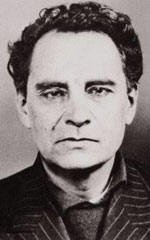

In June 1928, an elderly, mild-mannered man calling himself ‘Frank Howard’ visited a tenement flat in Manhattan, offering employment to 18-year-old Edward Budd before charming the family into allowing his ten-year-old sister, Grace Budd, to accompany him to a birthday party. Grace vanished without a trace, initiating a grueling six-year cold-case investigation led by NYPD Detective William King. The case broke open in November 1934 when the perpetrator mailed an anonymous, graphic letter to Grace’s mother describing her horrific murder and cannibalization at an abandoned Westchester cottage. The subsequent forensic breakthrough combined paper watermark provenance analysis, classical handwriting examination, post-mortem skeletal exhumations, and astonishing radiographic pelvic X-rays that revealed 29 metallic needles embedded in the killer’s flesh. This definitive case dossier examines the manhunt, forensic documentation, psychiatric insanity debates, and execution at Sing Sing.
Executive Case Factsheet
- Victim(s): Grace Budd (10, confirmed); Francis McDonnell (8), Billy Gaffney (4), multiple suspected children nationwide
- Date of Incident: June 3, 1928 (Grace Budd abduction) – December 13, 1934 (Arrest)
- Primary Crime Scene / Location: 406 West 15th Street, Manhattan, New York; Wisteria Cottage, Greenburgh, Westchester County, New York
- Lead Investigating Jurisdictions: New York City Police Department (NYPD), Westchester County Sheriff’s Office
- Key Forensic Evidence: Watermarked envelope from New York Private Chauffeur Benevolent Association, handwriting analysis, pelvic X-ray showing 29 embedded sewing needles, skeletal remains at Wisteria Cottage
- Suspect(s) / Perpetrator(s): Hamilton Howard ‘Albert’ Fish (65)
- Legal Outcome & Status: Convicted of first-degree murder; sentenced to death; executed in Sing Sing electric chair on January 16, 1936
The Grace Budd Abduction and the Six-Year NYPD Cold Case
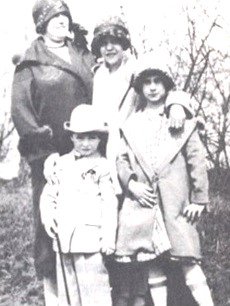
On June 3, 1928, 58-year-old Albert Fish entered the Budd family apartment at 406 West 15th Street in New York City. Presenting himself as a benevolent Long Island farmer named Frank Howard, he gained the trust of Delia and Albert Budd. He offered Edward Budd a farming job and requested permission to take young Grace Budd to his sister’s birthday party in Queens. The family consented. Grace walked out holding Fish’s hand and was never seen alive again.
When ‘Frank Howard’ failed to return Grace, the New York City Police Department launched a massive missing-persons search. Detective William King of the Missing Persons Bureau took personal charge of the case. Initial inquiries into Long Island farms yielded zero leads; the address provided by the suspect was completely fictitious.
For six years, Detective King maintained the investigation active, cataloging dozens of false leads, interviewing transient farm workers, and comparing Grace’s disappearance with unsolved child homicides across New York, New Jersey, and Massachusetts, including the 1924 slaying of eight-year-old Francis McDonnell in Staten Island.

The Cannibalism Letter: Watermark Tracing and the Chauffeur Association Clue
On November 11, 1934, Delia Budd received an unstamped envelope delivered by mail. Inside was a handwritten letter containing a horrifying, literate confession detailing how the author took Grace to ‘Wisteria Cottage’ in Greenburgh, strangled her, dismembered her body, and cooked and consumed her flesh over nine days.
Detective William King immediately submitted the letter to the NYPD Document and Ballistics Laboratory. While the envelope bore no fingerprints due to heavy postal handling, physical inspection under specialized transmitted lighting revealed a subtle, embossed monogram in the upper left corner: the emblem of the ‘New York Private Chauffeur Benevolent Association.’
Detective King interviewed association treasurer Lee Ryan, discovering that a janitor had salvaged a batch of leftover association stationary and sold or distributed the envelopes. King cross-referenced former residents and workers who had access to the building at 200 West 44th Street, tracing a rooming house box to a 65-year-old painter and odd-job worker named Albert Fish.
The Rooming House Arrest and Wisteria Cottage Skeletal Recovery
On December 13, 1934, Detective King staked out a rooming house at 200 East 52nd Street. When Albert Fish returned to collect a letter containing money sent by his son, King arrested him. During a physical search, police seized an address book, an ornate folding knife, and newspaper clippings of missing children.
Under intense interrogation by Detective King and Chief Inspector John O’Brien, Fish confessed to the murder of Grace Budd, describing the location of Wisteria Cottage in Westchester County.
On December 15, 1934, NYPD detectives and Westchester County medical examiners excavated the overgrown grounds around Wisteria Cottage. In a shallow pit beneath a collapsed wooden shed, forensic teams unearthed Grace Budd’s skull, jawbone fragments with dental fillings matching childhood dental records, and small finger bones, establishing incontrovertible forensic proof of corpus delicti.
Pelvic Radiography: The 29 Embedded Needles and Psychiatric Litigation
Following his indictment for first-degree murder in White Plains, Fish was transferred to Bellevue Psychiatric Hospital for evaluation by Dr. Fredric Wertham and Dr. Walter Bromberg.
During physical examinations, physicians noted strange indurations in Fish’s perineal and pelvic regions. Dr. Wertham ordered full-body radiographic X-rays. The resulting X-ray plates produced a medical sensation: embedded deep within Fish’s pelvic tissues, scrotum, and perineum were 29 complete metallic sewing needles and pins that Fish had self-inserted over decades as acts of severe masochistic paraphilia.
In March 1935, Fish went on trial in the Westchester County Court before Judge Frederick Close. Defense attorney James Dempsey argued legal insanity, presenting the radiographic plates and Dr. Wertham’s testimony diagnosing extreme sadomasochism, cannibalistic psychosis, and coprophilia. However, Prosecutor Elbert Gallagher demonstrated that Fish took elaborate precautions to conceal his identity, used aliases, destroyed evidence, and understood the moral wrongfulness of his acts under the M’Naghten rule. On March 29, 1935, the jury convicted Fish of first-degree murder.
Capital Punishment at Sing Sing and Forensic Behavioral Legacy
Judge Frederick Close sentenced Albert Fish to death by electrocution. On January 16, 1936, 65-year-old Albert Fish was escorted into the execution chamber at Sing Sing Correctional Facility in Ossining, New York.
Witnesses noted that Fish aided executioner Robert G. Elliott in adjusting the electrodes to his legs. Due to the dense concentration of metallic needles embedded throughout his groin and pelvis, the initial electrical surge caused an unusual short-circuiting arc, requiring a second surge to confirm cardiac cessation.
The Albert Fish case stands as a foundational milestone in forensic document examination, early victim-offender profiling, and psychiatric jurisprudence. Dr. Fredric Wertham’s clinical memoirs, *The Show of Violence*, analyzed Fish’s psychopathology, establishing classic diagnostic criteria for psychopathic sadism and serial child predation that continue to inform modern behavioral analysis.
Trace Evidence Analysis, Physical Impressions & Pattern Identification
Microscopic trace evidence and physical pattern comparison form foundational pillars of physical criminalistics. Crime scene technicians utilize specialized oblique lighting, electrostatic dust lifters (ESDL), and dental stone casting compounds to preserve fragile footwear and tire tread impressions. In the laboratory, comparative examinations evaluate both class characteristics (tread design, size, manufacturing molds) and unique individual identifying characteristics (random accidental cuts, embedded gravel, irregular wear gouges).
Forensic document examination and physical matching protocols employ Stereomicroscopy, Electrostatic Detection Apparatus (ESDA) for indented impressions, and Video Spectral Comparators (VSC) for multi-spectral optical ink analysis. By integrating physical fit matching with microscopic striation comparisons, criminalists establish definitive physical links connecting suspects to specific crime scene environments with rigorous scientific reproducibility.
Modern Jurisprudential Precedents & Evidentiary Standards
The landmark investigative and courtroom developments associated with Albert Fish fundamentally redefined procedural evidentiary standards under the Federal Rules of Evidence (Rule 702) and international common law equivalents. Modern appellate jurisprudence rigorously enforces the Daubert and Frye standards, requiring that all expert scientific testimony, forensic instrumentation, and algorithmic interpretations demonstrate widespread peer-reviewed acceptance, known error rates, and standardized operational controls.
Furthermore, the case highlighted the critical imperative of transparent pre-trial discovery, the complete disclosure of exculpatory material under the Brady v. Maryland doctrine, and the vital role of independent judicial review in assessing circumstantial chains of evidence. Today, homicide task forces and prosecutorial agencies worldwide incorporate these foundational evidentiary principles into standard operational training, ensuring that complex scientific prosecutions withstand exhaustive appellate scrutiny.
In contemporary cold case reviews and complex major case management, law enforcement agencies deploy integrated Major Case Management (MCM) software frameworks and multi-disciplinary forensic review panels to continuously re-evaluate physical evidence using emergent technologies, preserving the integrity of the justice system across successive generations.
Chronological Case Timeline
| Date / Milestone | Investigative Development | Forensic / Evidentiary Significance |
|---|---|---|
| June 3, 1928 | Grace Budd abducted from Manhattan flat by ‘Frank Howard’ | Beginning of six-year NYPD Missing Persons investigation |
| Nov 11, 1934 | Delia Budd receives anonymous handwritten cannibalism confession letter | Watermark on envelope traced to Chauffeur Benevolent Association |
| Dec 13, 1934 | Detective William King arrests Albert Fish at East 52nd Street rooming house | Suspect apprehended; confesses to Grace Budd murder and others |
| Dec 15, 1934 | Forensic teams excavate Grace Budd’s skull and bones at Wisteria Cottage | Physical recovery confirms homicide and dental matching |
| Jan 1935 | Bellevue Hospital pelvic X-rays reveal 29 self-inserted metallic needles | Sensational medical evidence introduced in psychiatric evaluations |
| Mar 29, 1935 | Westchester County jury rejects insanity defense, finds Fish guilty of murder | Capital death sentence imposed by Judge Frederick Close |
| Jan 16, 1936 | Albert Fish executed in Sing Sing Prison electric chair | Execution concludes historic early 20th-century serial predation case |
Frequently Asked Questions: Forensic & Legal Review
How was Albert Fish identified through the anonymous letter?
Detective William King examined the stationery under transmitted light, discovering an embossed seal for the New York Private Chauffeur Benevolent Association. King traced the salvaged envelopes to a janitor who gave them to a rooming house, ultimately identifying Albert Fish as the sender.
What did the famous pelvic X-rays of Albert Fish reveal?
Radiographic X-rays taken at Bellevue Hospital revealed 29 full sewing needles and pins embedded in Fish’s groin, scrotum, and pelvis, which he had inserted over decades as acts of extreme religious masochism and paraphilic pain gratification.
Why was Albert Fish’s insanity defense rejected by the jury?
Under New York’s M’Naghten legal standard, prosecutors proved Fish was legally sane because he used aliases (‘Frank Howard’), lured the child away in secret, fled the scene, destroyed physical evidence, and mailed the confession anonymously, proving consciousness of guilt.