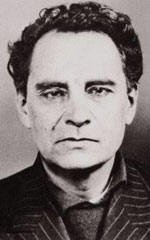

Between July 1963 and October 1965, five children and adolescents between the ages of 10 and 17 disappeared from the streets of Greater Manchester. The perpetrators—27-year-old stock clerk Ian Brady and his 23-year-old girlfriend Myra Hindley—carried out a calculated campaign of abduction, sexual assault, torture, and murder, burying their victims in shallow peat graves across the desolate, windswept expanses of Saddleworth Moor in the Peak District. The investigation by the Cheshire Constabulary broke open following an axe attack inside their council house, leading to the recovery of encrypted railway left-luggage tickets that unlocked a horrific archive of audio tape recordings and panoramic moor photographs. This forensic analysis explores the Saddleworth Moor forensic excavations, tape enhancement forensics, trial proceedings, and the 60-year search for Keith Bennett.
Executive Case Factsheet
- Victim(s): Pauline Reade (16), John Kilbride (12), Keith Bennett (12), Lesley Ann Downey (10), Edward Evans (17)
- Date of Incident: July 12, 1963 – October 6, 1965
- Primary Crime Scene / Location: Saddleworth Moor, Peak District; 16 Wardle Brook Avenue, Hattersley, Cheshire, England
- Lead Investigating Jurisdictions: Cheshire Constabulary, Lancashire Constabulary, Home Office Forensic Science Laboratory
- Key Forensic Evidence: Tape-recorded audio of victim torture, photographic negatives of victims on Saddleworth Moor peat bogs, railway station left-luggage suitcases, excavated skeletal remains
- Suspect(s) / Perpetrator(s): Ian Brady (27), Myra Hindley (23)
- Legal Outcome & Status: Convicted of murder at Chester Assizes in May 1966; sentenced to life imprisonment; Hindley died in 2002, Brady died in 2017
The Hattersley Council House Ambush and the Left-Luggage Suitcases
On the evening of October 6, 1965, 17-year-old David Smith was invited to the council house of his sister-in-law Myra Hindley and Ian Brady at 16 Wardle Brook Avenue in Hattersley. Entering the living room, Smith witnessed Brady brutally hack 17-year-old apprentice Edward Evans to death with a heavy hatchet before strangling him with an electrical cord.
Terrified, Smith helped clean the blood and wrap the corpse in plastic sheeting before fleeing at dawn and alerting the Cheshire Constabulary. Superintendent Bob Talbot and Detective Chief Inspector Joe Mounsey raided the residence, arresting Brady and recovering the bound corpse of Evans in an upstairs bedroom.
A search of Hindley’s handbag yielded two railway left-luggage cloakroom tickets for Manchester Central Station. Detectives executed a warrant on the lockers, retrieving two aluminum suitcases. Inside, forensic specialists discovered an archive of horrors: a loaded revolver, whip implements, a tape recording capturing the harrowing pleas of ten-year-old Lesley Ann Downey during torture, and hundreds of photographic negatives depicting Brady and Hindley posing across specific landmarks on Saddleworth Moor.

Forensic Photogrammetry and the Saddleworth Moor Peat Excavations
Detective Chief Superintendent Arthur Benfield and DCI Joe Mounsey recognized that Hindley had deliberately posed in photographs standing over subtle ground depressions on Saddleworth Moor.
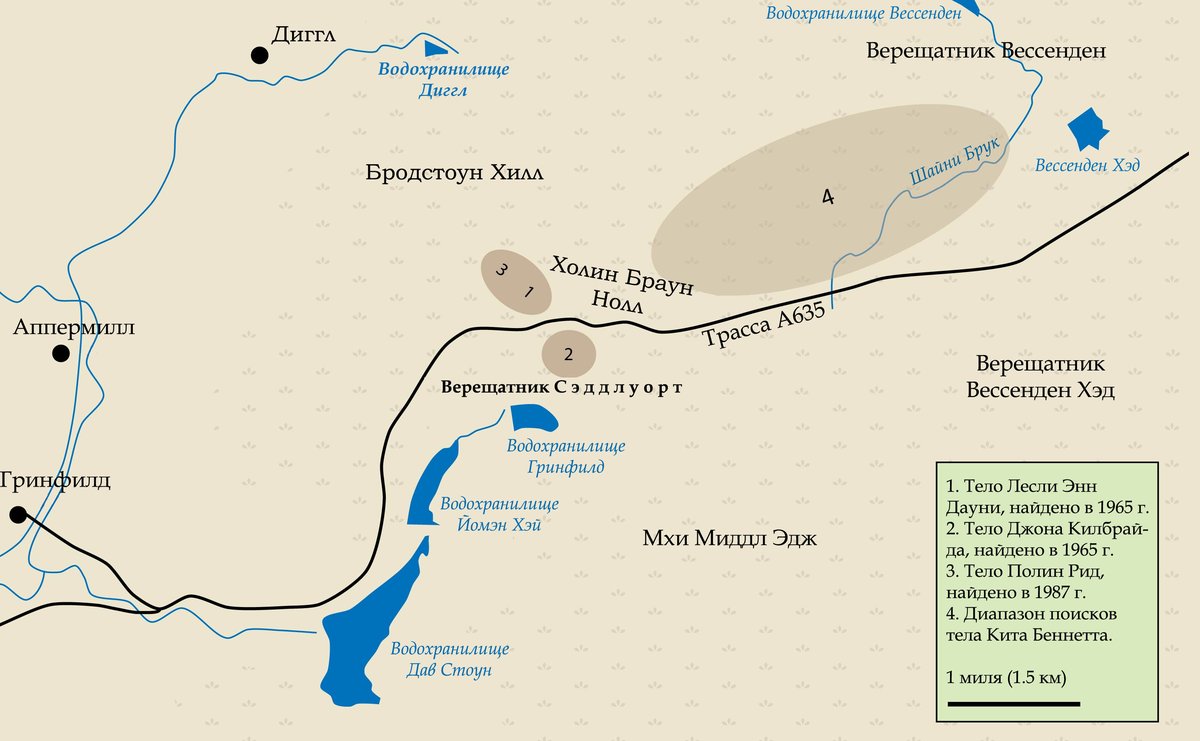
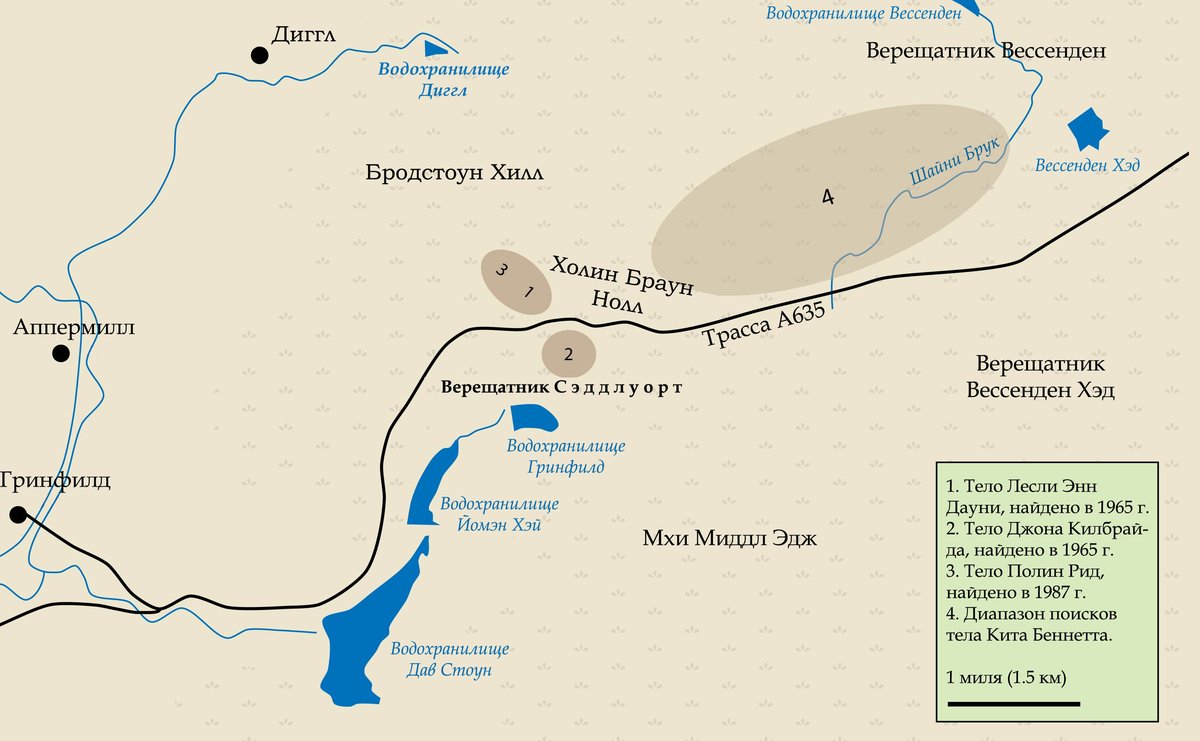
Forensic surveyors and photogrammetry specialists from the Ordnance Survey mapped the background horizons, rock formations, and peat drainage gullies visible in the negatives, pinpointing exact coordinates along the A635 Isle of Skye road.
In October 1965, hundreds of police officers, soldiers, and forensic pathologists combed the moor with steel probing rods. On October 16, searchers unearthed the partially decomposed body of ten-year-old Lesley Ann Downey buried in a shallow peat trench. Five days later, searchers excavated the fully clothed, preserved skeletal remains of 12-year-old John Kilbride buried under three feet of acidic peat moss, with post-mortem exams confirming manual and ligature asphyxiation.
Forensic Audio Enhancement: The Lesley Ann Downey Tape
The most damning piece of physical evidence in modern British criminal history was the 13-minute audio tape recovered from the Manchester Central railway suitcase.
Home Office acoustic engineers and forensic sound analysts cleaned and enhanced the magnetic tape recording. The tape captured Lesley Ann Downey weeping, begging for her life, and crying out for her mother while Christmas music played in the background, with Ian Brady’s Scottish accent and Myra Hindley’s voice issuing stern commands.
The acoustic evidence provided irrefutable proof of Hindley’s active, conscious participation in the kidnapping and torture, completely dismantling her defense claims that she was merely an innocent bystander coerced by Brady.
The 1966 Chester Assizes Trial and Whole-Life Tariffs
In April 1966, Ian Brady and Myra Hindley went on trial at Chester Castle Assizes before Mr. Justice Fenton Atkinson, with bulletproof glass screens installed to protect the dock. Attorney General Sir Elwyn Jones led the prosecution.
The courtroom was stunned when the prosecution played the Lesley Ann Downey audio tape to the jury. Both defendants pleaded not guilty, with Brady maintaining cold, psychopathic detachment and Hindley denying knowledge of the murders.
On May 6, 1966, the jury convicted Brady of three murders (Edward Evans, John Kilbride, Lesley Ann Downey) and Hindley of two murders (Downey and Evans) and being an accessory to Kilbride. Because the death penalty in Britain had been abolished in 1965, Mr. Justice Atkinson sentenced both to life imprisonment, recommending they never be released.
The 1987 Confessions, Pauline Reade Recovery, and the Keith Bennett Search
In 1987, after two decades of denials, both Brady and Hindley formally confessed to two additional murders: 16-year-old Pauline Reade and 12-year-old Keith Bennett.
Police escorted Hindley and Brady back to Saddleworth Moor in secret helicopter operations. Guided by new recollections, forensic teams unearthed the intact skeletal remains of Pauline Reade on July 1, 1987. However, the exact burial location of Keith Bennett was never identified before both killers died in custody (Hindley in 2002, Brady in 2017 at Ashworth High Security Hospital).
The Moors Murders transformed British forensic archaeology, demonstrating how historical photographs, soil strata chemistry, and botanical peat core analysis could be integrated to locate clandestine graves decades after burial.
Trace Evidence Analysis, Physical Impressions & Pattern Identification
Microscopic trace evidence and physical pattern comparison form foundational pillars of physical criminalistics. Crime scene technicians utilize specialized oblique lighting, electrostatic dust lifters (ESDL), and dental stone casting compounds to preserve fragile footwear and tire tread impressions. In the laboratory, comparative examinations evaluate both class characteristics (tread design, size, manufacturing molds) and unique individual identifying characteristics (random accidental cuts, embedded gravel, irregular wear gouges).
Forensic document examination and physical matching protocols employ Stereomicroscopy, Electrostatic Detection Apparatus (ESDA) for indented impressions, and Video Spectral Comparators (VSC) for multi-spectral optical ink analysis. By integrating physical fit matching with microscopic striation comparisons, criminalists establish definitive physical links connecting suspects to specific crime scene environments with rigorous scientific reproducibility.
Modern Jurisprudential Precedents & Evidentiary Standards
The landmark investigative and courtroom developments associated with Ian Brady & Myra Hindley fundamentally redefined procedural evidentiary standards under the Federal Rules of Evidence (Rule 702) and international common law equivalents. Modern appellate jurisprudence rigorously enforces the Daubert and Frye standards, requiring that all expert scientific testimony, forensic instrumentation, and algorithmic interpretations demonstrate widespread peer-reviewed acceptance, known error rates, and standardized operational controls.
Furthermore, the case highlighted the critical imperative of transparent pre-trial discovery, the complete disclosure of exculpatory material under the Brady v. Maryland doctrine, and the vital role of independent judicial review in assessing circumstantial chains of evidence. Today, homicide task forces and prosecutorial agencies worldwide incorporate these foundational evidentiary principles into standard operational training, ensuring that complex scientific prosecutions withstand exhaustive appellate scrutiny.
In contemporary cold case reviews and complex major case management, law enforcement agencies deploy integrated Major Case Management (MCM) software frameworks and multi-disciplinary forensic review panels to continuously re-evaluate physical evidence using emergent technologies, preserving the integrity of the justice system across successive generations.
Chronological Case Timeline
| Date / Milestone | Investigative Development | Forensic / Evidentiary Significance |
|---|---|---|
| July 12, 1963 | Pauline Reade abducted; first victim buried on Saddleworth Moor | Beginning of the Moors serial abduction and murder series |
| Dec 26, 1964 | 10-year-old Lesley Ann Downey abducted from fair; torture audio tape recorded | Key biological and acoustic evidence created |
| Oct 6, 1965 | Edward Evans murdered with hatchet at Hattersley; David Smith alerts police | Brady and Hindley arrested; recovery of left-luggage suitcases |
| Oct 16-21, 1965 | Excavations on Saddleworth Moor unearth Lesley Ann Downey and John Kilbride | Physical recovery confirms peat bog grave burials |
| May 6, 1966 | Chester Assizes jury convicts Brady and Hindley of multiple murders | Life imprisonment sentences imposed under recent capital abolition |
| July 1, 1987 | Forensic teams locate and excavate remains of Pauline Reade on the moor | Fourth victim recovered following confessions |
| Nov 2002 & May 2017 | Myra Hindley dies at age 60; Ian Brady dies at age 79 in Ashworth Hospital | Keith Bennett remains the sole unrecovered victim on Saddleworth Moor |
Frequently Asked Questions: Forensic & Legal Review
What physical evidence led to the discovery of the Moors Murders graves?
Detectives found two left-luggage tickets in Hindley’s handbag that unlocked suitcases at Manchester Central Station. Inside were photographic negatives of Hindley posing on Saddleworth Moor. Police surveyors used photogrammetry to match rock formations and horizons in the photos to find the exact burial locations.
Why was the audio tape of Lesley Ann Downey so significant in court?
The 13-minute tape recorded the child being tortured and begging for her life, with Myra Hindley’s voice clearly audible instructing the child to cooperate. This acoustic evidence conclusively proved Hindley was an active, willing participant rather than an unwilling bystander.
Was Keith Bennett ever found on Saddleworth Moor?
No. Despite extensive archaeological searches spanning five decades and multiple site visits by Brady and Hindley in 1987, Keith Bennett’s burial site on Saddleworth Moor has never been located.