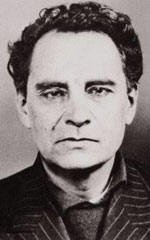
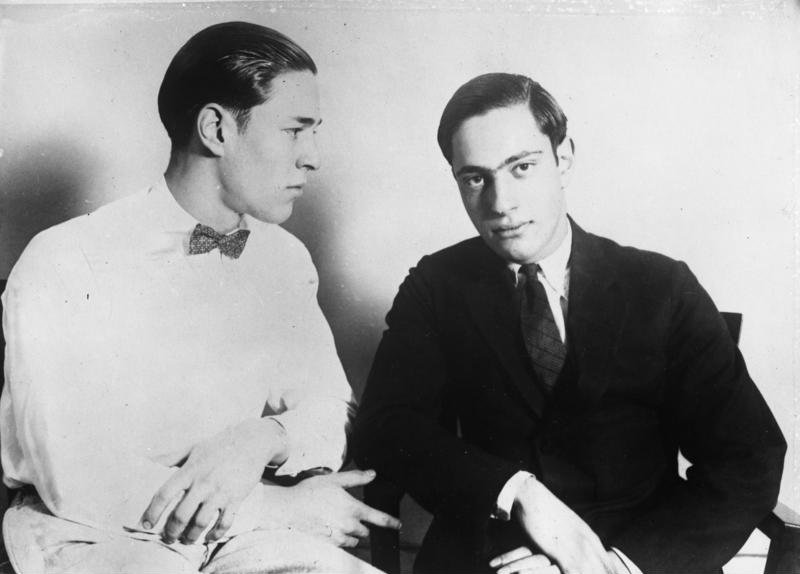
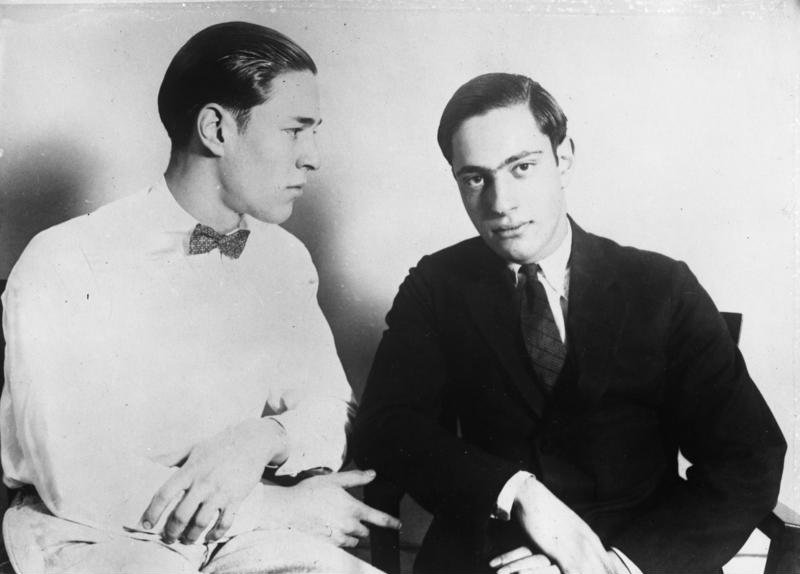
On May 21, 1924, two exceptionally brilliant, wealthy university graduates—nineteen-year-old Nathan Leopold Jr. and eighteen-year-old Richard Loeb—executed what they believed was the ‘perfect crime’ in Chicago, Illinois. Motivated by a distorted interpretation of Friedrich Nietzsche’s concept of the ‘Übermensch’ (superman) and an arrogant desire to demonstrate intellectual superiority over the legal system, the pair kidnapped and bludgeoned 14-year-old Bobby Franks to death inside a rented Willys-Knight automobile, dumping his body in a remote culvert near Wolf Lake. However, their meticulous seven-month plot collapsed within days due to a single microscopic piece of physical evidence: a pair of tortoiseshell eyeglasses with a patented hinge dropped by Leopold at the dumping site. Defended by renowned civil liberties attorney Clarence Darrow in a historic twelve-hour closing argument, the case became known worldwide as the ‘Trial of the Century.’
Executive Case Factsheet
- Victim(s): Robert ‘Bobby’ Franks (14)
- Date of Incident: May 21, 1924; Arrested May 29–31, 1924; Sentenced September 10, 1924
- Primary Crime Scene / Location: Ellis Avenue, Kenwood, Chicago & Wolf Lake culvert, Hegewisch, Illinois
- Lead Investigating Jurisdictions: Chicago Police Department, Cook County State’s Attorney’s Office
- Key Forensic Evidence: Horn-rimmed eyeglasses with patented Almer Coe & Co. hinge found near the body, Underwood typewriter typeface comparison matching ransom note, chisel head trauma
- Suspect(s) / Perpetrator(s): Nathan Freudenthal Leopold Jr. (19) & Richard Albert Loeb (18)
- Legal Outcome & Status: Pleaded guilty to murder and kidnapping on July 21, 1924; sentenced to life plus 99 years imprisonment
Initial Discovery & Crime Scene Reconstruction
On the afternoon of May 21, 1924, 14-year-old Bobby Franks, the son of a wealthy Chicago watch manufacturer, was walking home from the Harvard School for Boys in the affluent Kenwood neighborhood. Loeb lured Franks into a rented green sedan under the pretext of discussing a tennis racket. Once inside, Franks was struck repeatedly over the head with a heavy taped chisel and suffocated with a gag. Leopold and Loeb drove the corpse twenty miles south to the marshlands of Wolf Lake near Hegewisch, poured hydrochloric acid over Franks’ face to obscure identification, and stuffed the body into a railroad drainage culvert.
The following morning, before the Franks family could deliver a $10,000 ransom demanded in a typed letter, a Polish immigrant railway worker named Tony Minke discovered Franks’ foot protruding from the culvert. Chicago police and Cook County State’s Attorney Robert E. Crowe initiated an intensive homicide investigation, recovering the boy’s clothes and personal belongings from the marsh.
Forensic Science, Pathology & Physical Evidence
During the crime scene processing at Wolf Lake, Chicago police detectives recovered a pair of horn-rimmed eyeglasses lying in the mud near the culvert entrance. Recognizing the unique mechanical construction of the spectacles, State’s Attorney Crowe sent them to local optometrists. Forensic tracing revealed that the glasses featured a rare, patented three-screw hinge mechanism manufactured exclusively by the high-end Chicago optical firm Almer Coe & Co.
Optometrists examined company sales ledgers and established that only three individuals in the entire city of Chicago had purchased this specific custom prescription frame. Two of the customers were accounted for and possessed their glasses. The third pair had been purchased by 19-year-old Nathan Leopold Jr., a brilliant law student and ornithologist living just blocks from the Franks residence.
Simultaneously, forensic document examiners evaluated the typed $10,000 ransom letter sent to the Franks home. Comparing the typeface imperfections, ribbon wear, and misalignment of the letters ‘t’ and ‘e’, examiners proved the note was produced on an Underwood portable typewriter belonging to Leopold’s university study group.
Investigative Breakdown & Key Breakthroughs
On May 29, 1924, State’s Attorney Crowe brought Nathan Leopold in for questioning. Leopold claimed he had lost his eyeglasses while birdwatching at Wolf Lake weeks earlier, offering an alibi that he and Richard Loeb had spent the evening of May 21 driving Leopold’s red Willys-Knight car around Lincoln Park with two young women.
When detectives questioned Loeb separately, their coordinated alibis disintegrated. Leopold’s family chauffeur revealed that Leopold’s automobile had remained parked in the family garage undergoing engine maintenance on the night of the murder. Confronted with the chauffeur’s testimony, the optical hinge records, and typewriter forensics, Loeb broke down on May 31 and confessed, followed hours later by Leopold. Both young men provided chillingly detached, remorseless accounts of how they planned the thrill killing purely for intellectual stimulation.
Courtroom Proceedings & Evidentiary Arguments
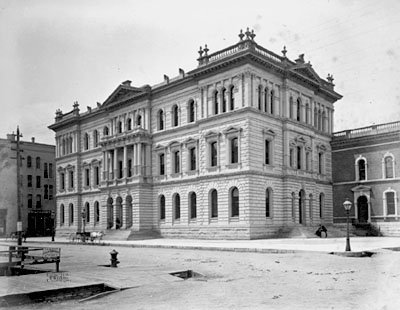
To avoid a hostile Chicago jury that would demand the gallows, legendary defense attorney Clarence Darrow advised Leopold and Loeb to plead guilty to murder and kidnapping, placing their fate entirely in the hands of Cook County Circuit Court Judge John R. Caverly. The sentencing hearing began in July 1924, evolving into a historic philosophical and psychiatric battle. Darrow called pioneering psychiatric experts to testify regarding the defendants’ developmental anomalies, emotional detachment, and toxic psychological interdependence.
On August 22 and 23, 1924, Clarence Darrow delivered a legendary twelve-hour closing argument against the death penalty, hailed as a masterpiece of forensic rhetoric. Darrow argued that executing two teenagers would not cure societal violence, pleading for mercy, psychiatric understanding, and human progress. On September 10, 1924, Judge Caverly sentenced Leopold and Loeb to life imprisonment for the murder of Bobby Franks, plus an additional ninety-nine years for kidnapping. Loeb was murdered by a fellow inmate in Stateville Penitentiary in 1936, while Leopold was paroled in 1958, dedicating his remaining years to medical research and education in Puerto Rico until his death in 1971.
Forensic Legacy & Criminal Justice Impact
The forensic, legal, and systemic ramifications of the investigation into Leopold & Loeb continue to shape modern criminal justice doctrine worldwide. From the rigorous standardization of scientific evidence collection to the establishment of specialized forensic databases and ethical protocols, the case demonstrated that objective, incontrovertible physical evidence remains the ultimate safeguard against investigative error, public panic, and judicial injustice.
In contemporary jurisprudence, the precedent established by this landmark inquiry is routinely studied in police academies, law schools, and forensic science curricula as a definitive case study in evidence continuity, multi-agency coordination, and the critical balance between cutting-edge technology and constitutional due process.
Forensic Pathology, Traumatology & Biomechanical Reconstruction
Medico-legal autopsy protocols mandate systematic anatomical dissection and photographic documentation to determine both the immediate cause and underlying manner of death. Forensic pathologists evaluate external cutaneous trauma—including contusions, abrasions, lacerations, and incised wounds—measuring dimensional metrics, beveling angles, and marginal tissue bridging to reconstruct weapon kinematics and kinetic energy transfer.
Histopathological examination of microscopic tissue sections stained with Hematoxylin and Eosin (H&E) allows pathologists to differentiate between ante-mortem vital reactions and post-mortem artifactual damage. Sub-cutaneous hemorrhaging, inflammatory cellular infiltration, and microscopic vascular thrombosis confirm that physiological circulation was active at the time injury was sustained, allowing investigators to establish precise chronological sequences of fatal physical trauma.
Modern Jurisprudential Precedents & Evidentiary Standards
The landmark investigative and courtroom developments associated with Leopold & Loeb fundamentally redefined procedural evidentiary standards under the Federal Rules of Evidence (Rule 702) and international common law equivalents. Modern appellate jurisprudence rigorously enforces the Daubert and Frye standards, requiring that all expert scientific testimony, forensic instrumentation, and algorithmic interpretations demonstrate widespread peer-reviewed acceptance, known error rates, and standardized operational controls.
Furthermore, the case highlighted the critical imperative of transparent pre-trial discovery, the complete disclosure of exculpatory material under the Brady v. Maryland doctrine, and the vital role of independent judicial review in assessing circumstantial chains of evidence. Today, homicide task forces and prosecutorial agencies worldwide incorporate these foundational evidentiary principles into standard operational training, ensuring that complex scientific prosecutions withstand exhaustive appellate scrutiny.
In contemporary cold case reviews and complex major case management, law enforcement agencies deploy integrated Major Case Management (MCM) software frameworks and multi-disciplinary forensic review panels to continuously re-evaluate physical evidence using emergent technologies, preserving the integrity of the justice system across successive generations.
Chronological Case Timeline
| Date / Milestone | Investigative & Forensic Milestone | |
|---|---|---|
| May 21, 1924 | Nathan Leopold and Richard Loeb kidnap and murder 14-year-old Bobby Franks in Chicago. | |
| May 22, 1924 | Bobby Franks’ body is discovered in a Wolf Lake culvert; police recover dropped horn-rimmed eyeglasses. | |
| May 29, 1924 | Patented Almer Coe & Co. hinge forensics trace the eyeglasses directly to Nathan Leopold Jr. | |
| May 31, 1924 | Chauffeur testimony breaks their alibi; Leopold and Loeb confess to the thrill killing. | |
| Jul–Aug 1924 | Clarence Darrow delivers his historic 12-hour closing argument against capital punishment. | |
| Sep 10, 1924 | Judge Caverly sentences Leopold and Loeb to life plus 99 years imprisonment. | |
Frequently Asked Questions: Forensic & Legal Review
What single piece of forensic evidence solved the Bobby Franks murder?
A pair of tortoiseshell eyeglasses found near the Wolf Lake culvert had a rare, patented three-screw hinge made by Chicago optical firm Almer Coe & Co. Sales records traced the prescription to just three customers in Chicago, identifying Nathan Leopold Jr.
What was the motive of Leopold and Loeb in committing the crime?
Both from extremely wealthy Chicago families, Leopold and Loeb were motivated by an arrogant desire to commit a ‘perfect crime’ for pure intellectual thrill and to prove their superiority over society’s moral and legal codes.
What was the impact of Clarence Darrow’s 12-hour closing argument?
Darrow’s impassioned 12-hour closing address is regarded as one of the greatest courtroom speeches in American history, successfully convincing Judge John Caverly to spare the teenage killers the death penalty.