The investigation into 10 Rillington Place in Notting Hill, London, stands as one of the most horrifying serial murder cases in British history and the single greatest catalyst for the abolition of the death penalty in the United Kingdom. Between 1943 and 1953, former War Reserve police constable John Reginald Halliday Christie lured at least eight women—including his wife Ethel and tenant Beryl Evans—to his squalid ground-floor flat. Christie incapacitated his victims by administering domestic coal gas (carbon monoxide) through a rubber tube under the guise of medicinal steam inhalations before sexually assaulting and strangling them. In 1950, Christie served as the Crown’s star witness in the wrongful trial and hanging of his innocent tenant Timothy Evans. Three years later, new tenants renovating the vacant flat discovered Christie’s concealed human burial alcoves, triggering a forensic excavation that exposed an unimaginable house of horrors.
Executive Case Factsheet
- Victim(s): 8 confirmed victims (Ethel Christie, Beryl Evans, Geraldine Evans, Ruth Fuerst, Muriel Eady, Rita Nelson, Kathleen Maloney, Hectorina Maclennan)
- Date of Incident: 1943–1953; Arrested March 31, 1953
- Primary Crime Scene / Location: 10 Rillington Place, Notting Hill, West London, England
- Lead Investigating Jurisdictions: Metropolitan Police Service (Scotland Yard), Home Office Forensic Science Laboratory
- Key Forensic Evidence: Concealed kitchen pantry alcove containing 3 paper-wrapped mummified bodies, floorboard skeletal remains of wife Ethel, garden bone fragments holding up fence, carbon monoxide gas apparatus
- Suspect(s) / Perpetrator(s): John Reginald Halliday Christie (54)
- Legal Outcome & Status: Convicted on June 25, 1953, at the Old Bailey; executed by hanging on July 15, 1953; led to abolition of capital punishment in the UK
Initial Discovery & Crime Scene Reconstruction
On March 24, 1953, a West Indian tenant named Beresford Brown was granted permission by the landlord to use the ground-floor kitchen of the recently vacated flat at 10 Rillington Place. While attempting to install a bracket for a wireless radio on the kitchen wall, Brown tapped on the wallpaper behind the pantry and realized the wall was hollow. Peeling away multiple layers of wallpaper, Brown shone a flashlight into an unventilated alcove recess and was confronted by the bare human back of a woman’s body.
Terrified, Brown immediately contacted Notting Hill police. Scotland Yard detectives and Home Office pathologist Dr. Francis Camps arrived within the hour. Behind the wallpapered pantry alcove, forensic teams recovered the corpses of three young women—Kathleen Maloney, Rita Nelson, and Hectorina Maclennan—stacked vertically, wrapped in blankets, and coated in household disinfectant powder to mask decomposition odors.

Forensic Science, Pathology & Physical Evidence
Dr. Francis Camps and forensic archaeology teams initiated a total dissection of 10 Rillington Place and its overgrown back garden. Beneath the loose wooden floorboards of the front living room, technicians discovered the decomposing body of Christie’s wife, Ethel Christie, who had been strangled in December 1952. In the back garden, forensic anthropologists sieved soil, recovering two complete human skeletons—Ruth Fuerst (murdered in 1943) and Muriel Eady (murdered in 1944). A human thigh bone was even found being used by Christie as a garden fence prop.
Dr. Francis Camps performed extensive toxicological and forensic pathological analyses on all recovered bodies. Camps identified massive carbon monoxide saturation levels in the lungs and blood of the victims. In Christie’s kitchen, detectives recovered a modified glass jar, rubber tubing, and clips connected to the domestic coal gas supply. Christie had convinced his victims that inhaling the vapors from his ‘special inhaler’ would cure respiratory ailments or induce abortion, using the carbon monoxide to render them unconscious within seconds before applying ligature strangulation.
Investigative Breakdown & Key Breakthroughs
A nationwide manhunt for John Christie was launched across Britain. On the morning of March 31, 1953, Police Constable Thomas Ledger spotted an unkempt, haggard man leaning over the parapet of Putney Bridge in southwest London. When asked for his identity card, the man muttered his real name: John Reginald Christie.
Taken to Notting Hill Police Station, Christie underwent days of intense interrogation. He gave comprehensive confessions to murdering eight women, including his wife Ethel and previous garden victims. Most critically, Christie admitted that he had also murdered 20-year-old Beryl Evans in 1949—the exact crime for which 25-year-old Welshman Timothy Evans had been wrongfully convicted and hanged at Pentonville Prison in March 1950. Christie’s admission sent shockwaves through the British judicial and political establishment.

Courtroom Proceedings & Evidentiary Arguments
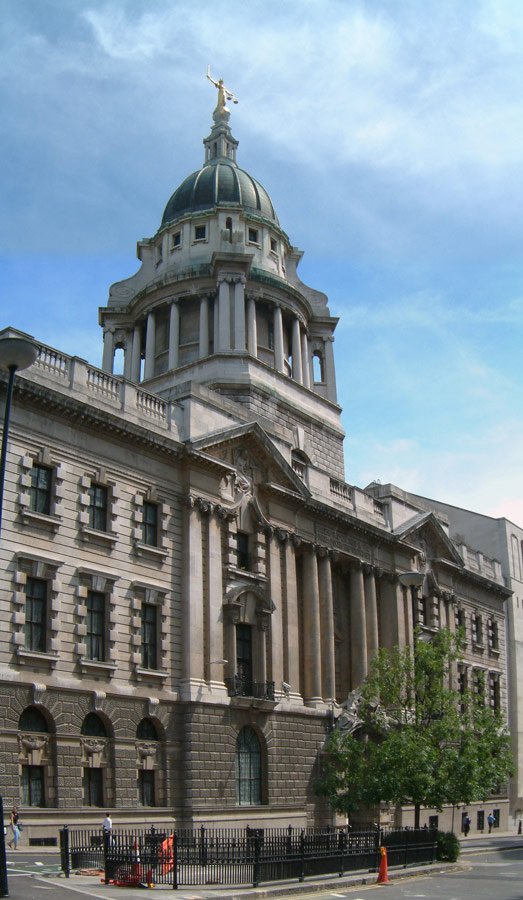
John Christie was tried at the Old Bailey in London on June 22, 1953, before Mr. Justice Finnemore, specifically charged with the murder of his wife Ethel. Christie’s defense team, led by Derek Curtis-Bennett, entered a plea of insanity, arguing that Christie was a psychopathic necrophile devoid of moral comprehension. However, the Attorney General Sir Lionel Heald established that Christie displayed extreme cunning in concealing bodies, selling furniture, and forging letters to simulate his wife’s continued survival.
On June 25, 1953, the Old Bailey jury deliberated for eighty-five minutes before finding Christie guilty of capital murder. On July 15, 1953, Christie was executed by hanging at HM Prison Pentonville by executioner Albert Pierrepoint. The monumental miscarriage of justice surrounding Timothy Evans’ wrongful execution sparked decades of public outrage, leading to statutory inquiries by J. Scott Henderson QC and Sir Daniel Brabin, a posthumous royal pardon for Timothy Evans in 1966, and the definitive passage of the Murder (Abolition of Death Penalty) Act 1965 in the British Parliament.
Forensic Legacy & Criminal Justice Impact
The forensic, legal, and systemic ramifications of the investigation into John Christie continue to shape modern criminal justice doctrine worldwide. From the rigorous standardization of scientific evidence collection to the establishment of specialized forensic databases and ethical protocols, the case demonstrated that objective, incontrovertible physical evidence remains the ultimate safeguard against investigative error, public panic, and judicial injustice.
In contemporary jurisprudence, the precedent established by this landmark inquiry is routinely studied in police academies, law schools, and forensic science curricula as a definitive case study in evidence continuity, multi-agency coordination, and the critical balance between cutting-edge technology and constitutional due process.
Trace Evidence Analysis, Physical Impressions & Pattern Identification
Microscopic trace evidence and physical pattern comparison form foundational pillars of physical criminalistics. Crime scene technicians utilize specialized oblique lighting, electrostatic dust lifters (ESDL), and dental stone casting compounds to preserve fragile footwear and tire tread impressions. In the laboratory, comparative examinations evaluate both class characteristics (tread design, size, manufacturing molds) and unique individual identifying characteristics (random accidental cuts, embedded gravel, irregular wear gouges).
Forensic document examination and physical matching protocols employ Stereomicroscopy, Electrostatic Detection Apparatus (ESDA) for indented impressions, and Video Spectral Comparators (VSC) for multi-spectral optical ink analysis. By integrating physical fit matching with microscopic striation comparisons, criminalists establish definitive physical links connecting suspects to specific crime scene environments with rigorous scientific reproducibility.
Modern Jurisprudential Precedents & Evidentiary Standards
The landmark investigative and courtroom developments associated with John Christie fundamentally redefined procedural evidentiary standards under the Federal Rules of Evidence (Rule 702) and international common law equivalents. Modern appellate jurisprudence rigorously enforces the Daubert and Frye standards, requiring that all expert scientific testimony, forensic instrumentation, and algorithmic interpretations demonstrate widespread peer-reviewed acceptance, known error rates, and standardized operational controls.
Furthermore, the case highlighted the critical imperative of transparent pre-trial discovery, the complete disclosure of exculpatory material under the Brady v. Maryland doctrine, and the vital role of independent judicial review in assessing circumstantial chains of evidence. Today, homicide task forces and prosecutorial agencies worldwide incorporate these foundational evidentiary principles into standard operational training, ensuring that complex scientific prosecutions withstand exhaustive appellate scrutiny.
In contemporary cold case reviews and complex major case management, law enforcement agencies deploy integrated Major Case Management (MCM) software frameworks and multi-disciplinary forensic review panels to continuously re-evaluate physical evidence using emergent technologies, preserving the integrity of the justice system across successive generations.
Chronological Case Timeline
| Date / Milestone | Investigative & Forensic Milestone | |
|---|---|---|
| 1943–1944 | Christie murders Ruth Fuerst and Muriel Eady, burying their skeletal remains in his back garden. | |
| Nov 1949 | Christie murders tenant Beryl Evans; innocent husband Timothy Evans is wrongfully convicted and hanged in 1950. | |
| Dec 1952 | Christie murders his wife Ethel, concealing her corpse beneath the living room floorboards. | |
| Mar 24, 1953 | New tenant Beresford Brown discovers three corpses hidden behind wallpaper in the kitchen pantry alcove. | |
| Mar 31, 1953 | Christie is captured at Putney Bridge; confesses to eight murders including Beryl Evans. | |
| Jul 15, 1953 | Christie is hanged at Pentonville Prison; the scandal prompts the abolition of capital punishment in the UK. | |
Frequently Asked Questions: Forensic & Legal Review
How did John Christie incapacitate his victims at 10 Rillington Place?
Christie connected rubber tubing to his domestic coal gas pipe, pretending it was a therapeutic medical inhalation mixture to cure headaches or colds. The heavy carbon monoxide gas quickly rendered victims unconscious before strangulation.
Why is the 10 Rillington Place case crucial to British legal history?
Christie was the star prosecution witness against his tenant Timothy Evans, who was wrongfully hanged in 1950 for the murder of his wife and baby. Christie’s later confession exposed the fatal flaw of capital punishment and led directly to its abolition in the UK in 1965.
How were the bodies at 10 Rillington Place discovered?
In March 1953, after Christie vacated the flat, new tenant Beresford Brown tapped on a hollow wall in the kitchen pantry to install a radio bracket, peeling back wallpaper to find three concealed female corpses.