Executive Case Factsheet
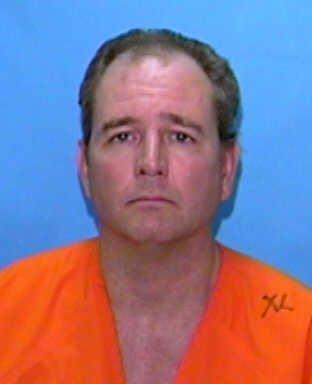
- Perpetrator: Danny Harold Rolling (‘The Gainesville Ripper’)
- Active Period: August 1990 (Arrested September 7, 1990 for robbery in Ocala, FL)
- Jurisdiction: Gainesville, Alachua County, Florida; Shreveport, Louisiana
- Confirmed Victims: 5 University of Florida students (plus 3 Shreveport triple-homicide victims)
- Modus Operandi: Nocturnal apartment break-ins; binding victims; sexual assault, lethal stabbing, decapitation, and theatrical corpse staging
- Key Forensic Breakthrough: Campsite audio confession cassette tapes; Ka-Bar knife tool-mark comparison; early RFLP/STR DNA semen match
- Judicial Outcome: Pleaded guilty to all 5 counts of first-degree murder on February 15, 1994; executed by lethal injection on October 25, 2006 at Florida State Prison
The Criminal Genesis, Modus Operandi & Geographic Hunting Grounds
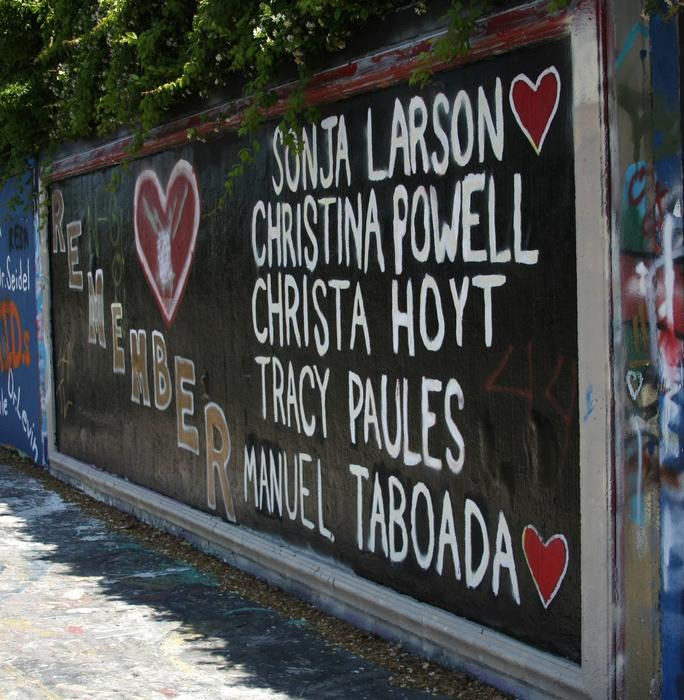
In late August 1990, the college town of Gainesville, Florida, was gripped by unprecedented terror during the opening week of the University of Florida academic semester. Over four days, five college students—Sonja Larson, Christina Powell, Christa Hoyt, Manuel Toboada, and Tracy Paules—were slaughtered inside their off-campus student apartments by an unknown intruder who became known as the ‘Gainesville Ripper’.
The perpetrator, 36-year-old Louisiana fugitive Danny Harold Rolling, had fled Shreveport after committing a triple homicide in 1989. In Gainesville, Rolling stalked off-campus student apartment complexes bordering Archer Road. Breaking in through sliding glass patio doors or unlocked windows under cover of darkness, Rolling immobilized victims at knife-point, restrained them with duct tape, and executed them with deep, kinetic stab wounds from a Ka-Bar combat knife before staging the crime scenes with theatrical, shocking poses.
Forensic Crime Scene Investigation, Pathology & Evidence Reconstruction
Forensic crime scene investigators from the Florida Department of Law Enforcement (FDLE) encountered scenes of extreme physical trauma. Autopsies conducted by Medical Examiner Dr. William Hamilton documented fatal sharp-force penetrating wounds, blunt-force cranial trauma, and complete decapitation in the case of Christa Hoyt, whose head was posed on a bedroom bookshelf facing her decapitated torso.
FDLE serologists collected high-quality biological evidence from the crime scenes, including high-molecular-weight DNA extracted from seminal fluid. Forensic tool-mark examiners analyzed cartilage notches on victim ribs and cervical vertebrae, noting distinct micro-serration marks that matched the specific geometry of a commercial Ka-Bar military combat knife.
The Investigative Breakthrough, Behavioral Profiling & Tactical Manhunt
While task force detectives initially pursued a local student suspect, the breakthrough came from physical evidence recovered outside the immediate crime scenes. In December 1990, forest maintenance workers discovered a concealed woodland campsite in a pine grove less than a mile from the university campus. Inside the abandoned tent, FDLE criminalists recovered a Ka-Bar knife, lock picks, bank money wrappers, and a handheld audio cassette recorder containing tapes in which Rolling sang songs and spoke of his predatory urges.
Rolling had been arrested in neighboring Marion County on September 7, 1990, following an armed robbery. In November 1991, FDLE geneticists completed Restriction Fragment Length Polymorphism (RFLP) DNA matching, establishing that Rolling’s DNA matched the semen recovered from multiple Gainesville crime scenes with an astronomical statistical probability exceeding 1 in 100 million.
Courtroom Proceedings, Expert Testimony & The Definitive Verdict
Indicted on five counts of first-degree murder, Rolling’s trial was scheduled for February 1994 at the Alachua County Courthouse before Judge Stan R. Morris. In a shocking courtroom maneuver on the opening day of proceedings, Rolling unexpectedly entered a plea of GUILTY to all five murders and three related sexual assaults, stating he wished to spare the families further trial agony.
During the subsequent penalty phase, the defense presented evidence of severe physical and emotional abuse inflicted by Rolling’s police officer father. However, the prosecution emphasized the chilling premeditation, torture, and mutilation. On March 24, 1994, the jury unanimously recommended the death penalty. On October 25, 2006, Danny Rolling was executed by lethal injection at Florida State Prison in Raiford.
Modern Criminological Impact, Legal Precedents & Forensic Evolution
The Danny Rolling investigation established critical benchmarks for forensic DNA implementation in American jurisprudence, serving as an early showcase of RFLP and STR genetic matching in high-profile capital trials.
The case also profoundly influenced American popular culture and emergency university campus safety protocols, inspiring the modern ‘Blue Light’ emergency phone network across U.S. college campuses and serving as the direct inspiration for the 1996 horror cinema classic ‘Scream’.
Forensic Genetic Profiling & Laboratory Chain of Custody
In modern criminalistics, the extraction and preservation of biological evidence adheres to strict ISO/IEC 17025 accredited laboratory standards. Every biological cutting, cellular swab, and whole-blood reference sample undergoes rigorous chain of custody tracking to prevent cross-contamination and enzymatic degradation. Forensic geneticists utilize automated liquid handling platforms to isolate genomic DNA, followed by quantitative real-time PCR (qPCR) to assess human DNA yield and potential cellular degradation.
Modern Short Tandem Repeat (STR) multiplex amplification examines up to 24 standardized loci alongside the Amelogenin sex-determination marker. When evaluating degraded, fragmented, or low-template biological fluids, specialized laboratories deploy Single Nucleotide Polymorphism (SNP) microarray analysis and Next-Generation Sequencing (NGS/MPS), capable of generating high-density genomic profiles from minuscule biological traces that were previously intractable under legacy RFLP or early PCR methods.
Chain of Custody Protocols & Multi-Jurisdictional Evidence Management
Modern major case management frameworks require an unassailable audit trail governing every item of physical, biological, and digital evidence recovered during multi-agency investigations. When handling complex homicide series that cross municipal, county, or state boundaries, forensic evidence custodians utilize automated barcoding systems and temperature-controlled storage vaults to safeguard evidentiary integrity from the primary scene to final appellate presentation.
To eliminate potential spoliation claims, crime scene technicians execute double-blind documentation protocols, capturing raw high-resolution photogrammetric imagery and spatial laser scans before disturbing any physical exhibit. Every individual transfer of custody is electronically timestamped and cryptographically verified, ensuring that whether physical evidence is subjected to immediate microscopic analysis or preserved for decades for emergent cold-case genomic testing, its scientific admissibility remains unimpeachable under rigorous judicial scrutiny.
Modern Jurisprudential Precedents & Evidentiary Standards
The landmark investigative and courtroom developments associated with Danny Rolling fundamentally redefined procedural evidentiary standards under the Federal Rules of Evidence (Rule 702) and international common law equivalents. Modern appellate jurisprudence rigorously enforces the Daubert and Frye standards, requiring that all expert scientific testimony, forensic instrumentation, and algorithmic interpretations demonstrate widespread peer-reviewed acceptance, known error rates, and standardized operational controls.
Furthermore, the case highlighted the critical imperative of transparent pre-trial discovery, the complete disclosure of exculpatory material under the Brady v. Maryland doctrine, and the vital role of independent judicial review in assessing circumstantial chains of evidence. Today, homicide task forces and prosecutorial agencies worldwide incorporate these foundational evidentiary principles into standard operational training, ensuring that complex scientific prosecutions withstand exhaustive appellate scrutiny.
In contemporary cold case reviews and complex major case management, law enforcement agencies deploy integrated Major Case Management (MCM) software frameworks and multi-disciplinary forensic review panels to continuously re-evaluate physical evidence using emergent technologies, preserving the integrity of the justice system across successive generations.
Chronological Case Timeline
| Date | Event Description |
|---|---|
| November 4, 1989 | Triple homicide of the Grissom family in Shreveport, Louisiana. |
| August 24 – 27, 1990 | Five college students brutally murdered in Gainesville, Florida, sparking mass panic. |
| September 7, 1990 | Rolling arrested in Ocala, Florida, for armed robbery of a supermarket. |
| December 1990 | Forensic teams discover Rolling’s woodland campsite containing Ka-Bar knife and audio tapes. |
| November 1991 | Florida Department of Law Enforcement (FDLE) confirms DNA match from crime scenes. |
| February 15, 1994 | Rolling unexpectedly enters guilty plea on opening day of trial. |
| March 24, 1994 | Jury recommends death penalty on all counts; sentenced to death by Judge Stan Morris. |
| October 25, 2006 | Executed by lethal injection at Florida State Prison in Raiford. |
Frequently Asked Questions
What was found at Danny Rolling’s campsite in Gainesville?
Investigators recovered a woodland tent containing a Ka-Bar combat knife matching victim bone striations, audio cassette tapes featuring Rolling singing and confessing, and cash bags from local robberies.
How did Danny Rolling pose his victims’ bodies?
Rolling engaged in macabre staging, posing decapitated bodies in seated positions facing mirrors and arranging limbs to shock first responders and maximize psychological horror.
What movie was inspired by the Gainesville Ripper murders?
Screenwriter Kevin Williamson was inspired by news coverage of the Gainesville Ripper while house-sitting, which led him to write the screenplay for the iconic 1996 horror film ‘Scream’.
{
“@context”: “https://schema.org”,
“@type”: “FAQPage”,
“mainEntity”: [
{
“@type”: “Question”,
“name”: “What was found at Danny Rolling’s campsite in Gainesville?”,
“acceptedAnswer”: {
“@type”: “Answer”,
“text”: “Investigators recovered a woodland tent containing a Ka-Bar combat knife matching victim bone striations, audio cassette tapes featuring Rolling singing and confessing, and cash bags from local robberies.”
}
},
{
“@type”: “Question”,
“name”: “How did Danny Rolling pose his victims’ bodies?”,
“acceptedAnswer”: {
“@type”: “Answer”,
“text”: “Rolling engaged in macabre staging, posing decapitated bodies in seated positions facing mirrors and arranging limbs to shock first responders and maximize psychological horror.”
}
},
{
“@type”: “Question”,
“name”: “What movie was inspired by the Gainesville Ripper murders?”,
“acceptedAnswer”: {
“@type”: “Answer”,
“text”: “Screenwriter Kevin Williamson was inspired by news coverage of the Gainesville Ripper while house-sitting, which led him to write the screenplay for the iconic 1996 horror film ‘Scream’.”
}
}
]
}