Executive Case Factsheet
- Perpetrator: Cary Anthony Stayner (Cedar Lodge Handyman)
- Active Period: February 1999 – July 1999 (Arrested July 24, 1999 in Wilton, CA)
- Jurisdiction: Yosemite National Park, Mariposa County, California
- Confirmed Victims: 4 victims (Carole Sund, Juli Sund, Silvina Pelosso, Joie Armstrong)
- Modus Operandi: Posing as hotel maintenance worker at Cedar Lodge to enter guest rooms; strangulation, blunt trauma, decapitation, and remote forest disposal
- Key Forensic Breakthrough: Physical tire tread casting at Armstrong crime scene; anonymous map sent to FBI; full confession to FBI Profiler Jeff Rinek
- Judicial Outcome: Pleaded guilty in federal court for Armstrong murder (life sentence); convicted of 3 state murders on August 27, 2002; sentenced to death
The Criminal Genesis, Modus Operandi & Geographic Hunting Grounds
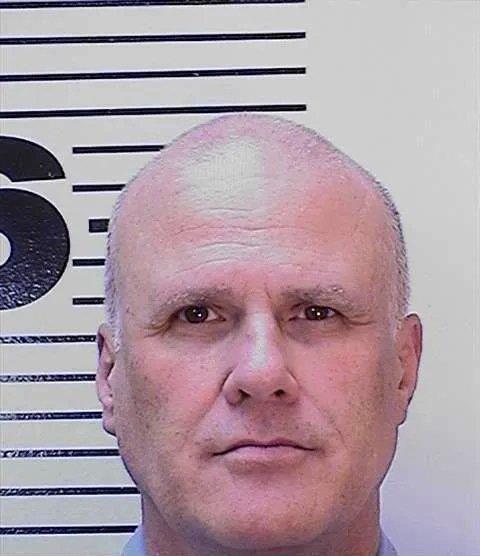
In 1999, the pristine wilderness of Yosemite National Park became the backdrop for one of the most publicized serial homicide investigations in American history. Operating from the Cedar Lodge motel in El Portal, California, 37-year-old handyman Cary Anthony Stayner harbored lifelong violent sexual fantasies while living in the shadow of his younger brother, Steven Stayner, whose 1972 kidnapping and heroic escape had captivated the nation.
Stayner’s predatory strategy exploited his position of institutional trust at Cedar Lodge. On February 15, 1999, 42-year-old Carole Sund, her 15-year-old daughter Juli Sund, and 16-year-old Argentine exchange student Silvina Pelosso checked into Room 509. Knocking on their door under the guise of an urgent maintenance inspection, Stayner gained peaceful entry, restrained the victims with nylon cord, and executed fatal manual and ligature strangulation before transporting their bodies into the remote Stanislaus National Forest.
Forensic Crime Scene Investigation, Pathology & Evidence Reconstruction
On March 19, 1999, federal search teams located the burned rental car containing the charred skeletal remains of Carole Sund and Silvina Pelosso concealed beneath tree branches near Long Barn, California. Forensic odontologists utilized antemortem dental radiographs to confirm identity amidst severe thermal destruction.
Days later, the FBI received an anonymous handwritten letter containing a hand-drawn map scrawled with the message: ‘We had fun with this one’. FBI Evidence Response Teams following the coordinates located the body of Juli Sund near Don Pedro Reservoir, her throat slashed. Document examiners at the FBI Laboratory in Quantico identified distinct linguistic patterns and unique paper fiber compositions matching stationery from the El Portal area, though initial suspicion mistakenly focused on a local methamphetamine gang.
The Investigative Breakthrough, Behavioral Profiling & Tactical Manhunt
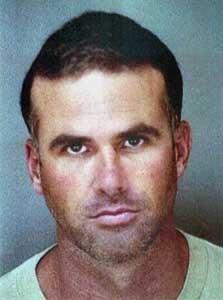
The critical break occurred four months later on July 21, 1999, when 26-year-old Yosemite Institute naturalist Joie Armstrong was found beheaded near her cabin in Foresta. FBI forensic examiners recovered distinct automotive tire impression casts from the damp mud bordering the crime scene, exhibiting class and individual wear characteristics matching a 1979 International Harvester Scout owned by Cedar Lodge handyman Cary Stayner.
On July 24, 1999, FBI agents arrested Stayner at the Laguna del Sol naturist resort in Wilton, California. In a masterclass of behavioral interrogation, Special Agent Jeff Rinek established empathetic rapport, prompting Stayner to provide a comprehensive, video-recorded confession detailing all four homicides, explaining how his brother’s kidnapping had fueled his internal fantasies of predation.
Courtroom Proceedings, Expert Testimony & The Definitive Verdict
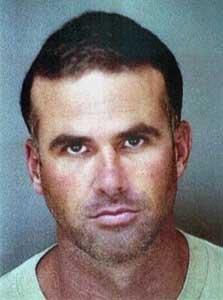
In 2000, Stayner pleaded guilty in federal court to the first-degree murder of Joie Armstrong, receiving a life sentence without parole. In 2002, he was tried in Santa Clara County Superior Court for the state capital murders of Carole Sund, Juli Sund, and Silvina Pelosso before Judge Thomas Hastings.
The defense presented extensive psychiatric testimony alleging obsessive-compulsive disorder, sexual paraphilia, and childhood trauma. However, prosecution psychiatric experts established that Stayner exhibited organized psychopathy, calculated planning, and forensic awareness. On August 27, 2002, the jury found Stayner guilty on all counts, sentencing him to death. Stayner is currently on death row at San Quentin Rehabilitation Center.
Modern Criminological Impact, Legal Precedents & Forensic Evolution
The Yosemite murders exposed critical pitfalls of ‘investigative tunnel vision’, highlighting how federal task forces had prematurely focused on regional methamphetamine rings while overlooking physical evidence linking the lodge handyman.
The case fundamentally altered FBI Major Case Management training, emphasizing the mandatory integration of behavioral profiling with rigorous forensic tire impression matching and physical evidence audits in national park jurisdictions.
Behavioral Analysis, Geographic Profiling & Offender Typology
Forensic behavioral analysis synthesizes victimological data, crime scene dynamics, and spatial-temporal patterns to reconstruct the psychological characteristics and operational habits of violent offenders. Behavioral analysts from the FBI National Center for the Analysis of Violent Crime (NCAVC) evaluate the degree of criminal sophistication, distinguishing between organized offenders who exhibit meticulous planning and forensic awareness, and disorganized offenders driven by impulsive, deteriorating psychopathology.
Geographic profiling software algorithms utilize Rigel and CrimeStat spatial analysis to model offender anchor points, hunting ranges, and buffer zones based on Rossmo’s formula of distance decay. By analyzing signature behaviors—such as ritualistic posing, souvenir retention, and post-mortem staging—behavioral scientists establish vital behavioral linkages across multi-jurisdictional crime series, guiding targeted investigative strategies and tactical interrogation approaches.
Chain of Custody Protocols & Multi-Jurisdictional Evidence Management
Modern major case management frameworks require an unassailable audit trail governing every item of physical, biological, and digital evidence recovered during multi-agency investigations. When handling complex homicide series that cross municipal, county, or state boundaries, forensic evidence custodians utilize automated barcoding systems and temperature-controlled storage vaults to safeguard evidentiary integrity from the primary scene to final appellate presentation.
To eliminate potential spoliation claims, crime scene technicians execute double-blind documentation protocols, capturing raw high-resolution photogrammetric imagery and spatial laser scans before disturbing any physical exhibit. Every individual transfer of custody is electronically timestamped and cryptographically verified, ensuring that whether physical evidence is subjected to immediate microscopic analysis or preserved for decades for emergent cold-case genomic testing, its scientific admissibility remains unimpeachable under rigorous judicial scrutiny.
Modern Jurisprudential Precedents & Evidentiary Standards
The landmark investigative and courtroom developments associated with Cary Stayner fundamentally redefined procedural evidentiary standards under the Federal Rules of Evidence (Rule 702) and international common law equivalents. Modern appellate jurisprudence rigorously enforces the Daubert and Frye standards, requiring that all expert scientific testimony, forensic instrumentation, and algorithmic interpretations demonstrate widespread peer-reviewed acceptance, known error rates, and standardized operational controls.
Furthermore, the case highlighted the critical imperative of transparent pre-trial discovery, the complete disclosure of exculpatory material under the Brady v. Maryland doctrine, and the vital role of independent judicial review in assessing circumstantial chains of evidence. Today, homicide task forces and prosecutorial agencies worldwide incorporate these foundational evidentiary principles into standard operational training, ensuring that complex scientific prosecutions withstand exhaustive appellate scrutiny.
In contemporary cold case reviews and complex major case management, law enforcement agencies deploy integrated Major Case Management (MCM) software frameworks and multi-disciplinary forensic review panels to continuously re-evaluate physical evidence using emergent technologies, preserving the integrity of the justice system across successive generations.
Chronological Case Timeline
| Date | Event Description |
|---|---|
| February 15, 1999 | Carole Sund, daughter Juli Sund, and exchange student Silvina Pelosso vanish from Cedar Lodge. |
| March 19, 1999 | Burnt rental car containing bodies of Carole Sund and Silvina Pelosso found near Long Barn, CA. |
| March 25, 1999 | Body of Juli Sund discovered near Don Pedro Reservoir following anonymous map sent to FBI. |
| July 21, 1999 | Yosemite Institute naturalist Joie Armstrong beheaded near Foresta, CA. |
| July 24, 1999 | Cary Stayner arrested at a naturist resort in Wilton, CA. |
| July 25, 1999 | Stayner confesses to all four murders during comprehensive FBI interrogation by Agent Jeff Rinek. |
| August 27, 2002 | Convicted in Santa Clara County Superior Court of three counts of first-degree murder. |
| Present | Incarcerated on death row at San Quentin Rehabilitation Center. |
Frequently Asked Questions
How was Cary Stayner connected to famous kidnapping survivor Steven Stayner?
Cary Stayner was the older brother of Steven Stayner, who was famously kidnapped in 1972 at age seven, held captive for seven years, and died in a motorcycle accident in 1989.
How did Stayner gain access to his first three victims?
Working as a trusted handyman at the Cedar Lodge motel in El Portal, Stayner knocked on the victims’ room door claiming he needed to repair a plumbing leak, gaining peaceful entry.
What key forensic evidence broke the Yosemite case?
Following the murder of Joie Armstrong in July 1999, FBI forensic teams matched tire tread impressions at the crime scene to Stayner’s 1979 International Scout vehicle.
{
“@context”: “https://schema.org”,
“@type”: “FAQPage”,
“mainEntity”: [
{
“@type”: “Question”,
“name”: “How was Cary Stayner connected to famous kidnapping survivor Steven Stayner?”,
“acceptedAnswer”: {
“@type”: “Answer”,
“text”: “Cary Stayner was the older brother of Steven Stayner, who was famously kidnapped in 1972 at age seven, held captive for seven years, and died in a motorcycle accident in 1989.”
}
},
{
“@type”: “Question”,
“name”: “How did Stayner gain access to his first three victims?”,
“acceptedAnswer”: {
“@type”: “Answer”,
“text”: “Working as a trusted handyman at the Cedar Lodge motel in El Portal, Stayner knocked on the victims’ room door claiming he needed to repair a plumbing leak, gaining peaceful entry.”
}
},
{
“@type”: “Question”,
“name”: “What key forensic evidence broke the Yosemite case?”,
“acceptedAnswer”: {
“@type”: “Answer”,
“text”: “Following the murder of Joie Armstrong in July 1999, FBI forensic teams matched tire tread impressions at the crime scene to Stayneru2019s 1979 International Scout vehicle.”
}
}
]
}