Executive Case Factsheet
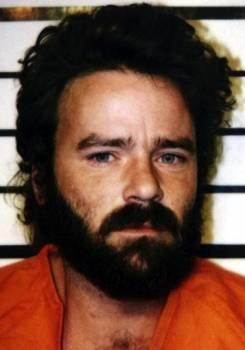
- Perpetrator: Tommy Lynn Sells (‘The Coast to Coast Killer’)
- Active Period: 1980 – 1999 (Arrested January 2, 2000 in Del Rio, TX)
- Jurisdiction: Texas, Missouri, Illinois, Kentucky, West Virginia, Nevada, Wyoming, United States
- Confirmed Victims: Convicted of 1 murder; confessed to 22+ homicides across multiple states
- Modus Operandi: Transcontinental drifting via freight trains; opportunistic home invasions; bludgeoning and sharp-force trauma on sleeping victims
- Key Forensic Breakthrough: Surviving victim Krystal Surles’s forensic composite sketch; Texas Rangers palm print matching on bedroom window frame
- Judicial Outcome: Convicted of capital murder of Kaylene Harris on September 21, 2000; executed by lethal injection on April 3, 2014 in Huntsville, TX
The Criminal Genesis, Modus Operandi & Geographic Hunting Grounds
Tommy Lynn Sells ranks among the most lethal and elusive nomadic serial killers in modern United States history. Operating across at least eight states—including Texas, Missouri, Illinois, Kentucky, West Virginia, Nevada, and Wyoming—between 1980 and 1999, Sells lived entirely on the margins of society as an itinerant carnival worker, rail hobo, and transient laborer. His extreme geographical mobility and total lack of local ties allowed him to commit opportunistic homicides without triggering regional pattern recognition across disparate law enforcement agencies.
Sells’s modus operandi was characterized by sudden, opportunistic violence. Traveling via freight train lines, Sells scouted small rural communities, targeting isolated homes with unlocked doors or ground-floor windows. Striking during the pre-dawn hours, he entered residences armed with utility knives, heavy clubs, or stolen firearms, executing sleeping occupants in their beds with overwhelming physical force before boarding departing trains within hours of the crime.

Forensic Crime Scene Investigation, Pathology & Evidence Reconstruction
The criminal spree culminated in the early morning of December 31, 1999, in Del Rio, Texas. Sells breached the bedroom window of a mobile home occupied by 13-year-old Kaylene Harris and her 10-year-old friend Krystal Surles. Sells repeatedly stabbed Harris, severing her carotid artery, before cutting Surles’s throat from ear to ear with a boning knife and fleeing the scene.
Despite sustaining a catastrophic incised wound that severed her trachea and strap muscles, Krystal Surles demonstrated extraordinary survival instinct. Feigning death until Sells departed, she walked a quarter-mile to a neighbor’s house while manually compressing her lacerated neck to maintain airway patency. Emergency trauma surgeons saved her life, while Texas Rangers forensic technicians secured the crime scene, lifting a high-definition latent palm print from the aluminum bedroom window sill.
The Investigative Breakthrough, Behavioral Profiling & Tactical Manhunt
While still recovering in intensive care, Krystal Surles collaborated with renowned forensic sketch artist Lois Gibson of the Houston Police Department. Utilizing cognitive recall techniques, Gibson produced a composite facial sketch of the assailant. When the sketch was broadcast across regional television news in Del Rio on January 1, 2000, local residents immediately identified Sells, who was residing in a nearby boarding house.
Texas Rangers and Del Rio police arrested Sells on January 2, 2000. Forensic friction ridge examiners confirmed that Sells’s palm print matched the latent impression recovered from the window sill with 100% scientific certainty. Over subsequent months, Texas Ranger Johnny Allen conducted extensive interviews during which Sells confessed to 22 homicides across the United States, providing intimate crime scene details that resolved numerous longstanding cold cases.

Courtroom Proceedings, Expert Testimony & The Definitive Verdict
Sells was tried for the capital murder of Kaylene Harris in September 2000 in the 63rd Judicial District Court of Val Verde County. The prosecution’s case centered on Krystal Surles’s heroic eyewitness testimony, supported by palm print physical evidence and DNA analysis.
The jury deliberated for under an hour before convicting Sells of capital murder on September 21, 2000. Judge Thomas F. Lee formally sentenced him to death. On April 3, 2014, Tommy Lynn Sells was executed by lethal injection at the Huntsville Unit in Texas.
Modern Criminological Impact, Legal Precedents & Forensic Evolution
The Tommy Lynn Sells investigation revolutionized the role of forensic composite artistry in active serial homicide manhunts, earning Lois Gibson recognition in forensic textbooks for the most successful composite identification in American criminal history.
The case also served as a major catalyst for the expansion of the FBI’s Violent Criminal Apprehension Program (ViCAP), demonstrating the critical necessity of cross-matching transient felony arrests against national cold-case database registries.
Forensic Pathology, Traumatology & Biomechanical Reconstruction
Medico-legal autopsy protocols mandate systematic anatomical dissection and photographic documentation to determine both the immediate cause and underlying manner of death. Forensic pathologists evaluate external cutaneous trauma—including contusions, abrasions, lacerations, and incised wounds—measuring dimensional metrics, beveling angles, and marginal tissue bridging to reconstruct weapon kinematics and kinetic energy transfer.
Histopathological examination of microscopic tissue sections stained with Hematoxylin and Eosin (H&E) allows pathologists to differentiate between ante-mortem vital reactions and post-mortem artifactual damage. Sub-cutaneous hemorrhaging, inflammatory cellular infiltration, and microscopic vascular thrombosis confirm that physiological circulation was active at the time injury was sustained, allowing investigators to establish precise chronological sequences of fatal physical trauma.
Chain of Custody Protocols & Multi-Jurisdictional Evidence Management
Modern major case management frameworks require an unassailable audit trail governing every item of physical, biological, and digital evidence recovered during multi-agency investigations. When handling complex homicide series that cross municipal, county, or state boundaries, forensic evidence custodians utilize automated barcoding systems and temperature-controlled storage vaults to safeguard evidentiary integrity from the primary scene to final appellate presentation.
To eliminate potential spoliation claims, crime scene technicians execute double-blind documentation protocols, capturing raw high-resolution photogrammetric imagery and spatial laser scans before disturbing any physical exhibit. Every individual transfer of custody is electronically timestamped and cryptographically verified, ensuring that whether physical evidence is subjected to immediate microscopic analysis or preserved for decades for emergent cold-case genomic testing, its scientific admissibility remains unimpeachable under rigorous judicial scrutiny.
Modern Jurisprudential Precedents & Evidentiary Standards
The landmark investigative and courtroom developments associated with Tommy Lynn Sells fundamentally redefined procedural evidentiary standards under the Federal Rules of Evidence (Rule 702) and international common law equivalents. Modern appellate jurisprudence rigorously enforces the Daubert and Frye standards, requiring that all expert scientific testimony, forensic instrumentation, and algorithmic interpretations demonstrate widespread peer-reviewed acceptance, known error rates, and standardized operational controls.
Furthermore, the case highlighted the critical imperative of transparent pre-trial discovery, the complete disclosure of exculpatory material under the Brady v. Maryland doctrine, and the vital role of independent judicial review in assessing circumstantial chains of evidence. Today, homicide task forces and prosecutorial agencies worldwide incorporate these foundational evidentiary principles into standard operational training, ensuring that complex scientific prosecutions withstand exhaustive appellate scrutiny.
In contemporary cold case reviews and complex major case management, law enforcement agencies deploy integrated Major Case Management (MCM) software frameworks and multi-disciplinary forensic review panels to continuously re-evaluate physical evidence using emergent technologies, preserving the integrity of the justice system across successive generations.
Chronological Case Timeline
| Date | Event Description |
|---|---|
| 1980 – 1999 | Perpetrates nationwide series of opportunistic murders while working as transient carnival worker. |
| December 31, 1999 | Invades mobile home in Del Rio, TX; murders 13-year-old Kaylene Harris; slits throat of 10-year-old Krystal Surles. |
| January 1, 2000 | Krystal Surles survives severe tracheal laceration; provides detailed description to forensic sketch artist. |
| January 2, 2000 | Sells arrested in Del Rio; palm print matched to the bedroom window sill. |
| January – May 2000 | Confesses to 22 homicides to Texas Ranger Johnny Allen. |
| September 21, 2000 | Convicted of capital murder in Val Verde County District Court; sentenced to death. |
| April 3, 2014 | Executed by lethal injection at the Huntsville Unit in Texas. |
Frequently Asked Questions
How did 10-year-old Krystal Surles survive Tommy Lynn Sells’ attack?
Despite suffering a catastrophic throat slash that severed her trachea, Surles remained motionless until Sells fled, then walked a quarter-mile to a neighbor’s house for help, holding her neck together with her hands.
How did police identify Sells?
Forensic sketch artist Lois Gibson worked with Krystal Surles to create a composite sketch so accurate that local residents immediately identified Sells, leading to his arrest within 48 hours.
Why was Sells called the Coast to Coast Killer?
Sells worked as an itinerant laborer and carnival worker, hopping freight trains and hitchhiking across the continental United States, committing unlinked murders in at least eight states.
{
“@context”: “https://schema.org”,
“@type”: “FAQPage”,
“mainEntity”: [
{
“@type”: “Question”,
“name”: “How did 10-year-old Krystal Surles survive Tommy Lynn Sells’ attack?”,
“acceptedAnswer”: {
“@type”: “Answer”,
“text”: “Despite suffering a catastrophic throat slash that severed her trachea, Surles remained motionless until Sells fled, then walked a quarter-mile to a neighbor’s house for help, holding her neck together with her hands.”
}
},
{
“@type”: “Question”,
“name”: “How did police identify Sells?”,
“acceptedAnswer”: {
“@type”: “Answer”,
“text”: “Forensic sketch artist Lois Gibson worked with Krystal Surles to create a composite sketch so accurate that local residents immediately identified Sells, leading to his arrest within 48 hours.”
}
},
{
“@type”: “Question”,
“name”: “Why was Sells called the Coast to Coast Killer?”,
“acceptedAnswer”: {
“@type”: “Answer”,
“text”: “Sells worked as an itinerant laborer and carnival worker, hopping freight trains and hitchhiking across the continental United States, committing unlinked murders in at least eight states.”
}
}
]
}