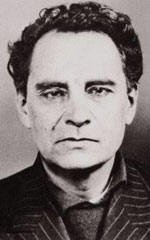
In the early dawn hours of July 4, 1954, Marilyn Reese Sheppard, the pregnant wife of prominent neurosurgeon Dr. Sam Sheppard, was bludgeoned to death in the master bedroom of their lakeside home in Bay Village, Ohio. Dr. Sheppard claimed he was awakened by his wife’s screams, fought a ‘bushy-haired intruder’ on the stairs, was knocked unconscious, and pursued the assailant to the Lake Erie beach where he was choked into insensibility. Amid unprecedented media sensationalism spearheaded by local newspapers, Sheppard was convicted of second-degree murder. Twelve years later, legendary criminalist Dr. Paul Leland Kirk conducted a pioneering forensic bloodstain pattern analysis that proved the killer was left-handed and left third-party blood at the scene, leading to F. Lee Bailey’s triumphant 1966 acquittal and inspiring ‘The Fugitive.’
Executive Case Factsheet
- Victim(s): Marilyn Reese Sheppard (31, pregnant)
- Date of Incident: July 4, 1954
- Primary Crime Scene / Location: 28924 West Lake Road, Bay Village, Cuyahoga County, Ohio
- Lead Investigating Jurisdictions: Bay Village Police Department, Cuyahoga County Coroner’s Office, Cleveland Police Department
- Key Forensic Evidence: Void bloodstain pattern on wardrobe door, left-handed cast-off trajectories, missing surgical instrument weapon, unidentified male third-party blood type O drop
- Suspect(s) / Perpetrator(s): Dr. Samuel Holmes Sheppard (neurosurgeon)
- Legal Outcome & Status: Convicted of second-degree murder in 1954; conviction overturned by US Supreme Court in 1966; acquitted at retrial
The July 4, 1954 Lakefront Slaying: The Bushy-Haired Intruder
At approximately 5:45 a.m. on July 4, 1954, Bay Village Mayor J. Spencer Houk received a panicked telephone call from Dr. Sam Sheppard: ‘My God, Spen, get over here quick. I think they’ve killed Marilyn.’ Arriving at 28924 West Lake Road, Houk and his wife found Marilyn Sheppard dead in her blood-soaked twin bed on the second floor, having suffered over 35 catastrophic lacerations to her face and head.
Dr. Sheppard was shirtless, wearing water-soaked trousers, with severe swelling on his cheek and neck. Sheppard stated he fell asleep on the downstairs couch after a dinner party, awoke to Marilyn’s screams, rushed upstairs, and was struck from behind. Awakening, he saw a form moving toward the Lake Erie beach stairs, grappled with the ‘bushy-haired’ figure on the shore, and was knocked unconscious into the water.
Cuyahoga County Coroner Dr. Samuel Gerber immediately suspected Sheppard, focusing on domestic marital friction and an extramarital affair Sheppard had with technician Susan Hayes. Gerber declared at the scene that a surgical instrument had been used, despite finding no murder weapon.
The 1954 Media Circus and the Kangaroo Trial
Fueled by inflammatory front-page headlines in the *Cleveland Press* demanding Sheppard’s arrest, Coroner Gerber held a televised three-day inquest inside a high school gymnasium, where Sheppard was interrogated without counsel. Sheppard was arrested on July 30, 1954.
The trial began in October 1954 before Judge Edward Blythin. The courtroom was transformed into a media circus, with broadcasting tables inside the bar enclosure and jurors exposed to daily television and newspaper coverage.
Coroner Gerber testified that an imprint on Marilyn’s pillowcase represented the outline of a surgical instrument (a claim later disproven). Prosecutors emphasized Sheppard’s extramarital affair and minor inconsistencies in his statements. On December 21, 1954, the jury convicted Dr. Sam Sheppard of second-degree murder, and he was sentenced to life imprisonment at the Ohio State Penitentiary in Columbus.
Dr. Paul Leland Kirk’s Pioneering Forensic Bloodstain Investigation
In 1955, defense attorneys retained Dr. Paul Leland Kirk, Professor of Criminalistics at the University of California, Berkeley, and the father of modern forensic blood spatter analysis. Dr. Kirk gained court-ordered access to the preserved Bay Village crime scene.
Dr. Kirk’s forensic investigation became a watershed moment in criminalistics. By mapping the size, shape, and distribution of impact blood spatter on the bedroom walls and wardrobe door, Kirk determined:
1. The killer had swung a heavy blunt weapon with the **left hand**, whereas Dr. Sam Sheppard was completely right-handed.
2. A distinct ‘void pattern’ in the blood spatter on the wardrobe door indicated that a large human body had stood between the victim and the door during the attack, shielding that surface.
3. Crucially, Kirk identified a large, round blood drop on the wardrobe door that did not match Marilyn Sheppard’s blood type (Type M/ABO) or Sam Sheppard’s blood type (Type A/MN). The drop belonged to an unidentified third individual (Type O), providing definitive scientific evidence of an intruder.
Supreme Court Ruling (Sheppard v. Maxwell) and the 1966 Retrial
Following Dr. Kirk’s report and years of habeas corpus litigation led by a young Boston attorney named F. Lee Bailey, the case reached the Supreme Court of the United States. In June 1966, in the landmark decision *Sheppard v. Maxwell*, the Supreme Court overturned Sheppard’s conviction, ruling that pervasive, prejudicial pretrial media publicity had deprived him of a fair trial under the Sixth and Fourteenth Amendments.
The State of Ohio elected to retry Sheppard in October 1966 before Judge Francis Talty in Cleveland. F. Lee Bailey served as lead defense counsel, presenting Dr. Paul Kirk’s comprehensive blood spatter findings and dismantling Coroner Gerber’s surgical instrument theory on cross-examination.
Bailey demonstrated that Sheppard had suffered genuine neurological injuries—including a fractured cervical vertebra and chipped tooth—corroborating his struggle on the beach. On November 16, 1966, the jury returned a verdict of **not guilty**, fully acquitting Dr. Sam Sheppard after a decade of wrongful incarceration.
Richard Eberling Suspect Development and Modern DNA Testing
Following his acquittal, Dr. Sam Sheppard attempted to rebuild his medical career and briefly entered professional wrestling before dying of liver failure in April 1970 at age 46.
In the 1990s, Sam Sheppard’s son, Sam Reese Sheppard, pursued a wrongful imprisonment lawsuit against the State of Ohio. Forensic scientists conducted modern STR DNA profiling on preserved crime scene swatches and exhumed tissue standards.
The DNA analysis confirmed that the third-party blood drop on the wardrobe matched the DNA profile of Richard Eberling, the Sheppard family’s window washer who had stolen Marilyn’s ring and was later convicted of murdering another elderly woman in 1984. The Sam Sheppard case remains the foundational legal standard for fair trial protections (*Sheppard v. Maxwell*) and the historic cornerstone of forensic bloodstain pattern reconstruction.
Forensic Pathology, Traumatology & Biomechanical Reconstruction
Medico-legal autopsy protocols mandate systematic anatomical dissection and photographic documentation to determine both the immediate cause and underlying manner of death. Forensic pathologists evaluate external cutaneous trauma—including contusions, abrasions, lacerations, and incised wounds—measuring dimensional metrics, beveling angles, and marginal tissue bridging to reconstruct weapon kinematics and kinetic energy transfer.
Histopathological examination of microscopic tissue sections stained with Hematoxylin and Eosin (H&E) allows pathologists to differentiate between ante-mortem vital reactions and post-mortem artifactual damage. Sub-cutaneous hemorrhaging, inflammatory cellular infiltration, and microscopic vascular thrombosis confirm that physiological circulation was active at the time injury was sustained, allowing investigators to establish precise chronological sequences of fatal physical trauma.
Modern Jurisprudential Precedents & Evidentiary Standards
The landmark investigative and courtroom developments associated with Dr. Sam Sheppard fundamentally redefined procedural evidentiary standards under the Federal Rules of Evidence (Rule 702) and international common law equivalents. Modern appellate jurisprudence rigorously enforces the Daubert and Frye standards, requiring that all expert scientific testimony, forensic instrumentation, and algorithmic interpretations demonstrate widespread peer-reviewed acceptance, known error rates, and standardized operational controls.
Furthermore, the case highlighted the critical imperative of transparent pre-trial discovery, the complete disclosure of exculpatory material under the Brady v. Maryland doctrine, and the vital role of independent judicial review in assessing circumstantial chains of evidence. Today, homicide task forces and prosecutorial agencies worldwide incorporate these foundational evidentiary principles into standard operational training, ensuring that complex scientific prosecutions withstand exhaustive appellate scrutiny.
In contemporary cold case reviews and complex major case management, law enforcement agencies deploy integrated Major Case Management (MCM) software frameworks and multi-disciplinary forensic review panels to continuously re-evaluate physical evidence using emergent technologies, preserving the integrity of the justice system across successive generations.
Chronological Case Timeline
| Date / Milestone | Investigative Development | Forensic / Evidentiary Significance |
|---|---|---|
| July 4, 1954 | Marilyn Sheppard bludgeoned to death in Bay Village, Ohio residence | Dr. Sam Sheppard reports bushy-haired intruder; Coroner Gerber investigates |
| Dec 21, 1954 | Sheppard convicted of second-degree murder after sensationalized media trial | Sentenced to life imprisonment at Ohio State Penitentiary |
| Jan 1955 | Dr. Paul Kirk inspects crime scene; publishes groundbreaking blood spatter report | Proves left-handed killer, void pattern, and third-party Type O blood drop |
| June 6, 1966 | US Supreme Court overturns conviction in landmark Sheppard v. Maxwell ruling | Establishes constitutional standard on prejudicial pretrial publicity |
| Nov 16, 1966 | F. Lee Bailey secures ‘Not Guilty’ verdict in Cleveland retrial | Dr. Sam Sheppard fully acquitted and released from custody |
| 1997 – 2000 | Modern STR DNA profiling links third-party bloodstains to window washer Richard Eberling | Scientific corroboration of the intruder defense theory |
Frequently Asked Questions: Forensic & Legal Review
How did Dr. Paul Kirk prove Dr. Sam Sheppard was innocent?
Dr. Paul Kirk mapped blood spatter in the master bedroom, proving that the killer swung the weapon with their left hand (Sheppard was right-handed), identified a void pattern on the wardrobe door showing a body shielded the surface, and found a large blood drop that matched neither Marilyn nor Sam, proving a third person bled at the scene.
What was the constitutional significance of Sheppard v. Maxwell (1966)?
The U.S. Supreme Court ruled that relentless, prejudicial media publicity and an uncontrolled courtroom atmosphere deprived Sheppard of his Sixth Amendment right to a fair trial, establishing modern judicial protocols for change of venue, gag orders, and jury sequestration.
Did the Sam Sheppard case inspire the TV show and movie ‘The Fugitive’?
Yes. The premise of a prominent physician wrongfully accused of murdering his wife and claiming a one-armed/bushy-haired intruder was the direct real-life inspiration for the iconic series and Harrison Ford movie ‘The Fugitive.’