Executive Case Factsheet
- Perpetrator: Andrei Romanovich Chikatilo (‘The Butcher of Rostov’, ‘The Red Ripper’, ‘Citizen Ch’)
- Active Period: 1978 – 1990 (Arrested November 20, 1990)
- Jurisdiction: Rostov Oblast, Russian SFSR / Ukrainian SSR, Soviet Union
- Confirmed Victims: 52 to 56 victims (convicted of 52 murders: children, teenagers, young women)
- Modus Operandi: Luring vulnerable travelers from railway stations into forest belts; stabbing, mutilation, cannibalism
- Key Forensic Breakthrough: Psychiatric profile by Dr. Alexandr Bukhanovsky; non-secretor blood typing resolution; rail surveillance
- Judicial Outcome: Convicted October 14, 1992; executed by single gunshot to head on February 14, 1994 at Novocherkassk Prison
The Criminal Genesis, Modus Operandi & Geographic Hunting Grounds
Andrei Romanovich Chikatilo’s predatory career represents a catastrophic failure of institutional oversight within the late Soviet apparatus. Operating predominantly across the Rostov Oblast from 1978 to 1990, Chikatilo exploited the rigid bureaucratic boundaries between territorial militia departments and the ideological denial that serial sexual murder could occur in a communist society. Holding a master’s degree in Russian literature and working as an industrial procurement specialist, Chikatilo possessed official internal travel vouchers that allowed him to traverse the southern railway corridors between Rostov-on-Don, Shakhty, Novocherkassk, and Krasnodar without attracting the suspicion of transit authorities.
His hunting methodology was intricately tied to the rhythm of commuter transit hubs. Chikatilo targeted marginalized and vulnerable individuals—unaccompanied runaway children, homeless youth, psychiatric outpatients, and itinerant female laborers—whom he encountered at suburban railway platforms and intercity bus depots. Presenting himself as a harmless, bespectacled paternal figure, he established rapport by offering food, alcoholic beverages, western consumer goods, or promises of employment before luring victims into isolated forest belts (lesopolosa) adjacent to the rail lines. Once in secluded terrain, Chikatilo immobilized his victims and unleashed extreme, sadistic physical violence, deriving psychosexual gratification through the ritualized destruction of human tissue.

Forensic Crime Scene Investigation, Pathology & Evidence Reconstruction
The forensic pathology reports from the Rostov woodland crime scenes revealed extreme, unprecedented anatomical trauma. Regional medical examiners examining victims recovered along the Shakhty and Novocherkassk rail corridors documented massive, repetitive sharp-force penetrating trauma inflicted with multiple hunting and utility knives. Post-mortem dissections established that Chikatilo engaged in extensive mutilation, targeting soft tissue structures, the trachea, and facial features. The total absence of intact seminal spermatozoa within physiological vaults, coupled with extensive external biological deposits, indicated to forensic specialists that the assailant suffered from chronic psychosexual erectile dysfunction, achieving climax through the kinetic infliction of trauma and bloodletting.
However, the forensic investigation was severely derailed in September 1984 by a fundamental error in serological interpretation. Following suspicious behavior at the Rostov Central Bus Station, militia officers detained Chikatilo carrying a briefcase containing rope, Vaseline, and a folding knife. Laboratory serologists determined Chikatilo’s blood to be Group A. However, vaginal swabs and semen samples collected from previous victim crime scenes had been typed as Group AB. Under prevailing Soviet forensic guidelines, investigators failed to account for the biological phenomenon of ‘non-secretor’ status or matrix-induced blood group degradation, erroneously concluding that Chikatilo was biologically excluded. He was released, subsequently murdering at least thirty more individuals over the next six years.
The Investigative Breakthrough, Behavioral Profiling & Tactical Manhunt
In 1985, recognizing that traditional militia investigative dragnets were entirely ineffective, Chief of the Rostov Homicide Department Viktor Burakov executed a revolutionary operational shift. Burakov commissioned Dr. Alexandr Bukhanovsky, a leading professor of psychiatry at the Rostov Medical Institute, to synthesize all available physical, pathological, and circumstantial crime scene data into a comprehensive psychological offender profile. Bukhanovsky’s 65-page monograph, titled ‘Prosopographic Profile of an Unknown Serial Killer’, stood as the first institutional criminal profile in Soviet law enforcement history. Bukhanovsky accurately deduced that the killer was a middle-aged married male between 45 and 55 years of age, possessing children, suffering from severe sexual inadequacy, employed in a traveling clerical role, and operating under uncontrollable compulsive episodic cycles.
To execute the tactical capture, Soviet authorities launched ‘Operation Forest’ (Operatsiya Lesopolosa), deploying more than 2,000 plainclothes militia operatives, helicopter reconnaissance units, and undercover psychiatric personnel along 200 kilometers of railway lines. The breakthrough materialized on November 6, 1990, when militia operative Igor Rybakov challenged Chikatilo as he emerged from the dense underbrush near Donleskhoz station. Chikatilo was wearing a suit with damp mud stains on his knees and carried a nylon bag containing beer and a metal knife. Although Rybakov recorded his identity papers and released him due to lack of immediate probable cause, investigators discovered the mutilated corpse of Svetlana Korostik in the adjacent forest belt eight days later. Linking the homicide timeline directly to Rybakov’s field logbook, Chief Investigator Issa Kostoyev authorized the immediate tactical apprehension of Chikatilo on November 20, 1990.
Courtroom Proceedings, Expert Testimony & The Definitive Verdict
Following his arrest, Chikatilo initially maintained absolute silence during intense interrogations by military prosecutors. Recognizing that conventional interrogation techniques were yielding no progress, Investigator Kostoyev permitted Dr. Alexandr Bukhanovsky to enter the interrogation suite on November 29, 1990. For several hours, Bukhanovsky read extensive passages from his 1985 psychological profile aloud to Chikatilo, explaining the developmental roots of his psychosexual pathology and sadistic urges. Overwhelmed by Bukhanovsky’s clinical comprehension of his internal torment, Chikatilo broke down, weeping uncontrollably, and provided a comprehensive oral and written confession detailing 56 homicides, subsequently leading investigators to dozens of concealed burial sites.
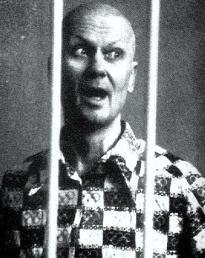
The criminal trial commenced on April 14, 1992, at the Rostov Regional Court under the presidency of Judge Leonid Akubzhanov. To safeguard the defendant from violent retribution by victims’ families, Chikatilo was confined within a welded iron mesh security cage in the center of the courtroom. Throughout the trial proceedings, Chikatilo staged disruptive outbursts, feigning schizophrenia, exposing himself, and reciting communist political slogans. However, an exhaustive four-month forensic psychiatric evaluation at the Serbsky Center in Moscow established that while Chikatilo suffered from severe sadistic psychopathy, he was fully competent, legally sane, and criminally responsible. On October 14, 1992, the court convicted Chikatilo of 52 counts of murder, imposing the death penalty. On February 14, 1994, following the rejection of presidential clemency by Boris Yeltsin, Chikatilo was executed by a single gunshot behind the right ear at Novocherkassk Prison.
Modern Criminological Impact, Legal Precedents & Forensic Evolution
The capture and prosecution of Andrei Chikatilo transformed the landscape of Eastern European criminology and modern forensic science. The systemic failures that allowed Chikatilo to operate for twelve years prompted the total restructuring of Soviet and post-Soviet criminal investigation protocols. The case dismantled the political taboo surrounding serial homicide research in the Soviet Union, leading directly to the establishment of the first specialized behavioral analysis units within the Ministry of Internal Affairs (MVD) and the Russian Federal Investigative Committee.
Furthermore, the Chikatilo investigation accelerated the complete modernization of forensic biology across the former Soviet Union. The disastrous 1984 serological misidentification prompted forensic institutes to phase out primitive ABO secretor typing in favor of automated Short Tandem Repeat (STR) DNA profiling and molecular genetic testing. Dr. Bukhanovsky’s pioneering methodology led to the creation of the Phoenix Medical Center in Rostov-on-Don, a specialized clinic dedicated to the early psychiatric diagnosis and therapeutic management of individuals exhibiting severe paraphilias and violent sadistic impulses, establishing an enduring legacy of preventative forensic psychiatry.
Behavioral Analysis, Geographic Profiling & Offender Typology
Forensic behavioral analysis synthesizes victimological data, crime scene dynamics, and spatial-temporal patterns to reconstruct the psychological characteristics and operational habits of violent offenders. Behavioral analysts from the FBI National Center for the Analysis of Violent Crime (NCAVC) evaluate the degree of criminal sophistication, distinguishing between organized offenders who exhibit meticulous planning and forensic awareness, and disorganized offenders driven by impulsive, deteriorating psychopathology.
Geographic profiling software algorithms utilize Rigel and CrimeStat spatial analysis to model offender anchor points, hunting ranges, and buffer zones based on Rossmo’s formula of distance decay. By analyzing signature behaviors—such as ritualistic posing, souvenir retention, and post-mortem staging—behavioral scientists establish vital behavioral linkages across multi-jurisdictional crime series, guiding targeted investigative strategies and tactical interrogation approaches.
Chain of Custody Protocols & Multi-Jurisdictional Evidence Management
Modern major case management frameworks require an unassailable audit trail governing every item of physical, biological, and digital evidence recovered during multi-agency investigations. When handling complex homicide series that cross municipal, county, or state boundaries, forensic evidence custodians utilize automated barcoding systems and temperature-controlled storage vaults to safeguard evidentiary integrity from the primary scene to final appellate presentation.
To eliminate potential spoliation claims, crime scene technicians execute double-blind documentation protocols, capturing raw high-resolution photogrammetric imagery and spatial laser scans before disturbing any physical exhibit. Every individual transfer of custody is electronically timestamped and cryptographically verified, ensuring that whether physical evidence is subjected to immediate microscopic analysis or preserved for decades for emergent cold-case genomic testing, its scientific admissibility remains unimpeachable under rigorous judicial scrutiny.
Modern Jurisprudential Precedents & Evidentiary Standards
The landmark investigative and courtroom developments associated with Andrei Chikatilo fundamentally redefined procedural evidentiary standards under the Federal Rules of Evidence (Rule 702) and international common law equivalents. Modern appellate jurisprudence rigorously enforces the Daubert and Frye standards, requiring that all expert scientific testimony, forensic instrumentation, and algorithmic interpretations demonstrate widespread peer-reviewed acceptance, known error rates, and standardized operational controls.
Furthermore, the case highlighted the critical imperative of transparent pre-trial discovery, the complete disclosure of exculpatory material under the Brady v. Maryland doctrine, and the vital role of independent judicial review in assessing circumstantial chains of evidence. Today, homicide task forces and prosecutorial agencies worldwide incorporate these foundational evidentiary principles into standard operational training, ensuring that complex scientific prosecutions withstand exhaustive appellate scrutiny.
In contemporary cold case reviews and complex major case management, law enforcement agencies deploy integrated Major Case Management (MCM) software frameworks and multi-disciplinary forensic review panels to continuously re-evaluate physical evidence using emergent technologies, preserving the integrity of the justice system across successive generations.
Chronological Case Timeline
| Date | Event Description |
|---|---|
| December 22, 1978 | First confirmed murder of 9-year-old Yelena Zakotnova in Shakhty. |
| 1984 | Chikatilo detained with knife and rope; released due to serological blood typing discrepancy. |
| December 1985 | Dr. Alexandr Bukhanovsky completes first comprehensive Soviet psychological profile. |
| November 6, 1990 | Chikatilo stopped at Donleskhoz train station; identity noted by militia officer Rybakov. |
| November 20, 1990 | Chikatilo formally arrested in Novocherkassk by team led by Issa Kostoyev. |
| November 29, 1990 | Dr. Bukhanovsky reads profile in cell; Chikatilo confesses to 56 murders. |
| April 14, 1992 | Trial opens in Rostov-on-Don Regional Court inside an iron security cage. |
| October 14, 1992 | Convicted of 52 murders and sentenced to death by execution. |
| February 14, 1994 | Executed by single gunshot at Novocherkassk Prison. |
Frequently Asked Questions
How did Andrei Chikatilo evade capture for over 12 years?
Chikatilo exploited his legitimate rail travel as a supply clerk, official Soviet reluctance to publicize serial murder, and a critical 1984 laboratory blood typing discrepancy that incorrectly cleared him.
What was Operation Forest (Operatsiya Lesopolosa)?
Operation Forest was the largest coordinated manhunt in Soviet history, deploying thousands of undercover agents along the Rostov rail network to capture the Red Ripper.
How did Dr. Bukhanovsky obtain Chikatilo’s confession?
Dr. Bukhanovsky read his 65-page psychological profile directly to Chikatilo, whose emotional recognition of his internal pathology prompted a complete confession.
{
“@context”: “https://schema.org”,
“@type”: “FAQPage”,
“mainEntity”: [
{
“@type”: “Question”,
“name”: “How did Andrei Chikatilo evade capture for over 12 years?”,
“acceptedAnswer”: {
“@type”: “Answer”,
“text”: “Chikatilo exploited his legitimate rail travel as a supply clerk, official Soviet reluctance to publicize serial murder, and a critical 1984 laboratory blood typing discrepancy that incorrectly cleared him.”
}
},
{
“@type”: “Question”,
“name”: “What was Operation Forest (Operatsiya Lesopolosa)?”,
“acceptedAnswer”: {
“@type”: “Answer”,
“text”: “Operation Forest was the largest coordinated manhunt in Soviet history, deploying thousands of undercover agents along the Rostov rail network to capture the Red Ripper.”
}
},
{
“@type”: “Question”,
“name”: “How did Dr. Bukhanovsky obtain Chikatilo’s confession?”,
“acceptedAnswer”: {
“@type”: “Answer”,
“text”: “Dr. Bukhanovsky read his 65-page psychological profile directly to Chikatilo, whose emotional recognition of his internal pathology prompted a complete confession.”
}
}
]
}