Executive Case Factsheet
- Perpetrator: Alexander Yuryevich Pichushkin (‘The Chessboard Killer’, ‘The Bitsa Park Maniac’)
- Active Period: 1992 – 2006 (Arrested June 16, 2006)
- Jurisdiction: Moscow, Russian Federation
- Confirmed Victims: 48 to 60 victims (convicted of 48 murders and 3 attempted murders)
- Modus Operandi: Luring acquaintances into Bittsevsky Park under pretext of drinking vodka; blunt cranial trauma, discarding into sewage wells
- Key Forensic Breakthrough: Moscow metro ticket tracking, CCTV transit footage, handwritten note left by victim Marina Moskalyova
- Judicial Outcome: Convicted October 24, 2007; sentenced to life imprisonment with first 15 years in solitary confinement at Polar Owl Colony
The Criminal Genesis, Modus Operandi & Geographic Hunting Grounds
Alexander Yuryevich Pichushkin terrorized the southern urban fringe of Moscow for over five years, converting the 2,200-hectare woodland expanse of Bittsevsky Park into his personal predatory sanctuary. Motivated by an obsessive competitive desire to surpass the 52-victim murder toll of Andrei Chikatilo, Pichushkin conceived a macabre game: to fill all 64 squares of a standard wooden chessboard with the chronological dates and names of his victims. Working as a logistics stocker at a supermarket on Sevastopolsky Avenue, Pichushkin maintained an unremarkable social profile that allowed him to blend effortlessly into Moscow’s working-class suburbs.
His predatory methodology was intimate and calculating. Pichushkin targeted elderly, lonely, or alcohol-dependent men whom he encountered near neighborhood squares, flea markets, and public transit stations. Presenting himself as an empathetic, respectful acquaintance, he invited his targets into the dense, unmonitored interior trails of Bittsevsky Park under the sentimental pretext of sharing a toast of vodka at the woodland burial plot of his deceased pet dog. Once the victim became incapacitated by alcohol, Pichushkin struck from behind with devastating kinetic force, deploying heavy carpenters’ hammers, steel pipes, or heavy glass liquor bottles to deliver fatal cranial blows.

Forensic Crime Scene Investigation, Pathology & Evidence Reconstruction
In the early years of his campaign between 2001 and 2005, Pichushkin successfully evaded forensic detection through an ingenious disposal mechanism. After rendering victims unconscious or dead via blunt-force trauma, he dragged their bodies to open municipal storm drains and sewage conduits scattered throughout Bittsevsky Park, dropping them into the rushing subterranean water system. As a consequence, dozens of victims were swept deep into Moscow’s subterranean canal network and into the Moscow River, where decomposing remains were classified by coroners as accidental drownings or unidentifiable transit accidents.
However, in late 2005, driven by an escalating narcissistic need for public recognition, Pichushkin radically altered his operational signature. He ceased utilizing sewage wells and began leaving victims openly displayed along popular jogging paths and forest clearings. Forensic pathologists from the Moscow Bureau of Forensic Medical Examination documented catastrophic depressed and comminuted skull fractures with extensive inward bone fragmentation. Furthermore, Pichushkin introduced a ritualized trophy signature: embedding unbroken twigs, sticks, or shattered vodka bottles directly into the cranial wound cavities. Toxicology reports consistently confirmed acute alcohol intoxication in the victims’ bloodstreams, validating that they had been incapacitated prior to the blunt-force assault.
The Investigative Breakthrough, Behavioral Profiling & Tactical Manhunt
In early 2006, the Moscow Criminal Investigation Department (MUR) launched Operation Maniac Hunter, stationing hundreds of plainclothes police officers, camouflaged marksmen, and dog-handling units across Bittsevsky Park. However, Pichushkin evaded park perimeter checkpoints by selecting a personal acquaintance, 36-year-old supermarket coworker Marina Moskalyova, on June 13, 2006.
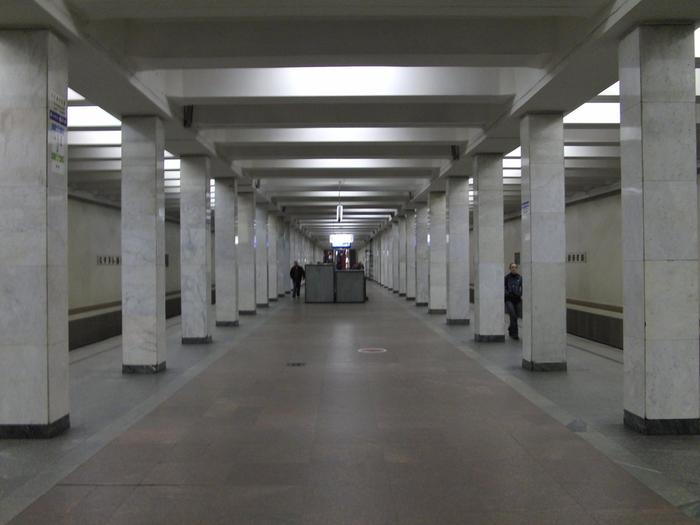
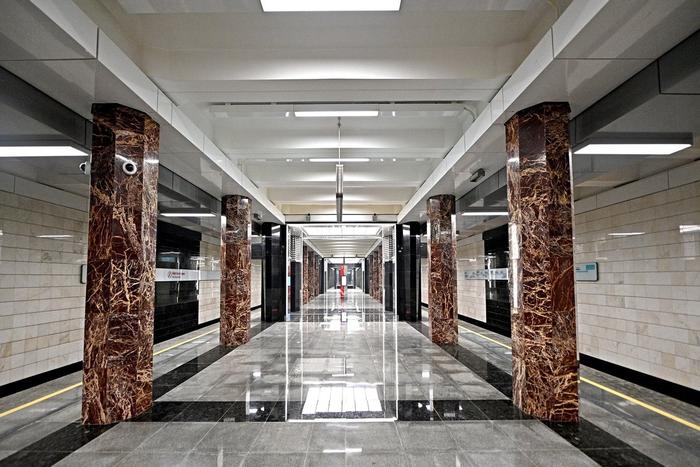
The breakthrough in the case resulted from Moskalyova’s foresight. Harboring subtle apprehensions about the late-evening walk, Moskalyova left a handwritten note on her kitchen table informing her son that she was walking into Bittsevsky Park with Alexander Pichushkin, providing his phone number. When her bludgeoned body was discovered the following afternoon, MUR detectives immediately retrieved closed-circuit television (CCTV) security tapes from the Moscow Metro Kakhovskaya station. High-definition footage captured Pichushkin and Moskalyova entering the turnstiles together at 8:42 PM, while electronic transit card transaction logs confirmed their synchronized entry. On June 16, 2006, tactical officers breached Pichushkin’s apartment on Khersonskaya Street, apprehending him without incident.
Courtroom Proceedings, Expert Testimony & The Definitive Verdict
During the search of Pichushkin’s apartment, detectives discovered the centerpiece of the prosecution’s evidentiary dossier: a wooden chessboard bearing 61 numbered squares, each inscribed with handwritten operational dates matching unsolved homicide dates across Moscow. Pichushkin exhibited complete pride during interrogations, confessing to 63 murders and actively guiding homicide investigators on comprehensive video-recorded field reconstructions in Bittsevsky Park, demonstrating weapon mechanics and pinpointing previously unlocated sewage shafts.
The trial commenced on August 13, 2007, at the Moscow City Court before Judge Vladimir Usov. Due to extreme security requirements and intense media interest, Pichushkin was enclosed within a reinforced glass and steel defendant dock. Over three months, the prosecution presented overwhelming forensic evidence, including blood splatter trace matching on Pichushkin’s clothing, tool-mark comparisons matching hammer striations on victim cranial vaults, and digital transit tracking records. Forensic psychiatrists from the Serbsky Institute testified that while Pichushkin suffered from severe antisocial and narcissistic personality disorders, he possessed full cognitive awareness of his actions and was entirely competent. On October 24, 2007, the jury unanimously convicted him of 48 counts of murder and 3 counts of attempted murder. On October 29, 2007, he was sentenced to life imprisonment with the first 15 years to be served in solitary confinement at the FKU IK-18 ‘Polar Owl’ penal colony in the Yamalo-Nenets Arctic region.
Modern Criminological Impact, Legal Precedents & Forensic Evolution
The Alexander Pichushkin investigation fundamentally reshaped modern Russian municipal security and forensic surveillance architecture. The case served as a primary catalyst for the integration of comprehensive CCTV surveillance, facial recognition software, and digital transit card tracking throughout the Moscow Metro and municipal park systems, creating the ‘Safe City’ digital surveillance framework currently deployed across major Russian metropolitan areas.
Criminologically, Pichushkin’s case provided crucial clinical insights into the phenomenon of ‘signature evolution’ and serial killer rivalry dynamics. Forensic behavioral scientists at the Russian Academy of Sciences extensively documented how Pichushkin transitioned from covert, disposal-oriented crimes to overt, theatrical crime scene staging driven by an unquenchable craving for media notoriety. His case remains a foundational case study in forensic psychology, demonstrating how digital metadata—from electronic subway swipes to time-stamped surveillance feeds—can decisively solve complex serial homicides in dense urban environments.
Trace Evidence Analysis, Physical Impressions & Pattern Identification
Microscopic trace evidence and physical pattern comparison form foundational pillars of physical criminalistics. Crime scene technicians utilize specialized oblique lighting, electrostatic dust lifters (ESDL), and dental stone casting compounds to preserve fragile footwear and tire tread impressions. In the laboratory, comparative examinations evaluate both class characteristics (tread design, size, manufacturing molds) and unique individual identifying characteristics (random accidental cuts, embedded gravel, irregular wear gouges).
Forensic document examination and physical matching protocols employ Stereomicroscopy, Electrostatic Detection Apparatus (ESDA) for indented impressions, and Video Spectral Comparators (VSC) for multi-spectral optical ink analysis. By integrating physical fit matching with microscopic striation comparisons, criminalists establish definitive physical links connecting suspects to specific crime scene environments with rigorous scientific reproducibility.
Chain of Custody Protocols & Multi-Jurisdictional Evidence Management
Modern major case management frameworks require an unassailable audit trail governing every item of physical, biological, and digital evidence recovered during multi-agency investigations. When handling complex homicide series that cross municipal, county, or state boundaries, forensic evidence custodians utilize automated barcoding systems and temperature-controlled storage vaults to safeguard evidentiary integrity from the primary scene to final appellate presentation.
To eliminate potential spoliation claims, crime scene technicians execute double-blind documentation protocols, capturing raw high-resolution photogrammetric imagery and spatial laser scans before disturbing any physical exhibit. Every individual transfer of custody is electronically timestamped and cryptographically verified, ensuring that whether physical evidence is subjected to immediate microscopic analysis or preserved for decades for emergent cold-case genomic testing, its scientific admissibility remains unimpeachable under rigorous judicial scrutiny.
Modern Jurisprudential Precedents & Evidentiary Standards
The landmark investigative and courtroom developments associated with Alexander Pichushkin fundamentally redefined procedural evidentiary standards under the Federal Rules of Evidence (Rule 702) and international common law equivalents. Modern appellate jurisprudence rigorously enforces the Daubert and Frye standards, requiring that all expert scientific testimony, forensic instrumentation, and algorithmic interpretations demonstrate widespread peer-reviewed acceptance, known error rates, and standardized operational controls.
Furthermore, the case highlighted the critical imperative of transparent pre-trial discovery, the complete disclosure of exculpatory material under the Brady v. Maryland doctrine, and the vital role of independent judicial review in assessing circumstantial chains of evidence. Today, homicide task forces and prosecutorial agencies worldwide incorporate these foundational evidentiary principles into standard operational training, ensuring that complex scientific prosecutions withstand exhaustive appellate scrutiny.
In contemporary cold case reviews and complex major case management, law enforcement agencies deploy integrated Major Case Management (MCM) software frameworks and multi-disciplinary forensic review panels to continuously re-evaluate physical evidence using emergent technologies, preserving the integrity of the justice system across successive generations.
Chronological Case Timeline
| Date | Event Description |
|---|---|
| July 27, 1992 | First murder of classmate Mikhail Odiychuk in Moscow. |
| 2001 | Pichushkin resumes active killing spree in Bittsevsky Park. |
| Late 2005 | Changes signature, leaving victims in open clearings with blunt head trauma. |
| June 13, 2006 | Marina Moskalyova murdered after leaving a note identifying Pichushkin. |
| June 14, 2006 | Moskalyova’s body discovered; CCTV and metro card logs confirm suspect. |
| June 16, 2006 | Pichushkin arrested at his Moscow apartment; chessboard seized. |
| August 13, 2007 | Trial opens at the Moscow City Court in a glass security enclosure. |
| October 24, 2007 | Jury finds Pichushkin guilty of 48 murders and 3 attempted murders. |
| October 29, 2007 | Sentenced to life imprisonment with initial solitary confinement at Polar Owl. |
Frequently Asked Questions
Why was Alexander Pichushkin called the Chessboard Killer?
Pichushkin maintained a standard wooden chessboard in his bedroom where he numbered each square with the date of a murder, aspiring to fill all 64 squares on the board. At the time of his arrest, 61 squares had been marked.
What key forensic evidence led to Alexander Pichushkin’s arrest?
The crucial breakthrough was a handwritten note left by his final victim, Marina Moskalyova, combined with Moscow Metro CCTV footage capturing them entering the subway system together and matching electronic transit ticket timestamps.
Where is Alexander Pichushkin serving his life sentence?
Pichushkin is incarcerated at the FKU IK-18 ‘Polar Owl’ penal colony, an ultra-maximum-security prison located within the Arctic Circle in Kharp, Yamalo-Nenets Autonomous Okrug, Russia.
{
“@context”: “https://schema.org”,
“@type”: “FAQPage”,
“mainEntity”: [
{
“@type”: “Question”,
“name”: “Why was Alexander Pichushkin called the Chessboard Killer?”,
“acceptedAnswer”: {
“@type”: “Answer”,
“text”: “Pichushkin maintained a standard wooden chessboard in his bedroom where he numbered each square with the date of a murder, aspiring to fill all 64 squares on the board. At the time of his arrest, 61 squares had been marked.”
}
},
{
“@type”: “Question”,
“name”: “What key forensic evidence led to Alexander Pichushkin’s arrest?”,
“acceptedAnswer”: {
“@type”: “Answer”,
“text”: “The crucial breakthrough was a handwritten note left by his final victim, Marina Moskalyova, combined with Moscow Metro CCTV footage capturing them entering the subway system together and matching electronic transit ticket timestamps.”
}
},
{
“@type”: “Question”,
“name”: “Where is Alexander Pichushkin serving his life sentence?”,
“acceptedAnswer”: {
“@type”: “Answer”,
“text”: “Pichushkin is incarcerated at the FKU IK-18 ‘Polar Owl’ penal colony, an ultra-maximum-security prison located within the Arctic Circle in Kharp, Yamalo-Nenets Autonomous Okrug, Russia.”
}
}
]
}