Executive Case Factsheet
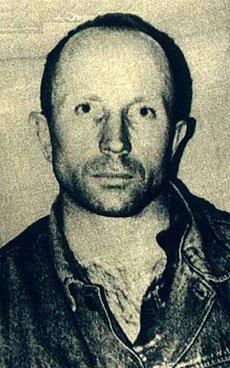
- Perpetrator: Anatoly Yuryevich Onoprienko (‘The Beast of Ukraine’, ‘The Terminator’, ‘Citizen O’)
- Active Period: 1989 – 1996 (Arrested April 16, 1996)
- Jurisdiction: Zhytomyr, Lviv, Dnipropetrovsk, and Zaporizhzhia Oblasts, Ukraine
- Confirmed Victims: 52 victims (including 10 entire families and young children)
- Modus Operandi: Isolated rural home invasions; executing male occupants with a sawed-off shotgun, sharp-force trauma on children; arson
- Key Forensic Breakthrough: Ballistic tool-mark matching on recovered 12-gauge shotgun hulls; seizure of 122 stolen property items and TOZ-34 shotgun in Yavoriv
- Judicial Outcome: Convicted on April 1, 1999; sentenced to death, commuted to life imprisonment; died of heart failure in Zhytomyr Prison on August 27, 2013
The Criminal Genesis, Modus Operandi & Geographic Hunting Grounds
Anatoly Yuryevich Onoprienko, widely designated as ‘The Terminator’ and ‘The Beast of Ukraine’, perpetrated the most devastating serial murder spree in modern Eastern European history. Between 1989 and 1996, Onoprienko executed 52 individuals across five Ukrainian administrative oblasts—Zhytomyr, Lviv, Dnipropetrovsk, Kyiv, and Zaporizhzhia. His rampage exploited the socio-economic turbulence and administrative fragmentation following the dissolution of the Soviet Union, during which national police databases were fractured and interstate forensic intelligence sharing was severely degraded.
Onoprienko operated with militaristic precision and extreme kinetic ruthlessness. His hunting ground focused almost exclusively on isolated, two-story standalone brick farmhouses situated on the geographical outskirts of rural villages located within hiking distance of major railway arteries. Operating during the deepest hours of nocturnal vulnerability (between 2:00 AM and 4:30 AM), Onoprienko established a rigid operational sequence: he severed the external electrical and telephone lines, breached the residence via kitchen windows or back doors, and immediately shot the adult male homeowner at point-blank range with a sawed-off TOZ-34 12-gauge double-barrel shotgun. Moving rapidly through the residence, he neutralized adult females with gunshot blasts before executing sleeping children using hunting knives or axes, systematically extinguishing entire multigenerational families in less than fifteen minutes before looting small portable valuables and torching the residence with kerosene.
Forensic Crime Scene Investigation, Pathology & Evidence Reconstruction
Forensic investigation teams confronting Onoprienko’s crime scenes encountered complex dual-trauma scenes characterized by severe thermal destruction superimposed over high-velocity ballistic and sharp-force trauma. Specialized arson investigators from the Ukrainian Ministry of Internal Affairs (MVD) deployed gas chromatography to isolate accelerant burn patterns, discovering that Onoprienko routinely stacked mattresses and furniture over victim corpses to maximize post-mortem thermal degradation and consume biological trace evidence.
Medico-legal autopsy protocols performed across regional forensic morgues established a consistent wound pattern. Adult victims exhibited devastating close-range shotgun wound channels with extensive cranial and thoracic cavitation caused by 12-gauge lead shot and Brenneke rifled slugs. Juvenile victims, spared gunshot discharges to avoid noise, exhibited catastrophic penetrating sharp-force trauma to the cervical vertebrae and skull fractures inflicted with axes. Forensic ballistic examiners painstakingly sieved through incinerated ash beds, recovering deformed lead shot, plastic over-powder wads, and brass-headed shotshell hulls. Comparative microscopic analysis of firing pin indentations and breech face striations confirmed that identical mechanical tool marks appeared on shell hulls recovered from disparate crime scenes spanning hundreds of kilometers, proving conclusively that a single serial perpetrator was operating nationally.
The Investigative Breakthrough, Behavioral Profiling & Tactical Manhunt
By March 1996, following the brutal slaughter of the Pilat family in Bratkovychi and the Kryuchkov family in Malyn, the Ukrainian Government initiated the largest internal security operation in the nation’s history. President Leonid Kuchma deployed over 100,000 personnel—including elite tactical units of the Security Service of Ukraine (SBU), the National Guard, and territorial militia—establishing roadblocks along 1,500 kilometers of national highways and guarding rural villages around the clock.
The investigative breakthrough materialized in mid-April 1996 in the western town of Yavoriv near the Polish border. Onoprienko had taken temporary lodging in an apartment rented by his cousin, Petro Onoprienko. Following a heated personal dispute, local residents reported suspicious behavior and the presence of unregistered firearms to regional authorities. On April 16, 1996, SBU special operations units raided the Yavoriv apartment. Inside the premises, officers recovered the primary physical evidentiary cache: a modified sawed-off TOZ-34 12-gauge shotgun, hundreds of rounds of ammunition, and 122 stolen personal items—including wedding rings, gold watches, fur coats, cassette recorders, and family heirlooms—belonging to victims of the Bratkovychi, Malyn, and Fastiv massacres. Forensic ballistics testing completed within hours established a definitive 100% mechanical match between the seized TOZ-34 shotgun and crime scene hulls.

Courtroom Proceedings, Expert Testimony & The Definitive Verdict
Following his arrest, Onoprienko provided comprehensive, chilling confessions, displaying an photographic recall of floor plans, victim positions, and weapon discharges across all 52 homicides. He claimed to be driven by subconscious cosmic commands and telepathic voices, yet demonstrated total lucidity regarding his forensic countermeasures and evasive maneuvers. A multi-disciplinary forensic psychiatric evaluation at the Ukrainian Research Institute of Clinical and Experimental Forensic Psychiatry evaluated Onoprienko over 90 days, diagnosing him with severe psychopathic personality disorder and malignant narcissism, while confirming that he was legally sane and fully capable of understanding the criminality of his conduct.
The trial commenced on November 23, 1998, at the Zhytomyr Regional Court under unprecedented military security, with Onoprienko housed inside a reinforced steel cage guarded by masked special forces commandos. The prosecution presented overwhelming forensic evidence: ballistic comparisons, microscopic tool-mark matches on cut electrical wires, blood trace analysis, and eyewitness property identifications from surviving relatives. On April 1, 1999, Judge Dmytro Lipsky delivered a comprehensive verdict, finding Onoprienko guilty on all 52 counts of murder and sentencing him to death by firing squad. However, following Ukraine’s accession to the Council of Europe and the subsequent abolition of capital punishment, the sentence was commuted to life imprisonment. Onoprienko served his term in solitary confinement at Zhytomyr Maximum Security Prison No. 8 until his death from cardiovascular disease on August 27, 2013.
Modern Criminological Impact, Legal Precedents & Forensic Evolution
The Onoprienko massacres exposed critical structural vulnerabilities in post-Soviet law enforcement coordination and accelerated the rapid modernization of Ukrainian forensic infrastructure. In response to the investigative communication breakdowns between regional oblasts, Ukraine established its first centralized National Automated Ballistic Identification System (ABIS) and a unified violent crimes intelligence registry.
Furthermore, the Onoprienko prosecution served as a landmark legal crucible during Ukraine’s transition from Soviet-era jurisprudence to modern European human rights standards. The contentious commutation of Onoprienko’s death sentence generated profound legal debates regarding penal philosophy, the irrevocability of capital punishment, and the rights of victims’ families under international law. Today, the case remains a foundational study in modern forensic ballistics, mass casualty crime scene management, and behavioral criminalistics across European police academies.
Forensic Ballistics, Tool-Mark Comparison & Trajectory Physics
Forensic firearm and tool-mark examination establishes definitive mechanical linkages between fired ammunition components and specific weapon mechanisms. Utilizing high-resolution comparison stereomicroscopy, firearms examiners evaluate microscopic class characteristics (caliber, number and direction of rifling lands and grooves) alongside unique individual striations left by manufacturing reamers, firing pins, extractors, and breech faces.
Trajectory reconstruction combines lasers, trigonometric angle measurement, and terminal ballistic gel testing to determine shooter positioning, muzzle-to-target distance, and projectile velocity. Automated Ballistic Identification Systems (IBIS/NIBIN) digitize 3D topographical scans of cartridge cases, enabling instant correlation across regional and national shooting databases to identify connected firearms across multi-jurisdictional homicide series.
Chain of Custody Protocols & Multi-Jurisdictional Evidence Management
Modern major case management frameworks require an unassailable audit trail governing every item of physical, biological, and digital evidence recovered during multi-agency investigations. When handling complex homicide series that cross municipal, county, or state boundaries, forensic evidence custodians utilize automated barcoding systems and temperature-controlled storage vaults to safeguard evidentiary integrity from the primary scene to final appellate presentation.
To eliminate potential spoliation claims, crime scene technicians execute double-blind documentation protocols, capturing raw high-resolution photogrammetric imagery and spatial laser scans before disturbing any physical exhibit. Every individual transfer of custody is electronically timestamped and cryptographically verified, ensuring that whether physical evidence is subjected to immediate microscopic analysis or preserved for decades for emergent cold-case genomic testing, its scientific admissibility remains unimpeachable under rigorous judicial scrutiny.
Modern Jurisprudential Precedents & Evidentiary Standards
The landmark investigative and courtroom developments associated with Anatoly Onoprienko fundamentally redefined procedural evidentiary standards under the Federal Rules of Evidence (Rule 702) and international common law equivalents. Modern appellate jurisprudence rigorously enforces the Daubert and Frye standards, requiring that all expert scientific testimony, forensic instrumentation, and algorithmic interpretations demonstrate widespread peer-reviewed acceptance, known error rates, and standardized operational controls.
Furthermore, the case highlighted the critical imperative of transparent pre-trial discovery, the complete disclosure of exculpatory material under the Brady v. Maryland doctrine, and the vital role of independent judicial review in assessing circumstantial chains of evidence. Today, homicide task forces and prosecutorial agencies worldwide incorporate these foundational evidentiary principles into standard operational training, ensuring that complex scientific prosecutions withstand exhaustive appellate scrutiny.
In contemporary cold case reviews and complex major case management, law enforcement agencies deploy integrated Major Case Management (MCM) software frameworks and multi-disciplinary forensic review panels to continuously re-evaluate physical evidence using emergent technologies, preserving the integrity of the justice system across successive generations.
Chronological Case Timeline
| Date | Event Description |
|---|---|
| June 1989 | First murder series with accomplice Sergei Rogozin on Dnipropetrovsk highways. |
| October 1995 | Resumes solo massacres targeting rural families in northern and western Ukraine. |
| January 17, 1996 | Slaughter of seven members of the Pilat family in Bratkovychi. |
| March 1996 | Ukrainian government mobilizes 100,000 police and military personnel in national manhunt. |
| April 16, 1996 | Arrested in Yavoriv; TOZ-34 shotgun and 122 stolen victim items recovered. |
| November 23, 1998 | Trial opens at the Zhytomyr Regional Court inside a reinforced security cage. |
| April 1, 1999 | Convicted of 52 murders; sentenced to death (commuted to life imprisonment). |
| August 27, 2013 | Dies of cardiovascular failure in Zhytomyr Maximum Security Prison. |
Frequently Asked Questions
How many people did Anatoly Onoprienko kill?
Onoprienko was officially convicted of murdering 52 people between 1989 and 1996, including entire families and young children, making him the deadliest serial killer in Ukrainian history.
What firearm did Onoprienko use in his crimes?
He primarily used a sawed-off TOZ-34 12-gauge double-barrel shotgun, which allowed him to deliver fatal close-range blasts before switching to sharp instruments or setting fires.
Why was Anatoly Onoprienko not executed despite receiving the death penalty?
Although sentenced to death by firing squad in 1999, Ukraine declared a moratorium on capital punishment and subsequently abolished the death penalty to meet Council of Europe membership requirements, commuting his sentence to life imprisonment.
{
“@context”: “https://schema.org”,
“@type”: “FAQPage”,
“mainEntity”: [
{
“@type”: “Question”,
“name”: “How many people did Anatoly Onoprienko kill?”,
“acceptedAnswer”: {
“@type”: “Answer”,
“text”: “Onoprienko was officially convicted of murdering 52 people between 1989 and 1996, including entire families and young children, making him the deadliest serial killer in Ukrainian history.”
}
},
{
“@type”: “Question”,
“name”: “What firearm did Onoprienko use in his crimes?”,
“acceptedAnswer”: {
“@type”: “Answer”,
“text”: “He primarily used a sawed-off TOZ-34 12-gauge double-barrel shotgun, which allowed him to deliver fatal close-range blasts before switching to sharp instruments or setting fires.”
}
},
{
“@type”: “Question”,
“name”: “Why was Anatoly Onoprienko not executed despite receiving the death penalty?”,
“acceptedAnswer”: {
“@type”: “Answer”,
“text”: “Although sentenced to death by firing squad in 1999, Ukraine declared a moratorium on capital punishment and subsequently abolished the death penalty to meet Council of Europe membership requirements, commuting his sentence to life imprisonment.”
}
}
]
}