Executive Case Factsheet
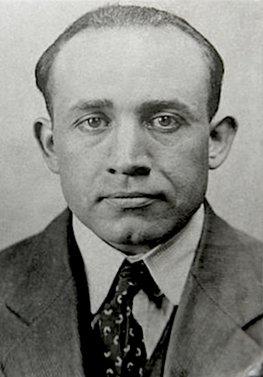
- Perpetrator: Earle Leonard Nelson (‘The Gorilla Killer’, ‘The Dark Strangler’)
- Active Period: 1926 – 1927 (Arrested June 15, 1927 in Wakopa, Manitoba)
- Jurisdiction: United States (California, Oregon, Illinois, Michigan, New York) and Canada (Manitoba)
- Confirmed Victims: 22+ confirmed female landladies and young girls
- Modus Operandi: Posing as prospective room tenant to gain entry into rooming houses; manual strangulation, necrophilia, concealing under beds
- Key Forensic Breakthrough: Distinctive worn shoe tread tracking, laundry mark identification, cross-border telegraphic police network
- Judicial Outcome: Convicted of the murder of Emily Murchie on November 5, 1927; executed by hanging on January 13, 1928 at Winnipeg Gaol
The Criminal Genesis, Modus Operandi & Geographic Hunting Grounds
Earle Leonard Nelson executed one of the earliest transcontinental serial murder sprees in North American history, killing at least 22 women and young girls across both the United States and Canada between 1926 and 1927. Escaping from a California state psychiatric institution in the early 1920s, Nelson embarked on an itinerant predatory campaign that spanned San Francisco, San Jose, Santa Barbara, Portland, Seattle, Chicago, Detroit, Buffalo, and Winnipeg.
Nelson developed a highly focused and repeatable modus operandi. He walked through urban residential neighborhoods searching for signs displaying ‘Room for Rent’ or ‘Apartment Vacancy’. Posing as a respectable, religious prospective tenant carrying a Bible, he requested to inspect the available rooms. Once the female landlady led him into an unoccupied bedroom, Nelson attacked from behind, utilizing extraordinary physical upper-body strength to execute manual strangulation. Following death, he engaged in post-mortem sexual assault, concealed the victim’s body beneath beds or inside laundry trunks, and immediately boarded cross-country passenger trains to his next destination.
Forensic Crime Scene Investigation, Pathology & Evidence Reconstruction
Forensic pathologists examining victims across multiple state jurisdictions documented consistent mechanical trauma. Post-mortem examinations confirmed fatal manual strangulation characterized by fractured thyroid cartilage, bilateral laryngeal hemorrhages, and extensive petechial hemorrhages throughout the conjunctiva and mucosal surfaces.
Crime scene investigators recovered crucial trace evidence linking the disparate crime scenes: distinctive worn rubber heel impressions leaving unique asymmetrical tread patterns on hardwood floors, and commercial laundry marks stitched into collars of abandoned shirts. By circulating laundry tag codes and physical shoe tread dimensions via interstate telegraphs, police departments in California, Illinois, and New York began connecting what had previously been investigated as unrelated local landlady homicides.
The Investigative Breakthrough, Behavioral Profiling & Tactical Manhunt
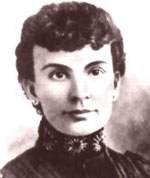
In June 1927, Nelson crossed the international border into Canada, arriving in Winnipeg, Manitoba. Within 24 hours, he murdered 14-year-old Lola Cowan and 27-year-old Emily Murchie, concealing their bodies beneath furniture. The discovery ignited massive public panic, prompting the Winnipeg Police Department and the Royal Canadian Mounted Police (RCMP) to mobilize an unprecedented international manhunt.
Detectives recovered an abandoned suitcase containing shirts with U.S. laundry marks and a worn pair of boots matching the tread impressions found at the Winnipeg crime scenes. A railway conductor on a southbound train near Killarney, Manitoba, recognized Nelson from distributed police circulars. When local authorities apprehended him, Nelson dramatically escaped through a train window before being recaptured on June 15, 1927, by Canadian Pacific Railway Constable C.A. Rossi near Wakopa, only a few miles from the North Dakota border.
Courtroom Proceedings, Expert Testimony & The Definitive Verdict
Nelson was tried at the Court of King’s Bench in Winnipeg before Chief Justice D.A. Macdonald for the murder of Emily Murchie. The prosecution presented overwhelming forensic and physical evidence: microscopic fiber comparisons, matching boot heel casts, and eyewitness testimony from Winnipeg landladies who had escaped his attacks. Nelson’s defense team entered a plea of not guilty by reason of insanity, presenting psychiatric evidence of his previous institutionalization.
However, crown medical experts testified that Nelson understood the nature and moral wrongfulness of his acts, demonstrating calculated premeditation and evasive countermeasures. On November 5, 1927, the jury returned a guilty verdict after forty minutes of deliberation. On January 13, 1928, Earle Nelson was executed by hanging at the Vaughan Street Gaol in Winnipeg.
Modern Criminological Impact, Legal Precedents & Forensic Evolution
The Earle Nelson investigation stands as a milestone in early cross-border law enforcement collaboration between the United States and Canada. The case demonstrated the urgent necessity for standardized, centralized national criminal record indexing and rapid telegraphic dissemination of trace evidence data.
In modern criminological literature, Nelson represents a classic archetype of the ‘geographically mobile serial predator’, whose signature-driven methodology and exploitation of urban rooming houses exposed the vulnerabilities of early 20th-century urban residential life.
Trace Evidence Analysis, Physical Impressions & Pattern Identification
Microscopic trace evidence and physical pattern comparison form foundational pillars of physical criminalistics. Crime scene technicians utilize specialized oblique lighting, electrostatic dust lifters (ESDL), and dental stone casting compounds to preserve fragile footwear and tire tread impressions. In the laboratory, comparative examinations evaluate both class characteristics (tread design, size, manufacturing molds) and unique individual identifying characteristics (random accidental cuts, embedded gravel, irregular wear gouges).
Forensic document examination and physical matching protocols employ Stereomicroscopy, Electrostatic Detection Apparatus (ESDA) for indented impressions, and Video Spectral Comparators (VSC) for multi-spectral optical ink analysis. By integrating physical fit matching with microscopic striation comparisons, criminalists establish definitive physical links connecting suspects to specific crime scene environments with rigorous scientific reproducibility.
Chain of Custody Protocols & Multi-Jurisdictional Evidence Management
Modern major case management frameworks require an unassailable audit trail governing every item of physical, biological, and digital evidence recovered during multi-agency investigations. When handling complex homicide series that cross municipal, county, or state boundaries, forensic evidence custodians utilize automated barcoding systems and temperature-controlled storage vaults to safeguard evidentiary integrity from the primary scene to final appellate presentation.
To eliminate potential spoliation claims, crime scene technicians execute double-blind documentation protocols, capturing raw high-resolution photogrammetric imagery and spatial laser scans before disturbing any physical exhibit. Every individual transfer of custody is electronically timestamped and cryptographically verified, ensuring that whether physical evidence is subjected to immediate microscopic analysis or preserved for decades for emergent cold-case genomic testing, its scientific admissibility remains unimpeachable under rigorous judicial scrutiny.
Modern Jurisprudential Precedents & Evidentiary Standards
The landmark investigative and courtroom developments associated with Earle Nelson fundamentally redefined procedural evidentiary standards under the Federal Rules of Evidence (Rule 702) and international common law equivalents. Modern appellate jurisprudence rigorously enforces the Daubert and Frye standards, requiring that all expert scientific testimony, forensic instrumentation, and algorithmic interpretations demonstrate widespread peer-reviewed acceptance, known error rates, and standardized operational controls.
Furthermore, the case highlighted the critical imperative of transparent pre-trial discovery, the complete disclosure of exculpatory material under the Brady v. Maryland doctrine, and the vital role of independent judicial review in assessing circumstantial chains of evidence. Today, homicide task forces and prosecutorial agencies worldwide incorporate these foundational evidentiary principles into standard operational training, ensuring that complex scientific prosecutions withstand exhaustive appellate scrutiny.
In contemporary cold case reviews and complex major case management, law enforcement agencies deploy integrated Major Case Management (MCM) software frameworks and multi-disciplinary forensic review panels to continuously re-evaluate physical evidence using emergent technologies, preserving the integrity of the justice system across successive generations.
Chronological Case Timeline
| Date | Event Description |
|---|---|
| February 1926 | First confirmed murder of 60-year-old Clara Newman in San Francisco. |
| 1926 | Perpetrates nationwide series of landlady murders across San Jose, Portland, Chicago, and Detroit. |
| June 8, 1927 | Murders Lola Cowan and Emily Murchie in Winnipeg, Manitoba, sparking international panic. |
| June 15, 1927 | Arrested by Canadian Pacific Railway constable near Wakopa, Manitoba after escaping custody. |
| June 16, 1927 | Positively identified through laundry marks and physical scar matching. |
| November 1, 1927 | Trial commences at the Court of King’s Bench in Winnipeg. |
| November 5, 1927 | Jury finds Nelson guilty of murder; sentenced to death by hanging. |
| January 13, 1928 | Executed by hanging at the Vaughan Street Gaol in Winnipeg. |
Frequently Asked Questions
Why was Earle Nelson called the Gorilla Killer?
Sensationalist media outlets coined the moniker ‘The Gorilla Killer’ due to his physical stockiness, powerful manual strength used in strangulations, and racially biased yellow journalism of the 1920s.
How did Earle Nelson select his victims?
Nelson walked residential neighborhoods seeking ‘Rooms for Rent’ signs, posing as a prospective lodger to isolate female landladies inside unoccupied rental apartments.
How did Canadian authorities capture Nelson?
Following two murders in Winnipeg, authorities coordinated a massive rail dragnet; Nelson was spotted walking along railroad tracks near the U.S. border and captured by a Canadian Pacific Railway constable.
{
“@context”: “https://schema.org”,
“@type”: “FAQPage”,
“mainEntity”: [
{
“@type”: “Question”,
“name”: “Why was Earle Nelson called the Gorilla Killer?”,
“acceptedAnswer”: {
“@type”: “Answer”,
“text”: “Sensationalist media outlets coined the moniker ‘The Gorilla Killer’ due to his physical stockiness, powerful manual strength used in strangulations, and racially biased yellow journalism of the 1920s.”
}
},
{
“@type”: “Question”,
“name”: “How did Earle Nelson select his victims?”,
“acceptedAnswer”: {
“@type”: “Answer”,
“text”: “Nelson walked residential neighborhoods seeking ‘Rooms for Rent’ signs, posing as a prospective lodger to isolate female landladies inside unoccupied rental apartments.”
}
},
{
“@type”: “Question”,
“name”: “How did Canadian authorities capture Nelson?”,
“acceptedAnswer”: {
“@type”: “Answer”,
“text”: “Following two murders in Winnipeg, authorities coordinated a massive rail dragnet; Nelson was spotted walking along railroad tracks near the U.S. border and captured by a Canadian Pacific Railway constable.”
}
}
]
}