Executive Case Factsheet
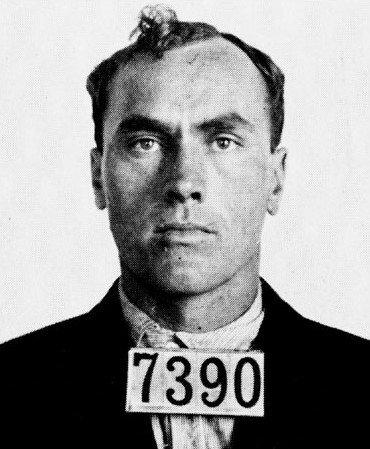
- Perpetrator: Carl Panzram (‘The Beast of Leavenworth’, ‘John O’Leary’)
- Active Period: 1915 – 1929 (Arrested August 1928 in Washington D.C.)
- Jurisdiction: United States (National) and Africa (Angola)
- Confirmed Victims: 21+ murders confessed, thousands of burglaries, dozens of arsons
- Modus Operandi: Opportunistic robbery, bludgeoning, shooting, and sodomy across global shipping lanes and rail corridors
- Key Forensic Breakthrough: Detailed handwritten autobiography delivered to Leavenworth guard Henry Lesser; ballistics matching on stolen D.C. firearms
- Judicial Outcome: Convicted of first-degree murder of laundry foreman R.G. Warnke; executed by hanging on September 5, 1930 at Leavenworth
The Criminal Genesis, Modus Operandi & Geographic Hunting Grounds
Carl Panzram embodies one of the most unrestrained and unapologetic portraits of nihilistic psychopathy in American criminological history. Born in Minnesota in 1891, Panzram’s formative years were defined by extreme corporal punishment and institutional abuse within state reformatories, experiences that crystallized into an all-consuming hatred for humanity. Over a thirty-year criminal trajectory spanning from 1899 to 1929, Panzram engaged in nationwide arson, grand larceny, armed robbery, and predatory homicide across the United States, Europe, and Africa.
Panzram’s operational footprint was inherently itinerant. Operating as a transient hobo, merchant mariner, and international drifter, he exploited maritime shipping lines and continental rail corridors to commit crimes without establishing local geographical ties. In 1920, following a massive burglary of the residence of former President William Howard Taft in Connecticut, Panzram used stolen funds to purchase a 30-foot yacht in New York Harbor, hiring crew members whom he murdered and discarded in the Atlantic Ocean. Later, traveling to Portuguese West Africa (Angola) in 1921, he hired an indigenous river expedition, executing all six guides and feeding their remains to crocodiles before returning to the United States.
Forensic Crime Scene Investigation, Pathology & Evidence Reconstruction
Because Panzram operated across disparate international boundaries during an era preceding national fingerprint registries and centralized criminal ballistic databases, many of his early homicides were investigated as isolated local crimes. His physical signature was characterized by overwhelming kinetic violence: deploying heavy iron crowbars, blunt wooden clubs, or stolen handguns to incapacitate victims before subjecting them to brutal physical violations.
Following his August 1928 arrest in Washington D.C. for a routine residential burglary, Metropolitan Police detectives recovered a cache of stolen high-caliber firearms. Ballistic examiners matched firing pin indentations and rifling impressions from the seized handguns to unsolved robbery-homicide crime scenes in Maryland and Massachusetts. Furthermore, latent fingerprint comparisons matched Panzram’s palm impressions to unrecovered property caches hidden along the Atlantic seaboard.
The Investigative Breakthrough, Behavioral Profiling & Tactical Manhunt
While detained at the District of Columbia Jail in 1928 awaiting trial on burglary charges, Panzram encountered Henry Lesser, an idealistic 26-year-old correctional officer. Recognizing Panzram’s extraordinary intelligence and total lack of remorse, Lesser provided him with writing paper, pencils, and tobacco, encouraging him to document his entire criminal life history.
The result was a remarkable 40,000-word handwritten manuscript: ‘Panzram: A Journal of Murder’. In cold, precise prose, Panzram provided an exhaustive autobiographical chronicle detailing 21 homicides, over 1,000 burglaries, and dozens of arsons across thirty states and foreign territories. Panzram famously synthesized his philosophy: ‘In my lifetime I have murdered 21 human beings, I have committed thousands of burglaries, robberies, arsons, and I don’t feel the least bit sorry for anything I have done. I wish the entire human race had one neck and I had my hands around it.’ Lesser preserved the manuscript, which became a foundational primary document in 20th-century forensic psychopathy research.
Courtroom Proceedings, Expert Testimony & The Definitive Verdict
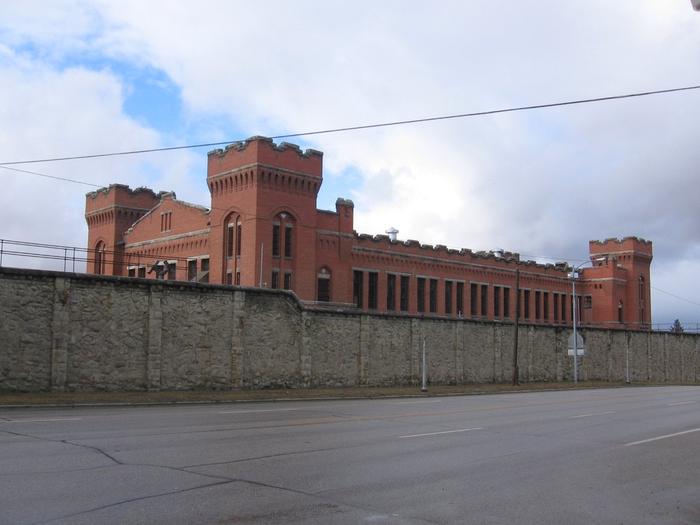
Transferred to the United States Penitentiary at Leavenworth, Kansas, to serve a 25-year sentence, Panzram remained fiercely volatile. On June 20, 1929, inside the prison laundry facility, Panzram struck civilian laundry foreman Robert Warnke over the head with a heavy iron pipe, killing him instantly. Indicted for first-degree murder in federal court in Topeka, Panzram refused legal defense, openly declared his guilt, and aggressively demanded the death penalty, threatening to kill his attorneys and any prison guard who attempted to intervene.
On April 16, 1930, Panzram was sentenced to death by hanging. When anti-death penalty advocates and members of the Society of Friends attempted to file clemency petitions on his behalf, Panzram penned blistering letters to President Herbert Hoover demanding immediate execution. On September 5, 1930, Carl Panzram was hanged at Leavenworth Federal Penitentiary, delivering his infamous parting words to the executioner: ‘Hurry it up, you Hoosier bastard! I could hang a dozen men while you’re fooling around!’
Modern Criminological Impact, Legal Precedents & Forensic Evolution
Carl Panzram’s autobiographical manuscript provided 20th-century criminologists and forensic psychologists with an unprecedented first-person documentation of malignant psychopathy, institutional brutalization, and predatory motivation. His case directly influenced early penological reforms, demonstrating how abusive juvenile carceral systems cultivate extreme violent pathology.
In modern forensic psychiatry, Panzram’s writings are analyzed alongside the Psychopathy Checklist-Revised (PCL-R), serving as a benchmark text illustrating the complete absence of affective empathy, extreme sensation-seeking behavior, and the conscious rationalization of predatory violence.
Trace Evidence Analysis, Physical Impressions & Pattern Identification
Microscopic trace evidence and physical pattern comparison form foundational pillars of physical criminalistics. Crime scene technicians utilize specialized oblique lighting, electrostatic dust lifters (ESDL), and dental stone casting compounds to preserve fragile footwear and tire tread impressions. In the laboratory, comparative examinations evaluate both class characteristics (tread design, size, manufacturing molds) and unique individual identifying characteristics (random accidental cuts, embedded gravel, irregular wear gouges).
Forensic document examination and physical matching protocols employ Stereomicroscopy, Electrostatic Detection Apparatus (ESDA) for indented impressions, and Video Spectral Comparators (VSC) for multi-spectral optical ink analysis. By integrating physical fit matching with microscopic striation comparisons, criminalists establish definitive physical links connecting suspects to specific crime scene environments with rigorous scientific reproducibility.
Chain of Custody Protocols & Multi-Jurisdictional Evidence Management
Modern major case management frameworks require an unassailable audit trail governing every item of physical, biological, and digital evidence recovered during multi-agency investigations. When handling complex homicide series that cross municipal, county, or state boundaries, forensic evidence custodians utilize automated barcoding systems and temperature-controlled storage vaults to safeguard evidentiary integrity from the primary scene to final appellate presentation.
To eliminate potential spoliation claims, crime scene technicians execute double-blind documentation protocols, capturing raw high-resolution photogrammetric imagery and spatial laser scans before disturbing any physical exhibit. Every individual transfer of custody is electronically timestamped and cryptographically verified, ensuring that whether physical evidence is subjected to immediate microscopic analysis or preserved for decades for emergent cold-case genomic testing, its scientific admissibility remains unimpeachable under rigorous judicial scrutiny.
Modern Jurisprudential Precedents & Evidentiary Standards
The landmark investigative and courtroom developments associated with Carl Panzram fundamentally redefined procedural evidentiary standards under the Federal Rules of Evidence (Rule 702) and international common law equivalents. Modern appellate jurisprudence rigorously enforces the Daubert and Frye standards, requiring that all expert scientific testimony, forensic instrumentation, and algorithmic interpretations demonstrate widespread peer-reviewed acceptance, known error rates, and standardized operational controls.
Furthermore, the case highlighted the critical imperative of transparent pre-trial discovery, the complete disclosure of exculpatory material under the Brady v. Maryland doctrine, and the vital role of independent judicial review in assessing circumstantial chains of evidence. Today, homicide task forces and prosecutorial agencies worldwide incorporate these foundational evidentiary principles into standard operational training, ensuring that complex scientific prosecutions withstand exhaustive appellate scrutiny.
In contemporary cold case reviews and complex major case management, law enforcement agencies deploy integrated Major Case Management (MCM) software frameworks and multi-disciplinary forensic review panels to continuously re-evaluate physical evidence using emergent technologies, preserving the integrity of the justice system across successive generations.
Chronological Case Timeline
| Date | Event Description |
|---|---|
| 1915 – 1920 | Perpetrates nationwide string of burglaries, robberies, and murders across U.S. |
| 1920 | Purchases yacht in New York with stolen burglary proceeds; hires crew and shoots them in Atlantic. |
| 1921 – 1922 | Travels to Lobito, Angola; murders guide and six indigenous crew members during safari. |
| August 1928 | Arrested in Washington D.C. for burglary; confesses to multiple unsolved homicides. |
| 1928 – 1929 | Transferred to Leavenworth Federal Penitentiary; writes autobiography for guard Henry Lesser. |
| June 20, 1929 | Kills prison laundry foreman Robert Warnke with iron bar inside Leavenworth. |
| April 1930 | Tried for Warnke murder in Topeka federal court; demands immediate death penalty. |
| September 5, 1930 | Executed by hanging at Leavenworth Federal Penitentiary. |
Frequently Asked Questions
Who was Henry Lesser and why is he important to the Panzram case?
Henry Lesser was a young correctional officer at the Washington D.C. jail who befriended Panzram, providing him with writing paper and pencils, resulting in Panzram’s historic 40,000-word autobiographical confession.
What were Carl Panzram’s famous final words before execution?
When the hangman asked if he had any last words, Panzram famously snarled: ‘Yes, hurry it up, you Hoosier bastard! I could hang a dozen men while you’re fooling around!’
Did Carl Panzram attempt to appeal his death sentence?
No. Panzram aggressively fought against anti-death penalty advocates and the ACLU, threatening to kill anyone who attempted to file an appeal or clemency petition on his behalf.
{
“@context”: “https://schema.org”,
“@type”: “FAQPage”,
“mainEntity”: [
{
“@type”: “Question”,
“name”: “Who was Henry Lesser and why is he important to the Panzram case?”,
“acceptedAnswer”: {
“@type”: “Answer”,
“text”: “Henry Lesser was a young correctional officer at the Washington D.C. jail who befriended Panzram, providing him with writing paper and pencils, resulting in Panzram’s historic 40,000-word autobiographical confession.”
}
},
{
“@type”: “Question”,
“name”: “What were Carl Panzram’s famous final words before execution?”,
“acceptedAnswer”: {
“@type”: “Answer”,
“text”: “When the hangman asked if he had any last words, Panzram famously snarled: ‘Yes, hurry it up, you Hoosier bastard! I could hang a dozen men while you’re fooling around!'”
}
},
{
“@type”: “Question”,
“name”: “Did Carl Panzram attempt to appeal his death sentence?”,
“acceptedAnswer”: {
“@type”: “Answer”,
“text”: “No. Panzram aggressively fought against anti-death penalty advocates and the ACLU, threatening to kill anyone who attempted to file an appeal or clemency petition on his behalf.”
}
}
]
}