Executive Case Factsheet
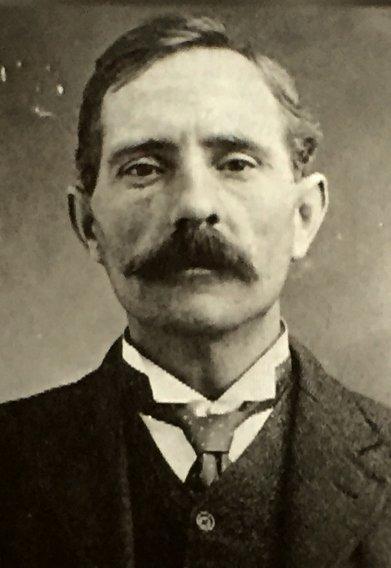
- Perpetrator: George Joseph Smith (‘The Brides in the Bath Murderer’, ‘Henry Williams’, ‘John Lloyd’)
- Active Period: 1912 – 1914 (Arrested February 1, 1915)
- Jurisdiction: Herne Bay, Blackpool, and Highgate (London), United Kingdom
- Confirmed Victims: 3 confirmed wives (Bessie Mundy, Alice Burnham, Margaret Lofty)
- Modus Operandi: Bigamous marriage to wealthy women; insuring their lives or securing wills; drowning them in household bathtubs without physical struggle
- Key Forensic Breakthrough: Sir Bernard Spilsbury’s hydrostatic water displacement and sudden submersion forensic experiments; ‘Similar Fact’ legal doctrine
- Judicial Outcome: Convicted of the murder of Bessie Mundy on July 1, 1915; executed by hanging on August 13, 1915 at Maidstone Prison
The Criminal Genesis, Modus Operandi & Geographic Hunting Grounds
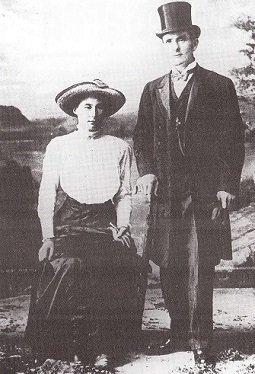
The ‘Brides in the Bath’ murders orchestrated by George Joseph Smith between 1912 and 1914 represent one of the most brilliant and sinister forensic puzzles in British legal history. Operating under various aliases—including ‘Henry Williams’, ‘George Oliver Love’, and ‘John Lloyd’—Smith was a serial bigamist who preyed on single, respectable middle-class women possessing independent financial savings or life insurance policies across seaside resort towns in England.
Smith’s operational cycle was executed with flawless precision: he courted his victims rapidly, entered into bigamous marriage ceremonies, induced the bride to draft a last will and testament naming him sole beneficiary or purchase substantial life insurance policies, and subsequently rented furnished apartments containing a full-sized bathtub. Within days of the financial arrangements being finalized, the bride was discovered drowned in the bathtub, with Smith presenting himself as the distraught husband who had merely stepped out to purchase groceries or postage stamps.
Forensic Crime Scene Investigation, Pathology & Evidence Reconstruction
The primary challenge facing medical examiners was the total absence of physical trauma on the victims’ bodies. In Herne Bay (1912), 33-year-old Bessie Mundy was found submerged in a five-foot cast-iron bath; in Blackpool (1913), 25-year-old Alice Burnham drowned in a boarding house bath; and in Highgate, London (1914), 38-year-old Margaret Lofty drowned less than twenty-four hours after her wedding. Local coroners initially ruled each death an accidental drowning triggered by an epileptic seizure or fainting fit.
Scotland Yard Detective Inspector Arthur Neil recognized the statistical impossibility of three women marrying similar men and dying in identical bathtub configurations within two years. Neil commissioned Sir Bernard Spilsbury, the preeminent Home Office forensic pathologist, to conduct exhaustive post-mortem and hydrostatic examinations. Spilsbury measured the dimensions of the Herne Bay bathtub and noted that Bessie Mundy was 5 feet 7 inches tall, while the tub was only 5 feet long. For her head to be entirely submerged underwater, her legs had to extend beyond the lip of the tub, contradicting the natural posture of an individual suffering an epileptic convulsion.
The Investigative Breakthrough, Behavioral Profiling & Tactical Manhunt
To determine the exact physical mechanics of the homicides, Spilsbury conducted groundbreaking experimental trials utilizing a professional female swimmer in the seized Herne Bay bathtub. Spilsbury demonstrated that if an assailant attempted to push a conscious victim under water by the shoulders or throat, violent struggle marks and extensive bruising would inevitably occur along the arms and bathtub enamel.
However, Spilsbury discovered an alternative, fatal physiological mechanism: by approaching a reclining bather, seizing her abruptly by the ankles or feet, and pulling upward toward himself, the bather’s torso and head slid instantaneously beneath the water. Water rushed violently into the nasopharynx and larynx, inducing sudden shock, vagal stimulation, and immediate unconsciousness, preventing the victim from offering physical resistance or gripping the sides of the tub. This experimental reconstruction provided the scientific key to the prosecution’s case.
Courtroom Proceedings, Expert Testimony & The Definitive Verdict
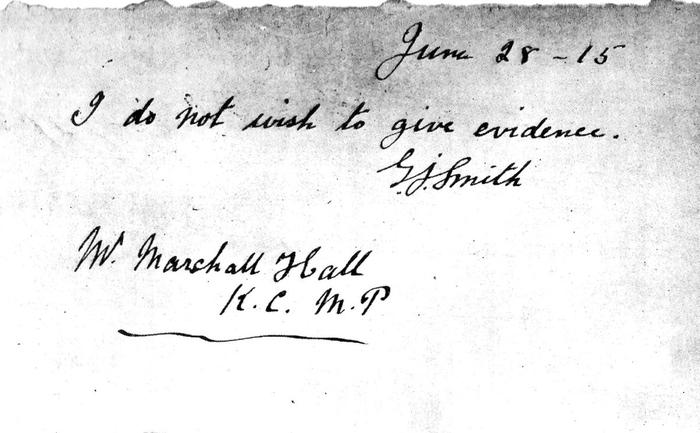
The trial of George Joseph Smith opened on June 22, 1915, at the Old Bailey before Mr. Justice Scrutton and prosecuting counsel Archibald Bodkin. In a landmark evidentiary ruling, the court allowed the prosecution to introduce evidence concerning the deaths of Alice Burnham and Margaret Lofty under the ‘Similar Fact’ doctrine, establishing that Mundy’s death was not an isolated misfortune but part of a systematic murderous design.
Spilsbury’s expert courtroom demonstration, complete with the physical exhibition of the three bathtubs in the courtroom well, transfixed the jury. The defense was unable to counter Spilsbury’s scientific rigor or the devastating financial timelines showing Smith collecting insurance payouts within days of each death. On July 1, 1915, the jury deliberated for twenty minutes before delivering a verdict of guilty. On August 13, 1915, George Joseph Smith was hanged at Maidstone Prison.
Modern Criminological Impact, Legal Precedents & Forensic Evolution
The prosecution of George Joseph Smith fundamentally transformed British common law and forensic science. The trial established the ‘Similar Fact Evidence’ precedent (later codified in the UK Criminal Justice Act 2003 and global common law jurisdictions), permitting evidence of uncharged misconduct to be admitted to rebut defenses of accident or mistake.
Forensically, the case elevated Sir Bernard Spilsbury to legendary status, establishing forensic pathology as an indispensable, scientific cornerstone of homicide adjudication. Spilsbury’s hydrodynamic bathtub experiments established modern protocol standards for reconstructing biomechanical dynamics in unwitnessed domestic drownings.
Forensic Pathology, Traumatology & Biomechanical Reconstruction
Medico-legal autopsy protocols mandate systematic anatomical dissection and photographic documentation to determine both the immediate cause and underlying manner of death. Forensic pathologists evaluate external cutaneous trauma—including contusions, abrasions, lacerations, and incised wounds—measuring dimensional metrics, beveling angles, and marginal tissue bridging to reconstruct weapon kinematics and kinetic energy transfer.
Histopathological examination of microscopic tissue sections stained with Hematoxylin and Eosin (H&E) allows pathologists to differentiate between ante-mortem vital reactions and post-mortem artifactual damage. Sub-cutaneous hemorrhaging, inflammatory cellular infiltration, and microscopic vascular thrombosis confirm that physiological circulation was active at the time injury was sustained, allowing investigators to establish precise chronological sequences of fatal physical trauma.
Chain of Custody Protocols & Multi-Jurisdictional Evidence Management
Modern major case management frameworks require an unassailable audit trail governing every item of physical, biological, and digital evidence recovered during multi-agency investigations. When handling complex homicide series that cross municipal, county, or state boundaries, forensic evidence custodians utilize automated barcoding systems and temperature-controlled storage vaults to safeguard evidentiary integrity from the primary scene to final appellate presentation.
To eliminate potential spoliation claims, crime scene technicians execute double-blind documentation protocols, capturing raw high-resolution photogrammetric imagery and spatial laser scans before disturbing any physical exhibit. Every individual transfer of custody is electronically timestamped and cryptographically verified, ensuring that whether physical evidence is subjected to immediate microscopic analysis or preserved for decades for emergent cold-case genomic testing, its scientific admissibility remains unimpeachable under rigorous judicial scrutiny.
Modern Jurisprudential Precedents & Evidentiary Standards
The landmark investigative and courtroom developments associated with George Joseph Smith fundamentally redefined procedural evidentiary standards under the Federal Rules of Evidence (Rule 702) and international common law equivalents. Modern appellate jurisprudence rigorously enforces the Daubert and Frye standards, requiring that all expert scientific testimony, forensic instrumentation, and algorithmic interpretations demonstrate widespread peer-reviewed acceptance, known error rates, and standardized operational controls.
Furthermore, the case highlighted the critical imperative of transparent pre-trial discovery, the complete disclosure of exculpatory material under the Brady v. Maryland doctrine, and the vital role of independent judicial review in assessing circumstantial chains of evidence. Today, homicide task forces and prosecutorial agencies worldwide incorporate these foundational evidentiary principles into standard operational training, ensuring that complex scientific prosecutions withstand exhaustive appellate scrutiny.
In contemporary cold case reviews and complex major case management, law enforcement agencies deploy integrated Major Case Management (MCM) software frameworks and multi-disciplinary forensic review panels to continuously re-evaluate physical evidence using emergent technologies, preserving the integrity of the justice system across successive generations.
Chronological Case Timeline
| Date | Event Description |
|---|---|
| July 13, 1912 | Bessie Mundy found drowned in a cast-iron bathtub in Herne Bay, Kent. |
| December 12, 1913 | Alice Burnham found drowned in a bathtub at a boarding house in Blackpool. |
| December 18, 1914 | Margaret Lofty found drowned in a bathtub in Highgate, London, 24 hours after wedding. |
| January 1915 | Scotland Yard Inspector Arthur Neil connects the three identical drowning reports. |
| February 1, 1915 | George Joseph Smith arrested while visiting his solicitor in London. |
| March 1915 | Sir Bernard Spilsbury conducts forensic bathtub immersion experiments with a female swimmer. |
| June 22, 1915 | Trial commences at the Old Bailey before Mr. Justice Scrutton. |
| July 1, 1915 | Convicted of murder; sentenced to death. |
| August 13, 1915 | Executed by hanging at Maidstone Prison. |
Frequently Asked Questions
How did George Joseph Smith drown his wives without signs of a struggle?
Sir Bernard Spilsbury demonstrated that Smith suddenly grabbed his wives by the feet while they bathed, pulling them abruptly toward him; this submerged their heads instantly under water without allowing them to grip the sides or struggle.
What was the ‘Similar Fact’ evidence doctrine established in this trial?
The judge allowed the prosecution to present evidence of the two other uncharged bathtub drownings (Burnham and Lofty) to prove a deliberate design and disprove the defense’s claim that Mundy’s death was an accidental epileptic seizure.
Who was Sir Bernard Spilsbury?
Sir Bernard Spilsbury was Britain’s most celebrated early 20th-century forensic pathologist, whose testimony at the Old Bailey transformed forensic pathology into an authoritative courtroom science.
{
“@context”: “https://schema.org”,
“@type”: “FAQPage”,
“mainEntity”: [
{
“@type”: “Question”,
“name”: “How did George Joseph Smith drown his wives without signs of a struggle?”,
“acceptedAnswer”: {
“@type”: “Answer”,
“text”: “Sir Bernard Spilsbury demonstrated that Smith suddenly grabbed his wives by the feet while they bathed, pulling them abruptly toward him; this submerged their heads instantly under water without allowing them to grip the sides or struggle.”
}
},
{
“@type”: “Question”,
“name”: “What was the ‘Similar Fact’ evidence doctrine established in this trial?”,
“acceptedAnswer”: {
“@type”: “Answer”,
“text”: “The judge allowed the prosecution to present evidence of the two other uncharged bathtub drownings (Burnham and Lofty) to prove a deliberate design and disprove the defense’s claim that Mundy’s death was an accidental epileptic seizure.”
}
},
{
“@type”: “Question”,
“name”: “Who was Sir Bernard Spilsbury?”,
“acceptedAnswer”: {
“@type”: “Answer”,
“text”: “Sir Bernard Spilsbury was Britain’s most celebrated early 20th-century forensic pathologist, whose testimony at the Old Bailey transformed forensic pathology into an authoritative courtroom science.”
}
}
]
}