Executive Case Factsheet
- Perpetrator: William George Heirens (‘The Lipstick Killer’)
- Active Period: 1945 – 1946 (Arrested June 26, 1946)
- Jurisdiction: Chicago, Illinois, United States
- Confirmed Victims: 3 victims (Josephine Ross, Frances Brown, and 6-year-old Suzanne Degnan)
- Modus Operandi: Nocturnal apartment cat burglary; stabbing and bludgeoning occupants; child abduction, dismemberment, and lipstick wall writing
- Key Forensic Breakthrough: Latent fingerprint comparison on Degnan ransom note; handwriting analysis of the red lipstick scrawl on Frances Brown’s wall
- Judicial Outcome: Pleaded guilty on September 4, 1946 to three life sentences; died in prison on March 5, 2012, after 65 years of incarceration
The Criminal Genesis, Modus Operandi & Geographic Hunting Grounds
The ‘Lipstick Killer’ investigation of 1945–1946 cast a dark shadow over post-war Chicago, generating one of the most sensational and legally contentious crime sagas in American legal history. The crimes occurred across the North Side of Chicago, characterized by nocturnal apartment intrusions where the assailant gained access via fire escapes and unlocked windows. The terror escalated through three distinct homicides: the June 1945 stabbing of 43-year-old Josephine Ross; the December 1945 shooting and stabbing of former Navy WAVE Frances Brown; and the January 1946 kidnapping and dismemberment of six-year-old Suzanne Degnan from her ground-floor bedroom in the affluent Edgewater neighborhood.
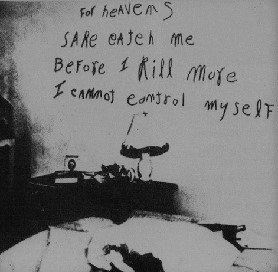
The crimes were marked by dramatic psychological signatures. In Frances Brown’s apartment, the killer scrawled a chilling plea across the living room wall using the victim’s red lipstick: ‘For heavens sake catch me before I kill more I cannot control myself’. Three weeks later, the kidnapper of Suzanne Degnan left a crude, misspelled ransom note demanding $20,000 before her dismembered remains were discovered in neighborhood sewer catch basins, triggering an unprecedented 1,000-officer municipal dragnet across Chicago.
Forensic Crime Scene Investigation, Pathology & Evidence Reconstruction
Forensic investigation teams led by the Chicago Police Scientific Crime Detection Laboratory (SCDL) collected latent fingerprints, textile fibers, and handwriting exemplars from the crime scenes. Autopsy examinations on Suzanne Degnan established that the victim had been strangled prior to anatomical disarticulation with a sharp, heavy butcher knife. Sewer maintenance crews recovered dismembered body sections across three separate sewer manholes on Lakewood Avenue.
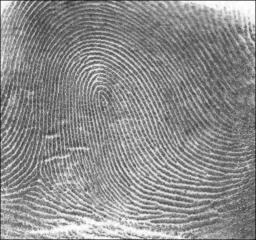
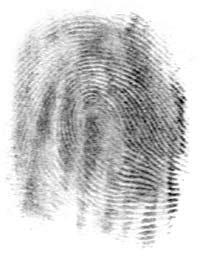
The primary physical evidence centered on two latent fingerprints: a faint, smudged friction ridge impression lifted from the Degnan ransom note envelope, and a bloody print on the doorframe of Frances Brown’s apartment. Document examiners and handwriting analysts from the Chicago Police Department compared the lipstick wall writing to dozens of suspects, but initial forensic comparisons remained inconclusive due to the irregular medium and texture of lipstick applied to painted plaster.
The Investigative Breakthrough, Behavioral Profiling & Tactical Manhunt
On June 26, 1946, police officers apprehended 17-year-old University of Chicago undergraduate William Heirens after an off-duty security guard caught him attempting a residential burglary. Heirens resisted violently, drawing a revolver that misfired before officers neutralized him by dropping three heavy flowerpots onto his head from a staircase landing.
While hospitalized with severe concussions, Heirens was subjected to aggressive, round-the-clock interrogations without counsel. State prosecutors administered the barbiturate sodium pentothal (‘truth serum’) without judicial warrant or parental consent, during which Heirens spoke of an alter-ego named ‘George Murman’. Following his interrogation, police announced that Heirens’s left middle finger matched the latent impression recovered from the Degnan ransom note, and that stolen bonds found in his dormitory room connected him to neighborhood burglaries.
Courtroom Proceedings, Expert Testimony & The Definitive Verdict
Facing intense media pressure and the threat of the electric chair, Heirens’s court-appointed defense attorneys advised him to negotiate a plea bargain. On September 4, 1946, Heirens entered a formal guilty plea before Judge Harold G. Ward in the Criminal Court of Cook County, receiving three consecutive life terms.
However, in 1952, Heirens formally recanted his confession, initiating a historic sixty-year appellate campaign supported by prominent legal scholars and wrongful conviction organizations. Appellate reviews revealed substantial procedural irregularities: the coercive administration of sodium pentothal, the suppression of alternative suspects, and severe forensic discrepancies regarding the latent fingerprint match, which possessed only nine identifiable ridge points rather than the legally accepted standard of twelve. Despite numerous parole applications and clemency petitions, Heirens remained incarcerated until his death from complications of diabetes on March 5, 2012, at the age of 83, serving 65 years—the longest prison sentence in American history.
Modern Criminological Impact, Legal Precedents & Forensic Evolution
The William Heirens case stands as a landmark cautionary study in American constitutional law and forensic science integrity. The egregious due process violations—including warrantless narco-analysis and pre-trial media demonization—heavily influenced subsequent United States Supreme Court jurisprudence regarding custodial interrogation rights, directly anticipating the landmark Miranda v. Arizona (1966) ruling.
In forensic criminalistics, the Heirens controversy accelerated the establishment of strict objective standards for latent fingerprint comparison, leading to the development of the Analysis, Comparison, Evaluation, and Verification (ACE-V) scientific methodology and computerized Automated Fingerprint Identification Systems (AFIS).
Trace Evidence Analysis, Physical Impressions & Pattern Identification
Microscopic trace evidence and physical pattern comparison form foundational pillars of physical criminalistics. Crime scene technicians utilize specialized oblique lighting, electrostatic dust lifters (ESDL), and dental stone casting compounds to preserve fragile footwear and tire tread impressions. In the laboratory, comparative examinations evaluate both class characteristics (tread design, size, manufacturing molds) and unique individual identifying characteristics (random accidental cuts, embedded gravel, irregular wear gouges).
Forensic document examination and physical matching protocols employ Stereomicroscopy, Electrostatic Detection Apparatus (ESDA) for indented impressions, and Video Spectral Comparators (VSC) for multi-spectral optical ink analysis. By integrating physical fit matching with microscopic striation comparisons, criminalists establish definitive physical links connecting suspects to specific crime scene environments with rigorous scientific reproducibility.
Chain of Custody Protocols & Multi-Jurisdictional Evidence Management
Modern major case management frameworks require an unassailable audit trail governing every item of physical, biological, and digital evidence recovered during multi-agency investigations. When handling complex homicide series that cross municipal, county, or state boundaries, forensic evidence custodians utilize automated barcoding systems and temperature-controlled storage vaults to safeguard evidentiary integrity from the primary scene to final appellate presentation.
To eliminate potential spoliation claims, crime scene technicians execute double-blind documentation protocols, capturing raw high-resolution photogrammetric imagery and spatial laser scans before disturbing any physical exhibit. Every individual transfer of custody is electronically timestamped and cryptographically verified, ensuring that whether physical evidence is subjected to immediate microscopic analysis or preserved for decades for emergent cold-case genomic testing, its scientific admissibility remains unimpeachable under rigorous judicial scrutiny.
Modern Jurisprudential Precedents & Evidentiary Standards
The landmark investigative and courtroom developments associated with William Heirens fundamentally redefined procedural evidentiary standards under the Federal Rules of Evidence (Rule 702) and international common law equivalents. Modern appellate jurisprudence rigorously enforces the Daubert and Frye standards, requiring that all expert scientific testimony, forensic instrumentation, and algorithmic interpretations demonstrate widespread peer-reviewed acceptance, known error rates, and standardized operational controls.
Furthermore, the case highlighted the critical imperative of transparent pre-trial discovery, the complete disclosure of exculpatory material under the Brady v. Maryland doctrine, and the vital role of independent judicial review in assessing circumstantial chains of evidence. Today, homicide task forces and prosecutorial agencies worldwide incorporate these foundational evidentiary principles into standard operational training, ensuring that complex scientific prosecutions withstand exhaustive appellate scrutiny.
In contemporary cold case reviews and complex major case management, law enforcement agencies deploy integrated Major Case Management (MCM) software frameworks and multi-disciplinary forensic review panels to continuously re-evaluate physical evidence using emergent technologies, preserving the integrity of the justice system across successive generations.
Chronological Case Timeline
| Date | Event Description |
|---|---|
| June 5, 1945 | 43-year-old Josephine Ross stabbed to death in her Chicago apartment. |
| December 10, 1945 | Frances Brown murdered; message written in red lipstick on living room wall. |
| January 7, 1946 | 6-year-old Suzanne Degnan abducted from her bedroom; dismembered remains found in sewers. |
| June 26, 1946 | 17-year-old University of Chicago student William Heirens arrested for burglary. |
| July 1946 | Police claim Heirens’s fingerprint matches latent print on Degnan ransom note. |
| September 4, 1946 | Heirens enters negotiated guilty plea to three life sentences to avoid electric chair. |
| 1952 | Heirens formally recants confession, initiating six-decade legal battle claiming coercion. |
| March 5, 2012 | Dies at Dixon Correctional Center, Illinois, having served the longest prison term in U.S. history. |
Frequently Asked Questions
What was written on the wall in the Lipstick Killer case?
On the wall of victim Frances Brown’s living room, the killer wrote in red lipstick: ‘For heavens sake catch me before I kill more I cannot control myself’.
Did William Heirens maintain his innocence?
Heirens pleaded guilty in 1946 to avoid the electric chair, but formally recanted his confession in 1952 and maintained his complete innocence until his death in 2012, citing police coercion and unconstitutional sodium pentothal administration.
What forensic controversies surround the fingerprint evidence?
Forensic critics and legal scholars highlighted that the latent print on the Degnan ransom note was smudged, had only nine matching ridge characteristics, and may have suffered from chain-of-custody contamination.
{
“@context”: “https://schema.org”,
“@type”: “FAQPage”,
“mainEntity”: [
{
“@type”: “Question”,
“name”: “What was written on the wall in the Lipstick Killer case?”,
“acceptedAnswer”: {
“@type”: “Answer”,
“text”: “On the wall of victim Frances Brown’s living room, the killer wrote in red lipstick: ‘For heavens sake catch me before I kill more I cannot control myself’.”
}
},
{
“@type”: “Question”,
“name”: “Did William Heirens maintain his innocence?”,
“acceptedAnswer”: {
“@type”: “Answer”,
“text”: “Heirens pleaded guilty in 1946 to avoid the electric chair, but formally recanted his confession in 1952 and maintained his complete innocence until his death in 2012, citing police coercion and unconstitutional sodium pentothal administration.”
}
},
{
“@type”: “Question”,
“name”: “What forensic controversies surround the fingerprint evidence?”,
“acceptedAnswer”: {
“@type”: “Answer”,
“text”: “Forensic critics and legal scholars highlighted that the latent print on the Degnan ransom note was smudged, had only nine matching ridge characteristics, and may have suffered from chain-of-custody contamination.”
}
}
]
}