Executive Case Factsheet
- Perpetrator: David Parker Ray (‘The Toy Box Killer’)
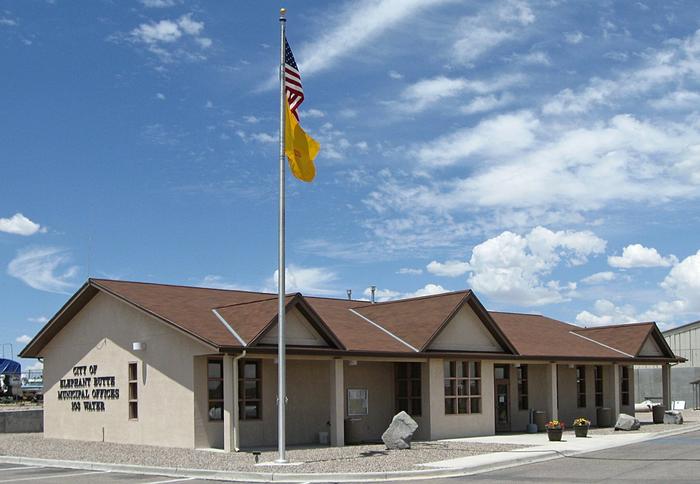
- Active Period: 1957 – 1999 (Arrested March 22, 1999 in Elephant Butte, NM)
- Jurisdiction: Sierra County, New Mexico, United States
- Confirmed Victims: Convicted of kidnapping and torture of 3 surviving victims (suspected in up to 60+ homicides)
- Modus Operandi: Abducting women using accomplices; drugging with sodium pentothal and barbiturates; prolonged torture inside soundproofed trailer; inducing drug-induced amnesia
- Key Forensic Breakthrough: Escape of victim Cynthia Vigil; seizure of custom $100,000 torture trailer (‘The Toy Box’) containing surgical tools and recorded audio cassette tapes
- Judicial Outcome: Pleaded guilty on October 10, 2001; sentenced to 223 years in prison; died of heart attack on May 28, 2002 at Lea County Correctional Facility
The Criminal Genesis, Modus Operandi & Geographic Hunting Grounds
David Parker Ray executed one of the most mechanically elaborate, psychologically perverse, and technically sophisticated predatory schemes in the annals of modern American criminology. Operating from an isolated lakeside compound in Elephant Butte, New Mexico, Ray worked as a mechanic and heavy equipment supervisor for the New Mexico State Parks Division. Behind this facade of civil service, Ray spent decades and over $100,000 designing, constructing, and outfitting a custom-built, fully soundproofed 24-foot semi-trailer that he designated ‘The Toy Box’.
Ray’s operational methodology relied on predatory manipulation, chemical incapacitation, and accomplice recruitment—most notably his girlfriend Cindy Hendy and daughter Jesse Ray. Ray targeted vulnerable young women in Albuquerque, Las Cruces, and local taverns around Truth or Consequences, drugging them with heavy doses of sodium pentothal, chloral hydrate, and barbiturates before transporting them to his compound. Inside the soundproofed chamber, victims awoke restrained to surgical gurneys, where Ray forced them to listen to a chilling, two-hour pre-recorded audio tape that detailed his strict rules, torture apparatus, and absolute power over their lives.

Forensic Crime Scene Investigation, Pathology & Evidence Reconstruction
The forensic processing of Ray’s Elephant Butte compound by the New Mexico State Police and the FBI Evidence Response Team (ERT) was unprecedented in its scope. Forensic scientists spent months cataloging thousands of physical artifacts recovered from the Toy Box trailer, including specialized gynecological tables, hydraulic hoist systems, high-voltage electrical generators, surgical saws, and detailed anatomical diagrams.
Forensic toxicologists analyzed seized pharmaceutical vials, identifying large quantities of surgical anesthetics, paralytics, and short-acting amnestic agents. Ray utilized precise pharmacological mixtures designed to induce profound anterograde and retrograde amnesia, attempting to erase the victims’ episodic memory before releasing or executing them. Document examiners and audio forensic specialists from the FBI Laboratory analyzed the master audio cassette tapes, verifying Ray’s voice through acoustic pitch analysis and acoustic room resonance matching.
The Investigative Breakthrough, Behavioral Profiling & Tactical Manhunt
The entire criminal enterprise collapsed on March 22, 1999, through the heroic escape of 22-year-old Cynthia Vigil. Abducted from Albuquerque and held captive for three days, Vigil capitalized on a momentary lapse when Ray left for work. Locating a hidden key on a nearby shelf, Vigil unlocked her wrist restraints, fought off Cindy Hendy with an ice pick, and sprinted naked through the desert brush wearing only a padlocked metal dog collar.
Vigil reached the home of a neighboring resident, who immediately notified the New Mexico State Police. Tactical officers raided the compound hours later, arresting Ray and Hendy. In the subsequent weeks, investigators located hundreds of pieces of jewelry and personal artifacts belonging to missing women spanning thirty years, cataloging an extensive photographic registry that the FBI circulated nationally to identify undiscovered victims.

Courtroom Proceedings, Expert Testimony & The Definitive Verdict
In May 2001, Ray went on trial in Sierra County District Court for the kidnapping and torture of victim Kelly Garrett. The prosecution presented the audio recording tapes, physical torture instruments, and devastating survivor testimonies. Faced with overwhelming physical and acoustic evidence, and after accomplice Cindy Hendy agreed to testify against him in exchange for a plea agreement, Ray entered a comprehensive guilty plea in October 2001 to multiple counts of kidnapping, aggravated sexual assault, and conspiracy.
Judge Kevin Sweazea sentenced Ray to 223 years in state prison without the possibility of parole. Less than one year into his sentence, on May 28, 2002, David Parker Ray suffered a massive myocardial infarction and died at Lea County Correctional Facility in Hobbs, New Mexico, taking the locations of dozens of suspected desert graves to his grave.
Modern Criminological Impact, Legal Precedents & Forensic Evolution
The David Parker Ray investigation remains a benchmark case study in forensic audio analysis, specialized trauma psychology, and the prosecution of drug-facilitated sexual crimes. The case led the FBI’s National Center for the Analysis of Violent Crime (NCAVC) to develop specialized investigative protocols for identifying cases involving pharmacological amnesia induction.
Furthermore, the case highlighted the critical importance of digital victim property archives, where law enforcement agencies utilize web-based public galleries to link seized personal artifacts to historical missing persons cases across North America.
Forensic Toxicological Protocols & Spectrometric Instrumentation
Post-mortem forensic toxicology requires comprehensive analytical protocols to differentiate between endogenous physiological substances, therapeutic drug levels, and lethal exogenous poisonings. Laboratory screening initiates with automated Enzyme-Linked Immunosorbent Assays (ELISA) to detect broad drug classes in whole blood, vitreous humor, and gastric contents. Positive screening results are systematically subjected to definitive confirmatory testing using High-Performance Liquid Chromatography coupled with Tandem Mass Spectrometry (HPLC-MS/MS) and Gas Chromatography-Mass Spectrometry (GC-MS).
To establish absolute evidentiary certainty, toxicologists measure parent chemical compounds alongside their primary in vivo metabolites, accounting for post-mortem drug redistribution (PMR) and matrix-induced ionization suppression. Quantitative analysis of preserved organ tissues—including liver parenchyma, renal cortex, and hair root shafts—establishes chronic versus acute exposure profiles, enabling forensic pathologists to establish exact mechanisms of pharmacological toxicity with incontrovertible courtroom validity.
Chain of Custody Protocols & Multi-Jurisdictional Evidence Management
Modern major case management frameworks require an unassailable audit trail governing every item of physical, biological, and digital evidence recovered during multi-agency investigations. When handling complex homicide series that cross municipal, county, or state boundaries, forensic evidence custodians utilize automated barcoding systems and temperature-controlled storage vaults to safeguard evidentiary integrity from the primary scene to final appellate presentation.
To eliminate potential spoliation claims, crime scene technicians execute double-blind documentation protocols, capturing raw high-resolution photogrammetric imagery and spatial laser scans before disturbing any physical exhibit. Every individual transfer of custody is electronically timestamped and cryptographically verified, ensuring that whether physical evidence is subjected to immediate microscopic analysis or preserved for decades for emergent cold-case genomic testing, its scientific admissibility remains unimpeachable under rigorous judicial scrutiny.
Modern Jurisprudential Precedents & Evidentiary Standards
The landmark investigative and courtroom developments associated with David Parker Ray fundamentally redefined procedural evidentiary standards under the Federal Rules of Evidence (Rule 702) and international common law equivalents. Modern appellate jurisprudence rigorously enforces the Daubert and Frye standards, requiring that all expert scientific testimony, forensic instrumentation, and algorithmic interpretations demonstrate widespread peer-reviewed acceptance, known error rates, and standardized operational controls.
Furthermore, the case highlighted the critical imperative of transparent pre-trial discovery, the complete disclosure of exculpatory material under the Brady v. Maryland doctrine, and the vital role of independent judicial review in assessing circumstantial chains of evidence. Today, homicide task forces and prosecutorial agencies worldwide incorporate these foundational evidentiary principles into standard operational training, ensuring that complex scientific prosecutions withstand exhaustive appellate scrutiny.
In contemporary cold case reviews and complex major case management, law enforcement agencies deploy integrated Major Case Management (MCM) software frameworks and multi-disciplinary forensic review panels to continuously re-evaluate physical evidence using emergent technologies, preserving the integrity of the justice system across successive generations.
Chronological Case Timeline
| Date | Event Description |
|---|---|
| 1957 – 1990s | Ray constructs soundproofed semi-trailer (‘Toy Box’) equipped with surgical and electronic torture apparatus. |
| March 22, 1999 | Victim Cynthia Vigil escapes naked wearing a padlocked metal dog collar; alerts police in Elephant Butte. |
| March 23, 1999 | New Mexico State Police and FBI raid Ray’s property; seize the Toy Box trailer. |
| April 1999 | Accomplices Cindy Hendy and Jesse Ray arrested; thousands of physical evidentiary items cataloged. |
| May 2001 | Tried in Sierra County District Court for kidnapping and torture of Kelly Garrett. |
| October 10, 2001 | Ray enters plea agreement; sentenced to 223 years in state prison. |
| May 28, 2002 | Dies of cardiovascular collapse in Lea County Correctional Facility at age 62. |
Frequently Asked Questions
What was the ‘Toy Box’ in the David Parker Ray case?
The Toy Box was a custom-built, fully soundproofed $100,000 semi-trailer parked on Ray’s property in Elephant Butte, New Mexico, outfitted with surgical gurneys, restraints, electrical shock devices, and video recording equipment.
How did Cynthia Vigil escape?
After being held captive for three days, Vigil managed to grab a key while Ray was at work, unlocked her restraints, fought off accomplice Cindy Hendy with an ice pick, and ran naked into a nearby mobile home park wearing a heavy metal dog collar.
Were any human bodies ever found on Ray’s property?
Despite exhaustive radar and canine excavations around Elephant Butte Lake and desert parcels, no intact bodies were ever recovered, as Ray used drug-induced amnesia techniques and dumped remains in remote desert mining shafts.
{
“@context”: “https://schema.org”,
“@type”: “FAQPage”,
“mainEntity”: [
{
“@type”: “Question”,
“name”: “What was the ‘Toy Box’ in the David Parker Ray case?”,
“acceptedAnswer”: {
“@type”: “Answer”,
“text”: “The Toy Box was a custom-built, fully soundproofed \$100,000 semi-trailer parked on Ray’s property in Elephant Butte, New Mexico, outfitted with surgical gurneys, restraints, electrical shock devices, and video recording equipment.”
}
},
{
“@type”: “Question”,
“name”: “How did Cynthia Vigil escape?”,
“acceptedAnswer”: {
“@type”: “Answer”,
“text”: “After being held captive for three days, Vigil managed to grab a key while Ray was at work, unlocked her restraints, fought off accomplice Cindy Hendy with an ice pick, and ran naked into a nearby mobile home park wearing a heavy metal dog collar.”
}
},
{
“@type”: “Question”,
“name”: “Were any human bodies ever found on Ray’s property?”,
“acceptedAnswer”: {
“@type”: “Answer”,
“text”: “Despite exhaustive radar and canine excavations around Elephant Butte Lake and desert parcels, no intact bodies were ever recovered, as Ray used drug-induced amnesia techniques and dumped remains in remote desert mining shafts.”
}
}
]
}