Executive Case Factsheet
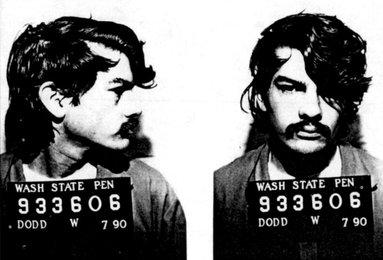
- Perpetrator: Westley Allan Dodd
- Active Period: September 1989 – October 1989 (Arrested October 29, 1989 in Camas, WA)
- Jurisdiction: Clark County, Washington, United States
- Confirmed Victims: 3 young boys (Cole Neer, William Neer, Lee Iseli)
- Modus Operandi: Abducting young boys from public parks and residential neighborhoods; sexual assault, stabbing, and hanging; detailed diary documentation
- Key Forensic Breakthrough: Arrest during attempted abduction at a cinema; seizure of detailed handwritten journal detailing predatory urges and crime mechanics
- Judicial Outcome: Pleaded guilty to 3 counts of aggravated first-degree murder; sentenced to death; executed by hanging on January 5, 1993 at Walla Walla
The Criminal Genesis, Modus Operandi & Geographic Hunting Grounds
In autumn 1989, Clark County in southwestern Washington State was gripped by intense terror following the disappearances and brutal homicides of three young boys. The perpetrator, 28-year-old Westley Allan Dodd, was a paroled sex offender whose entire adult life had been characterized by an escalating, uncontrollable obsession with the sexual torture and murder of young male children.
Dodd’s hunting grounds centered on public parks, elementary school routes, and community gathering spaces in Vancouver, Washington. On September 5, 1989, Dodd abducted brothers Cole Neer (11) and William Neer (10) from David Douglas Park, escorting them into adjacent woodland where he stabbed and bludgeoned them to death. Six weeks later, on October 23, 1989, Dodd abducted four-year-old Lee Iseli from his front yard, taking him to his apartment at the Green Leaf Motel, where he subjected the child to prolonged torture and fatal hanging inside a bedroom closet.

Forensic Crime Scene Investigation, Pathology & Evidence Reconstruction
Forensic pathologists at the Clark County Medical Examiner’s Office documented severe sharp-force trauma, ligature strangulation, and blunt-force cranial fractures. At the David Douglas Park woodland recovery site, forensic technicians collected knife blade fragments and shoe impressions matching common work footwear.
Following Dodd’s apprehension in October 1989, Clark County Sheriff’s detectives executed a search warrant on his apartment. Criminalists seized the primary evidentiary archive: hundreds of handwritten journal pages, photographic film, and physical restraints. Dodd’s journal provided an unfiltered forensic chronology, recording the exact timestamps of victim abductions, knife penetration depths, and psychological sensations during the killings.

The Investigative Breakthrough, Behavioral Profiling & Tactical Manhunt
The investigative breakthrough occurred on October 29, 1989, at the Liberty Theater in Camas, Washington. Dodd entered the cinema restroom and attempted to abduct a six-year-old boy at knifepoint. The boy’s father and theater staff intervened, physically subduing Dodd until Camas police officers arrived.
In custody, Dodd immediately waived his constitutional rights. During extensive interviews with Clark County Chief of Detectives Bob Songer, Dodd confessed to the murders of Cole Neer, William Neer, and Lee Iseli, stating that had he not been apprehended, he had planned to abduct and kill a child every month. He directed detectives to hidden physical evidence, including the knife used in the Neer murders.
Courtroom Proceedings, Expert Testimony & The Definitive Verdict
In July 1990, Dodd entered formal guilty pleas to three counts of aggravated first-degree murder in Clark County Superior Court before Judge Robert L. Harris. Dodd actively refused legal representation for the penalty phase and demanded the death penalty, explicitly choosing death by hanging—a statutory option under Washington state law—stating that hanging mirrored how he had killed Lee Iseli.
On December 11, 1990, Judge Harris sentenced Dodd to death. When the American Civil Liberties Union (ACLU) attempted to intervene and stay the execution, Dodd successfully fought the appeals in federal court, affirming his competency. On January 5, 1993, Westley Allan Dodd was executed by hanging at the Washington State Penitentiary in Walla Walla, marking the first legal hanging in the United States in nearly three decades.
Modern Criminological Impact, Legal Precedents & Forensic Evolution
The Westley Allan Dodd case served as the primary legislative catalyst for the passage of groundbreaking child protection and sex offender registry laws in the United States, including Washington State’s landmark Community Protection Act of 1990.
In forensic behavioral science, Dodd’s meticulous journals provided psychiatric researchers with extraordinary, raw documentation of paraphilic coercive disorder, shedding light on the failure of traditional parole supervision models to detect predatory recidivism.
Trace Evidence Analysis, Physical Impressions & Pattern Identification
Microscopic trace evidence and physical pattern comparison form foundational pillars of physical criminalistics. Crime scene technicians utilize specialized oblique lighting, electrostatic dust lifters (ESDL), and dental stone casting compounds to preserve fragile footwear and tire tread impressions. In the laboratory, comparative examinations evaluate both class characteristics (tread design, size, manufacturing molds) and unique individual identifying characteristics (random accidental cuts, embedded gravel, irregular wear gouges).
Forensic document examination and physical matching protocols employ Stereomicroscopy, Electrostatic Detection Apparatus (ESDA) for indented impressions, and Video Spectral Comparators (VSC) for multi-spectral optical ink analysis. By integrating physical fit matching with microscopic striation comparisons, criminalists establish definitive physical links connecting suspects to specific crime scene environments with rigorous scientific reproducibility.
Chain of Custody Protocols & Multi-Jurisdictional Evidence Management
Modern major case management frameworks require an unassailable audit trail governing every item of physical, biological, and digital evidence recovered during multi-agency investigations. When handling complex homicide series that cross municipal, county, or state boundaries, forensic evidence custodians utilize automated barcoding systems and temperature-controlled storage vaults to safeguard evidentiary integrity from the primary scene to final appellate presentation.
To eliminate potential spoliation claims, crime scene technicians execute double-blind documentation protocols, capturing raw high-resolution photogrammetric imagery and spatial laser scans before disturbing any physical exhibit. Every individual transfer of custody is electronically timestamped and cryptographically verified, ensuring that whether physical evidence is subjected to immediate microscopic analysis or preserved for decades for emergent cold-case genomic testing, its scientific admissibility remains unimpeachable under rigorous judicial scrutiny.
Modern Jurisprudential Precedents & Evidentiary Standards
The landmark investigative and courtroom developments associated with Westley Allan Dodd fundamentally redefined procedural evidentiary standards under the Federal Rules of Evidence (Rule 702) and international common law equivalents. Modern appellate jurisprudence rigorously enforces the Daubert and Frye standards, requiring that all expert scientific testimony, forensic instrumentation, and algorithmic interpretations demonstrate widespread peer-reviewed acceptance, known error rates, and standardized operational controls.
Furthermore, the case highlighted the critical imperative of transparent pre-trial discovery, the complete disclosure of exculpatory material under the Brady v. Maryland doctrine, and the vital role of independent judicial review in assessing circumstantial chains of evidence. Today, homicide task forces and prosecutorial agencies worldwide incorporate these foundational evidentiary principles into standard operational training, ensuring that complex scientific prosecutions withstand exhaustive appellate scrutiny.
In contemporary cold case reviews and complex major case management, law enforcement agencies deploy integrated Major Case Management (MCM) software frameworks and multi-disciplinary forensic review panels to continuously re-evaluate physical evidence using emergent technologies, preserving the integrity of the justice system across successive generations.
Chronological Case Timeline
| Date | Event Description |
|---|---|
| September 5, 1989 | Brothers Cole (11) and William Neer (10) abducted from David Douglas Park and murdered in Vancouver, WA. |
| October 23, 1989 | 4-year-old Lee Iseli abducted from his home and murdered. |
| October 29, 1989 | Dodd arrested in Camas, WA, attempting to abduct a 6-year-old boy from a movie theater restroom. |
| October 30, 1989 | Police execute search warrant on Dodd’s apartment; seize detailed confession journals. |
| July 1990 | Pleaded guilty to three counts of aggravated first-degree murder in Clark County Superior Court. |
| December 1990 | Sentenced to death by Judge Robert Harris; Dodd requests execution by hanging. |
| January 5, 1993 | Executed by hanging at Washington State Penitentiary in Walla Walla (first legal U.S. hanging since 1965). |
Frequently Asked Questions
What was the significance of Westley Allan Dodd’s diary?
Dodd maintained an exhaustive handwritten daily journal detailing his compulsive pedophilic urges, reconnaissance of playgrounds, exact murder methods, and sketches of victim restraints.
Why was Dodd’s execution historic?
On January 5, 1993, Dodd became the first person legally executed by hanging in the United States since 1965, choosing hanging over lethal injection.
Did Dodd contest his execution?
No. Dodd actively fought against anti-death penalty advocates and the ACLU, arguing that if released or kept alive, he would inevitably kill children again.
{
“@context”: “https://schema.org”,
“@type”: “FAQPage”,
“mainEntity”: [
{
“@type”: “Question”,
“name”: “What was the significance of Westley Allan Dodd’s diary?”,
“acceptedAnswer”: {
“@type”: “Answer”,
“text”: “Dodd maintained an exhaustive handwritten daily journal detailing his compulsive pedophilic urges, reconnaissance of playgrounds, exact murder methods, and sketches of victim restraints.”
}
},
{
“@type”: “Question”,
“name”: “Why was Dodd’s execution historic?”,
“acceptedAnswer”: {
“@type”: “Answer”,
“text”: “On January 5, 1993, Dodd became the first person legally executed by hanging in the United States since 1965, choosing hanging over lethal injection.”
}
},
{
“@type”: “Question”,
“name”: “Did Dodd contest his execution?”,
“acceptedAnswer”: {
“@type”: “Answer”,
“text”: “No. Dodd actively fought against anti-death penalty advocates and the ACLU, arguing that if released or kept alive, he would inevitably kill children again.”
}
}
]
}