Executive Case Factsheet
- Perpetrator: Arthur Gary Bishop (Accountant and Former Boy Scout Leader)
- Active Period: 1979 – 1983 (Arrested November 1983 in Salt Lake City, UT)
- Jurisdiction: Salt Lake County, Utah, United States
- Confirmed Victims: 5 young boys (Alonzo Daniels, Kim Peterson, Danny Davis, Troy Ward, Matthew Bowman)
- Modus Operandi: Luring young boys from roller rinks, baseball fields, and neighborhoods; sexual assault, drowning, bludgeoning, and suffocating; concealing remains in remote canyon graves
- Key Forensic Breakthrough: Physical witness identification at Classic Skating rink; recovery of victim photographs and journals in basement apartment; guided canyon grave excavations
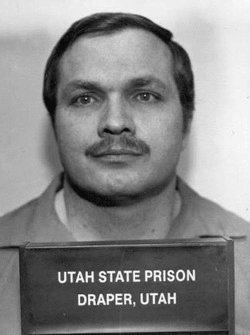
- Judicial Outcome: Pleaded guilty to 5 counts of first-degree murder on February 21, 1984; executed by lethal injection on June 10, 1988 at Utah State Prison
The Criminal Genesis, Modus Operandi & Geographic Hunting Grounds
Between 1979 and 1983, the Salt Lake Valley of Utah was haunted by the disappearances of five young boys aged four to eleven. The perpetrator was Arthur Gary Bishop, an accountant, former high-ranking Boy Scout troop leader, and devout church member whose respectable civic reputation completely concealed his predatory pedophilic compulsion.
Bishop’s modus operandi relied on calculated grooming and geographical positioning. Frequenting community venues such as the Classic Skating roller rink in Sandy, baseball parks, and residential neighborhoods, Bishop approached young boys, offering them quarters for arcade machines, candy, or promises of viewing small pets. Once the child accompanied him to his vehicle, Bishop transported the victim to his basement apartment in Salt Lake City, subjecting the child to sexual assault before executing fatal suffocation, drowning, or blunt-force cranial bludgeoning and burying the remains in shallow desert graves in Cedar Valley.
Forensic Crime Scene Investigation, Pathology & Evidence Reconstruction
Following Bishop’s full confession in November 1983, specialized forensic recovery teams led by the Utah State Medical Examiner and Salt Lake County Sheriff’s Office conducted archaeological excavations in Cedar Valley and Big Cottonwood Canyon. Investigators recovered the skeletal remains of all five missing boys.
Forensic odontologists and osteologists analyzed the recovered remains, documenting blunt-force cranial fractures and asphyxial hyoid trauma that corroborated Bishop’s mechanical descriptions. Inside Bishop’s basement apartment, forensic technicians uncovered a detailed personal diary, hidden photographic slides of the victims, and trace fiber transfers matching victim clothing.

The Investigative Breakthrough, Behavioral Profiling & Tactical Manhunt
The critical breakthrough occurred on November 17, 1983, when four-year-old Matthew Bowman vanished from the Classic Skating rink in Sandy. Witness interviews conducted by task force detectives revealed that an adult male matching Bishop’s description had been observed purchasing arcade tokens for Bowman. Detectives recognized Bishop from a previous questioning session regarding a neighborhood disappearance.
On November 19, 1983, detectives brought Bishop in for questioning. During a dramatic interrogation by Detective Ronald Yengich and Sheriff’s investigators, Bishop broke down, providing an exhaustive multi-hour confession detailing all five homicides and agreeing to personally guide police to each concealed grave in Cedar Valley.

Courtroom Proceedings, Expert Testimony & The Definitive Verdict
On February 21, 1984, Bishop entered formal guilty pleas to five counts of first-degree capital murder before Third District Judge Raymond S. Uno. During the penalty phase, Bishop expressed deep remorse and explicitly asked the court for the death penalty, stating that execution was the only appropriate moral and legal retribution.
On March 19, 1984, Judge Uno sentenced Bishop to death. Refusing all federal appeals and clemency petitions, Arthur Gary Bishop was executed by lethal injection at Utah State Prison in Draper on June 10, 1988.
Modern Criminological Impact, Legal Precedents & Forensic Evolution
The Arthur Gary Bishop case spurred major national reforms in youth organization background vetting protocols, establishing mandatory criminal registry screenings for scout leaders, coaches, and volunteers across the United States.
In forensic psychology, Bishop’s detailed diaries and interview transcripts contributed significant clinical data to the FBI Behavioral Analysis Unit regarding the cognitive distortions and compartmentalization mechanisms utilized by pedophilic serial predators.
Behavioral Analysis, Geographic Profiling & Offender Typology
Forensic behavioral analysis synthesizes victimological data, crime scene dynamics, and spatial-temporal patterns to reconstruct the psychological characteristics and operational habits of violent offenders. Behavioral analysts from the FBI National Center for the Analysis of Violent Crime (NCAVC) evaluate the degree of criminal sophistication, distinguishing between organized offenders who exhibit meticulous planning and forensic awareness, and disorganized offenders driven by impulsive, deteriorating psychopathology.
Geographic profiling software algorithms utilize Rigel and CrimeStat spatial analysis to model offender anchor points, hunting ranges, and buffer zones based on Rossmo’s formula of distance decay. By analyzing signature behaviors—such as ritualistic posing, souvenir retention, and post-mortem staging—behavioral scientists establish vital behavioral linkages across multi-jurisdictional crime series, guiding targeted investigative strategies and tactical interrogation approaches.
Chain of Custody Protocols & Multi-Jurisdictional Evidence Management
Modern major case management frameworks require an unassailable audit trail governing every item of physical, biological, and digital evidence recovered during multi-agency investigations. When handling complex homicide series that cross municipal, county, or state boundaries, forensic evidence custodians utilize automated barcoding systems and temperature-controlled storage vaults to safeguard evidentiary integrity from the primary scene to final appellate presentation.
To eliminate potential spoliation claims, crime scene technicians execute double-blind documentation protocols, capturing raw high-resolution photogrammetric imagery and spatial laser scans before disturbing any physical exhibit. Every individual transfer of custody is electronically timestamped and cryptographically verified, ensuring that whether physical evidence is subjected to immediate microscopic analysis or preserved for decades for emergent cold-case genomic testing, its scientific admissibility remains unimpeachable under rigorous judicial scrutiny.
Modern Jurisprudential Precedents & Evidentiary Standards
The landmark investigative and courtroom developments associated with Arthur Gary Bishop fundamentally redefined procedural evidentiary standards under the Federal Rules of Evidence (Rule 702) and international common law equivalents. Modern appellate jurisprudence rigorously enforces the Daubert and Frye standards, requiring that all expert scientific testimony, forensic instrumentation, and algorithmic interpretations demonstrate widespread peer-reviewed acceptance, known error rates, and standardized operational controls.
Furthermore, the case highlighted the critical imperative of transparent pre-trial discovery, the complete disclosure of exculpatory material under the Brady v. Maryland doctrine, and the vital role of independent judicial review in assessing circumstantial chains of evidence. Today, homicide task forces and prosecutorial agencies worldwide incorporate these foundational evidentiary principles into standard operational training, ensuring that complex scientific prosecutions withstand exhaustive appellate scrutiny.
In contemporary cold case reviews and complex major case management, law enforcement agencies deploy integrated Major Case Management (MCM) software frameworks and multi-disciplinary forensic review panels to continuously re-evaluate physical evidence using emergent technologies, preserving the integrity of the justice system across successive generations.
Chronological Case Timeline
| Date | Event Description |
|---|---|
| October 1979 | First murder of 4-year-old Alonzo Daniels in Salt Lake City. |
| 1980 – 1983 | Abductions of Kim Peterson, Danny Davis, and Troy Ward across Salt Lake Valley. |
| November 17, 1983 | 4-year-old Matthew Bowman abducted from Classic Skating roller rink in Sandy, UT. |
| November 19, 1983 | Witnesses identify Bishop; Salt Lake County Sheriff’s detectives detain him. |
| November 20, 1983 | Bishop breaks down during interrogation; confesses to all 5 murders and leads police to canyon graves. |
| February 21, 1984 | Enters formal guilty plea to 5 counts of first-degree murder. |
| March 19, 1984 | Sentenced to death by lethal injection by Judge Raymond Uno. |
| June 10, 1988 | Executed by lethal injection at Utah State Prison in Draper. |
Frequently Asked Questions
How did Arthur Gary Bishop lure his victims?
Bishop exploited his background as a former Boy Scout leader and Sunday school teacher, offering candy, video arcade tokens, or puppies to young boys at roller rinks and parks.
How did police catch Arthur Gary Bishop?
Following the disappearance of four-year-old Matthew Bowman from a Sandy, Utah, roller skating rink in 1983, multiple witnesses remembered Bishop loitering near the arcade area and talking with the child.
Did Bishop contest his death sentence?
No. Bishop cooperated fully with investigators, expressed remorse, refused appellate delays, and actively requested the execution of his death sentence.
{
“@context”: “https://schema.org”,
“@type”: “FAQPage”,
“mainEntity”: [
{
“@type”: “Question”,
“name”: “How did Arthur Gary Bishop lure his victims?”,
“acceptedAnswer”: {
“@type”: “Answer”,
“text”: “Bishop exploited his background as a former Boy Scout leader and Sunday school teacher, offering candy, video arcade tokens, or puppies to young boys at roller rinks and parks.”
}
},
{
“@type”: “Question”,
“name”: “How did police catch Arthur Gary Bishop?”,
“acceptedAnswer”: {
“@type”: “Answer”,
“text”: “Following the disappearance of four-year-old Matthew Bowman from a Sandy, Utah, roller skating rink in 1983, multiple witnesses remembered Bishop loitering near the arcade area and talking with the child.”
}
},
{
“@type”: “Question”,
“name”: “Did Bishop contest his death sentence?”,
“acceptedAnswer”: {
“@type”: “Answer”,
“text”: “No. Bishop cooperated fully with investigators, expressed remorse, refused appellate delays, and actively requested the execution of his death sentence.”
}
}
]
}