
Executive Case Factsheet
- Perpetrator: Moses Sithole (“The ABC Killer”, “The South African Strangler”)
- Active Period: July 1994 – November 1995 (Arrested October 1995)
- Jurisdiction: Atteridgeville, Boksburg, and Cleveland (Gauteng Province, South Africa)
- Confirmed Victims: 38 women and 1 toddler (39 confirmed homicides; 40 rapes)
- Modus Operandi: Posing as a director of a fictitious charitable organization offering employment to unemployed women; luring victims to remote open veld fields; ligature strangulation with victims’ own undergarments
- Key Forensic Breakthrough: Psychological offender profiling by Dr. Micki Pistorius (SAPS Investigative Psychology Unit); telephone tracing of taunting calls to local journalists; forensic handwriting matching
- Judicial Outcome: Convicted on December 5, 1997 of 38 murders, 40 rapes, and 6 robberies; sentenced to 2,410 years imprisonment without parole eligibility for 930 years
The terror unleashed by Moses Sithole during the dawn of South Africa’s post-apartheid transition remains the country’s most prolific and intensely studied serial murder investigation. Operating primarily across the industrial wastelands and open veld of Gauteng Province between 1994 and 1995, Sithole’s lethal spree became known as the “ABC Murders” due to the geographic triangulation of his crime scenes across Atteridgeville, Boksburg, and Cleveland. The resolution of the case represented a landmark triumph for criminal investigative psychology through the groundbreaking work of Dr. Micki Pistorius and the South African Police Service (SAPS).
The Post-Apartheid Societal Vulnerability & The Phony Charity Ruse
Born in Vosloorus in 1964, Moses Sithole grew up in extreme destitution following his father’s death and subsequent abandonment in a rural youth home. Following an early prison sentence for rape in the late 1980s, Sithole recognized that the dramatic political transition of 1994—while heralding democracy—left millions of black South African women experiencing acute economic distress and unemployment in urban townships.
Sithole engineered a sophisticated confidence trick. Presenting himself as an articulate, well-dressed representative of fictitious non-governmental organizations and youth empowerment initiatives (such as “Youth Against Human Rights Abuse”), he approached women at taxi ranks, train stations, and employment bureaus. He offered lucrative administrative, catering, or cleaning positions, instructing applicants to accompany him across open fields to meet regional managers or attend on-site interviews. Once secluded in dense veld grasslands, Sithole assaulted and strangled his victims using their own clothing.

Forensic Crime Scene Reconstruction in the Gauteng Veld
Between mid-1994 and late 1995, SAPS patrol officers repeatedly discovered decomposing female bodies hidden in tall grass and abandoned mine dumps across three distinct districts: Atteridgeville west of Pretoria, Boksburg on the East Rand, and Cleveland in central Johannesburg. The spatial dispersion initially led regional police stations to treat the incidents as separate local homicides.
Forensic pathologists conducted extensive autopsies on recovered remains at the Pretoria and Medico-Legal Mortuaries. Medical examiners documented consistent pathological signatures: manual ligature strangulation utilizing victims’ own pantyhose, bras, or shoelaces, tied with complex double-granny knots. Toxicological screenings ruled out pharmacological incapacitation, indicating that the perpetrator relied entirely on physical dominance and the element of surprise in remote terrain.
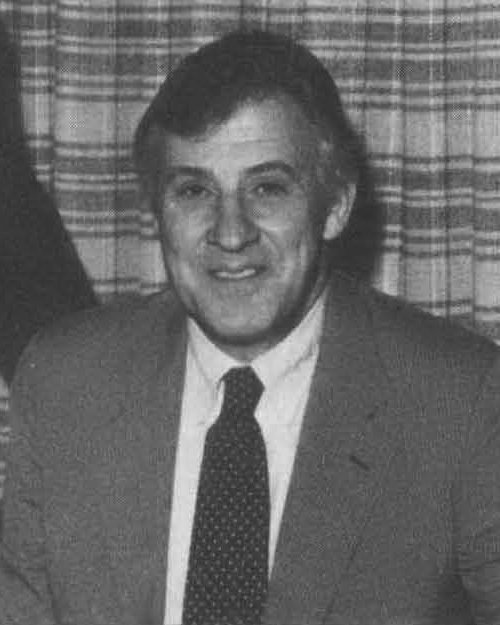
The Investigative Breakthrough: Dr. Micki Pistorius & Behavioral Profiling
Recognizing the operation of a single, highly organized serial predator, SAPS established a dedicated task force under Senior Superintendent Bushie Engelbrecht and enlisted Dr. Micki Pistorius, South Africa’s first forensic investigative psychologist. Dr. Pistorius conducted comprehensive crime scene analyses, victimology assessments, and geographic profiling that linked the Atteridgeville, Boksburg, and Cleveland clusters into the unified “ABC Murders” case file.
Dr. Pistorius accurately profiled the killer as a solitary black male in his early thirties, intimately familiar with public transit corridors, possessing high interpersonal confidence, and harboring deep-seated sadistic misogyny rooted in early maternal rejection. The breakthrough intensified when Sithole initiated telephone calls to The Star journalist Tamsen de Beer, boasting of his crimes and detailing unrecovered victim locations. Telecommunications tracing, combined with an alert tip-off from an acquaintance who recognized his employment scam, allowed detectives to identify Sithole.

The 1995 Capture, High Court Trial & Historic Sentencing
On October 21, 1995, SAPS task force operatives cornered Sithole in Benoni. During the confrontation, Sithole attempted to attack an officer with an axe and was shot in the torso before being subdued and hospitalized. While recovering under armed guard, Sithole was interrogated by Dr. Pistorius and task force detectives, ultimately confessing to dozens of homicides and providing detailed maps of additional burial sites in the Boksburg veld.
The trial commenced in 1997 at the Pretoria High Court before Justice David Carstairs. Over months of proceedings, the prosecution introduced overwhelming forensic evidence, ballistics, handwriting analyses of fake employment applications, and testimony from surviving victims. On December 5, 1997, Justice Carstairs convicted Moses Sithole of 38 murders, 40 rapes, and 6 robberies, handing down consecutive sentences totaling 2,410 years imprisonment. Sithole was remanded to the C-Max maximum-security section of Pretoria Central Prison (now Kgosi Mampuru II Management Area), where he remains incarcerated without possibility of parole until well into the 30th century.
Behavioral Analysis & The Psychological Dynamics of the Ruse
The criminal profiling methodology developed by Dr. Micki Pistorius in the Moses Sithole investigation marked the birth of modern forensic psychology in South Africa. Dr. Pistorius recognized that Sithole’s predatory methodology exploited the intersection of post-apartheid socioeconomic transition and acute urban poverty. By establishing the fictitious organization ‘Youth Against Human Rights Abuse,’ Sithole weaponized the aspirations of disenfranchised township women seeking employment in the new democratic South Africa.
Sithole’s behavioral signature—forcing victims to walk for miles across open veld before attacking them—functioned as a psychological dominance ritual. Forensic psychologists noted that the extensive physical trek served to exhaust victims, isolate them from potential assistance, and establish total psychological control before the fatal assault, reflecting deep-seated retaliatory hostility toward women rooted in his institutionalized childhood.
Forensic Pathology & Knots Analysis at Pretoria Medico-Legal Mortuary
The post-mortem examinations carried out by the Pretoria Medico-Legal Laboratory provided vital forensic evidence that linked the geographic clusters of Atteridgeville, Boksburg, and Cleveland into an indisputable serial chain. Forensic pathologists documented identical ligature constriction patterns, demonstrating that Sithole employed a signature double-granny knot using the victims’ own undergarments and pantyhose, which prevented accidental slippage during mechanical strangulation.
Furthermore, forensic trace evidence technicians recovered microscopic soil particles and botanical seeds from Sithole’s clothing that matched the endemic flora of the Boksburg veld excavation sites. This trace evidence, combined with telecommunication voice analysis of his recorded telephone calls to newsrooms, provided the prosecution with an airtight scientific case that withstood extensive cross-examination in the Pretoria High Court.
Chronological Case Timeline
| Date / Period | Investigative & Legal Milestone |
|---|---|
| November 17, 1964 | Moses Sithole is born in Vosloorus, Transvaal, South Africa. |
| July 1994 | Sithole initiates serial abductions using fraudulent NGO employment offers in Atteridgeville. |
| Early 1995 | Clusters of female victims discovered across Atteridgeville, Boksburg, and Cleveland. |
| Mid-1995 | Dr. Micki Pistorius constructs the comprehensive SAPS offender profile linking the ABC Murders. |
| August – October 1995 | Sithole conducts taunting telephone calls to journalists; SAPS telecommunication traps zero in on his location. |
| October 21, 1995 | Sithole is shot and captured by SAPS detectives in Benoni. |
| December 5, 1997 | Pretoria High Court convicts Sithole on 38 counts of murder; sentences him to 2,410 years imprisonment. |
Forensic Evidence Matrix & Criminological Assessment
The prosecution of Moses Sithole before the Pretoria High Court represented a milestone in South African forensic science and criminal psychology. Key evidential pillars include:
- Behavioral Offender Profiling: Dr. Micki Pistorius’s pioneer profile accurately predicted Sithole’s demographic profile, psychological motives, and geographic targeting across Atteridgeville, Boksburg, and Cleveland.
- Physical Trace & Knots Analysis: Medico-legal mortuary autopsies documented identical double-granny knot ligature signatures utilizing victims’ undergarments, alongside matching botanical seeds and veld soil recovered from Sithole’s clothes.
- Judicial Precedent: The historic sentence of 2,410 years imprisonment with a non-parole period of 930 years established South Africa’s benchmark for the legal punishment of prolific serial predators.
The ABC Murders case demonstrated the vital operational synergy between clinical psychology, crime scene trace analysis, and modern telecommunication tracing.
Related Case Files & Investigative Dossiers
Explore related deep-dive investigations into psychological profiling, major manhunts, and historic global serial crime cases:
- Andrei Chikatilo: The Butcher of Rostov, Operation Forest & Forensic Psychiatry
- Ted Bundy: The Chi Omega Murders, Forensic Odontology & Trial Analysis
- Gary Ridgway: The Green River Killer, STR DNA Typing & Task Force Operations
- Arthur Shawcross: The Genesee River Killer, Behavioral Profiling & Forensic Pathology
- Richard Ramirez: The Night Stalker, AFIS Fingerprint ID & East LA Capture
Frequently Asked Questions
What were the ABC Murders in South Africa?
The ABC Murders refers to the serial killing spree perpetrated by Moses Sithole between 1994 and 1995 across three geographic areas in Gauteng Province: Atteridgeville, Boksburg, and Cleveland.
How did Dr. Micki Pistorius help capture Moses Sithole?
Dr. Micki Pistorius, pioneer of the SAPS Investigative Psychology Unit, constructed a behavioral profile that unified the disparate murder clusters, predicted the killer’s demographics and psychological motives, and assisted in direct interrogation strategies following his arrest.
What was Moses Sithole’s final prison sentence?
Moses Sithole was sentenced to 2,410 years imprisonment for 38 murders, 40 rapes, and 6 robberies. Under South African law, he must serve at least 930 years before becoming eligible to apply for parole.
{
“@context”: “https://schema.org”,
“@type”: “FAQPage”,
“mainEntity”: [
{
“@type”: “Question”,
“name”: “What were the ABC Murders in South Africa?”,
“acceptedAnswer”: {
“@type”: “Answer”,
“text”: “The ABC Murders refers to the serial killing spree perpetrated by Moses Sithole between 1994 and 1995 across three geographic areas in Gauteng Province: Atteridgeville, Boksburg, and Cleveland.”
}
},
{
“@type”: “Question”,
“name”: “How did Dr. Micki Pistorius help capture Moses Sithole?”,
“acceptedAnswer”: {
“@type”: “Answer”,
“text”: “Dr. Micki Pistorius, pioneer of the SAPS Investigative Psychology Unit, constructed a behavioral profile that unified the disparate murder clusters, predicted the killer’s demographics and psychological motives, and assisted in direct interrogation strategies following his arrest.”
}
},
{
“@type”: “Question”,
“name”: “What was Moses Sithole’s final prison sentence?”,
“acceptedAnswer”: {
“@type”: “Answer”,
“text”: “Moses Sithole was sentenced to 2,410 years imprisonment for 38 murders, 40 rapes, and 6 robberies. Under South African law, he must serve at least 930 years before becoming eligible to apply for parole.”
}
}
]
}