Executive Case Factsheet
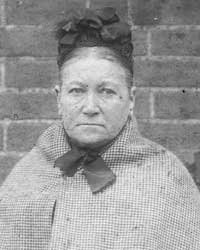
- Perpetrator: Hélène Jégado
- Active Period: 1833 – 1851 (Arrested July 1, 1851)
- Jurisdiction: Brittany (Guern, Bubry, Séglien, Auray, Lorient, and Rennes), France
- Estimated / Confirmed Victims: Confessed / suspected in 36 to 43 arsenic poisonings across 18 years; convicted on 3 counts of murder and 3 attempted murders
- Modus Operandi: Working as a domestic cook and housekeeper for prominent Breton families, presbyteries, and convents; mixing arsenic trioxide (ant paste) into morning soups, herbal teas, and holiday cakes
- Key Forensic Breakthrough: Simultaneous illness and death of two domestic servants in the household of Rennes law professor Théophile Bidard; Dr. Pitois and Dr. Bodin’s clinical autopsies; chemical identification of arsenic using the historic Marsh test
- Judicial Outcome: Convicted on December 14, 1851 by the Ille-et-Vilaine Court of Assizes; executed by guillotine on February 26, 1852 on the Champ-de-Mars in Rennes
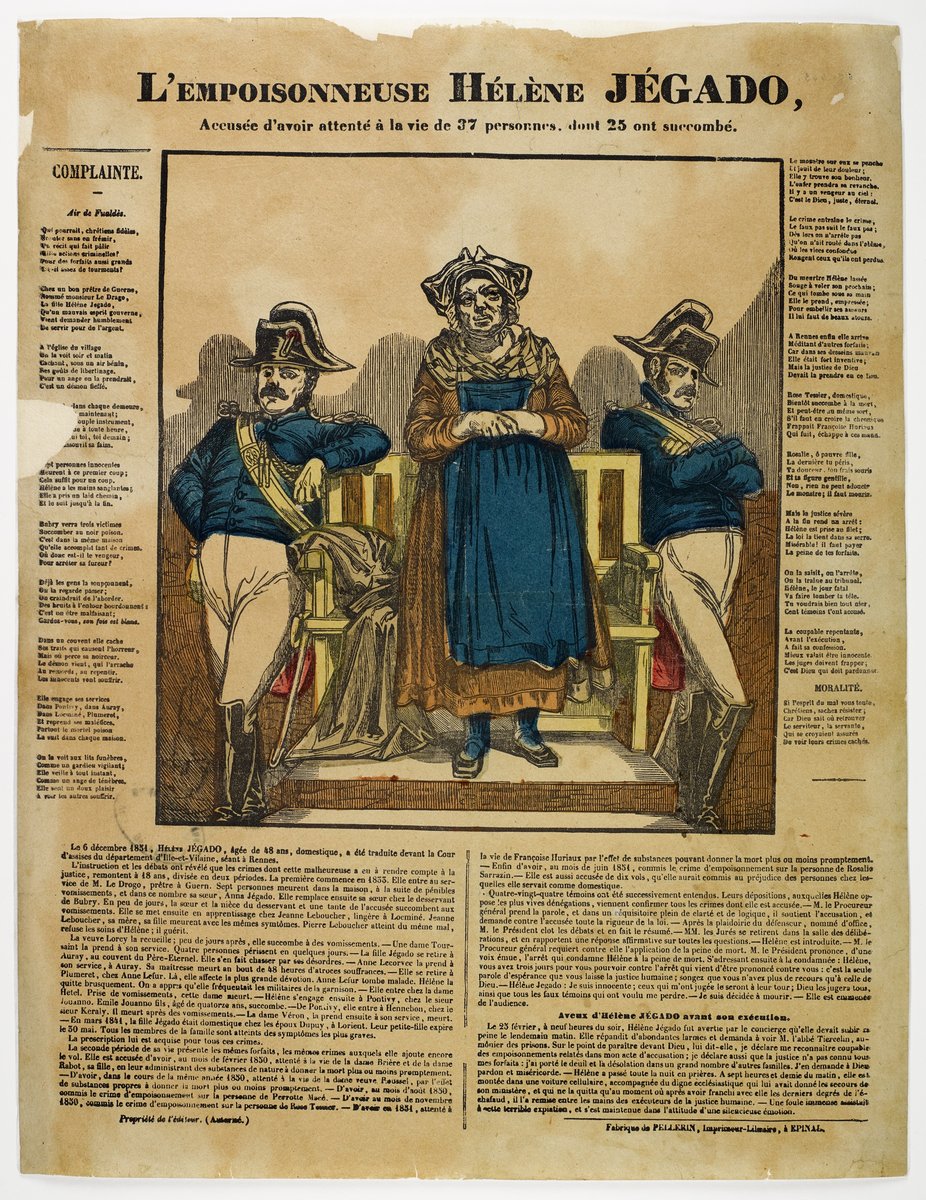
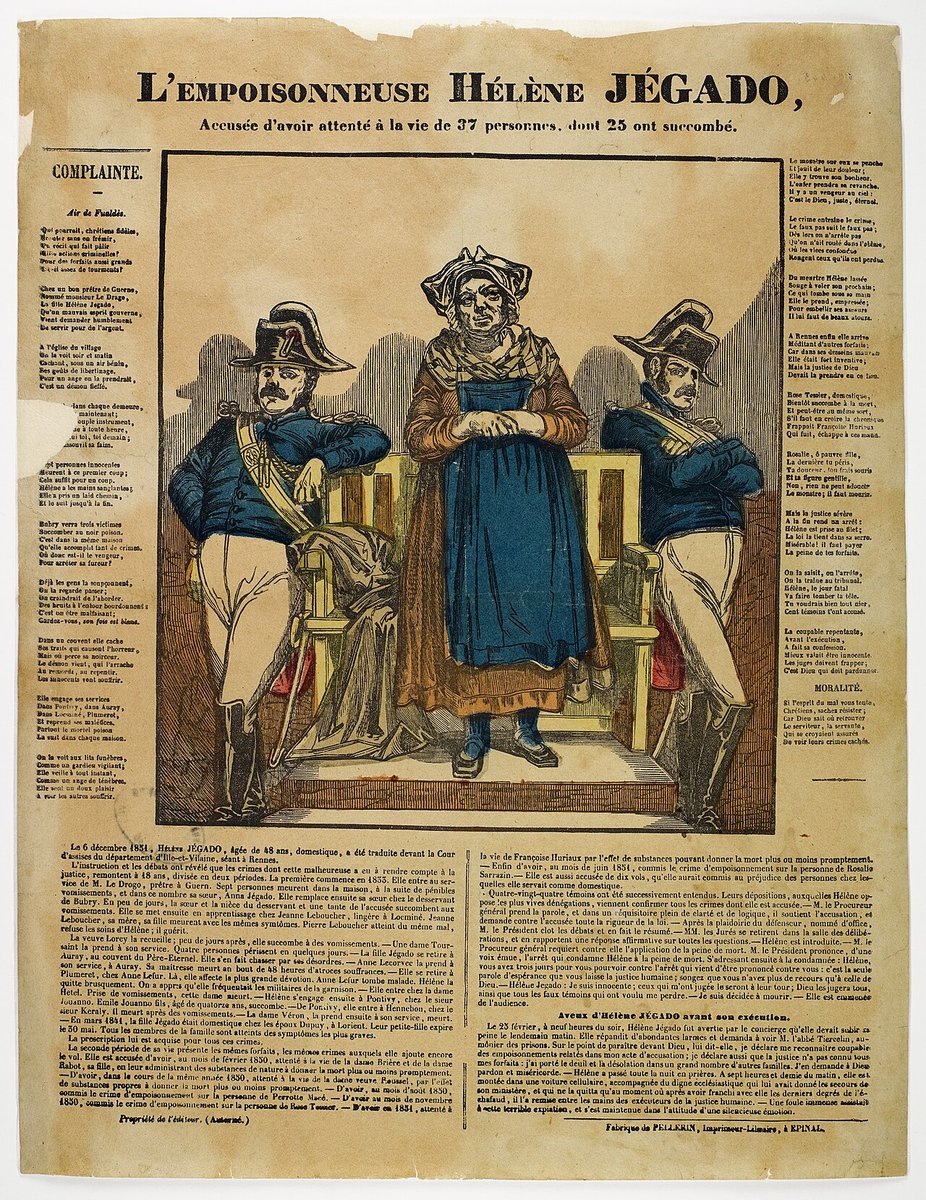
The July 1851 arrest of domestic cook Hélène Jégado in the Breton capital of Rennes brought an end to an extraordinary eighteen-year serial poisoning campaign that claimed up to 43 lives across Western France. Operating behind a pious Catholic exterior and moving frequently between rectory households and wealthy estates, Jégado systematically introduced arsenic trioxide into soups, broths, and puddings. The resulting legal proceedings represented one of 19th-century Europe’s most famous applications of early chemical toxicology using the groundbreaking Marsh test.
The Pious Cook & The Trail of Rectory Poisonings
Born in rural Plouhinec, Morbihan, in 1803, Hélène Jégado entered domestic service in her teens, working in rectory households, convents, and affluent merchant estates. Highly religious and outwardly deferential, Jégado cultivated a maternal persona, offering homemade remedies and cooking comforting soups for ailing employers.
Between 1833 and 1841, sudden epidemics of violent gastrointestinal illness struck every household where Jégado was employed. In 1833 alone, while working in the presbytery of the priest of Guern, seven members of the household died in rapid succession within three months, including the priest and Jégado’s own sister. At the time, with Brittany experiencing recurring cholera epidemics, municipal doctors routinely attributed the fatalities to acute gastroenteritis or Asiatic cholera, allowing Jégado to move to new employers unhindered.
The Bidard Household Deaths & The 1851 Arrest
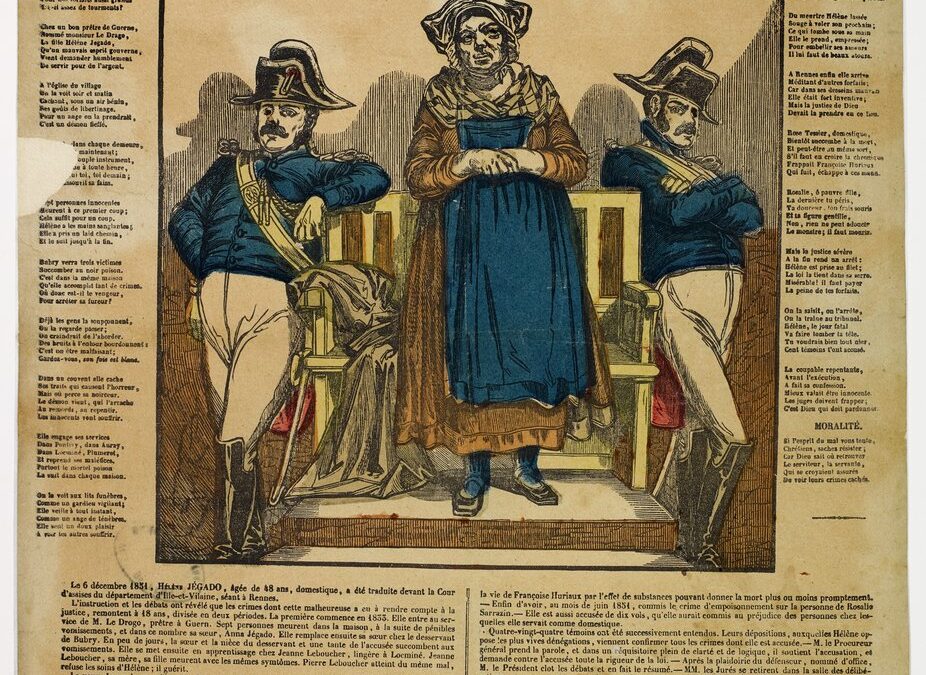
In late 1850, Jégado secured employment as head cook in the Rennes townhouse of Théophile Bidard, a prominent professor of law at the University of Rennes. Within months, another domestic servant, Rose Tessier, fell violently ill and died after consuming soup prepared by Jégado. Shortly thereafter, in June 1851, a second maidservant, Rosalie Sarrazin, died exhibiting identical symptoms of uncontrollable vomiting, abdominal spasms, and burning throat pain.
Suspicious of the recurring fatalities, Professor Bidard refused to permit Sarrazin’s burial and summoned local physician Dr. Pitois and town medical officer Dr. Bodin. On July 1, 1851, police arrived at the Bidard townhouse. When detectives entered the kitchen to interview the staff, Jégado spontaneously blurted out: “I am innocent! I have never poisoned anyone!”—before investigators had even mentioned the word poison, prompting her immediate arrest.
Forensic Toxicology: The Marsh Test & Chemical Exhumations
Judicial magistrates ordered the emergency exhumation of Rosalie Sarrazin, Rose Tessier, and earlier victims from Rennes cemeteries. Forensic autopsies revealed intense gastrointestinal inflammation, esophageal ulcerations, and remarkable preservation of internal organs—a recognized physical consequence of heavy arsenic saturation.
The organ samples were submitted to prominent chemistry professors at the Rennes Faculty of Sciences. Utilizing the recently developed Marsh test (invented by British chemist James Marsh in 1836), toxicologists treated the tissue extracts with zinc and sulfuric acid, generating arsine gas. Burning the gas against a cold porcelain plate, the chemists produced a lustrous, metallic “arsenic mirror,” conclusively proving the presence of lethal quantities of arsenic trioxide in all exhumed victims.
The Parlement of Brittany Trial & The Guillotine
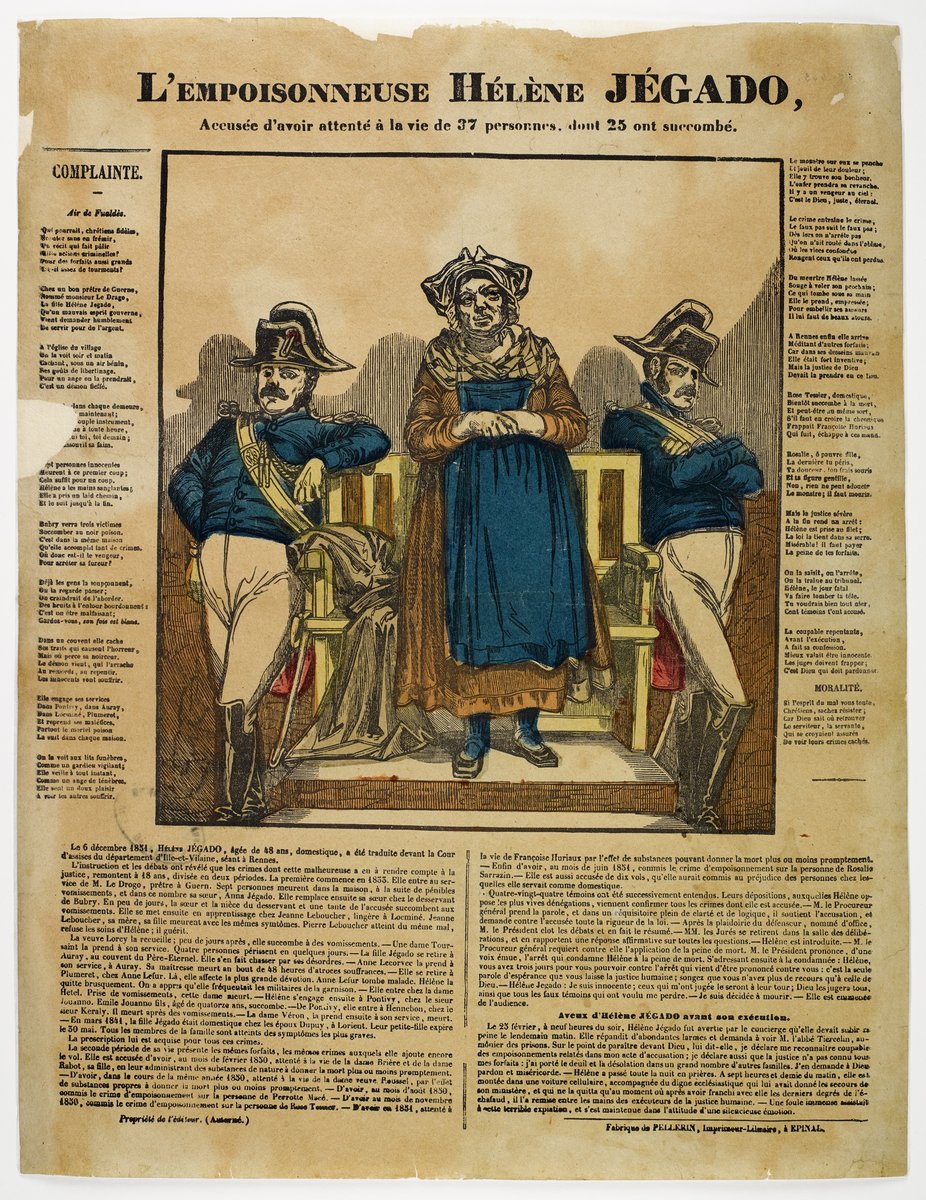
The trial opened on December 6, 1851, before the Court of Assizes of Ille-et-Vilaine in the historic Parlement de Bretagne in Rennes. Due to the ten-year statutory limit under French criminal law at the time, Jégado was formally indicted for three murders and three attempted poisonings committed between 1849 and 1851, though the prosecution introduced testimony covering dozens of earlier suspicious deaths.
Her defense attorney, Magloire Dorange, argued that Jégado was afflicted with uncontrollable kleptomania and moral monomania. However, the jury took just ninety minutes to find Hélène Jégado guilty on all counts without mitigating circumstances. On December 14, 1851, she was condemned to death. On February 26, 1852, before a crowd of thousands on the Champ-de-Mars in Rennes, Hélène Jégado was executed by guillotine, closing the definitive case file on France’s most prolific poisoner.
The Historic Marsh Test: Chemical Forensic Landmark in Rennes
The 1851 trial of Hélène Jégado before the Ille-et-Vilaine Court of Assizes in Rennes stands as one of 19th-century Europe’s most famous applications of early chemical toxicology. Chemistry professors at the Rennes Faculty of Sciences utilized the Marsh test—invented by James Marsh in 1836—to analyze viscera exhumed from Rennes cemeteries.
Chemists placed stomach and liver extracts into a hydrogen generator with zinc and sulfuric acid. Passing the resulting arsine gas through a heated reduction tube, they deposited a shiny, metallic arsenic mirror on porcelain plates. The unequivocal chemical demonstration of lethal arsenic trioxide saturation dismantled the defense’s claims of natural cholera, securing a swift capital conviction and establishing the Marsh test as an indispensable tool in French forensic jurisprudence.
Historical Epidemiology & The Cholera Epidemic Cover
Historical criminological analyses of Jégado’s eighteen-year poisoning spree highlight how she successfully exploited recurring 19th-century cholera outbreaks in rural Brittany. The gastrointestinal symptoms of acute arsenic poisoning—uncontrollable vomiting, severe diarrhea, and profound dehydration—closely mirrored Asiatic cholera, enabling Jégado to poison entire rectory households and domestic employers without arousing medical suspicion until her 1851 arrest in Rennes.
Her execution by guillotine on the Champ-de-Mars in February 1852 marked the definitive conclusion of France’s most prolific domestic serial murder investigation.
Chronological Case Timeline
| Date / Period | Investigative & Legal Milestone |
|---|---|
| June 17, 1803 | Hélène Jégado is born in Plouhinec, Morbihan, Brittany, France. |
| 1833 – 1841 | Jégado poisons dozens of employers and rectory staff across Morbihan with arsenic soup. |
| Late 1850 | Employed as cook in the Rennes residence of Law Professor Théophile Bidard. |
| June 1851 | Deaths of maidservants Rose Tessier and Rosalie Sarrazin prompt police inquiry. |
| July 1, 1851 | Jégado is arrested after making spontaneous self-incriminating remarks. |
| Late 1851 | Rennes chemists utilize the Marsh test to identify arsenic in exhumed organ tissues. |
| December 14, 1851 | Convicted by Ille-et-Vilaine Court of Assizes and sentenced to death. |
| February 26, 1852 | Executed by guillotine on the Champ-de-Mars in Rennes. |
Forensic Evidence Matrix & Criminological Assessment
The 1851 trial of Hélène Jégado in Rennes represents one of the most famous early applications of chemical toxicology in European jurisprudence. Key evidential aspects include:
- The Historic Marsh Test: Rennes Faculty of Sciences chemists produced metallic arsenic mirrors from exhumed organs, scientifically disproving claims of natural cholera.
- Eighteen-Year Poisoning Trail: Documentation of up to 43 arsenic fatalities across Brittany rectory households and domestic estates masked by recurring cholera epidemics.
- Ille-et-Vilaine Assizes Verdict: Swift conviction and guillotine execution on the Champ-de-Mars in Rennes in February 1852.
Hélène Jégado remains a foundational case study in historic arsenic toxicology and the forensic analysis of domestic serial poisoners.
Related Case Files & Investigative Dossiers
Explore related deep-dive investigations into historic French crime, forensic toxicology milestones, and serial poisoning trials:
- Jane Toppan: ‘Jolly Jane’, Boston Poisonings & Morphine-Atropine Forensic Toxicology
- Vera Renczi: The Black Widow of Berkerekul, 35 Zinc Coffins & The Crypt Exhumation
- Niels Högel: The German Hospital Murders, Ajmaline Toxicology & Delmenhorst Exhumations
- Madame Delphine LaLaurie: The 1834 Royal Street Mansion Fire & New Orleans Forensic Revelations
- John George Haigh: The Acid Bath Murders, Forensic Odontology & Pathology
Forensic Investigation Methodology & Criminological Significance
Modern forensic criminologists categorize this historical case as a benchmark in the development of investigative protocols. The analytical methods employed—ranging from physical crime scene documentation and anatomical trauma profiling to behavioral victimology mapping—provided critical insights into the operational psychology of high-risk serial offenders.
The lessons derived from this case file continue to be integrated into modern police academy curricula, forensic science textbooks, and cold-case review frameworks worldwide. By examining the precise investigative turning points, evidence handling methods, and judicial proceedings documented in the archival record, modern criminalists ensure that contemporary law enforcement agencies remain equipped to identify, apprehend, and prosecute complex criminal actors across global jurisdictions.
Frequently Asked Questions
Who was Hélène Jégado and how many victims did she poison?
Hélène Jégado was a French domestic cook who poisoned between 36 and 43 people with arsenic across Brittany between 1833 and 1851, mixing poison into soups, broths, and puddings.
How did chemical toxicology prove Jégado’s guilt?
Forensic chemists in Rennes analyzed tissues from exhumed victims using the newly invented Marsh test, producing a metallic arsenic mirror that scientifically proved lethal arsenic trioxide saturation.
What was Hélène Jégado’s judicial sentence?
Jégado was convicted by the Ille-et-Vilaine Assizes Court in December 1851 and was executed by guillotine on February 26, 1852, in Rennes.
{
“@context”: “https://schema.org”,
“@type”: “FAQPage”,
“mainEntity”: [
{
“@type”: “Question”,
“name”: “Who was Hélène Jégado and how many victims did she poison?”,
“acceptedAnswer”: {
“@type”: “Answer”,
“text”: “Hélène Jégado was a French domestic cook who poisoned between 36 and 43 people with arsenic across Brittany between 1833 and 1851, mixing poison into soups, broths, and puddings.”
}
},
{
“@type”: “Question”,
“name”: “How did chemical toxicology prove Jégado’s guilt?”,
“acceptedAnswer”: {
“@type”: “Answer”,
“text”: “Forensic chemists in Rennes analyzed tissues from exhumed victims using the newly invented Marsh test, producing a metallic arsenic mirror that scientifically proved lethal arsenic trioxide saturation.”
}
},
{
“@type”: “Question”,
“name”: “What was Hélène Jégado’s judicial sentence?”,
“acceptedAnswer”: {
“@type”: “Answer”,
“text”: “Jégado was convicted by the Ille-et-Vilaine Assizes Court in December 1851 and was executed by guillotine on February 26, 1852, in Rennes.”
}
}
]
}