Executive Case Factsheet
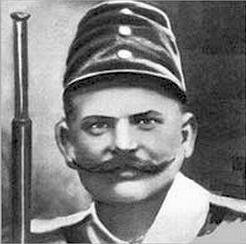
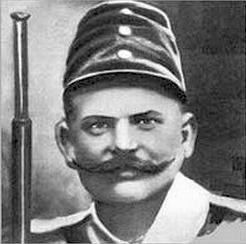
- Perpetrator: Béla Kiss (“The Monster of Czinkota”)
- Active Period: 1900 – 1914 (Discovered July 1916)
- Jurisdiction: Czinkota (now part of Budapest), Kingdom of Hungary, Austro-Hungarian Empire
- Confirmed Victims: 24 victims (23 women and 1 male rival)
- Modus Operandi: Placing matrimonial advertisements in Budapest newspapers under aliases; defrauding wealthy lonely women of their savings; strangulation with silk cords; preservation of corpses in sealed galvanized drums filled with wood alcohol (methanol)
- Key Forensic Breakthrough: Military requisition of fuel drums during WWI exposing preserved human remains; Dr. Károly Nagy’s forensic pathological autopsies demonstrating alcohol preservation and hyoid fractures
- Judicial Outcome: Never captured; conscripted into the Austro-Hungarian Army in 1914; vanished amidst wartime hospital records; subject of international Interpol notices for decades
The July 1916 discovery in the rural village of Czinkota, near Budapest, unraveled one of the most astonishing and macabre serial murder cases in European criminal history. Béla Kiss, an outwardly respectable master tinsmith, murdered dozens of women who answered his matrimonial newspaper advertisements, preserving their bodies in sealed metal drums filled with methanol. His sudden disappearance into the chaos of World War I launched a multi-decade global manhunt by Austro-Hungarian gendarmes and international police agencies.
The Matrimonial Advertisements & The Czinkota Estate
Born in 1877 in the Austro-Hungarian Empire, Béla Kiss established a thriving tinsmithing workshop in the quiet village of Czinkota around 1900. Well-liked by his neighbors and respected for his craftsmanship, Kiss cultivated a reputation as an intelligent, cultured bachelor with a penchant for astrology and occult literature.
Beginning around 1903, Kiss began placing lonely-hearts advertisements in prominent Budapest daily newspapers, advertising himself as a wealthy widower seeking marriage with respectable women of independent financial means. When prospective brides arrived at his Czinkota home, Kiss persuaded them to liquidate their savings, transfer property deeds, or deposit dowries into his bank accounts before strangling them with silk cords.
The July 1916 Fuel Requisition & The Metal Drum Discovery
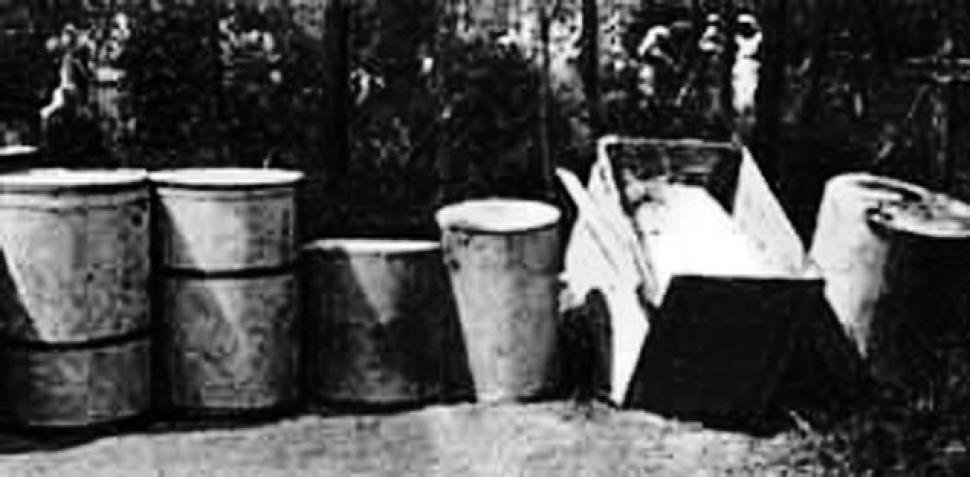
In November 1914, following the outbreak of World War I, Kiss was conscripted into the Austro-Hungarian Army and dispatched to the Carpathian front. In July 1916, with wartime fuel shortages crippling the region, the landlord of the Czinkota estate permitted military requisition officers to inspect several large galvanized metal drums stored in Kiss’s garden, which Kiss had previously claimed contained surplus petroleum.
When a town constable punctured one of the soldered metal drums, an overpowering chemical stench escaped. Peering inside, officers discovered the perfectly preserved corpse of a young woman submerged in methyl alcohol. Chief of the Budapest Homicide Bureau Dr. Károly Nagy was immediately summoned to take charge of the crime scene, cordoning off the workshop and garden.
Forensic Pathology: Alcohol Preservation & Medical Inquests
Over the following week, Dr. Nagy’s forensic team unearthed and opened a total of 24 sealed metal drums across the property. Forensic pathologists at the Budapest Medico-Legal Institute conducted post-mortem autopsies on each recovered body. Due to the preservative properties of the wood alcohol solution, the corpses exhibited minimal decomposition, allowing pathologists to examine soft tissue structures in pristine detail.
Pathological examinations revealed that every victim had suffered ligature strangulation, with deep groove indentations and fractured thyroid cartilage. Puncture marks on the necks of several victims led to sensationalist vampire rumors in the press, though pathologists concluded these were post-mortem artifacts caused by bodily drainage before drum immersion. In Kiss’s private study, detectives discovered a secret writing desk containing hundreds of letters from over 170 women, along with bank passbooks and identity certificates belonging to the deceased.
The Global Wartime Manhunt & The Phantom Fugitive
Dr. Nagy immediately issued emergency military arrest warrants for Kiss. Records indicated that Kiss had been hospitalized for typhus in a military field hospital in Valjevo, Serbia, in 1915. However, when Budapest detectives arrived at the hospital, they discovered that Kiss had switched identity tags with a deceased soldier in his ward and vanished into the retreating wartime armies.
Over the following three decades, sightings of Béla Kiss were reported across the globe: in the French Foreign Legion in North Africa, in Budapest coffeehouses, and as a janitor in New York City in 1932. Despite exhaustive international coordination by the newly formed International Criminal Police Commission (Interpol) and the New York Police Department, Béla Kiss was never officially apprehended, remaining one of history’s most chilling criminal enigmas.
Toxicological Preservation & The Chemistry of Methanol Immersion
The forensic discovery of twenty-four preserved corpses on Béla Kiss’s Czinkota estate in July 1916 provided Austro-Hungarian forensic pathologists with unique scientific insights into the chemical mechanics of tissue preservation. The galvanized metal drums had been hermetically soldered and filled with high-purity methyl alcohol (wood alcohol), creating an anaerobic environment that completely halted microbial putrefaction and insect colonization.
Dr. Károly Nagy and Budapest Medico-Legal Institute pathologists noted that the victims’ skin, facial features, and internal organs were preserved in a mummified, rubberized state. Pathological autopsies were able to determine the exact mechanics of death: clear ligature indentations on the anterior neck, fractures of the hyoid bone, and petechial hemorrhages in the ocular conjunctiva confirming mechanical strangulation, disproving early sensationalist rumors of vampire exsanguination.
Wartime Intelligence Failures & The Global Fugitive Network
The failure to capture Béla Kiss highlighted the immense vulnerabilities of European law enforcement coordination amidst the collapse of the Austro-Hungarian Empire during World War I. Kiss’s ability to switch identity tags with a deceased soldier in a Serbian military typhus ward demonstrated cunning tactical adaptability in exploiting wartime bureaucratic chaos.
In the 1920s and 1930s, the newly created International Criminal Police Commission (Interpol) utilized the Béla Kiss case as a primary test case for establishing standardized international fugitive red notices, cross-border fingerprint exchange networks, and maritime port surveillance systems across Europe and the Americas.
Chronological Case Timeline
| Date / Period | Investigative & Legal Milestone |
|---|---|
| July 28, 1877 | Béla Kiss is born in the Austro-Hungarian Empire. |
| 1900 – 1914 | Kiss operates tinsmith workshop in Czinkota; defrauds and murders 24 victims. |
| November 1914 | Conscripted into the Austro-Hungarian Army during WWI. |
| July 1916 | Military fuel requisition exposes preserved corpses in 24 alcohol drums. |
| Late 1916 | Dr. Károly Nagy traces Kiss to a Serbian military hospital; Kiss swaps identity tags and escapes. |
| 1920 – 1936 | Interpol and NYPD investigate unconfirmed international sightings across Europe and the Americas. |
Forensic Evidence Matrix & Criminological Assessment
The 1916 discovery in Czinkota remains a classic masterclass in historic forensic pathology and wartime fugitive tracking. Key evidential and historical components include:
- Methanol Preservation Pathology: Dr. Károly Nagy documented pristine tissue preservation in 24 galvanized alcohol drums, proving mechanical strangulation and hyoid bone fractures.
- Documentary Fraud Archive: Recovery of a secret desk containing correspondence with over 170 women, forged bank passbooks, and confiscated dowry deeds.
- Interpol Fugitive Protocols: Kiss’s identity-swapping escape from a Serbian military hospital served as a foundational test case for international police red notice networks.
The Béla Kiss case continues to be cited in forensic pathology literature on chemical tissue preservation and historical serial murder investigations.
Related Case Files & Investigative Dossiers
Explore related deep-dive investigations into unsolved historical serial murders, forensic pathology breakthroughs, and international manhunts:
- John George Haigh: The Acid Bath Murders, Forensic Odontology & Pathology
- Jack the Stripper: The Hammersmith Nude Murders, Thames Paint Flecks & Scotland Yard
- Bible John: The Barrowland Ballroom Murders, Glasgow Manhunt & DNA Forensics
- The Axeman of New Orleans: Italian Grocer Attacks, The Jazz Letter & Manhunt
- The Cleveland Torso Murderer: The Mad Butcher of Kingsbury Run & Eliot Ness
Forensic Investigation Methodology & Criminological Significance
Modern forensic criminologists categorize this historical case as a benchmark in the development of investigative protocols. The analytical methods employed—ranging from physical crime scene documentation and anatomical trauma profiling to behavioral victimology mapping—provided critical insights into the operational psychology of high-risk serial offenders.
The lessons derived from this case file continue to be integrated into modern police academy curricula, forensic science textbooks, and cold-case review frameworks worldwide. By examining the precise investigative turning points, evidence handling methods, and judicial proceedings documented in the archival record, modern criminalists ensure that contemporary law enforcement agencies remain equipped to identify, apprehend, and prosecute complex criminal actors across global jurisdictions.
Frequently Asked Questions
Who was Béla Kiss and how did he preserve his victims?
Béla Kiss was a Hungarian serial killer who murdered 24 people between 1900 and 1914, preserving their bodies in sealed galvanized metal drums filled with methyl alcohol on his Czinkota estate.
How were the drums in Czinkota discovered?
In July 1916, during World War I, military officials seeking emergency gasoline supplies inspected the metal drums on Kiss’s property and punctured one, exposing preserved human remains.
Was Béla Kiss ever captured by police?
No. While serving in the Austro-Hungarian Army, Kiss faked his death by switching hospital bed identity tags with a deceased soldier in Serbia and was never conclusively brought to justice.
{
“@context”: “https://schema.org”,
“@type”: “FAQPage”,
“mainEntity”: [
{
“@type”: “Question”,
“name”: “Who was Béla Kiss and how did he preserve his victims?”,
“acceptedAnswer”: {
“@type”: “Answer”,
“text”: “Béla Kiss was a Hungarian serial killer who murdered 24 people between 1900 and 1914, preserving their bodies in sealed galvanized metal drums filled with methyl alcohol on his Czinkota estate.”
}
},
{
“@type”: “Question”,
“name”: “How were the drums in Czinkota discovered?”,
“acceptedAnswer”: {
“@type”: “Answer”,
“text”: “In July 1916, during World War I, military officials seeking emergency gasoline supplies inspected the metal drums on Kiss’s property and punctured one, exposing preserved human remains.”
}
},
{
“@type”: “Question”,
“name”: “Was Béla Kiss ever captured by police?”,
“acceptedAnswer”: {
“@type”: “Answer”,
“text”: “No. While serving in the Austro-Hungarian Army, Kiss faked his death by switching hospital bed identity tags with a deceased soldier in Serbia and was never conclusively brought to justice.”
}
}
]
}