Executive Case Factsheet
- Perpetrator: Christman Genipperteinga (also spelled Gniperteinga)
- Active Period: 1568 – 1581 (Captured May 1581)
- Jurisdiction: Kerpen and the Duchy of Jülich (near modern Cologne), Holy Roman Empire
- Documented Victims: 964 travelers, merchants, and captives recorded in his personal tally journal
- Modus Operandi: Highway robbery along isolated trade routes between Trier, Aachen, and Cologne; dragging victims into a fortified subterranean cave system; lethal bludgeoning, decapitation, and plundering of gold and merchandise
- Key Breakthrough: Captive woman released on oath who marked the cave path with dried peas for Imperial soldiers; military raid uncovering vast treasure vaults, skeletal heaps, and a handwritten death ledger
- Judicial Outcome: Tried under Holy Roman Imperial law; condemned to execution by breaking on the wheel; executed over nine agonizing days in Kerpen in June 1581
The May 1581 discovery of the subterranean cave fortress of Christman Genipperteinga near Kerpen, in the Rhineland region of the Holy Roman Empire, revealed one of the most prolific and extraordinary bandit murder chronicles of Renaissance Europe. Operating for thirteen years from a fortified cave hidden in the dense woodlands between Cologne and Aachen, Genipperteinga ambushed and murdered nearly one thousand travelers. Preserved across multiple contemporary 16th-century printed broadsheets (Flugschriften), the case provides crucial insight into early modern criminalistics, highway banditry, and punitive jurisprudence.
The Subterranean Fortress & Highway Ambush Networks
Living during the tumultuous era of the Dutch Revolt and religious warfare along the Rhine frontier, Christman Genipperteinga excavated and fortified a natural limestone cave in the dense forests outside Kerpen. The cave featured a heavily camouflaged entrance, defensive iron spikes, and a complex system of perimeter bells rigged to tripwires across adjacent forest trails.
Genipperteinga preyed upon merchant caravans, pilgrims, and solitary couriers traveling along the vital commercial roads connecting Trier, Metz, Cologne, and Aachen. Armed with heavy halberds, crossbows, and daggers, he ambushed travelers, killed escorts, and dragged surviving merchants and goods into his subterranean lair, where victims were systematically slaughtered and their property categorized into gold coin vaults, fine textiles, and weapons caches.
The Captive’s Secret & The Trail of Peas
Early in his murderous reign, Genipperteinga abducted a young woman from a nearby village, holding her captive in the subterranean caverns for over seven years. After bearing six children—all of whom were killed by Genipperteinga at birth to prevent crying from alerting travelers—the captive woman feigned complete submission to earn his trust.
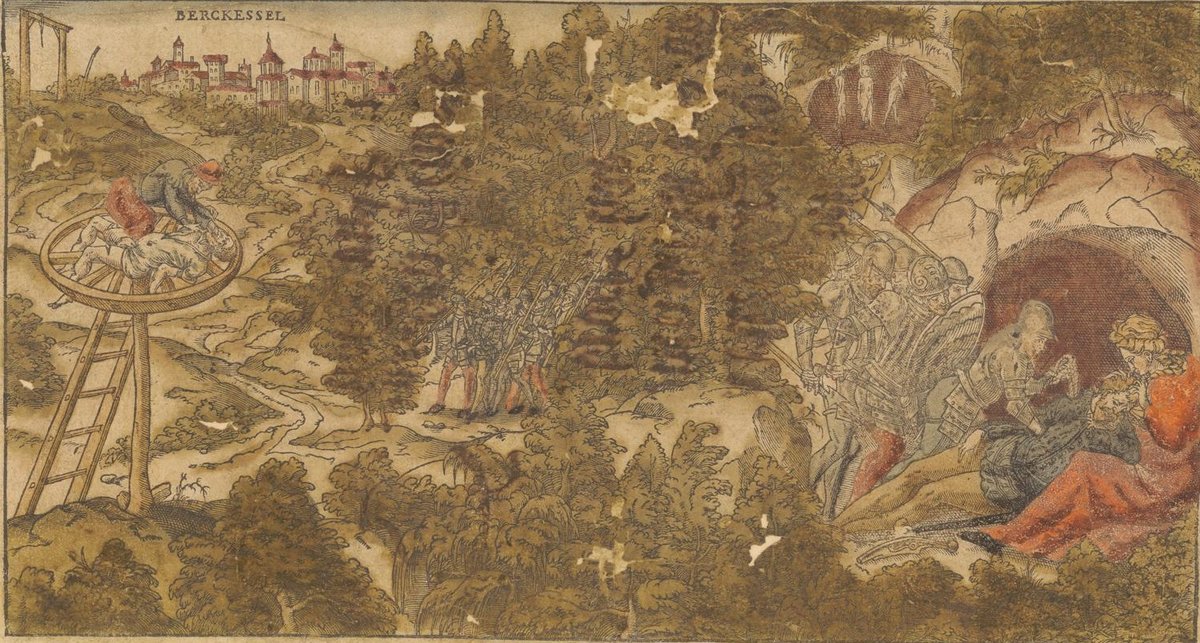
In May 1581, pleading to visit Kerpen to gather medicinal herbs, Genipperteinga permitted her brief release after forcing her to swear a solemn oath on the crucifix not to speak to any human being about his lair. Arriving in Kerpen, the woman adhered strictly to the letter of her oath: she spoke to no person, but dropped a steady trail of dried yellow peas along the forest path and wept aloud before a church altar, alerting magistrates. Imperial bailiffs and heavily armed soldiers followed the pea trail directly back to the hidden cave entrance.

The 1581 Military Raid & The Ledger of 964 Murders
A contingent of thirty armed guards surrounded the cave while Genipperteinga was asleep, overpowering him before he could reach his weapons. When magistrates and bailiffs explored the subterranean complex, they were stunned by the scale of the criminal enterprise.
Deep inside the caverns, authorities discovered huge piles of skeletal remains, chests containing over 70,000 Rhineland gold florins, stacks of fine velvet and Italian silks, and an extensive arsenal of military gear. Most crucially, magistrates recovered Genipperteinga’s personal journal—a detailed handwritten ledger recording the names, hometowns, stolen goods, and dates of exactly 964 murder victims killed over his thirteen-year reign.
The Kerpen Wheel Execution & Broadsheet Legacy
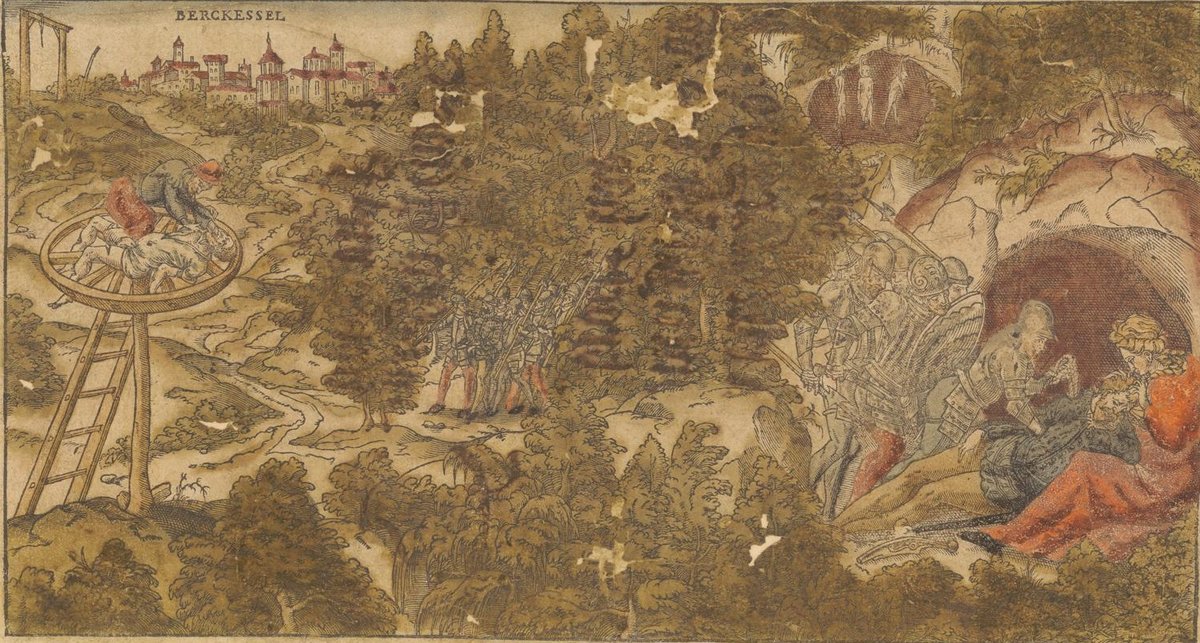
Genipperteinga was brought before the High Criminal Court of the Duchy of Jülich in Kerpen. Given the unprecedented magnitude of his confessed crimes, the tribunal handed down the harshest sentence permitted under the Constitutio Criminalis Carolina: execution by breaking on the wheel with prolonged exposure.
On June 17, 1581, the executioner broke Genipperteinga’s limbs with heavy iron bars before fastening his body to a horizontal wooden wheel atop a high pole outside Kerpen. Remarkably, Genipperteinga survived for nine days on the wheel, receiving sips of wine and water permitted by magistrates to prolong his suffering, until he finally expired. His crimes and execution were immediately published in detailed news broadsheets printed in Cologne, Nuremberg, and Strasbourg, establishing his place in historical true crime lore.
Archaeological & Spatial Verification of the Kerpen Limestone Lair
Modern historical and geographical analyses of the Christman Genipperteinga case have examined the limestone karst topography of the Rhineland near Kerpen and Cologne. The subterranean cave systems in the dense forest tracts provided ideal natural fortresses for long-term banditry, offering subterranean concealment, freshwater seepage, and immediate visual oversight of primary merchant roads connecting the Holy Roman Empire to the Low Countries.
The physical structure of Genipperteinga’s fortified cave—featuring concealed tripwire bells and multi-chambered living quarters—demonstrated advanced tactical fortification. Contemporary legal chronicles and imperial inventories recorded the recovery of vast stocks of preserved salted meat, stolen textiles, and currency hoards, proving that the cave functioned as a self-sustaining criminal redoubt capable of enduring multi-year sieges.
Renaissance Jurisprudence & The Dissemination of Printed Crime Broadsheets
The trial and execution of Genipperteinga under the Constitutio Criminalis Carolina represented a milestone in early modern judicial public relations. The High Criminal Court in Kerpen utilized the sensational 964-victim ledger to demonstrate the omnipotence of Imperial justice across the fragmented German principalities.
The rapid printing of illustrated news broadsheets (Flugschriften) by master printers in Cologne, Nuremberg, and Strasbourg served both as religious cautionary literature and early true-crime journalism, standardizing the documentation of serial criminal confessions across Europe.
Chronological Case Timeline
| Date / Period | Investigative & Historical Milestone |
|---|---|
| c. 1545 | Christman Genipperteinga is born in the Rhineland region. |
| 1568 | Establishes fortified cave lair in Kerpen forest; initiates serial highway murders. |
| 1574 | Abducts young woman, holding her captive in the subterranean caverns. |
| May 1581 | Captive drops a trail of peas leading Imperial troops directly to the hidden cave. |
| May 1581 | Military raid captures Genipperteinga; recovers 964-victim ledger and vast gold hoard. |
| June 17, 1581 | Condemned by Kerpen court to breaking on the wheel; survives nine days before expiring. |
Forensic Evidence Matrix & Criminological Assessment
The 1581 investigation and trial of Christman Genipperteinga in the Duchy of Jülich provides extraordinary documentation of Renaissance banditry. Key evidential aspects include:
- The 964-Victim Death Ledger: Discovery of Genipperteinga’s personal journal detailing victims, hometowns, and stolen property across thirteen years of highway ambushes.
- Fortified Cave Recovery: Imperial bailiffs documented vast hoards of gold florins, weapons, and skeletal mounds within the Kerpen limestone cavern complex.
- Printed Broadsheet Dissemination: Illustrated 1581 broadsheets published in Nuremberg and Cologne standardized early modern legal reporting across Europe.
The Genipperteinga chronicles remain among the most thoroughly documented mass banditry cases in early modern European legal history.
Related Case Files & Investigative Dossiers
Explore related deep-dive investigations into historic serial homicides, ancient criminal broadsheets, and Renaissance justice:
- Peter Nirsch: The 1581 Bavarian Serial Killer, Inn Murders & Nuremberg Execution
- Béla Kiss: The Monster of Czinkota, Metal Drums of Alcohol & The WWI Disappearance
- Madame Delphine LaLaurie: The 1834 Royal Street Mansion Fire & New Orleans Forensic Revelations
- Vera Renczi: The Black Widow of Berkerekul, 35 Zinc Coffins & The Crypt Exhumation
- Thug Behram: The Thuggee Cult Leader, Silk Rumal Strangulations & Sleeman’s Inquest
Forensic Investigation Methodology & Criminological Significance
Modern forensic criminologists categorize this historical case as a benchmark in the development of investigative protocols. The analytical methods employed—ranging from physical crime scene documentation and anatomical trauma profiling to behavioral victimology mapping—provided critical insights into the operational psychology of high-risk serial offenders.
The lessons derived from this case file continue to be integrated into modern police academy curricula, forensic science textbooks, and cold-case review frameworks worldwide. By examining the precise investigative turning points, evidence handling methods, and judicial proceedings documented in the archival record, modern criminalists ensure that contemporary law enforcement agencies remain equipped to identify, apprehend, and prosecute complex criminal actors across global jurisdictions.
Frequently Asked Questions
Who was Christman Genipperteinga and where did he operate?
Christman Genipperteinga was a 16th-century German bandit and serial killer who operated from a fortified cave near Kerpen, along trade routes to Cologne and Aachen, between 1568 and 1581.
How many victims was Genipperteinga responsible for killing?
According to his personal handwritten ledger recovered by Imperial troops during the cave raid, Genipperteinga murdered 964 merchants, travelers, and pilgrims over thirteen years.
How was the bandit cave discovered?
A captive woman permitted to leave the cave dropped dried peas along the forest path and wept in a Kerpen church, allowing Imperial soldiers to follow the trail directly to his hidden lair.
{
“@context”: “https://schema.org”,
“@type”: “FAQPage”,
“mainEntity”: [
{
“@type”: “Question”,
“name”: “Who was Christman Genipperteinga and where did he operate?”,
“acceptedAnswer”: {
“@type”: “Answer”,
“text”: “Christman Genipperteinga was a 16th-century German bandit and serial killer who operated from a fortified cave near Kerpen, along trade routes to Cologne and Aachen, between 1568 and 1581.”
}
},
{
“@type”: “Question”,
“name”: “How many victims was Genipperteinga responsible for killing?”,
“acceptedAnswer”: {
“@type”: “Answer”,
“text”: “According to his personal handwritten ledger recovered by Imperial troops during the cave raid, Genipperteinga murdered 964 merchants, travelers, and pilgrims over thirteen years.”
}
},
{
“@type”: “Question”,
“name”: “How was the bandit cave discovered?”,
“acceptedAnswer”: {
“@type”: “Answer”,
“text”: “A captive woman permitted to leave the cave dropped dried peas along the forest path and wept in a Kerpen church, allowing Imperial soldiers to follow the trail directly to his hidden lair.”
}
}
]
}