
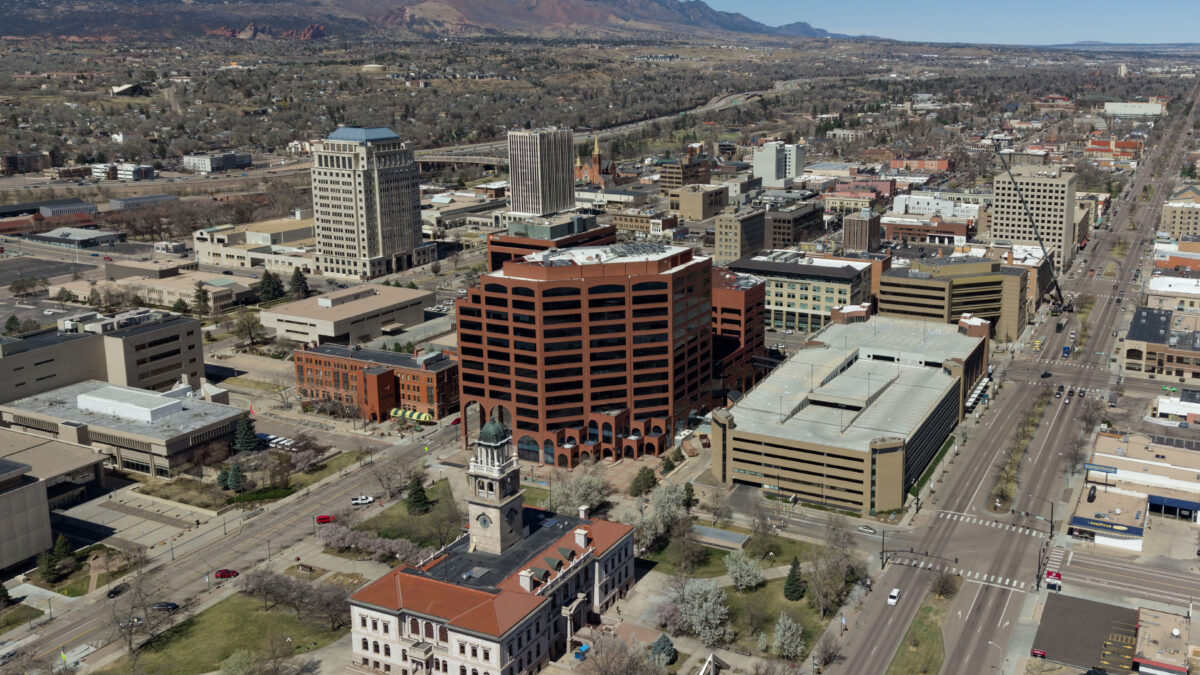
Executive Case Factsheet
- Victim: Jennifer Watkins (26 years old)
- Date of Crime: November 6, 1999
- Location: Memorial Hospital Central, Colorado Springs, Colorado
- Perpetrator: Michael David Peterson (Hospital maintenance worker)
- Investigating Agency: Colorado Springs Police Department Cold Case Unit & 4th Judicial District Attorney
- Forensic Breakthrough: Othram Inc. Forensic-Grade Genome Sequencing & Genetic Genealogy
- Case Status: Solved & Cleared (December 2020)

On November 6, 1999, twenty-six-year-old hospital dietary aide Jennifer Watkins vanished during her evening shift at Memorial Hospital Central in Colorado Springs, Colorado. Two days later, her body was found hidden under plastic sheeting in a secluded, under-construction stairwell on the hospital’s ninth floor. She had suffered severe blunt force trauma to the head and sexual assault. For over two decades, the Jennifer Watkins murder baffled detectives, as the crime had occurred inside an active medical facility. In December 2020, the Colorado Springs Police Department and forensic genomics laboratory Othram Inc. unmasked her killer as former hospital maintenance employee Michael David Peterson.
The Crime & Hospital Crime Scene Reconstruction
Jennifer Watkins was employed in the food services and nutrition department at Memorial Hospital Central in Colorado Springs. On Saturday, November 6, 1999, she reported for her scheduled afternoon shift. Around 8:00 PM, coworkers noticed she had uncharacteristically disappeared from her workstation, leaving behind her personal purse, coat, and car keys. Immediate searches of the main hospital wards yielded no sign of her.
On Monday morning, November 8, 1999, hospital staff discovered Watkins’ body concealed in an unfinished stairwell located in the 9th floor elevator service tower, an area accessible primarily to hospital staff, maintenance crews, and construction contractors. The victim had been wrapped in plastic sheeting and construction paper. An autopsy conducted by the El Paso County Coroner revealed that Watkins died from massive blunt impact injuries to her skull. Detectives from the Colorado Springs Police Department recovered foreign biological fluid from the victim’s clothing, carefully securing and freezing the evidence for future forensic examination.
The Long Impasse & CODIS Dead Ends
In 1999 and 2000, detectives interviewed hundreds of hospital workers, doctors, nurses, security officers, and subcontracted construction laborers who had electronic badge or physical key access to the 9th floor utility area. Over fifty hospital employees voluntarily submitted reference blood and buccal swabs for elimination testing. In 2001, crime lab analysts isolated a male DNA profile from the physical evidence and uploaded it to CODIS. However, the profile yielded no hits in the national felon database.
Over the subsequent two decades, cold case detectives periodically reviewed the case files and resubmitted the DNA profile through regional database updates, but the identity of the perpetrator remained entirely unknown.
The Forensic Breakthrough: Othram Forensic Genome Sequencing
In 2020, the Colorado Springs Police Department partnered with Othram Inc., a forensic genomics laboratory located in The Woodlands, Texas. The preserved biological evidence was degraded and mixed with human substrate, making standard next-generation sequencing challenging. Othram’s scientists utilized their proprietary Forensic-Grade Genome Sequencing (FGGS) pipeline to build a comprehensive, high-resolution SNP genetic profile containing hundreds of thousands of genetic markers.
Othram’s in-house genetic genealogy team uploaded the profile to genealogical platforms, including GEDmatch and FamilyTreeDNA. By mapping genealogical relationships and cross-referencing public census, obituary, and historical records, the team identified a family branch originating in Colorado. They provided Colorado Springs detectives with a targeted lead: Michael David Peterson.
Suspect Profile: Michael David Peterson & Case Resolution
Investigative research revealed that Michael David Peterson had worked as a maintenance worker and equipment technician at Memorial Hospital Central at the time of Watkins’ murder. Peterson possessed universal key and badge access to every secure corridor, utility closet, and elevator shaft in the hospital, including the 9th floor construction zone. Furthermore, records indicated that Peterson had voluntarily provided an elimination interview in 1999, but due to administrative oversight and his lack of a prior violent criminal record, his DNA was not collected at that time.
Detectives discovered that Peterson had relocated to Albuquerque, New Mexico, shortly after the murder, where he died of natural causes in 2006. In late 2020, Colorado Springs detectives traveled to New Mexico and obtained familial reference DNA samples from Peterson’s surviving biological relatives. Direct nuclear STR comparison conducted by the Colorado Bureau of Investigation confirmed that Peterson’s genetic profile matched the crime scene DNA profile with statistical certainty, officially closing the 21-year-old homicide investigation.
Forensic Architecture of the Memorial Hospital Utility Core
The physical layout of Memorial Hospital Central in Colorado Springs presented a unique investigative challenge for the Colorado Springs Police Department Cold Case Unit. The 9th floor where Jennifer Watkins’ body was concealed was an unfinished utility elevator tower and mechanical room that was off-limits to the public and patients. Access required physical brass master keys held exclusively by the hospital’s engineering staff or electronic security badges issued to facility maintenance personnel.
Crime scene photographs and spatial modeling indicated that the perpetrator had extensive, intimate familiarity with the hospital’s hidden infrastructure, including service stairwells and maintenance ducts that bypassed main security cameras. The body had been carefully concealed beneath heavy construction drop cloths, drywall panels, and acoustic tiles, demonstrating calculated forensic countermeasures designed to delay discovery while the perpetrator completed his shift and exited the premises without raising immediate alarm.
Othram’s FGGS Technology & Overcoming Severely Degraded DNA
When the Colorado Springs Police Department submitted the 1999 crime scene evidence to Othram Inc. in 2020, standard forensic laboratories had repeatedly classified the biological material as unsuitable for next-generation sequencing due to bacterial contamination and chemical degradation. Othram’s laboratory applied their proprietary Forensic-Grade Genome Sequencing (FGGS) protocol, which utilizes specialized enzyme extraction chemistries to isolate micro-gram quantities of high-molecular-weight human DNA from complex substrates.
Othram’s sequencing platform generated a comprehensive genome dataset that allowed their forensic genealogy team to construct multi-generational pedigree charts across public databases. By cross-referencing military records, Colorado census archives, and historical utility employment rolls, genealogists pinpointed Michael David Peterson. The subsequent direct STR confirmation closed a twenty-one-year procedural loop, demonstrating that advanced genomic sequencing can resolve complex homicides committed within secure institutional facilities.
The 4th Judicial District Cold Case Protocol & Institutional Evidence Custody
The successful resolution of the Jennifer Watkins homicide provided a masterclass in modern hospital crime scene investigations. El Paso County Coroner Dr. David Bowerman preserved foreign biological fluid recovered from the victim’s clothing on sterile cotton swabs in 1999, ensuring unbroken chain-of-custody documentation across more than two decades.
When Othram Inc. identified Michael David Peterson through genetic genealogy in 2020, Colorado Springs Police cold case detectives executed sworn affidavits to secure reference DNA from Peterson’s surviving family in New Mexico. The conclusive STR confirmation proved that Peterson used his universal maintenance access to commit the murder, closing the case exceptionally and providing closure to the victim’s family.
Forensic Sanitation & Hospital Facility Physical Evidence Protocols
The investigation into the murder of Jennifer Watkins led to nationwide security enhancements across large regional medical complexes. Memorial Hospital Central implemented digitized badge reader logs, centralized closed-circuit surveillance across utility corridors, and strict access controls for subcontracted maintenance personnel.
The Colorado Springs Police Department’s persistent preservation of physical biological swabs ensured that when Othram’s FGGS genomic platform became available, the evidence was ready to yield an indisputable identification.
Pedigree Analysis & Generative Genealogic Reconstruction
Othram’s genealogical workflow in the Jennifer Watkins case constructed family trees extending across five generations. By cross-referencing death notices, military discharge logs, and public social security index records, genealogists verified that Michael David Peterson had relocated to Albuquerque, New Mexico, shortly after the crime, leaving behind a clear documentary trail that investigators used to secure definitive reference samples.
Case Timeline & Forensic Milestones
| Date | Milestone / Development | Forensic & Legal Impact |
|---|---|---|
| November 6, 1999 | Disappearance of Jennifer Watkins | Victim vanishes during evening dietary shift at Memorial Hospital Central |
| November 8, 1999 | Discovery of Body | Found in 9th floor utility stairwell; semen DNA preserved in evidence |
| 2001 | CODIS Entry | Male STR profile entered into CODIS; returns no matching offender |
| 2006 | Death of Michael Peterson | Suspect dies in Albuquerque, NM, without having been tested for DNA |
| 2020 | Othram Genomic Sequencing | Othram builds SNP profile and identifies Peterson through genealogy |
| December 2020 | Case Clearance Announced | Familial DNA confirms Peterson as the killer; 21-year cold case cleared |
Related Cold Case Investigations
Explore additional forensic genetic genealogy breakthroughs and hospital investigations:
- Cheree Osmankisic Murder: Solved by Othram DNA in Colorado Springs
- Helene Pruszynski Murder: Solved in Douglas County Colorado
- Carla Walker Murder: How Othram DNA Solved Fort Worth Cold Case
- Pamela Maurer Murder: Solved by Parabon DNA Phenotyping
Frequently Asked Questions (FAQ)
Who killed Jennifer Watkins at Memorial Hospital?
Jennifer Watkins was murdered by Michael David Peterson, a hospital maintenance technician who possessed master key and electronic access to the secure 9th floor utility area where her body was hidden.
How did Othram solve the Jennifer Watkins case?
Othram applied Forensic-Grade Genome Sequencing to degraded DNA recovered from the 1999 crime scene. Genetic genealogists mapped family trees to identify Peterson as the suspect, which was confirmed via familial reference DNA.
Was Michael David Peterson ever arrested or tried?
No. Peterson relocated to New Mexico shortly after the crime and died in 2006, fourteen years before forensic genetic genealogy unmasked his identity.



