

Executive Case Factsheet
- Victim: Pamela Maurer (16 years old)
- Date of Crime: January 13, 1978
- Location: Lisle / Woodridge, DuPage County, Illinois
- Perpetrator: Bruce Lindahl (Deceased suspected serial predator)
- Investigating Agency: DuPage County State’s Attorney’s Office & Lisle Police Department
- Forensic Breakthrough: Parabon NanoLabs Snapshot DNA Phenotyping & Investigative Genetic Genealogy
- Case Status: Solved & Cleared Exceptionally (January 2020)
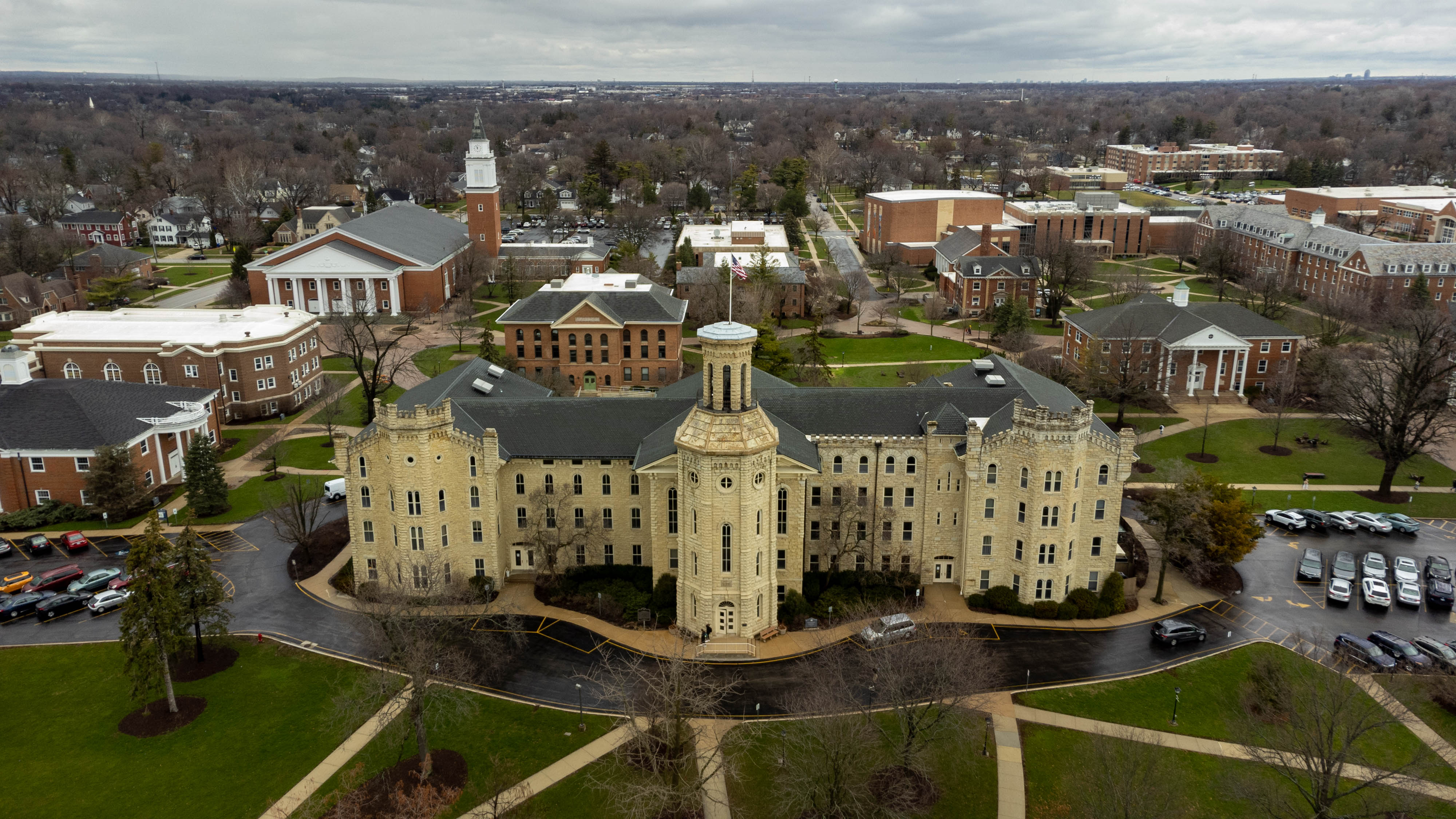
In the freezing pre-dawn hours of January 13, 1978, the body of sixteen-year-old high school student Pamela Maurer was discovered discarded in a snowbank along College Road in Lisle, Illinois. She had been abducted, sexually assaulted, violently beaten, and strangled with her own rubber belt. For forty-two years, the Pamela Maurer murder haunted the western suburbs of Chicago as one of the region’s most baffling cold cases. In January 2020, DuPage County authorities made forensic history by announcing the first homicide clearance in Illinois achieved through investigative genetic genealogy and Parabon NanoLabs Snapshot DNA phenotyping, identifying deceased serial rapist and suspected serial killer Bruce Lindahl as her murderer.
The Crime & Scene 360 Reconstruction
On the evening of Thursday, January 12, 1978, Pamela Maurer left a friend’s residence in Woodridge, Illinois, around 9:30 PM to walk a short distance to a McDonald’s on Maple Avenue to purchase a soda. She never arrived at the restaurant. Her parents reported her missing later that night when she failed to return home before curfew. At approximately 6:30 AM the next morning, a road service worker driving along College Road near Ohio Street observed a body lying face down in the snow off the shoulder of the roadway.
Lisle Police detectives and DuPage County Sheriff’s investigators secured the scene. Physical examination of the snow revealed signs of a violent struggle. Maurer’s clothing was in disarray, and her rubber belt was tightly knotted around her neck. An autopsy conducted by the DuPage County Coroner determined the cause of death was asphyxiation due to ligature strangulation, accompanied by severe blunt force trauma to her head. Crucially, forensic pathologists collected biological swabs from the victim’s body and clothing, sealing them in sterile glass vials within the evidence locker—an act of meticulous forensic foresight that preserved microscopic DNA evidence across four decades.
Initial Investigation & Four Decades of Impasse
In 1978, detectives conducted hundreds of interviews with classmates, local business patrons, motorists who traveled College Road, and known sex offenders across DuPage, Will, and Cook counties. Despite pursuing hundreds of leads, law enforcement encountered dead ends. In 2001, DuPage County Sheriff’s crime lab technicians successfully isolated a male Short Tandem Repeat (STR) DNA profile from the biological fluid preserved since 1978. The profile was uploaded to the FBI’s Combined DNA Index System (CODIS), but searches across state and national offender databases produced zero matching hits.
For the next eighteen years, the case remained in cold case status. Periodic re-testing with newer STR amplification kits confirmed the purity of the suspect’s genetic profile, but without a suspect profile in the database, the killer remained entirely anonymous.
The Forensic Breakthrough: Parabon Snapshot & Genetic Genealogy
In 2019, DuPage County State’s Attorney Robert Berlin and Lisle Police Chief Ron Wilke authorized a new investigative approach, partnering with Parabon NanoLabs, a bioinformatics company in Reston, Virginia. Parabon extracted single-nucleotide polymorphisms (SNPs) across hundreds of thousands of genetic markers from the 1978 biological evidence. Using these SNPs, Parabon generated a “Snapshot” DNA phenotyping composite predicting the killer’s physical characteristics, including fair skin, brown hair, hazel eyes, and northern European ancestry.
Renowned investigative genetic genealogist CeCe Moore then uploaded the SNP profile to public genealogy databases GEDmatch and FamilyTreeDNA. Moore mapped complex multi-generational family trees, tracing common ancestors down through branches that converged on a specific family residing in DuPage County in the 1970s: the Lindahl family. The genealogical data indicated that the killer was one of several male siblings.
Suspect Profile: Bruce Lindahl & Exhumation Verification
Investigative records quickly singled out Bruce Lindahl, who had resided in Downers Grove and Naperville during the late 1970s. Lindahl had a violent criminal record involving sexual assaults and kidnappings. Most notably, Lindahl died on April 4, 1981, at the age of 28. In that incident, Lindahl lured 18-year-old Charles Huber to a Naperville apartment and attacked him with a knife; during the violent struggle, Lindahl accidentally severed his own femoral artery with his knife and bled to death next to Huber’s body.
Because Lindahl died years before DNA testing was developed, no DNA profile existed in CODIS. In November 2019, State’s Attorney Robert Berlin obtained a court order to exhume Bruce Lindahl’s remains from Oakridge Cemetery in Hillside, Illinois. Forensic scientists extracted nuclear DNA from Lindahl’s femur bone and conducted direct STR comparison against the semen recovered from Pamela Maurer in 1978. The results were definitive: Bruce Lindahl’s DNA matched the crime scene evidence exactly, with a random match probability exceeding 1 in 1.8 quadrillion.
Broader Serial Killer Investigation & Legacy
Following the positive identification, DuPage County authorities established a regional task force to review dozens of unsolved homicides and missing person cases from the 1970s and 1980s across the Chicago metropolitan area. Lindahl is now strongly suspected in the 1979 disappearance of Deborah Colliander—who had filed rape charges against Lindahl shortly before vanishing—as well as the murders of Debra McCall and other young women. The Pamela Maurer resolution demonstrated that even deceased predators cannot escape the retrospective reach of modern genetic genealogy.
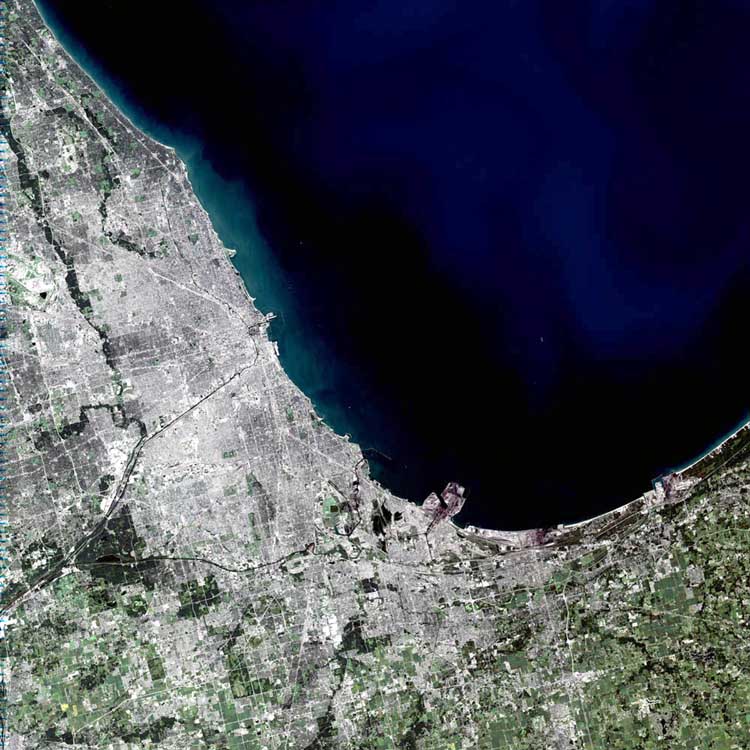
Forensic Serology & STR Marker Amplification Across Decades
The physical preservation of biological samples collected in 1978 highlights a pivotal era in the evolution of American forensic serology. At the time of Pamela Maurer’s murder, the DuPage County Coroner’s Office and Illinois State Police crime laboratories relied on ABO blood group typing and phosphoglucomutase (PGM) enzyme electrophoresis. Because these legacy serological techniques consumed large quantities of biological material while offering low discriminatory statistical power, forensic pathologists intentionally preserved duplicate swabs and biological smears on glass slides in climate-controlled evidence vaults.
When the DuPage County Crime Laboratory first attempted to amplify the sample in 2001 using the early AmpFlSTR Profiler Plus and COfiler PCR amplification kits, technicians faced challenges common to decades-old cold cases: chemical degradation, dye inhibitor contamination, and microscopic sample volume. Advances in capillary electrophoresis and human DNA quantification (Plexor HY) ultimately enabled scientists to generate a pristine 16-locus Short Tandem Repeat profile. This pristine profile subsequently served as the gold-standard ground truth against which Parabon’s genetic genealogy findings were conclusively validated.
The Parabon Snapshot Phenotyping Methodology & Single-Nucleotide Polymorphism Microarrays
The transition from standard STR forensic typing to investigative genetic genealogy required an entirely different molecular biology workflow. Whereas standard CODIS STR markers examine length polymorphisms across 20 non-coding regions of DNA, Parabon NanoLabs utilized an Illumina Infinium CytoSNP-850K beadchip microarray. This platform sequences over 850,000 single-nucleotide polymorphisms (SNPs) across the entire human genome.
By analyzing these dense SNP grids, Parabon’s bioinformatics algorithms calculated statistical probabilities for pigmentation traits, generating a composite predicting that the suspect possessed fair skin (93.8% confidence), hazel-to-brown eyes, brown hair, and negligible African or Native American admixture. Genetic genealogist CeCe Moore then utilized the dense SNP data to search GEDmatch and FamilyTreeDNA, identifying third- and fourth-degree cousin relationships that established the genealogical bridge directly to the Lindahl family tree.
Judicial Precedents & Forensic Standards in Illinois Post-Exhumation Cases
The exceptional clearance of the Pamela Maurer homicide in January 2020 established vital legal and evidentiary benchmarks for state’s attorneys across Illinois. DuPage County State’s Attorney Robert Berlin emphasized that exhumation orders for forensic genetic genealogy require an exceptionally high standard of probable cause and genealogical validation before probate courts will permit the disturbance of interred remains.
By documenting a complete chain of custody for the 1978 biological evidence and demonstrating the statistical rigor of Parabon’s kinship modeling, prosecutors created a replicable protocol now utilized by major crime task forces throughout the Midwest. The case confirms that posthumous DNA identification provides invaluable closure to families and permanently preserves historical truth in the public record.
Case Timeline & Forensic Milestones
| Date | Milestone / Development | Forensic & Legal Impact |
|---|---|---|
| January 13, 1978 | Discovery of Pamela Maurer | Body found on College Road; biological evidence meticulously preserved in cold storage |
| April 4, 1981 | Death of Bruce Lindahl | Suspect dies from self-inflicted femoral artery wound during Naperville attack |
| 2001 | CODIS STR Profile Extraction | Male DNA profile isolated; no match found in criminal offender database |
| 2019 | Parabon Snapshot & Genetic Genealogy | CeCe Moore traces lineage to Lindahl brothers using GEDmatch SNP analysis |
| November 2019 | Court-Ordered Exhumation | Lindahl’s remains exhumed from Oakridge Cemetery for bone DNA extraction |
| January 13, 2020 | Official Case Clearance | State’s Attorney announces 100% DNA match, clearing 42-year cold case |
Related Cold Case Investigations
Explore additional landmark cold case clearances and forensic DNA investigations:
- Carla Walker Murder: How Othram DNA Solved Fort Worth Cold Case
- Patricia Kalitzke & Lloyd Bogle: 1956 Montana Double Murder Solved
- Jay Cook & Tanya Van Cuylenborg: First Genetic Genealogy Jury Conviction
- Golden State Killer: How Genetic Genealogy Caught Joseph DeAngelo
Frequently Asked Questions (FAQ)
How did Parabon Snapshot help identify Bruce Lindahl?
Parabon NanoLabs utilized SNP DNA microarray sequencing to create a physical phenotyping profile and conduct investigative genetic genealogy on GEDmatch. Genealogist CeCe Moore constructed family trees connecting distant cousins to the Lindahl brothers in Illinois.
Why was Bruce Lindahl’s body exhumed?
Because Lindahl died in 1981 before DNA profiling was invented, investigators obtained a court order to exhume his skeletal remains to obtain a definitive reference DNA sample for direct STR comparison against the 1978 crime scene semen.
How many other crimes is Bruce Lindahl suspected of committing?
Law enforcement task forces in Illinois suspect Lindahl was an active serial predator responsible for at least a dozen unsolved murders, rapes, and abductions across DuPage, Will, and Cook counties between 1974 and 1981.



