Executive Case Factsheet
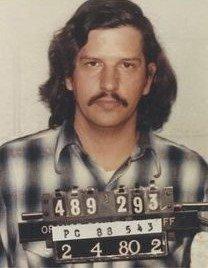
- Perpetrator: William George Bonin (‘The Freeway Killer’)
- Active Period: 1979 – 1980 (Arrested June 11, 1980 in Hollywood, CA)
- Jurisdiction: Los Angeles County and Orange County, California
- Confirmed Victims: 14 convicted murders (suspected in up to 36+ homicides of boys and young men)
- Modus Operandi: Abducting teenage boys and young men in a customized Ford Econoline van; brutal sexual torture, ligature strangulation, and roadside dumping
- Key Forensic Breakthrough: Van surveillance; recovery of victim driver’s licenses and t-shirt ligature fibers; accomplice testimonies of Vernon Butts and Gregory Miley
- Judicial Outcome: Convicted of 14 murders in two trials (1982 and 1983); executed by lethal injection on February 23, 1996 at San Quentin
The Criminal Genesis, Modus Operandi & Geographic Hunting Grounds
Between May 1979 and June 1980, William George Bonin terrorized Southern California, orchestrating a predatory rampage that claimed the lives of at least fourteen teenage boys and young men. Operating primarily across Los Angeles and Orange Counties, Bonin converted the sprawling Southern California freeway system into a hunting ground. A convicted sex offender paroled in 1978, Bonin operated a delivery truck by day and prowled coastal and suburban thoroughfares by night in his personal 1977 Ford Econoline van.
Bonin’s operational routine involved stalking young hitchhikers, runaways, and boys walking along roadside boulevards in Downey, Long Beach, Huntington Beach, and Hollywood. Often accompanied by compliant accomplices whom he manipulated through drugs and money, Bonin offered rides before locking the doors. Inside the sound-insulated rear compartment of the van, Bonin and his accomplices subjected the victims to severe physical restraints, sexual torture, and ligature strangulation utilizing t-shirts, electrical cords, or nylon ropes before discarding the bodies along freeway turnoffs.
Forensic Crime Scene Investigation, Pathology & Evidence Reconstruction
Forensic investigation teams examining victim recovery sites documented ligature strangulation as the primary cause of death, accompanied by massive blunt-force trauma to the head and thorax. Post-mortem examinations performed at the Los Angeles County Department of Medical Examiner-Coroner identified unique multi-strand textile fiber transfers embedded in the cervical furrows of the victims’ necks.
Following Bonin’s arrest, forensic criminalists conducted an exhaustive micro-vacuuming and chemical processing of his Ford Econoline van. Criminalists recovered microscopic blood stains beneath the carpet padding that matched victim enzyme profiles, alongside synthetic nylon carpet fibers identical to trace fibers recovered from victim clothing. Furthermore, forensic technicians discovered personal property belonging to missing victims, including driver’s licenses, student ID cards, and jewelry hidden in the van’s ventilation ducts.
The Investigative Breakthrough, Behavioral Profiling & Tactical Manhunt
By spring 1980, public outrage over the ‘Freeway Killer’ prompted the formation of a joint task force comprising the Los Angeles Police Department (LAPD), Orange County Sheriff’s Department, and the California Highway Patrol. Detectives established physical surveillance on known paroled sex offenders operating large commercial or passenger vans.
On June 11, 1980, LAPD surveillance officers observed Bonin’s green Ford Econoline parked in a secluded alley near Sunset Boulevard in Hollywood. Breaching the vehicle, officers caught Bonin in the act of sexually assaulting a runaway youth. Seizing the vehicle, detectives recovered victim property and arrested Bonin. Shortly thereafter, key accomplice Vernon Butts provided a massive 100-page tape-recorded confession detailing exact dates, locations, and disposal sites for twelve homicides, corroborating physical trace evidence seized from the vehicle.
Courtroom Proceedings, Expert Testimony & The Definitive Verdict
Bonin was prosecuted in two separate, high-profile trials. In November 1981, his first trial opened in Los Angeles County Superior Court before Judge William B. Keene. The prosecution presented devastating forensic evidence: carpet fiber matches, blood enzyme comparisons, and testimony from surviving victims and accomplices Gregory Miley and James Munro. On January 6, 1982, the jury convicted Bonin of 10 counts of first-degree murder, sentencing him to death.
In 1983, Bonin was tried in Orange County for four additional murders, resulting in four further death sentences. Following fourteen years of exhaustive state and federal appellate reviews, all convictions were unanimously affirmed. On February 23, 1996, William Bonin was executed by lethal injection at San Quentin State Prison, becoming the first California death row inmate executed by lethal injection.
Modern Criminological Impact, Legal Precedents & Forensic Evolution
The William Bonin investigation catalyzed foundational advancements in multi-jurisdictional homicide task force coordination and mobile crime scene forensic processing. The operational friction experienced between LAPD and Orange County detectives led directly to the creation of the Law Enforcement Information Network and standardized inter-agency evidence transfer protocols.
In criminological history, the case remains an essential study of the dynamics of accomplice coercion in serial predation and the utilization of automotive micro-environments as mobile homicide scenes.
Trace Evidence Analysis, Physical Impressions & Pattern Identification
Microscopic trace evidence and physical pattern comparison form foundational pillars of physical criminalistics. Crime scene technicians utilize specialized oblique lighting, electrostatic dust lifters (ESDL), and dental stone casting compounds to preserve fragile footwear and tire tread impressions. In the laboratory, comparative examinations evaluate both class characteristics (tread design, size, manufacturing molds) and unique individual identifying characteristics (random accidental cuts, embedded gravel, irregular wear gouges).
Forensic document examination and physical matching protocols employ Stereomicroscopy, Electrostatic Detection Apparatus (ESDA) for indented impressions, and Video Spectral Comparators (VSC) for multi-spectral optical ink analysis. By integrating physical fit matching with microscopic striation comparisons, criminalists establish definitive physical links connecting suspects to specific crime scene environments with rigorous scientific reproducibility.
Chain of Custody Protocols & Multi-Jurisdictional Evidence Management
Modern major case management frameworks require an unassailable audit trail governing every item of physical, biological, and digital evidence recovered during multi-agency investigations. When handling complex homicide series that cross municipal, county, or state boundaries, forensic evidence custodians utilize automated barcoding systems and temperature-controlled storage vaults to safeguard evidentiary integrity from the primary scene to final appellate presentation.
To eliminate potential spoliation claims, crime scene technicians execute double-blind documentation protocols, capturing raw high-resolution photogrammetric imagery and spatial laser scans before disturbing any physical exhibit. Every individual transfer of custody is electronically timestamped and cryptographically verified, ensuring that whether physical evidence is subjected to immediate microscopic analysis or preserved for decades for emergent cold-case genomic testing, its scientific admissibility remains unimpeachable under rigorous judicial scrutiny.
Modern Jurisprudential Precedents & Evidentiary Standards
The landmark investigative and courtroom developments associated with William Bonin fundamentally redefined procedural evidentiary standards under the Federal Rules of Evidence (Rule 702) and international common law equivalents. Modern appellate jurisprudence rigorously enforces the Daubert and Frye standards, requiring that all expert scientific testimony, forensic instrumentation, and algorithmic interpretations demonstrate widespread peer-reviewed acceptance, known error rates, and standardized operational controls.
Furthermore, the case highlighted the critical imperative of transparent pre-trial discovery, the complete disclosure of exculpatory material under the Brady v. Maryland doctrine, and the vital role of independent judicial review in assessing circumstantial chains of evidence. Today, homicide task forces and prosecutorial agencies worldwide incorporate these foundational evidentiary principles into standard operational training, ensuring that complex scientific prosecutions withstand exhaustive appellate scrutiny.
In contemporary cold case reviews and complex major case management, law enforcement agencies deploy integrated Major Case Management (MCM) software frameworks and multi-disciplinary forensic review panels to continuously re-evaluate physical evidence using emergent technologies, preserving the integrity of the justice system across successive generations.
Chronological Case Timeline
| Date | Event Description |
|---|---|
| May 28, 1979 | First confirmed murder of 13-year-old Thomas Lundgren in Los Angeles County. |
| 1979 – 1980 | Dozens of teenage boys abducted and murdered across Southern California freeways. |
| June 11, 1980 | Bonin arrested in Hollywood while sexually assaulting a runaway youth inside his van. |
| June 1980 | Accomplice Vernon Butts confesses, detailing murder mechanics and burial locations. |
| November 1981 | First trial commences in Los Angeles County Superior Court. |
| January 6, 1982 | Convicted of 10 counts of first-degree murder in Los Angeles. |
| August 1983 | Convicted of 4 additional murders in Orange County Superior Court. |
| February 23, 1996 | Executed by lethal injection at San Quentin State Prison. |
Frequently Asked Questions
Why was William Bonin called the Freeway Killer?
Bonin abducted his victims along highway corridors and systematically dumped their nude, strangled bodies along freeway on-ramps and turnoffs across Los Angeles and Orange Counties.
Who were William Bonin’s accomplices?
Bonin recruited several younger accomplices to assist in abductions and murders, most notably Vernon Butts (who committed suicide in jail), Gregory Miley, and James Munro.
What vehicle did Bonin use to commit his crimes?
Bonin used a modified green 1977 Ford Econoline utility van equipped with tinted windows, heavy carpeting, and restraint hardware, effectively creating a mobile torture chamber.
{
“@context”: “https://schema.org”,
“@type”: “FAQPage”,
“mainEntity”: [
{
“@type”: “Question”,
“name”: “Why was William Bonin called the Freeway Killer?”,
“acceptedAnswer”: {
“@type”: “Answer”,
“text”: “Bonin abducted his victims along highway corridors and systematically dumped their nude, strangled bodies along freeway on-ramps and turnoffs across Los Angeles and Orange Counties.”
}
},
{
“@type”: “Question”,
“name”: “Who were William Bonin’s accomplices?”,
“acceptedAnswer”: {
“@type”: “Answer”,
“text”: “Bonin recruited several younger accomplices to assist in abductions and murders, most notably Vernon Butts (who committed suicide in jail), Gregory Miley, and James Munro.”
}
},
{
“@type”: “Question”,
“name”: “What vehicle did Bonin use to commit his crimes?”,
“acceptedAnswer”: {
“@type”: “Answer”,
“text”: “Bonin used a modified green 1977 Ford Econoline utility van equipped with tinted windows, heavy carpeting, and restraint hardware, effectively creating a mobile torture chamber.”
}
}
]
}