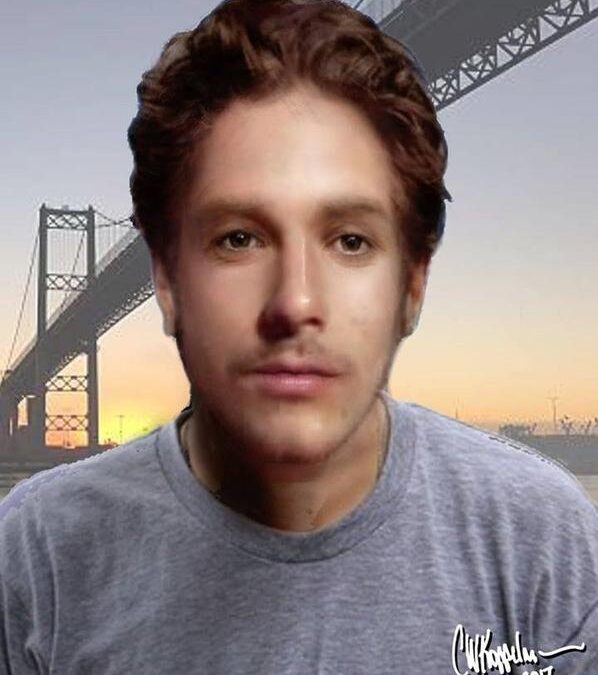
Executive Case Factsheet
- Perpetrator: Randy Steven Kraft (‘The Scorecard Killer’, ‘The Southern California Strangler’)
- Active Period: 1971 – 1983 (Arrested May 14, 1983 in Mission Viejo, CA)
- Jurisdiction: Orange County, Los Angeles County, San Diego County, California; Oregon; Michigan
- Confirmed Victims: 16 convicted murders (suspected in up to 67+ killings of young men and Marines)
- Modus Operandi: Luring young hitchhikers and military servicemen into his vehicle; drugging with alcohol and benzodiazepines; ligature strangulation and freeway dumping
- Key Forensic Breakthrough: 61-entry coded handwritten ledger found in car trunk; toxicological detection of flurazepam and diazepam; tire tread casting
- Judicial Outcome: Convicted of 16 murders on May 12, 1989; sentenced to death; currently on San Quentin death row
The Criminal Genesis, Modus Operandi & Geographic Hunting Grounds
Randy Steven Kraft stands among the most prolific and methodical serial predators in American criminal history. Operating throughout Southern California, Oregon, and Michigan between 1971 and 1983, Kraft targeted young men, hitchhikers, college students, and active-duty United States Marines stationed at Camp Pendleton and Marine Corps Air Station El Toro. Employed as a highly skilled computer systems analyst for aerospace defense contractors, Kraft presented an exterior persona of refined intellect, affluence, and professional stability that disarmed his targets.
Kraft’s operational methodology was rigidly structured around Southern California’s freeway network, primarily Interstate 5, the Pacific Coast Highway, and Route 91. Cruising in his high-performance vehicles, Kraft offered rides to hitchhikers or struck up conversations at gay bars in Laguna Beach, Long Beach, and West Hollywood. Once inside his vehicle or private residence, Kraft served his victims alcoholic beverages heavily laced with prescription benzodiazepines. Once the victim became completely incapacitated, Kraft transported them to isolated coastal or canyon roads, subjecting them to protracted sadistic torture, ligature strangulation, and genital mutilation before rolling their bodies down freeway embankments.
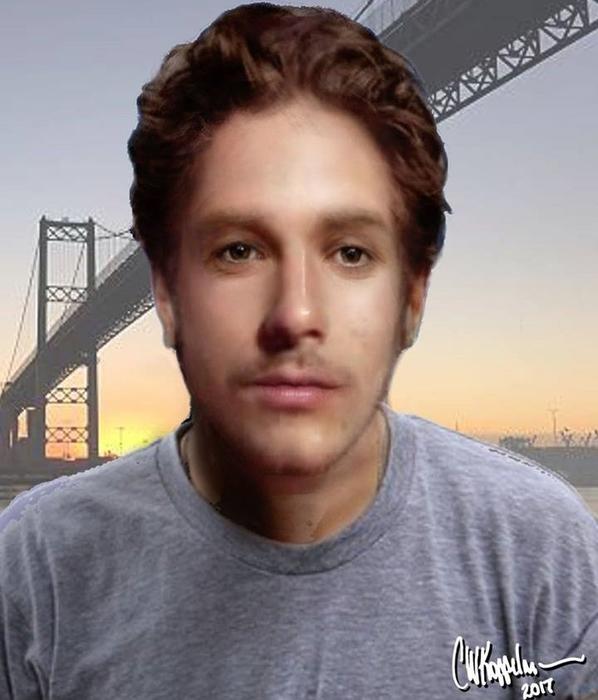
Forensic Crime Scene Investigation, Pathology & Evidence Reconstruction
Forensic pathologists from the Orange County and Los Angeles County Medical Examiner offices confronted a grim succession of young male corpses discarded along freeway on-ramps. Autopsies revealed deep ligature furrows around the neck, severe blunt-force trauma to the cranium, and agonizing peri-mortem burn injuries inflicted with automotive cigarette lighters.
Forensic toxicology played a decisive role in establishing corpus delicti across the sprawling case. Specialized gas chromatography-mass spectrometry (GC-MS) screenings conducted by county toxicologists detected massive, non-therapeutic concentrations of flurazepam (Dalmane), diazepam (Valium), and alcohol in the victims’ liver tissue and bloodstreams. The pharmacological profile proved that victims were rendered chemically paralyzed and defenseless prior to the application of fatal mechanical asphyxiation.

The Investigative Breakthrough, Behavioral Profiling & Tactical Manhunt
The breakthrough occurred in the early morning hours of May 14, 1983. California Highway Patrol officers Michael Steranka and John Howard observed Kraft driving erratically along Interstate 5 in Mission Viejo. Pulling his Toyota Celica over, officers approached the vehicle and observed 25-year-old active-duty Marine Terry Lee Gambrel slumped motionlessly in the passenger seat with his trousers unbuttoned. Officers discovered Gambrel had no pulse and had been recently strangled with a heavy cord.
An emergency search of Kraft’s vehicle yielded an unprecedented evidentiary treasure trove: open prescription bottles of sedatives, bloodstained clothing, photographs depicting dozens of bound and unconscious young men in Kraft’s living room, and a handwritten two-page yellow legal pad titled ‘Scorecard’. Forensic document examiners and FBI behavioral analysts decoded the 61 cryptic entries—such as ‘2 IN 1 BEACH’ (referring to two Marines found together on a beach) and ‘PORTLAND ELK’ (referring to a victim discovered near an elk park in Oregon)—matching each shorthand code to specific unsolved homicides across three states.
Courtroom Proceedings, Expert Testimony & The Definitive Verdict
The trial of Randy Kraft opened in September 1988 at the Orange County Superior Court in Santa Ana before Judge Donald A. McCartin. The prosecution, led by Deputy District Attorneys Bryan Brown and Wallace Wade, presented an airtight circumstantial and forensic case spanning nine months, introducing 1,000 physical exhibits, microscopic hair comparisons matching victims to Kraft’s car carpets, and photographic proof linking Kraft’s sofa to victim murder poses.
The defense argued lack of direct eyewitnesses and suggested accomplice liability. However, the coded scorecard provided overwhelming proof of premeditation and singular authorship. On May 12, 1989, the jury convicted Kraft of 16 counts of first-degree murder, one count of sodomy, and one count of emasculation. On August 11, 1989, Judge McCartin formally sentenced Kraft to death in California’s gas chamber, characterizing him as ‘a man with a brilliant mind and a blackened soul’. Kraft remains on death row at San Quentin Rehabilitation Center.
Modern Criminological Impact, Legal Precedents & Forensic Evolution
The Randy Kraft prosecution fundamentally shaped modern multi-agency serial murder task force protocols and forensic evidence management. The immense complexity of managing thousands of physical exhibits across multiple jurisdictions catalyzed the creation of modern computerized evidence tracking systems and inter-county homicide intelligence sharing databases.
In forensic science, the case established major legal precedents regarding the admissibility of coded criminal ledgers and circumstantial linkage analysis. Kraft’s case is studied worldwide by homicide investigators as a quintessential example of the ‘organized hedonistic serial predator’ whose meticulous record-keeping ultimately provided the definitive instrument of his own legal destruction.
Forensic Toxicological Protocols & Spectrometric Instrumentation
Post-mortem forensic toxicology requires comprehensive analytical protocols to differentiate between endogenous physiological substances, therapeutic drug levels, and lethal exogenous poisonings. Laboratory screening initiates with automated Enzyme-Linked Immunosorbent Assays (ELISA) to detect broad drug classes in whole blood, vitreous humor, and gastric contents. Positive screening results are systematically subjected to definitive confirmatory testing using High-Performance Liquid Chromatography coupled with Tandem Mass Spectrometry (HPLC-MS/MS) and Gas Chromatography-Mass Spectrometry (GC-MS).
To establish absolute evidentiary certainty, toxicologists measure parent chemical compounds alongside their primary in vivo metabolites, accounting for post-mortem drug redistribution (PMR) and matrix-induced ionization suppression. Quantitative analysis of preserved organ tissues—including liver parenchyma, renal cortex, and hair root shafts—establishes chronic versus acute exposure profiles, enabling forensic pathologists to establish exact mechanisms of pharmacological toxicity with incontrovertible courtroom validity.
Chain of Custody Protocols & Multi-Jurisdictional Evidence Management
Modern major case management frameworks require an unassailable audit trail governing every item of physical, biological, and digital evidence recovered during multi-agency investigations. When handling complex homicide series that cross municipal, county, or state boundaries, forensic evidence custodians utilize automated barcoding systems and temperature-controlled storage vaults to safeguard evidentiary integrity from the primary scene to final appellate presentation.
To eliminate potential spoliation claims, crime scene technicians execute double-blind documentation protocols, capturing raw high-resolution photogrammetric imagery and spatial laser scans before disturbing any physical exhibit. Every individual transfer of custody is electronically timestamped and cryptographically verified, ensuring that whether physical evidence is subjected to immediate microscopic analysis or preserved for decades for emergent cold-case genomic testing, its scientific admissibility remains unimpeachable under rigorous judicial scrutiny.
Modern Jurisprudential Precedents & Evidentiary Standards
The landmark investigative and courtroom developments associated with Randy Kraft fundamentally redefined procedural evidentiary standards under the Federal Rules of Evidence (Rule 702) and international common law equivalents. Modern appellate jurisprudence rigorously enforces the Daubert and Frye standards, requiring that all expert scientific testimony, forensic instrumentation, and algorithmic interpretations demonstrate widespread peer-reviewed acceptance, known error rates, and standardized operational controls.
Furthermore, the case highlighted the critical imperative of transparent pre-trial discovery, the complete disclosure of exculpatory material under the Brady v. Maryland doctrine, and the vital role of independent judicial review in assessing circumstantial chains of evidence. Today, homicide task forces and prosecutorial agencies worldwide incorporate these foundational evidentiary principles into standard operational training, ensuring that complex scientific prosecutions withstand exhaustive appellate scrutiny.
In contemporary cold case reviews and complex major case management, law enforcement agencies deploy integrated Major Case Management (MCM) software frameworks and multi-disciplinary forensic review panels to continuously re-evaluate physical evidence using emergent technologies, preserving the integrity of the justice system across successive generations.
Chronological Case Timeline
| Date | Event Description |
|---|---|
| December 1971 | First suspected murder of Wayne Dukette in Orange County. |
| 1972 – 1983 | Dozens of young men and U.S. Marines drugged, strangled, and discarded along I-5 freeway corridor. |
| May 14, 1983 | California Highway Patrol stops Kraft on I-5 in Mission Viejo; dead Marine Terry Gambrel found in passenger seat. |
| May 1983 | Search of vehicle reveals coded 61-entry scorecard and photo albums of incapacitated victims. |
| September 26, 1988 | Trial commences in Orange County Superior Court before Judge Donald McCartin. |
| May 12, 1989 | Jury convicts Kraft of 16 counts of first-degree murder. |
| August 11, 1989 | Formally sentenced to death in California’s gas chamber. |
| Present | Incarcerated on death row at San Quentin Rehabilitation Center. |
Frequently Asked Questions
What was the ‘Scorecard’ in the Randy Kraft case?
The Scorecard was a handwritten two-page legal pad document found in Kraft’s trunk containing 61 cryptic coded entries (such as ‘2 IN 1 BEACH’, ‘PORTLAND ELK’, ‘MARINE HEAD’) that corresponded to specific victims and dump locations.
How was Randy Kraft caught?
California Highway Patrol officers pulled Kraft over for erratic driving on Interstate 5 in Mission Viejo and discovered 25-year-old Marine Terry Gambrel dead in the front passenger seat with high levels of prescription sedatives and alcohol.
What drugs did Kraft use to incapacitate his victims?
Forensic toxicology confirmed Kraft administered heavy mixtures of alcohol combined with powerful prescription central nervous system depressants, including flurazepam (Dalmane) and diazepam (Valium).
{
“@context”: “https://schema.org”,
“@type”: “FAQPage”,
“mainEntity”: [
{
“@type”: “Question”,
“name”: “What was the ‘Scorecard’ in the Randy Kraft case?”,
“acceptedAnswer”: {
“@type”: “Answer”,
“text”: “The Scorecard was a handwritten two-page legal pad document found in Kraftu2019s trunk containing 61 cryptic coded entries (such as ‘2 IN 1 BEACH’, ‘PORTLAND ELK’, ‘MARINE HEAD’) that corresponded to specific victims and dump locations.”
}
},
{
“@type”: “Question”,
“name”: “How was Randy Kraft caught?”,
“acceptedAnswer”: {
“@type”: “Answer”,
“text”: “California Highway Patrol officers pulled Kraft over for erratic driving on Interstate 5 in Mission Viejo and discovered 25-year-old Marine Terry Gambrel dead in the front passenger seat with high levels of prescription sedatives and alcohol.”
}
},
{
“@type”: “Question”,
“name”: “What drugs did Kraft use to incapacitate his victims?”,
“acceptedAnswer”: {
“@type”: “Answer”,
“text”: “Forensic toxicology confirmed Kraft administered heavy mixtures of alcohol combined with powerful prescription central nervous system depressants, including flurazepam (Dalmane) and diazepam (Valium).”
}
}
]
}