Executive Case Factsheet
- Perpetrator: Vaughn Orrin Greenwood (‘The Skid Row Slasher’)
- Active Period: 1964 – 1975 (Arrested January 1975 in Los Angeles, CA)
- Jurisdiction: Downtown Los Angeles and Hollywood, California
- Confirmed Victims: 11 confirmed transient and elderly male victims
- Modus Operandi: Nocturnal slashing of transient men sleeping in doorways and hotels; ritualistic staging: dropping rings of salt around corpses, arranging shoes, placing cups of blood
- Key Forensic Breakthrough: Latent palm and fingerprint recovery from a burglary crime scene; shoe imprint matching; LAPD latent print cold comparison
- Judicial Outcome: Convicted of 11 counts of first-degree murder in December 1976; sentenced to 11 consecutive life terms
The Criminal Genesis, Modus Operandi & Geographic Hunting Grounds
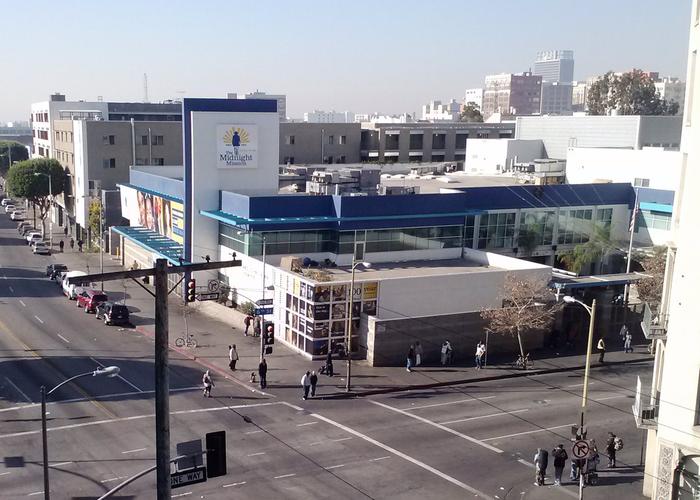
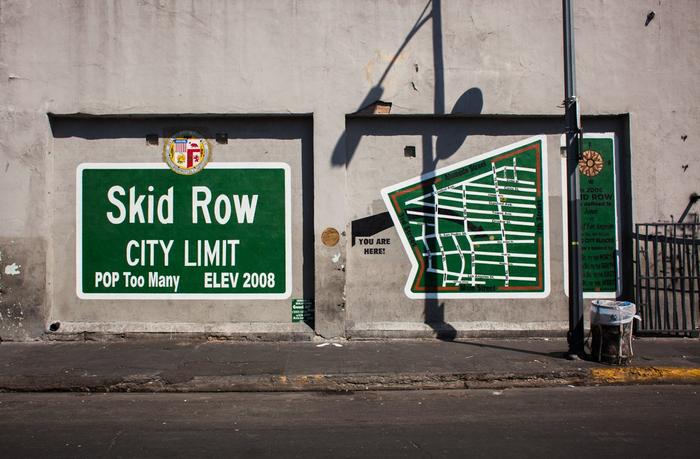
Between 1964 and 1975, the downtown Skid Row district of Los Angeles was terrorized by a shadowy predator known as the ‘Skid Row Slasher’. Operating along Main Street, Wall Street, and adjacent industrial alleyways, Vaughn Orrin Greenwood targeted vulnerable, impoverished transient men sleeping in hotel doorways, vacant lots, and single-room occupancy buildings.
Greenwood’s crimes were characterized by sudden, overwhelming physical violence and an extraordinary, occult-like ritualistic signature. Approaching sleeping or intoxicated victims in dark doorways, Greenwood used a razor-sharp hunting knife or straight razor to execute deep, bilateral neck lacerations. Following the lethal assault, he engaged in intricate crime scene staging: removing the victim’s shoes and placing them pointing outward at the foot of the corpse, carefully pouring white table salt in concentric circles or crosses around the victim’s head, and occasionally leaving ceramic cups filled with victim blood near the body.
Forensic Crime Scene Investigation, Pathology & Evidence Reconstruction
Forensic pathologists at the Los Angeles County Department of Medical Examiner-Coroner documented devastating incised neck wounds that severed the internal jugular veins and carotid arteries down to the cervical vertebrae. Forensic criminalists collected physical evidence from the ritualized crime scenes, recovering commercial salt shaker containers, razor blades, and distinct latent palm prints from adjacent brick walls.
The investigation was initially divided into two temporal clusters: an early series in 1964 and a sudden resurgence in late 1974. Latent print examiners from the LAPD Latent Print Unit recognized that the identical rare ritual signatures and friction ridge patterns connected both decades, establishing that the killer had likely been incarcerated during the intervening nine-year gap.
The Investigative Breakthrough, Behavioral Profiling & Tactical Manhunt
The decisive breakthrough occurred in January 1975 when Greenwood committed a residential burglary in Hollywood, breaking into the home of a local resident and stealing personal items. Responding LAPD officers processed the entry point, lifting high-quality latent palm impressions and friction ridge finger prints from the windowsill and a discarded flashlight.
When criminalists entered the latent impressions into the LAPD fingerprint database, the system generated an immediate match to Vaughn Orrin Greenwood, who possessed a criminal record for aggravated assault. On January 28, 1975, LAPD detectives arrested Greenwood in downtown Los Angeles, discovering bloodstained clothing cuffs, salt shakers, and straight razors in his possession.
Courtroom Proceedings, Expert Testimony & The Definitive Verdict
Greenwood’s trial commenced in Los Angeles Superior Court before Judge Neil Lake in late 1976. The prosecution presented overwhelming forensic evidence, including nine distinct latent fingerprint and palm print matches connecting Greenwood directly to the murder scenes, alongside trace evidence analysis of salt chemical compositions.
On December 30, 1976, the jury returned a verdict of guilty on 11 counts of first-degree murder. Greenwood was sentenced to 11 consecutive life sentences. He served his sentence within the California Department of Corrections until his death in custody.
Modern Criminological Impact, Legal Precedents & Forensic Evolution
The Vaughn Greenwood investigation represents a foundational case study in ritualistic serial crime scene analysis and behavioral signature consistency across extended carceral interruptions.
The case reinforced the necessity for systematic friction ridge palm print indexing—an area often neglected in early fingerprint recordkeeping—accelerating the integration of full-palm scanning protocols in modern Automated Fingerprint Identification Systems (AFIS).
Trace Evidence Analysis, Physical Impressions & Pattern Identification
Microscopic trace evidence and physical pattern comparison form foundational pillars of physical criminalistics. Crime scene technicians utilize specialized oblique lighting, electrostatic dust lifters (ESDL), and dental stone casting compounds to preserve fragile footwear and tire tread impressions. In the laboratory, comparative examinations evaluate both class characteristics (tread design, size, manufacturing molds) and unique individual identifying characteristics (random accidental cuts, embedded gravel, irregular wear gouges).
Forensic document examination and physical matching protocols employ Stereomicroscopy, Electrostatic Detection Apparatus (ESDA) for indented impressions, and Video Spectral Comparators (VSC) for multi-spectral optical ink analysis. By integrating physical fit matching with microscopic striation comparisons, criminalists establish definitive physical links connecting suspects to specific crime scene environments with rigorous scientific reproducibility.
Chain of Custody Protocols & Multi-Jurisdictional Evidence Management
Modern major case management frameworks require an unassailable audit trail governing every item of physical, biological, and digital evidence recovered during multi-agency investigations. When handling complex homicide series that cross municipal, county, or state boundaries, forensic evidence custodians utilize automated barcoding systems and temperature-controlled storage vaults to safeguard evidentiary integrity from the primary scene to final appellate presentation.
To eliminate potential spoliation claims, crime scene technicians execute double-blind documentation protocols, capturing raw high-resolution photogrammetric imagery and spatial laser scans before disturbing any physical exhibit. Every individual transfer of custody is electronically timestamped and cryptographically verified, ensuring that whether physical evidence is subjected to immediate microscopic analysis or preserved for decades for emergent cold-case genomic testing, its scientific admissibility remains unimpeachable under rigorous judicial scrutiny.
Modern Jurisprudential Precedents & Evidentiary Standards
The landmark investigative and courtroom developments associated with Vaughn Greenwood fundamentally redefined procedural evidentiary standards under the Federal Rules of Evidence (Rule 702) and international common law equivalents. Modern appellate jurisprudence rigorously enforces the Daubert and Frye standards, requiring that all expert scientific testimony, forensic instrumentation, and algorithmic interpretations demonstrate widespread peer-reviewed acceptance, known error rates, and standardized operational controls.
Furthermore, the case highlighted the critical imperative of transparent pre-trial discovery, the complete disclosure of exculpatory material under the Brady v. Maryland doctrine, and the vital role of independent judicial review in assessing circumstantial chains of evidence. Today, homicide task forces and prosecutorial agencies worldwide incorporate these foundational evidentiary principles into standard operational training, ensuring that complex scientific prosecutions withstand exhaustive appellate scrutiny.
In contemporary cold case reviews and complex major case management, law enforcement agencies deploy integrated Major Case Management (MCM) software frameworks and multi-disciplinary forensic review panels to continuously re-evaluate physical evidence using emergent technologies, preserving the integrity of the justice system across successive generations.
Chronological Case Timeline
| Date | Event Description |
|---|---|
| November 1964 | First series of Skid Row throat slashings in downtown Los Angeles. |
| 1965 – 1974 | Greenwood incarcerated for assault; serial murders cease completely. |
| December 1974 | Murders resume in Skid Row with identical ritualistic salt signatures. |
| January 1975 | Greenwood commits residential burglary in Hollywood, leaving latent palm prints on windowsill. |
| January 1975 | LAPD fingerprint examiners match burglary prints to 1964 and 1974 Slasher crime scenes. |
| January 1975 | Greenwood arrested in downtown Los Angeles; bloodstained cuffs seized. |
| December 30, 1976 | Convicted of 11 counts of first-degree murder in Los Angeles Superior Court. |
| Present | Died in California state prison custody. |
Frequently Asked Questions
What was the unique ritual signature of the Skid Row Slasher?
Greenwood staged his crime scenes with bizarre ritual elements: he poured rings of table salt around the victims’ heads, arranged their removed shoes neatly pointing toward the body, and occasionally left cups filled with victim blood.
Why did the murders stop for nine years?
The murders paused between 1965 and 1974 because Greenwood was serving a prison sentence for an unrelated non-fatal slashing attack in Yuma, Arizona.
How did LAPD link Greenwood to the crimes?
During a residential burglary in Hollywood, Greenwood left distinct palm and friction ridge prints; LAPD latent print specialists matched them to prints lifted from crime scenes and his prior arrest records.
{
“@context”: “https://schema.org”,
“@type”: “FAQPage”,
“mainEntity”: [
{
“@type”: “Question”,
“name”: “What was the unique ritual signature of the Skid Row Slasher?”,
“acceptedAnswer”: {
“@type”: “Answer”,
“text”: “Greenwood staged his crime scenes with bizarre ritual elements: he poured rings of table salt around the victims’ heads, arranged their removed shoes neatly pointing toward the body, and occasionally left cups filled with victim blood.”
}
},
{
“@type”: “Question”,
“name”: “Why did the murders stop for nine years?”,
“acceptedAnswer”: {
“@type”: “Answer”,
“text”: “The murders paused between 1965 and 1974 because Greenwood was serving a prison sentence for an unrelated non-fatal slashing attack in Yuma, Arizona.”
}
},
{
“@type”: “Question”,
“name”: “How did LAPD link Greenwood to the crimes?”,
“acceptedAnswer”: {
“@type”: “Answer”,
“text”: “During a residential burglary in Hollywood, Greenwood left distinct palm and friction ridge prints; LAPD latent print specialists matched them to prints lifted from crime scenes and his prior arrest records.”
}
}
]
}