Executive Case Factsheet
- Perpetrator: Juan Vallejo Corona (Labor Contractor)
- Active Period: February 1971 – May 1971 (Arrested May 26, 1971 in Yuba City, CA)
- Jurisdiction: Sutter County, California, United States
- Confirmed Victims: 25 migrant farmworkers and itinerant laborers
- Modus Operandi: Hiring transient agricultural workers; transporting to peach orchards along the Feather River; machete and meat cleaver hacking trauma; burial in shallow trenches
- Key Forensic Breakthrough: Labor ledger notebook containing victims’ names and burial dates; receipts bearing Corona’s signature found inside victim graves; machete tool marks
- Judicial Outcome: Convicted of 25 counts of first-degree murder in 1973; retried and convicted again in 1982; died in prison on March 4, 2019 at age 85
The Criminal Genesis, Modus Operandi & Geographic Hunting Grounds
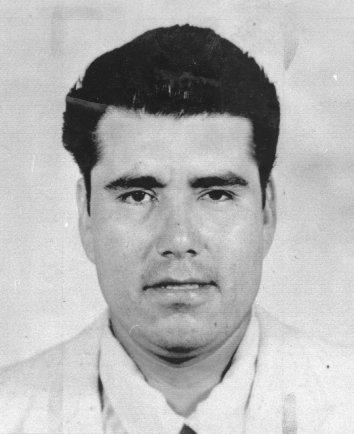
In May 1971, the agricultural community of Yuba City in Northern California became the site of the largest mass murder investigation in United States history up to that time. Operating as a licensed agricultural labor contractor, 37-year-old Juan Vallejo Corona supplied transient fruit pickers and farm laborers to regional orchards across Sutter and Yuba Counties.
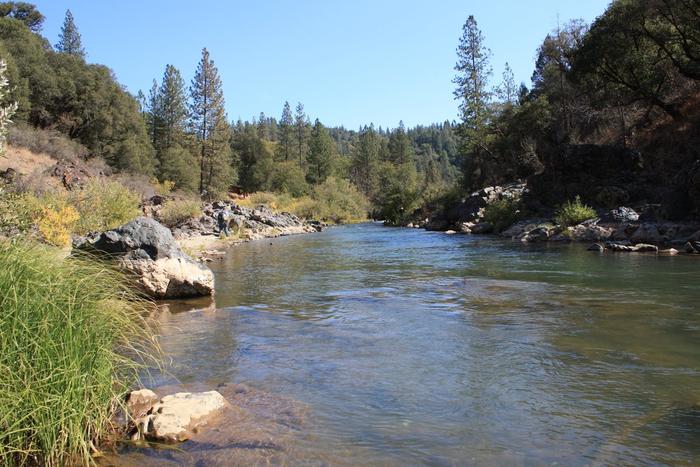
Corona’s predatory routine exploited the extreme socio-economic vulnerability of itinerant agricultural workers. Recruiting elderly, homeless, or transient men from local flophouses and labor hiring halls along Marysville’s ‘B’ Street, Corona transported them to secluded peach and prune orchards bordering the Feather River under the promise of seasonal field employment. Once isolated in remote orchard rows, Corona attacked the victims with overwhelming kinetic force using machetes, meat cleavers, and heavy knives, inflicting catastrophic cranial and thoracic hacking trauma before burying the bodies in pre-dug agricultural drainage trenches.
Forensic Crime Scene Investigation, Pathology & Evidence Reconstruction
The forensic discovery commenced on May 19, 1971, when a local orchard owner discovered a freshly dug trench between peach trees containing the body of Kenneth Whitacre, his skull cleaved open and chest stabbed. Sutter County Sheriff Roy Whiteaker coordinated a massive archaeological excavation along the riverbanks, utilizing heavy backhoes, soil probes, and forensic recovery teams. Over sixteen days, search teams unearthed 25 identical shallow graves.
Pathological post-mortem examinations revealed a horrific physical pattern: every victim had suffered massive cranial chops with cross-shaped incised wound patterns and deep chest penetrations. Inside two of the graves, forensic excavators discovered crucial physical evidence: bank deposit slips and meat market receipts bearing Juan Corona’s signature and home address, discarded alongside the corpses.
The Investigative Breakthrough, Behavioral Profiling & Tactical Manhunt
On May 26, 1971, sheriff’s deputies raided Corona’s residence in Yuba City. Inside his office and work truck, detectives seized an arsenal of edged weapons, including a 17-inch machete, a heavy meat cleaver, and a post-hole digger stained with dried blood.
Furthermore, investigators recovered the case’s central evidentiary document: a green spiral-bound ledger containing 34 handwritten names and dates matching the victims and their disappearances, titled in Spanish. Forensic document examiners and ink analysts confirmed the entries were written in Corona’s handwriting using pens seized from his home.
Courtroom Proceedings, Expert Testimony & The Definitive Verdict
Corona was tried in Colusa County Superior Court before Judge Richard Patton in late 1972. The prosecution presented 118 witnesses and 969 physical exhibits, establishing indisputable physical links between Corona’s tools, vehicle tire treads, and the orchard graves.
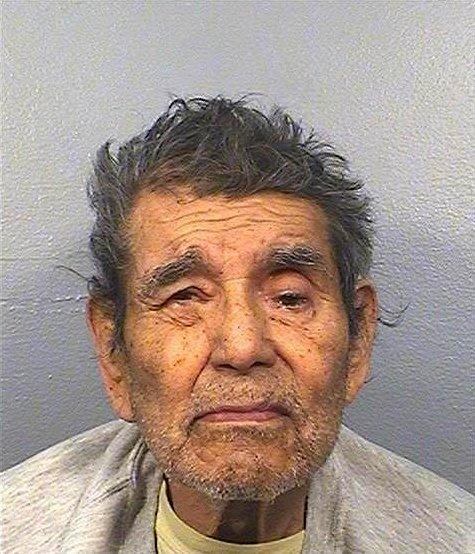
On January 18, 1973, the jury convicted Corona on all 25 counts of first-degree murder, resulting in 25 consecutive life terms. Although the conviction was overturned on appeal in 1978 due to ineffective counsel, a grueling seven-month retrial in 1982 in Hayward, California, resulted in a second unanimous conviction on all 25 counts. Corona died of natural causes at Corcoran State Prison on March 4, 2019, at the age of 85.
Modern Criminological Impact, Legal Precedents & Forensic Evolution
The Juan Corona investigation pioneered modern protocols for forensic archaeology and mass casualty clandestine grave excavation in agricultural terrains.
The case also spurred significant regulatory reforms governing agricultural labor contracting and worker identification, ensuring institutional protection for migrant labor populations across the United States.
Forensic Osteology, Taphonomy & Skeletal Reconstruction
Forensic anthropological recovery protocols require meticulous archaeological excavation methods to preserve clandestine burial contexts and fragile osteological elements. Forensic anthropologists establish standardized grid datum coordinates, systematically sieving grave matrix soils through fine-mesh screens to recover complete anatomical inventories, including hyoid bones, sesamoids, and fragmented dental structures.
Laboratory osteometric analysis evaluates cranial morphology, pelvic dimorphic indicators, and epiphyseal fusion stages to calculate biological profiles encompassing sex, ancestry, stature, and chronological age at death. Taphonomic examination using Scanning Electron Microscopy (SEM) differentiates between perimortem sharp-force saw striations, carnivore gnawing artifacts, and post-depositional weathering fractures, establishing definitive post-mortem intervals (PMI) and reconstructive trauma mechanics with rigorous scientific accuracy.
Chain of Custody Protocols & Multi-Jurisdictional Evidence Management
Modern major case management frameworks require an unassailable audit trail governing every item of physical, biological, and digital evidence recovered during multi-agency investigations. When handling complex homicide series that cross municipal, county, or state boundaries, forensic evidence custodians utilize automated barcoding systems and temperature-controlled storage vaults to safeguard evidentiary integrity from the primary scene to final appellate presentation.
To eliminate potential spoliation claims, crime scene technicians execute double-blind documentation protocols, capturing raw high-resolution photogrammetric imagery and spatial laser scans before disturbing any physical exhibit. Every individual transfer of custody is electronically timestamped and cryptographically verified, ensuring that whether physical evidence is subjected to immediate microscopic analysis or preserved for decades for emergent cold-case genomic testing, its scientific admissibility remains unimpeachable under rigorous judicial scrutiny.
Modern Jurisprudential Precedents & Evidentiary Standards
The landmark investigative and courtroom developments associated with Juan Corona fundamentally redefined procedural evidentiary standards under the Federal Rules of Evidence (Rule 702) and international common law equivalents. Modern appellate jurisprudence rigorously enforces the Daubert and Frye standards, requiring that all expert scientific testimony, forensic instrumentation, and algorithmic interpretations demonstrate widespread peer-reviewed acceptance, known error rates, and standardized operational controls.
Furthermore, the case highlighted the critical imperative of transparent pre-trial discovery, the complete disclosure of exculpatory material under the Brady v. Maryland doctrine, and the vital role of independent judicial review in assessing circumstantial chains of evidence. Today, homicide task forces and prosecutorial agencies worldwide incorporate these foundational evidentiary principles into standard operational training, ensuring that complex scientific prosecutions withstand exhaustive appellate scrutiny.
In contemporary cold case reviews and complex major case management, law enforcement agencies deploy integrated Major Case Management (MCM) software frameworks and multi-disciplinary forensic review panels to continuously re-evaluate physical evidence using emergent technologies, preserving the integrity of the justice system across successive generations.
Chronological Case Timeline
| Date | Event Description |
|---|---|
| May 19, 1971 | Peach rancher discovers freshly dug trench containing body of Kenneth Whitacre in Sutter County. |
| May 20 – June 4, 1971 | Sutter County Sheriff’s Office excavates 25 shallow graves along the Feather River. |
| May 26, 1971 | Juan Corona arrested at his Yuba City residence; labor ledger and machete seized. |
| September 1972 | First trial opens in Colusa County Superior Court. |
| January 18, 1973 | Convicted on all 25 counts of first-degree murder. |
| 1978 | California Court of Appeal overturns conviction due to inadequate legal defense representation. |
| November 1982 | Retried and convicted again on all 25 counts; sentenced to 25 consecutive life terms. |
| March 4, 2019 | Dies of natural causes in state prison custody at Corcoran State Prison. |
Frequently Asked Questions
What was found inside the graves in the Juan Corona case?
Investigators found bank deposit slips and meat market receipts bearing Juan Corona’s signature buried directly inside two of the victim graves, alongside matching tire impressions.
What was the ‘Death Ledger’ in the Corona trial?
The prosecution introduced a spiral notebook found in Corona’s home containing 34 names and dates, which handwriting and forensic document examiners linked directly to the buried farmworkers.
What weapon did Juan Corona use?
Forensic pathologists determined the victims were killed with heavy, hacking blows from a machete and meat cleaver, which matched blades seized from Corona’s truck and residence.
{
“@context”: “https://schema.org”,
“@type”: “FAQPage”,
“mainEntity”: [
{
“@type”: “Question”,
“name”: “What was found inside the graves in the Juan Corona case?”,
“acceptedAnswer”: {
“@type”: “Answer”,
“text”: “Investigators found bank deposit slips and meat market receipts bearing Juan Coronau2019s signature buried directly inside two of the victim graves, alongside matching tire impressions.”
}
},
{
“@type”: “Question”,
“name”: “What was the ‘Death Ledger’ in the Corona trial?”,
“acceptedAnswer”: {
“@type”: “Answer”,
“text”: “The prosecution introduced a spiral notebook found in Coronau2019s home containing 34 names and dates, which handwriting and forensic document examiners linked directly to the buried farmworkers.”
}
},
{
“@type”: “Question”,
“name”: “What weapon did Juan Corona use?”,
“acceptedAnswer”: {
“@type”: “Answer”,
“text”: “Forensic pathologists determined the victims were killed with heavy, hacking blows from a machete and meat cleaver, which matched blades seized from Coronau2019s truck and residence.”
}
}
]
}