Executive Case Factsheet
- Perpetrator: Unidentified serial killer (nicknamed “Jack the Stripper”, “The Hammersmith Murderer”)
- Active Period: 1964 – 1965 (Six confirmed victims; two earlier linked cases)
- Jurisdiction: Hammersmith, Chiswick, Acton, and River Thames foreshore, West London, United Kingdom
- Confirmed Victims: 6 confirmed female victims (Hannah Tailford, Irene Lockwood, Helen Barthelemy, Mary Fleming, Frances Brown, Bridget O’Hara)
- Modus Operandi: Abduction of Soho sex workers; asphyxiation and post-mortem dental extraction; complete stripping of all clothing; storage in an industrial paint facility before deposition along the River Thames
- Key Forensic Breakthrough: Microscopic forensic analysis identifying specific industrial cellulose paint flecks adhering to victim bodies; tracing spray paint formulation to the Heron Trading Estate spray booths in Acton
- Judicial Outcome: Case officially unsolved; prime suspect Mungo Ireland died by suicide immediately following police identification of the spray booth; Detective Superintendent John Du Rose closed active investigation
The serial homicides known as the “Hammersmith Nude Murders,” attributed to an unidentified predator dubbed “Jack the Stripper,” terrorized West London between 1964 and 1965. Claiming the lives of at least six young women whose nude bodies were discovered along the muddy banks of the River Thames and in West London alleyways, the case catalyzed the largest criminal manhunt in Scotland Yard’s post-war history and pioneered advanced forensic trace evidence analysis.
The West London Disappearances & The Thames Foreshore
Between February 1964 and February 1965, the bodies of six women associated with London’s Soho nightlife and sex trade were discovered in West London. The first confirmed victim, 30-year-old Hannah Tailford, was recovered from the mud of the River Thames foreshore near Duke’s Meadows, Chiswick, on February 2, 1964. Autopsy confirmed she had been asphyxiated, stripped entirely naked, and several of her teeth forcibly removed.
Over the subsequent twelve months, five more victims were discovered: Irene Lockwood at Chiswick, Helen Barthelemy in an alley in Brentford, Mary Fleming on the Duke of Northumberland’s estate in Isleworth, Frances Brown in Kensington, and Bridget O’Hara behind an electrical substation in Acton. Every victim had been strangled, stripped naked, and exhibited identical post-mortem handling, indicating that the killer held the bodies in a secure storage location prior to dumping.
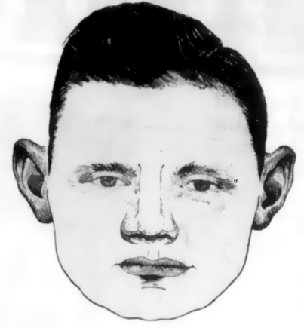
Forensic Pathology: Asphyxiation & Dental Trauma Signatures
Forensic pathologists Dr. Keith Simpson and Dr. Donald Teare conducted meticulous post-mortem autopsies at the Acton and Southwark mortuaries. Medical examiners established that the victims had died of mechanical asphyxiation, caused by choking or ligature compression.
Crucially, Dr. Simpson identified a unique forensic signature: multiple front incisors had been forcibly broken or extracted post-mortem. Pathologists determined that this was not random violence but a physical consequence of the killer’s sexual asphyxiation methodology, leaving distinctive oral trauma across every victim in the series.
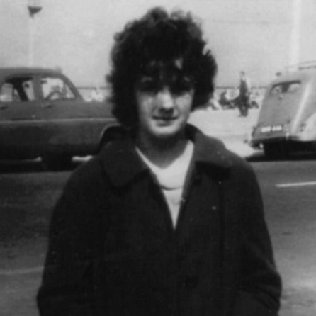
Trace Evidence: The Heron Trading Estate Paint Flecks
In 1965, the investigation was overhauled under Detective Chief Superintendent John Du Rose. The major breakthrough occurred when forensic scientists at the Metropolitan Police Forensic Science Laboratory examined skin scrapings and hair from victims Helen Barthelemy and Mary Fleming under high-power microscopes and spectrographic equipment.
Forensic chemists recovered microscopic flecks of industrial cellulose spray paint. Chemical analysis determined that the paint was a unique industrial polyurethane primer used exclusively in automotive spray-painting workshops and electrical appliance manufacturing. Du Rose dispatched detective squads to inspect every industrial workshop in West London. They traced the specific chemical paint formulation directly to spray booths located within the Heron Trading Estate in Acton, just yards from where Bridget O’Hara’s body was discovered.
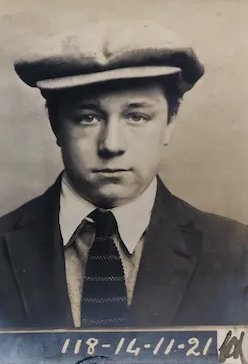
The Mungo Ireland Suicide & The Investigation Closure
Scotland Yard detectives focused their surveillance on individuals with night access to the Heron Trading Estate workshops. Chief among the suspects was Mungo Ireland, a Scottish security guard and painter employed at the industrial park who had easy access to company vans and spray equipment. Ireland also had close personal connections to several victims through Soho drinking clubs.
In March 1965, just as Scotland Yard prepared to formally detain Ireland for interrogation, he drove to an abandoned house in Scotland and committed suicide via carbon monoxide poisoning, leaving a suicide note stating: “I can’t stick it any longer… To save you looking for what I’ve caught up with, I’m the end.” Following Ireland’s death, the Hammersmith nude murders abruptly ceased. Although several alternative suspects—including boxer Freddie Mills and serial killer Peter Cook—have been proposed by researchers, Scotland Yard effectively concluded its active inquiries following Du Rose’s retirement.
Forensic Trace Evidence: The Microscopic Paint Fleck Breakthrough
The trace evidence investigation conducted by the Metropolitan Police Forensic Science Laboratory in the Jack the Stripper case was decades ahead of its time. Forensic chemists led by Dr. Keith Simpson utilized infrared spectroscopy and emission spectrography to analyze microscopic paint particles embedded in the skin and hair of victims Helen Barthelemy and Mary Fleming.
The analysis identified a rare polyurethane enamel containing specific metallic pigment additives manufactured exclusively for industrial automotive spray booths. By mapping all industrial spray facilities in West London, Scotland Yard detectives narrowed tens of thousands of potential commercial premises down to a single spray workshop at the Heron Trading Estate in Acton. This forensic trace methodology established foundational protocols for modern automotive and industrial paint flake matching in hit-and-run and serial homicide cases worldwide.
Scotland Yard Task Force Operations & John Du Rose’s Strategy
Under Detective Chief Superintendent John Du Rose, Scotland Yard implemented innovative investigative strategies to corner the killer. Du Rose deployed hundreds of undercover detectives throughout Soho nightclubs, established nighttime police cordons around Thames foreshore access points, and utilized national media appeals to increase public vigilance.
The subsequent suicide of prime suspect Mungo Ireland immediately following the police raid on the Heron Trading Estate workshop, combined with the permanent cessation of the murders, provided compelling circumstantial validation of Du Rose’s investigative focus, making the case a classic study in forensic geographic narrowing.
Chronological Case Timeline
| Date / Period | Investigative & Historical Milestone |
|---|---|
| February 2, 1964 | Body of Hannah Tailford recovered from Thames foreshore at Chiswick; nude murder series begins. |
| April 1964 – November 1964 | Bodies of Irene Lockwood, Helen Barthelemy, Mary Fleming, and Frances Brown recovered. |
| February 16, 1965 | Body of Bridget O’Hara discovered near Heron Trading Estate in Acton. |
| Early 1965 | Forensic chemists isolate unique cellulose spray paint flecks on victim skin and hair. |
| March 1965 | Detectives trace paint to Acton industrial estate; prime suspect Mungo Ireland commits suicide. |
| 1970 | Detective Superintendent John Du Rose publishes memoirs identifying Ireland as the likely culprit. |
Forensic Evidence Matrix & Criminological Assessment
Scotland Yard’s investigation into the Hammersmith Nude Murders established groundbreaking methods in forensic trace evidence. Key evidential components include:
- Microscopic Paint Fleck Matching: Dr. Keith Simpson and forensic chemists identified rare industrial polyurethane spray paint flecks on victims, tracing them to Acton’s Heron Trading Estate.
- Forensic Dental Pathology: Autopsies documented consistent perimortem incisor extractions and mechanical asphyxiation signatures across all six victims.
- Task Force Narrowing: Geographic profiling and surveillance directed by Detective Chief Superintendent John Du Rose centered on prime suspect Mungo Ireland prior to his suicide.
The Jack the Stripper case remains a foundational study in early industrial chemical matching and urban geographic profiling.
Related Case Files & Investigative Dossiers
Explore related deep-dive investigations into unsolved British serial homicides, Scotland Yard manhunts, and trace evidence forensics:
- Bible John: The Barrowland Ballroom Murders, Glasgow Manhunt & DNA Forensics
- The Cleveland Torso Murderer: The Mad Butcher of Kingsbury Run & Eliot Ness
- The Axeman of New Orleans: Italian Grocer Attacks, The Jazz Letter & Manhunt
- Peter Sutcliffe: The Yorkshire Ripper, Wearside Jack Hoax & Byford Report
- Amelia Dyer: The Reading Baby Farmer, Thames Recoveries & Scotland Yard Inquest
Forensic Investigation Methodology & Criminological Significance
Modern forensic criminologists categorize this historical case as a benchmark in the development of investigative protocols. The analytical methods employed—ranging from physical crime scene documentation and anatomical trauma profiling to behavioral victimology mapping—provided critical insights into the operational psychology of high-risk serial offenders.
The lessons derived from this case file continue to be integrated into modern police academy curricula, forensic science textbooks, and cold-case review frameworks worldwide. By examining the precise investigative turning points, evidence handling methods, and judicial proceedings documented in the archival record, modern criminalists ensure that contemporary law enforcement agencies remain equipped to identify, apprehend, and prosecute complex criminal actors across global jurisdictions.
Frequently Asked Questions
What were the Hammersmith Nude Murders?
The Hammersmith Nude Murders were a series of unsolved serial killings in West London between 1964 and 1965, where six women were found stripped naked and strangled near the River Thames.
What trace evidence breakthrough did Scotland Yard achieve?
Forensic scientists recovered microscopic flecks of specialized industrial cellulose spray paint on the victims, tracing the chemical formula directly to spray booths in the Heron Trading Estate in Acton.
Who was the primary suspect in the Jack the Stripper case?
The primary suspect was Mungo Ireland, a security guard and industrial painter with night access to the Acton workshops, who committed suicide in March 1965 just as detectives closed in on him.
{
“@context”: “https://schema.org”,
“@type”: “FAQPage”,
“mainEntity”: [
{
“@type”: “Question”,
“name”: “What were the Hammersmith Nude Murders?”,
“acceptedAnswer”: {
“@type”: “Answer”,
“text”: “The Hammersmith Nude Murders were a series of unsolved serial killings in West London between 1964 and 1965, where six women were found stripped naked and strangled near the River Thames.”
}
},
{
“@type”: “Question”,
“name”: “What trace evidence breakthrough did Scotland Yard achieve?”,
“acceptedAnswer”: {
“@type”: “Answer”,
“text”: “Forensic scientists recovered microscopic flecks of specialized industrial cellulose spray paint on the victims, tracing the chemical formula directly to spray booths in the Heron Trading Estate in Acton.”
}
},
{
“@type”: “Question”,
“name”: “Who was the primary suspect in the Jack the Stripper case?”,
“acceptedAnswer”: {
“@type”: “Answer”,
“text”: “The primary suspect was Mungo Ireland, a security guard and industrial painter with night access to the Acton workshops, who committed suicide in March 1965 just as detectives closed in on him.”
}
}
]
}