Executive Case Factsheet
- Perpetrator: Unidentified serial killer (known as “The Mad Butcher of Kingsbury Run”, “The Cleveland Torso Murderer”)
- Active Period: 1934 – 1938 (Twelve official victims; numerous linked dismemberments)
- Jurisdiction: Kingsbury Run, Roaring Run, and Lake Erie shoreline, Cleveland, Ohio, United States
- Confirmed Victims: 12 official victims (only 3 definitively identified: Edward Andrassy, Florence Polillo, and Rose Wallace)
- Modus Operandi: Abducting transient laborers and sex workers from Depression-era shantytowns; surgical decapitation and anatomical dismemberment; chemical treatment and washing of remains; deposition in public ravines and rail corridors
- Key Forensic Breakthrough: Detailed post-mortem anatomical dissections by Coroner Dr. Samuel Gerber identifying professional surgical skill; creation of plaster death masks for public identification; polygraph testing of Dr. Francis Sweeney
- Judicial Outcome: Case officially unsolved; Safety Director Eliot Ness ordered the controversial burning of the Kingsbury Run shantytowns in August 1938; primary suspect Dr. Francis Sweeney confined to psychiatric institutions until death
The gruesome series of serial decapitations and dismemberments known as the “Cleveland Torso Murders” or “The Mad Butcher of Kingsbury Run” terrified the industrial heartland of Ohio during the Great Depression. Between 1934 and 1938, at least twelve victims were cleanly decapitated, dissected, and dumped in the marshy industrial ravines of Cleveland. The case pitted famed former “Untouchables” leader and Cleveland Public Safety Director Eliot Ness against an elusive predator exhibiting sophisticated surgical knowledge.
Kingsbury Run & The Great Depression Shanty Encampments
During the 1930s, Cleveland was hit severely by the economic collapse of the Great Depression. The Kingsbury Run ravine, a sprawling industrial gulley carrying major railroad tracks toward Lake Erie, became home to thousands of unemployed transient workers living in improvised shantytowns (Hoovervilles).
Between September 1935 and August 1938, dismembered and headless human remains were repeatedly found in Kingsbury Run, Jackass Hill, and along the Lake Erie shoreline. Victims—both male and female—were discovered neatly severed into multiple anatomical sections. In many instances, the heads were never recovered, confounding coroner efforts to identify the deceased.
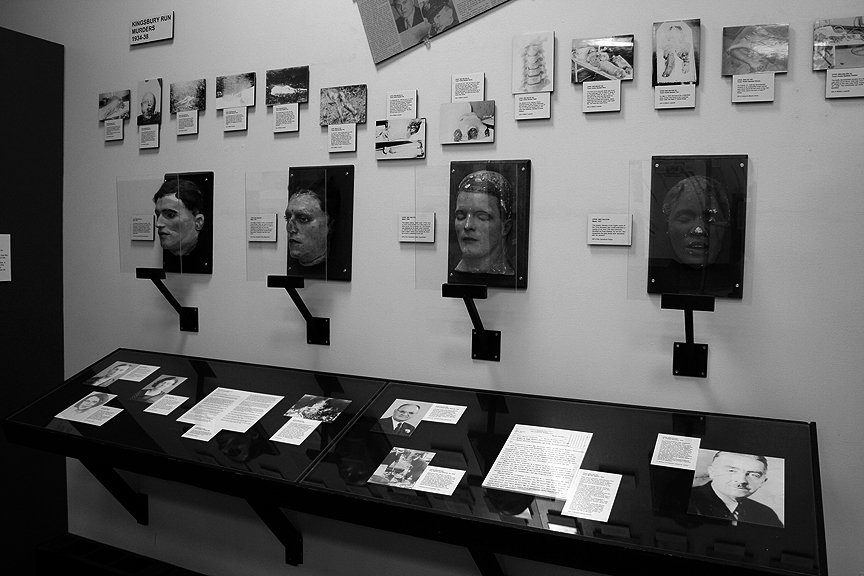
Forensic Pathology: Dr. Samuel Gerber’s Surgical Findings
Cuyahoga County Coroner Dr. Samuel R. Gerber conducted exhaustive forensic post-mortem autopsies on all recovered remains. Gerber’s pathological findings established that the perpetrator possessed high anatomical skill and specialized cutting tools, cleanly severing cervical vertebrae in a single cut without ragged bone splintering.
Gerber demonstrated that victims had been decapitated while still alive, and their corpses thoroughly washed with clean water and chemical antiseptic solutions before being wrapped in burlap or placed in burlap sacks. The total absence of blood at the outdoor discovery sites proved that the murders occurred in a private indoor facility equipped with running water and specialized surgical drainage.
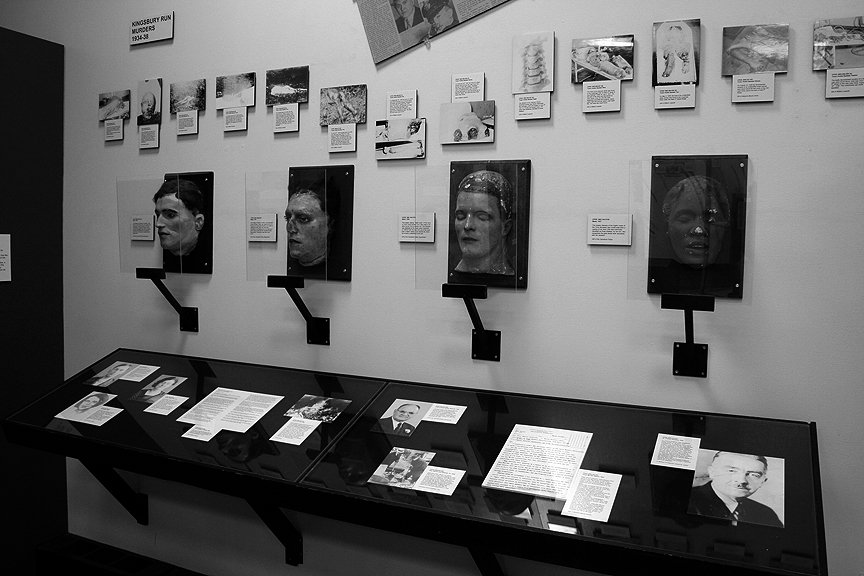
Eliot Ness, Plaster Masks & The Shantytown Raid
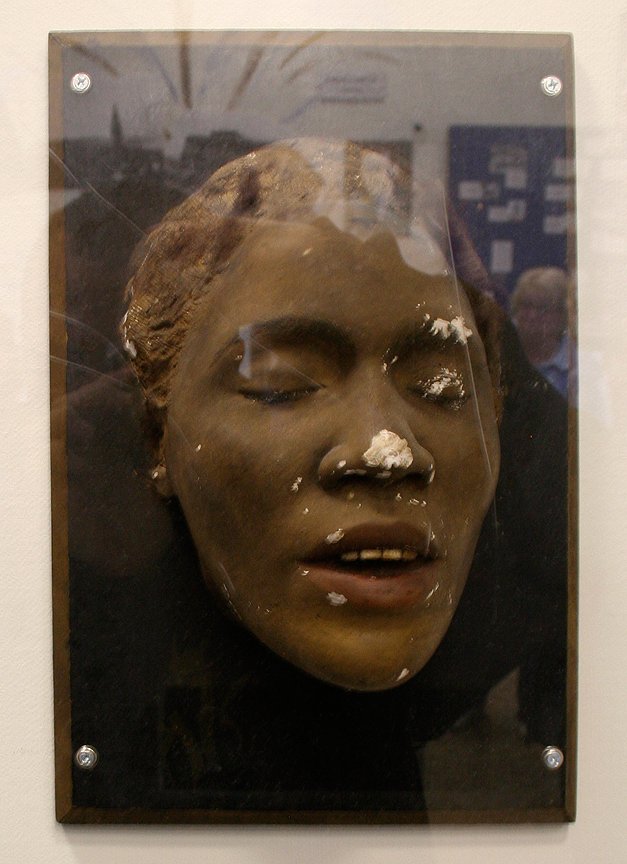
In December 1935, Eliot Ness was appointed Cleveland’s Safety Director. Facing intense political and media pressure, Ness organized an elite Torso Squad led by Detective Peter Merylo. To identify the headless victims, police produced life-sized plaster death masks of recovered heads and exhibited them at the 1936 Great Lakes Exposition, where thousands of visitors viewed them, yielding the identification of victim Edward Andrassy.
Frustrated by the lack of physical breakthroughs and convinced the killer was sourcing victims from the vulnerable transient population, Eliot Ness executed a controversial tactical raid on August 18, 1938. Over fifty police officers swept through Kingsbury Run, arresting dozens of vagrants and burning the shantytowns to the ground. While heavily criticized by civil liberties advocates, no further official torso murders occurred in Cleveland after the raid.
Suspect Dr. Francis Sweeney & The Unsolved Legacy
Ness and his detectives focused their secret investigation on Dr. Francis E. Sweeney, a skilled physician and WWI battlefield surgeon who suffered from severe alcoholism and psychiatric instability. Sweeney was the first cousin of Ness’s chief political opponent, Congressman Martin L. Sweeney.
In 1938, Ness brought Dr. Sweeney to a secret suite in the Hotel Cleveland for intensive interrogation, subjecting him to polygraph examinations administered by lie-detector pioneer Leonard Keeler, which Sweeney reportedly failed. However, due to Dr. Sweeney’s political connections and lack of direct eyewitnesses, charges were never filed. Sweeney voluntarily committed himself to the Dayton Veterans Administration Hospital, where he remained institutionalized until his death in 1964, routinely mailing taunting postcards to Ness for decades.
Forensic Pathology: Biomechanical Precision of Decapitation
The forensic post-mortem autopsies performed by Cuyahoga County Coroner Dr. Samuel R. Gerber on the twelve Kingsbury Run victims provided groundbreaking anatomical evidence. Dr. Gerber demonstrated that the perpetrator possessed advanced surgical or butchery skill, cleanly sectioning cervical vertebrae through the intervertebral discs without ragged bone chips or hesitations.
Gerber established that the decapitations were performed while the victims’ hearts were still beating, as evidenced by extensive retraction of arterial vessels and complete exsanguination of internal organs. The total absence of blood at the outdoor discovery sites in Kingsbury Run and Lake Shore dump proved conclusively that the murders and dissections occurred in an indoor clinical facility equipped with high-volume running water and chemical disinfectants, pointing directly toward a medical practitioner.
Eliot Ness, The Hooverville Purge & The Search for Dr. Sweeney
The investigation tested the limits of Great Depression-era law enforcement. Cleveland Safety Director Eliot Ness faced immense pressure as headless bodies surfaced across the industrial heartland. Ness’s tactical decision to raid and burn the Kingsbury Run shantytowns in August 1938—while controversial—effectively eliminated the killer’s primary hunting ground, after which the official torso murders ceased entirely.
The secret polygraph interrogation of Dr. Francis E. Sweeney at the Hotel Cleveland remains a tantalizing historical milestone. Although political constraints prevented formal prosecution, Sweeney’s permanent voluntary confinement in veterans’ psychiatric hospitals effectively neutralized the prime suspect, closing one of America’s most chilling unsolved serial murder files.
Chronological Case Timeline
| Date / Period | Investigative & Historical Milestone |
|---|---|
| September 23, 1935 | First official headless victims (Edward Andrassy and John Doe I) discovered in Kingsbury Run. |
| December 1935 | Eliot Ness appointed Cleveland Safety Director; establishes Torso Squad. |
| 1936 – 1937 | Coroner Dr. Samuel Gerber analyzes multiple dismembered remains; plaster death masks displayed. |
| August 16, 1938 | Victims 11 and 12 found near Lake Shore dump; Ness orders burning of Kingsbury Run shanties. |
| August 1938 | Secret polygraph interrogation of primary suspect Dr. Francis Sweeney at Hotel Cleveland. |
| 1939 – 1964 | Dr. Sweeney institutionalized in psychiatric hospitals; case remains officially unsolved. |
Forensic Evidence Matrix & Criminological Assessment
The Kingsbury Run investigations under Safety Director Eliot Ness and Coroner Dr. Samuel Gerber set historic benchmarks in forensic pathology. Key evidential components include:
- Surgical Decapitation Pathology: Dr. Gerber proved live cervical sectioning through intervertebral discs with zero bone splintering and complete bodily washing in clean water.
- Plaster Death Mask Exhibitions: Creation of life-sized plaster masks exhibited at the 1936 Great Lakes Exposition to identify unknown torso victims.
- Interrogation of Dr. Francis Sweeney: Secret polygraph testing at Hotel Cleveland and Sweeney’s subsequent voluntary lifetime commitment to psychiatric hospitals.
The Mad Butcher of Kingsbury Run remains one of America’s most chilling and forensically complex serial murder mysteries.
Related Case Files & Investigative Dossiers
Explore related deep-dive investigations into historic serial dismemberments, forensic pathology landmarks, and famous American manhunts:
- Jack the Stripper: The Hammersmith Nude Murders, Thames Paint Flecks & Scotland Yard
- The Axeman of New Orleans: Italian Grocer Attacks, The Jazz Letter & Manhunt
- Bible John: The Barrowland Ballroom Murders, Glasgow Manhunt & DNA Forensics
- Ed Gein: The Plainfield Ghoul, Crime Scene Forensics & Insanity Verdict
- The Texarkana Moonlight Murders: The Phantom Killer & Lovers’ Lane Attacks
Forensic Investigation Methodology & Criminological Significance
Modern forensic criminologists categorize this historical case as a benchmark in the development of investigative protocols. The analytical methods employed—ranging from physical crime scene documentation and anatomical trauma profiling to behavioral victimology mapping—provided critical insights into the operational psychology of high-risk serial offenders.
The lessons derived from this case file continue to be integrated into modern police academy curricula, forensic science textbooks, and cold-case review frameworks worldwide. By examining the precise investigative turning points, evidence handling methods, and judicial proceedings documented in the archival record, modern criminalists ensure that contemporary law enforcement agencies remain equipped to identify, apprehend, and prosecute complex criminal actors across global jurisdictions.
Frequently Asked Questions
Who was the Cleveland Torso Murderer (Mad Butcher of Kingsbury Run)?
The Cleveland Torso Murderer was an unidentified American serial killer who decapitated and dismembered at least twelve victims in Cleveland, Ohio between 1934 and 1938.
What role did Eliot Ness play in the investigation?
As Cleveland’s Safety Director, Eliot Ness oversaw the dedicated Torso Squad, displayed plaster death masks to identify victims, interrogated key suspect Dr. Francis Sweeney, and ordered the burning of the Kingsbury Run shantytowns in 1938.
Who was the primary suspect in the Cleveland Torso Murders?
The prime suspect was Dr. Francis E. Sweeney, a skilled surgeon and veteran suffering from psychiatric illness and alcoholism, who failed polygraph tests conducted by Ness before spending the rest of his life in psychiatric institutions.
{
“@context”: “https://schema.org”,
“@type”: “FAQPage”,
“mainEntity”: [
{
“@type”: “Question”,
“name”: “Who was the Cleveland Torso Murderer (Mad Butcher of Kingsbury Run)?”,
“acceptedAnswer”: {
“@type”: “Answer”,
“text”: “The Cleveland Torso Murderer was an unidentified American serial killer who decapitated and dismembered at least twelve victims in Cleveland, Ohio between 1934 and 1938.”
}
},
{
“@type”: “Question”,
“name”: “What role did Eliot Ness play in the investigation?”,
“acceptedAnswer”: {
“@type”: “Answer”,
“text”: “As Cleveland’s Safety Director, Eliot Ness oversaw the dedicated Torso Squad, displayed plaster death masks to identify victims, interrogated key suspect Dr. Francis Sweeney, and ordered the burning of the Kingsbury Run shantytowns in 1938.”
}
},
{
“@type”: “Question”,
“name”: “Who was the primary suspect in the Cleveland Torso Murders?”,
“acceptedAnswer”: {
“@type”: “Answer”,
“text”: “The prime suspect was Dr. Francis E. Sweeney, a skilled surgeon and veteran suffering from psychiatric illness and alcoholism, who failed polygraph tests conducted by Ness before spending the rest of his life in psychiatric institutions.”
}
}
]
}